Roughly 2% of the genome of every person with non-African ancestry comes from a species that died out around 40,000 years ago. That genetic code is not a random leftover—it is the surviving trace of sustained contact between modern humans and Neanderthals, beginning about 47,000 years ago and lasting around 7,000 years. When early modern humans left Africa in large numbers some 60,000 years ago, they entered a landscape that Neanderthals had already occupied for over 300,000 years. Those Neanderthals were deeply familiar with their territory, its climate, its survival demands, and its dangers.
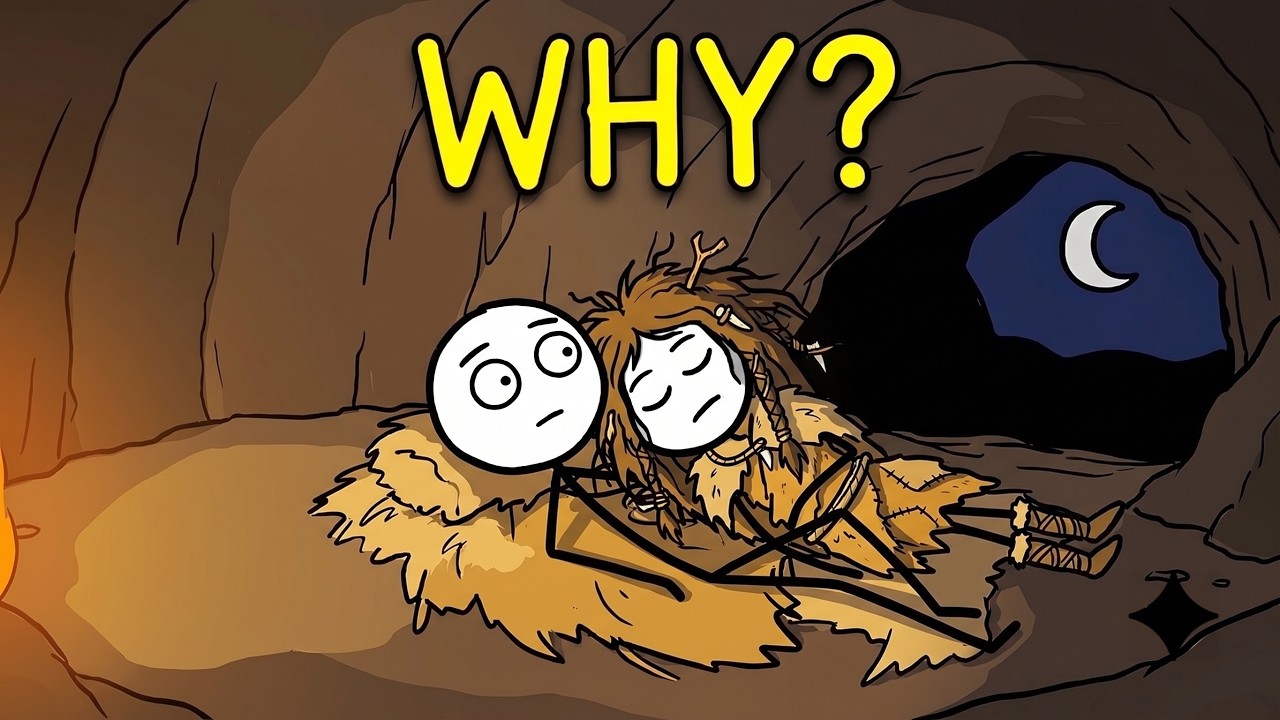
The newly arrived humans were outsiders in every practical sense, carrying bodies adapted to African warmth as they pushed into ice-age Eurasia. The two populations did not meet once, in a single isolated encounter. Genetic research has placed interbreeding in a specific window roughly 47,000 years ago, one that stretched across millennia. Archaeological evidence shows the two species coexisting in overlapping regions of Eurasia for thousands of years—small bands of modern humans repeatedly moving through the same river valleys and caves where Neanderthals were already settled.
Over generations, contact became routine. That prolonged mixing produced a lasting biological signature: nearly all living humans with ancestry outside Africa carry Neanderthal DNA. According to researchers, specific Neanderthal gene variants remain active in modern populations, including traits tied to skin pigmentation, hair texture, cold response, and resistance to certain viruses. These were not neutral leftovers—they were adaptive advantages that helped modern humans survive climates and pathogens their bodies were never originally built to handle.
The explanation for why two different species chose to interbreed appears to involve more than survival mechanics. Archaeological evidence contradicts the old image of Neanderthals as simple brutes. They buried their dead, made jewelry from eagle talons, used pigments, and cared for injured or disabled group members for years. Skeletons showing healed wounds and missing limbs suggest individuals survived only with prolonged assistance.
Their hyoid bone, which is involved in speech, is shaped almost identically to the modern human equivalent. The picture that emerges is one of people who were distinct but recognizably human. There may also have been demographic pressure. Migrating modern human bands were small, sometimes just a few dozen people spread over enormous territory.
Weeks might pass without encountering another human group. In small populations, genetic isolation kills faster than predators or starvation. From a biological point of view, any outside group encountered was effectively a lifeline—declining to interact could mean the end of a bloodline within a generation or two. The genetic record also points to an uncomfortable asymmetry.
A 2026 genetic analysis comparing the X chromosomes of the two species found the interbreeding pattern was lopsided: it ran mostly one way, involving Neanderthal males and modern human females. Scientists have not determined whether that reflects choice, cultural practice, or something else. No one alive can ask either side what those encounters actually involved. The same genes that provided ancient protection now produce measurable downsides in a modern environment.
Neanderthal gene variants linked to faster blood clotting helped prevent lethal bleeding from hunting wounds and difficult childbirth tens of thousands of years ago. In contemporary populations, those same variants are associated with higher risks of stroke and dangerous blood clots. Similarly, the immune system genes borrowed to fight unfamiliar pathogens are now linked to autoimmunity, including lupus and Crohn’s disease. During the COVID-19 pandemic, researchers connected a specific cluster of Neanderthal DNA on chromosome 3 to higher rates of severe illness in some patients.
Allergies have also been traced to the same inherited immune machinery—a system that learned to treat threats aggressively, and still reacts to harmless substances as if they were deadly infections. Even mood may be affected. A study of medical records from 28,000 people found Neanderthal DNA linked to a higher risk of depression, connected with how those genes interact with circadian rhythm. That internal clock once helped Neanderthals respond to changing light, cold, and danger; in the modern world, it continues running without the same signals to act on.
Notably, Neanderthals did not disappear through a great war or final battle. There is no evidence of a mass extinction event or a decisive conflict. Their population was already small and struggling. As the two species interbred generation after generation, the smaller Neanderthal population was gradually absorbed into the larger modern human one, until no distinct purebred population remained.
Their genetic material continued forward inside human bodies, spreading across continents. In that sense, the conventional picture of extinction may be incomplete. The final Neanderthal did not necessarily die alone while a species ended. The lineage survived through absorption.
Those genes remain active today, shaping aspects of health and biology in people alive now—an inheritance few consider, passed down silently through thousands of generations.