A series of strange armed conflicts throughout history share a common thread: the object at the center of the fight was never the actual point. From a wooden bucket to a severed ear, these incidents ignited wars that cost millions of pounds, thousands of lives, and decades of diplomatic tension, all over items of trivial value. In 1325, soldiers from Modena raided Bologna and captured a bucket as plunder. Bologna declared war in response, leading to the Battle of Zappolino.
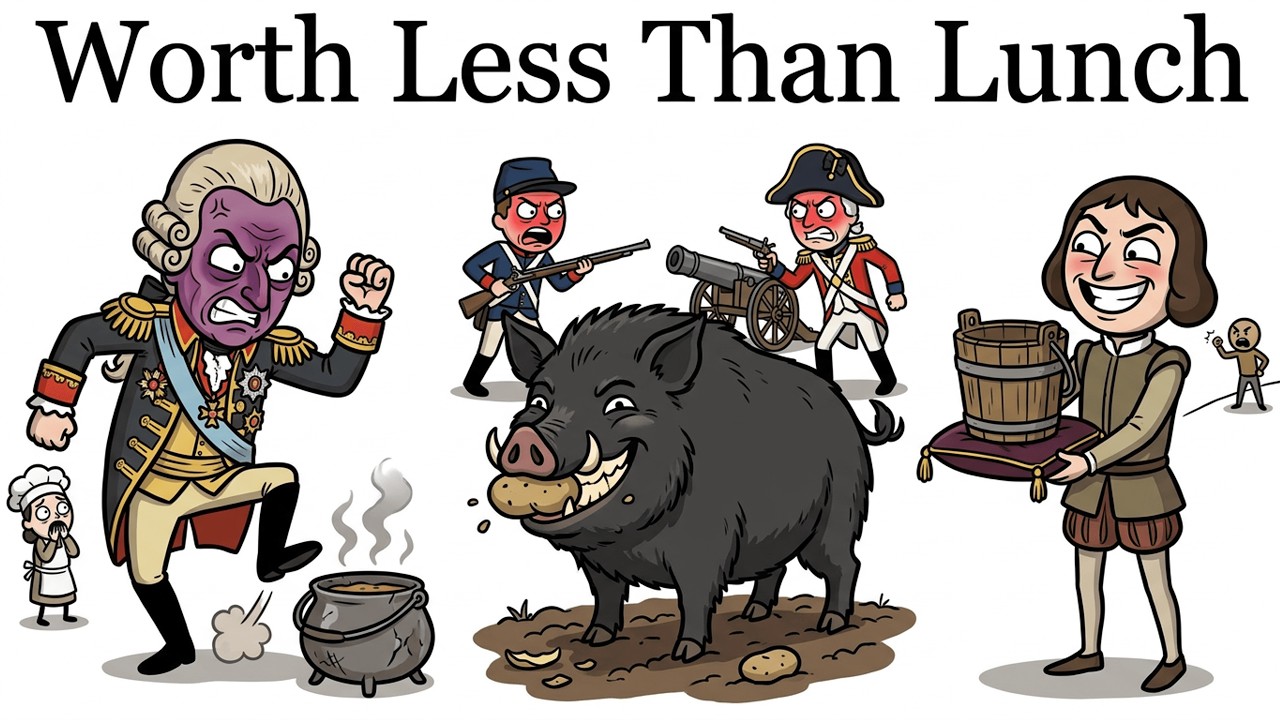
The battle left thousands dead, including roughly 2,000 Bolognese and 500 Modenese. Bologna never forgot the loss. The bucket still hangs in the cathedral of Modena today. In the early 18th century, British and Spanish forces clashed over territory in North America.
In 1731, Spanish coast guard captain Juan Fandino allegedly cut off the ear of British ship captain Robert Jenkins, telling him to take it to his king. The incident was used to justify the War of Jenkins’ Ear, which began in 1739. British forces launched a massive attack on the Caribbean port of Cartagena, but the campaign failed disastrously due to disease and poor command, leaving tens of thousands dead. The war even saw the Premiere of “Rule Britannia” in 1740.
A similar pattern emerged in the 19th century. In 1838, under the leadership of President Anastasio Bustamante, Mexico faced a new conflict with France. A French pastry chef with a shop in Mexico City claimed loot from his property, which included a store of pastries and $60,000 in gold. The Mexican government refused his claim, and French naval forces blockaded Mexican ports.
The resulting “Pastry War” saw French forces briefly capture the fortress of San Juan de Ulúa in Veracruz, and the city of Veracruz was bombarded. Though the conflict did not involve a direct ground invasion of Mexico City, the French navy did capture the port of Veracruz. The dispute was ultimately resolved after 13 months of negotiation, with Mexico agreeing to pay the original claim plus interest. The most absurd of these conflicts may be the Pig War of 1859.
American and British settlers on San Juan Island in the Pacific Northwest disputed the boundary between their nations. An American farmer shot a pig that belonged to the British Hudson’s Bay Company, sparking a military standoff. Troops from both sides arrived, but commanders on both sides exercised restraint, and no shots were fired. The Pig War was resolved peacefully through arbitration, with the island eventually becoming part of the United States.
Grudges persisted even after the resolution of the Pig War. In 1914, a war nearly began over a bucket, but the underlying tensions made conflict inevitable. In 1915, a border dispute between Greece and Bulgaria proved more deadly. When a Bulgarian soldier crossed the border and a Greek soldier was killed, Bulgaria was ordered to pay reparations and issued a formal apology.
When Bulgaria resisted cooperating with demands for an independent inquiry into the incident, Greece annexed the region, and Bulgaria invaded, leading to a brief war. The conflict ended with a League of Nations investigation that ultimately led to a settlement, but not before thousands of lives were lost. The most famous of these tales, the War of Jenkins’ Ear, claimed the life of Admiral Edward Vernon and inspired the phrase “to cop one’s coppers. ” The War of Jenkins’ Ear had a lasting impact on the English language, adding the term “cut to the quick” to the lexicon.
These stories show that when nations go to war, the stated reason is often not the true cause. The object that starts a war is often just a symbol for the resentments that have been building for years. The trivial nature of these conflicts reveals that the cost of national pride is often dearer than any disputed item.