Belgium then topped Group H with a 5-1 win over New Zealand, while Egypt and Iran played out a thrilling 1-1 draw to finish second and third, respectively.
ESPN’s By The Numbers brings you best stats from the World Cup action on June 26:
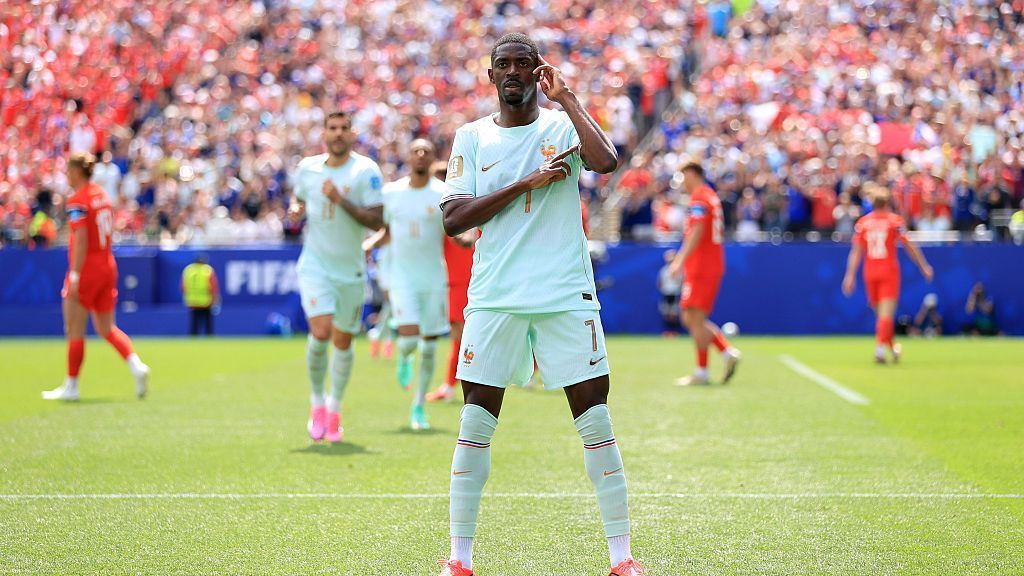
Norway 1 – 4 France
0.19
Ousmane Dembélé completed his hat trick despite just accumulating an xG total of 0.19. Since 1966, the only men’s World Cup hat trick completed with a lower xG was Hungary‘s Laszlo Kiss in 1982 (0.17).
1/182
Of the 182 goals scored (until then) at this FIFA World Cup, Dembélé’s hat trick goal was the first to see all 11 players involved in the move.
Dembélé ‘s hat trick (7′, 20′, 32’) is the second earliest hat trick in men’s World Cup history after Austria‘s Erich Probst vs Czechoslovakia in 1954 (24th minute). He is, in fact, just the 6th man with a first-half hat trick in a World Cup match and the first since Oleg Salenko for Russia in 1994 (Salenko hit 5 goals in that match).
2
With two assists today, Kylian Mbappé has joined Lionel Messi (26) and Miroslav Klose (20) as the only men with 20+ World Cup goal contributions (16 goals, 4 assists), since assist records started in 1966. What’s curious is that he had two assists in his previous 16 World Cup games!
3
Dembélé is only the third Frenchman to score a World Cup hat trick, after Just Fontaine (2x) and Kylian Mbappé.
3
Stunningly, Dembélé is the first Reigning Ballon D’Or winner to score a World Cup hat trick since Cristiano Ronaldo vs Spain in 2018. He’s only the fourth overall to do so (also Karl-Heinz Rummenigge in 1982 and Eusébio in 1966)
3
Mike Maignan is the third French goalkeeper to save a men’s World Cup penalty after Alex Thepot in 1930 vs Chile and Joel Bats in 1986 vs Brazil (excluding shootouts). Maignan dived to his left to keep out Jorgen Strand Larsen’s 50th minute penalty.
3 (or more)
France have scored 3 (or more) goals in each of their last four FIFA World Cup matches, the longest run by a team at a men’s World Cup since Spain between 1998 and 2002 (4).
6
Norway, who made 10 changes to the starting XI from the previous match, are now winless in their last 6 competitive games without Erling Haaland in the starting XI (0-3-3).
20
This is the 20th instance of a Frenchmen having a multi-goal game at the World Cup. France join Brazil (39), Germany (35), and Argentina (27) as the only countries to have players who’ve had multi-goal games at least 20 times at the World Cup.
23
With Jens Petter Hauge substitution in, all 23 of Norway’s outfield players have had minutes this tournament.
In einer schockierenden Wende, die die Reality-TV-Welt erschüttert hat, sorgte Silvia Wollny für Aufsehen, indem sie öffentlich angekündigt hat, dass sie Loredana…
Doveva essere il viaggio della rinascita, una fuga da sogno tra mare cristallino, resort esclusivi e tramonti mozzafiato. Invece, per Monica Montefalcone,…