Before Meghan Markle sat down with Oprah Winfrey, before the Netflix documentaries, and before the Sussexes’ exit became a global story, Prince Edward and his wife Sophie had already lived through a strikingly similar ordeal. They tried to balance royal duties with private careers, and the institution pushed back hard. Edward saw the consequences firsthand. When Edward married Sophie Rhys-Jones in June 1999 at St.
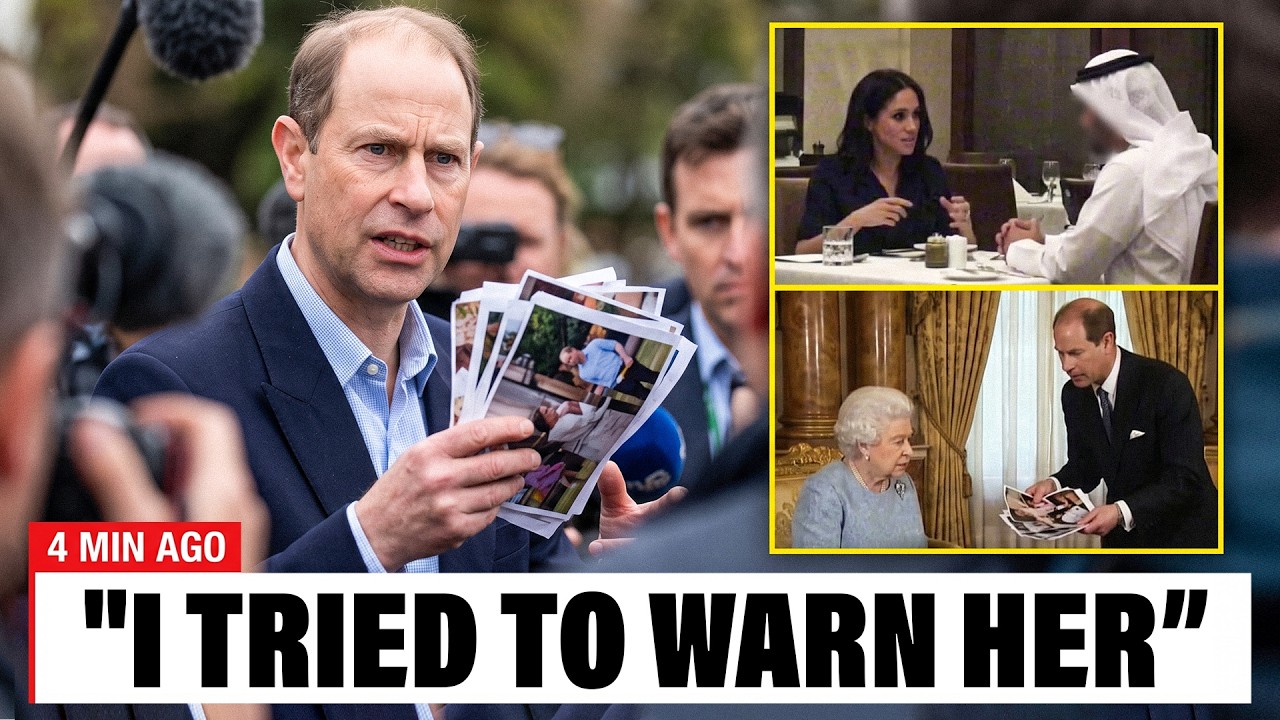
George’s Chapel in Windsor, they were not starting fresh. Edward had an established television production company, Ardent Productions, while Sophie had co-founded her own public relations firm, RJH Public Relations, three years earlier. They had real businesses, professional identities, and ambitions they hoped to maintain alongside their royal roles. The plan was straightforward: they wanted to be working royals while still earning income from outside ventures.
But it did not work. The experiment failed publicly. Royal expert Kinsey Schofield noted that Sophie faced criticism for wanting to continue her career while representing the crown, and Edward similarly wanted to remain a producer. When they combined royal duties with private business interests, they encountered serious problems that led to public humiliation.
Edward had not entered royal life without ambition. He had worked in theater, began Royal Marines training before leaving early, and then moved into television production. He led Ardent Productions while Sophie used her PR experience to build RJH Public Relations. Their businesses attracted criticism, and they reportedly reached a crisis point.
Unlike Harry and Meghan, however, Edward and Sophie chose to commit fully to royal duties starting in 2002. The most damaging moment came in September 2001, when a film crew from Ardent Productions followed Prince William at university. Buckingham Palace had an agreement with the media to keep William’s time at university private. Edward’s company was seen as violating that arrangement, and he was accused of exploiting his royal connections.
The criticism was swift and harsh, both from the press and from within the royal family. The incident confirmed Queen Elizabeth’s fears about royals involved in commercial ventures. Edward did not defend himself publicly. He accepted the criticism, and the company eventually closed down.
The restraint did not come naturally, but he learned it. The royal family teaches its members that the institution comes first. Sophie’s own scandal came the same year. In 2001, journalist Mazher Mahmood tricked her into meetings by pretending to be a potential client for her PR firm.
Sophie met with him several times, unaware that her conversations were being recorded. The recordings captured her making unguarded negative comments about senior political figures, including Cherie Blair and Tony Blair. She also allegedly made remarks about Prince Charles and Camilla Parker Bowles, suggesting the public would not accept Camilla as queen. When the recordings were published, the fallout was severe.
Sophie publicly apologized, stepped back from her company, and expressed regret for the embarrassment she caused the queen. In a statement, she said: “I am deeply distressed by the entrapment operation on me and my business, but I also regret my misjudgment in falling for that trick. This has been a difficult time for me. I take seriously the issues raised and regret any embarrassment to the queen.
”
Edward watched as his wife faced public ridicule. He could only stand by her and help make decisions that would shape their royal lives. Experts believe Queen Elizabeth did not want a repeat of that incident, which likely influenced her later rejection of Harry and Meghan’s proposal for a similar arrangement. The comparison is significant.
Sophie and Edward were not prominent figures in the royal family in 2001. Sophie was not next in line for the throne and had not been a celebrity before marriage. If someone in that position could be targeted so effectively, Meghan—one of the most recognized women in the world—would face even more pressure. The media environment around Meghan was larger and more aggressive.
The Queen had seen how Sophie’s business ties became a liability, how private family opinions ended up in tabloids, and how independent careers clashed with royal expectations. By 2020, when Harry and Meghan sought a similar half-in, half-out arrangement, she refused. Edward understood the cost of that sting for his wife and what it meant for him. He grasped the lessons the palace learned about working royals with their own careers.
When Meghan joined the royal family, eager to maintain some of her identity, the lingering memory of Sophie’s experience worked against her. It is possible that Edward could have warned Meghan. He had run a business within the royal family, watched his wife’s career struggle in the tabloids, and made the difficult decision to give everything up to focus on royal duties. He made that choice quietly, without a public breakdown.
Whether he actually spoke to Meghan or Harry privately is unknown. The institution thrives on silence, and such conversations rarely become public. When the Sandringham meeting was organized in early 2020 to address Harry and Meghan’s request for financial independence, Edward was not included. His experiences could have been valuable, but he remained absent from that discussion.
Edward chose to stay silent after the Sussexes stepped back from royal duties in March 2020. He understood when to speak and when to keep quiet. His earlier efforts to gain financial independence from the royal family helped explain their departure, but he remained distant and continued his royal duties, becoming more active rather than withdrawing. His choices did not change because of Harry and Meghan’s actions.
If anything, he likely felt reassured in his commitment to the monarchy. Sophie has since become a steady presence as the monarchy faced recent challenges. She represents a keep-calm-and-carry-on spirit during family conflicts and health issues. This is the Edward and Sophie the public knows today: stable, reliable, and uncontroversial.
But that steadiness came from past failures and scandals, and from accepting a system that does not allow for compromise. Edward’s silence after the Sussex exit revealed his acceptance of royal life. He supports the monarchy and his family, and he understands the changes the institution is going through. Although he may never share his thoughts publicly, his experiences connect with the challenges Meghan faced.
The man who is now the quiet Duke of Edinburgh was once ambitious and believed he could balance a career with royal duties. The institution has more patience than any individual. It waits, slowly applying pressure until a breaking point is reached.
Edward learned that lesson the hard way, and he has carried it with him ever since.