When Rick Moranis’s wife, Ann Belsky, died of cancer in 1991, the comedy star made a decision that stunned Hollywood. At the peak of his fame following hits like Ghostbusters, Spaceballs, and Honey, I Shrunk the Kids, he chose to step away from acting to raise his two young children. He never officially retired, but his break became a decades-long absence from the spotlight. Moranis later explained that family mattered more to him than fame, and his choice has been widely respected by fans and colleagues ever since.
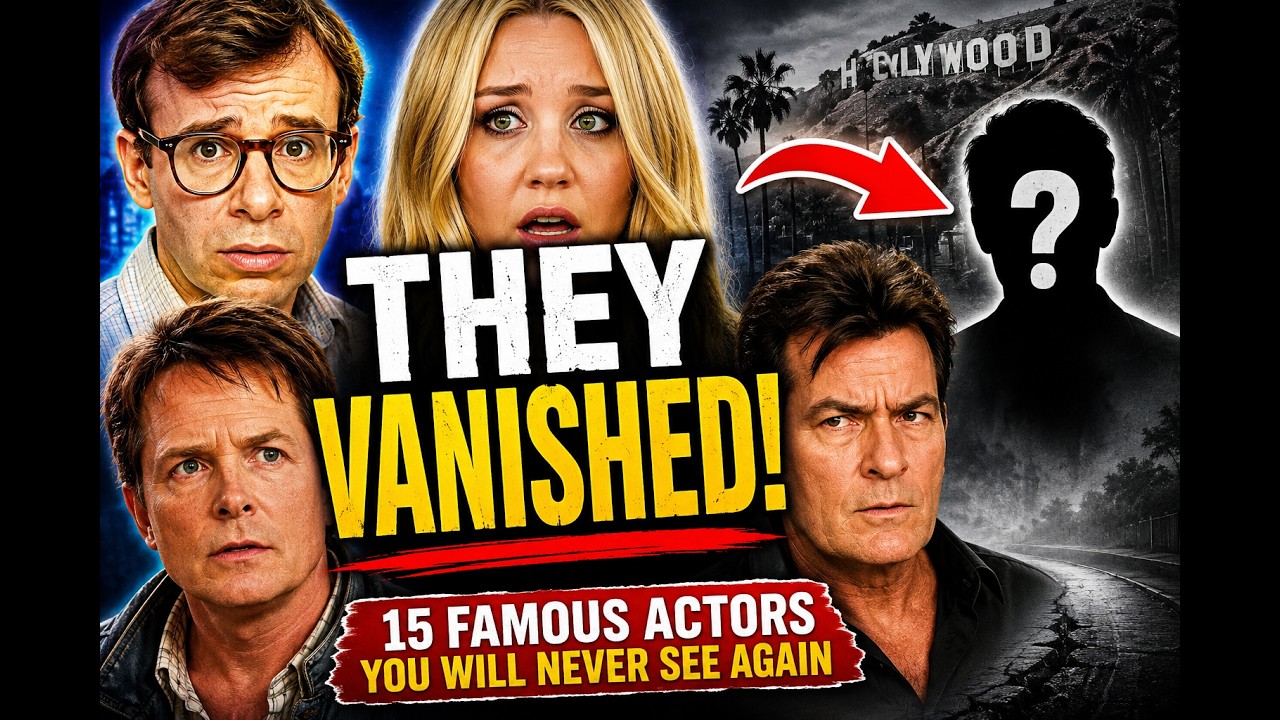
He is one of several well-known actors who once dominated screens but have largely disappeared from public view. Their reasons range from personal tragedy and burnout to scandal and shifting priorities. While some left by choice, others saw their careers unravel under the weight of controversy or health challenges. Randy Quaid built a reputation as one of Hollywood’s most reliable character actors, with memorable work in The Last Detail, National Lampoon’s Vacation, Independence Day, and Brokeback Mountain.
Over time, however, his career was overshadowed by legal troubles, missed court appearances, and a series of bizarre public statements. Major opportunities became harder to secure as headlines turned negative. His absence today looks less like a planned retirement and more like a career that quietly drifted away from the industry. Renee Zellweger stepped away at the height of her success.
After starring in Jerry Maguire, Bridget Jones’s Diary, Chicago, and Cold Mountain, she took a break from acting between 2010 and 2016 to focus on her personal life. She later said she needed time to reconnect with herself beyond her celebrity image. When she returned, she won another Academy Award for her portrayal of Judy Garland in Judy. Her absence was not a collapse but a reset that allowed her to come back with renewed purpose.
Jack Gleeson became widely known for playing King Joffrey on Game of Thrones, a role that made audiences despise him precisely because of his skill. After leaving the show in 2014, he chose not to pursue mainstream Hollywood stardom. Instead, he focused on theater, education, and creative projects in his native Ireland. He later returned to acting gradually, but on his own terms, refusing to let one famous role define his life.
Kirk Cameron rose to fame as Mike Seaver on Growing Pains, becoming one of television’s biggest teen stars. As his religious faith grew more central to his life, he deliberately shifted away from mainstream projects. He focused instead on faith-based films and family-centered entertainment, including Fireproof and the Left Behind series. His departure from Hollywood was intentional and redirected his career toward a different audience entirely.
Amanda Bynes was one of the brightest young talents of her generation, known for All That, The Amanda Show, She’s the Man, Hairspray, and Easy A. At just 24, she announced she was leaving acting. The years that followed brought personal struggles, legal issues, and a lengthy conservatorship. Fans watched with concern as her life became defined by difficult headlines.
She later chose a quieter life away from constant public attention, though her earlier work remains fondly remembered. Daniel Day-Lewis never behaved like a typical movie star. Known for his intense method preparation, he delivered unforgettable performances in My Left Foot, There Will Be Blood, and Lincoln. After completing Phantom Thread in 2017, he announced his retirement without scandal or drama.
He said simply that it felt like the right time. Years later, he returned for a project connected to his family, proving his retirement was not necessarily permanent. Throughout his career, he followed his own rhythm. Michael J.
Fox captured the optimism of the 1980s through Family Ties and Back to the Future, becoming one of the most beloved stars of his generation. In 1991, he was diagnosed with Parkinson’s disease. He continued acting for years while privately managing the condition. Eventually, the physical challenges became impossible to ignore.
Rather than disappear, he became a leading advocate for Parkinson’s research, building a legacy that extends far beyond his acting career. Karyn Parsons will always be remembered as Hilary Banks on The Fresh Prince of Bel-Air, but that role was not the only story she wanted to tell. After years of acting, she shifted toward writing, producing, and education. She founded Sweet Blackberry, an organization dedicated to sharing overlooked stories from African American history.
She chose meaningful storytelling over chasing celebrity. Paula Deen was one of television’s most popular cooking personalities, known for her warm presence and Southern recipes on the Food Network. In 2013, revelations from a legal deposition triggered public backlash and led to the loss of major partnerships and television opportunities. She continued working through cookbooks, online content, and other ventures, but she never regained her former mainstream presence.
Her story illustrates how quickly public trust can be lost. T. J. Miller was a prominent comedy presence in the mid-2010s, thanks to Silicon Valley and the Deadpool films.
His career momentum stalled as public disputes, legal issues, and negative headlines accumulated. Although he continues to perform, he has not recaptured the standing he once had. His trajectory shows that talent alone is not always enough to sustain a Hollywood career. Meg Ryan defined the romantic comedy genre for years with When Harry Met Sally, Sleepless in Seattle, and You’ve Got Mail.
Eventually, she wanted something different. She stepped away from acting to focus on family, personal growth, and life outside celebrity culture. She later explored directing and writing while maintaining a much lower profile. Her absence was a personal decision rather than a rejection by audiences.
Kat Dennings became a household name through 2 Broke Girls. When the sitcom ended, some assumed she had disappeared, but she continued working steadily, including Marvel projects and starring television roles. Her story is less about vanishing and more about how quickly public attention shifts once a major show concludes. Charlie Sheen was among the highest-paid actors on television during his Two and a Half Men years, following an already successful film career.
Personal struggles, public controversies, and a highly publicized feud with the show’s creators brought that era to an abrupt end. Though he has continued working and speaking openly about his mistakes, he never regained his former level of influence. Hollywood rarely restores a fallen throne. Sean Connery left Hollywood because he had already achieved everything he set out to do.
After redefining James Bond and delivering acclaimed performances in The Untouchables, Indiana Jones and The Last Crusade, and The Hunt for Red October, he became one of cinema’s most respected actors. By the early 2000s, he was ready for a quieter life. After The League of Extraordinary Gentlemen, he stepped away from acting and spent his remaining years largely out of the spotlight. He passed away in 2020 at age 90, leaving behind a legacy few actors could match.
These stars left Hollywood for many different reasons. Some chose family, some chose privacy, and others faced challenges that forced a change. But whether they left by choice or circumstance, audiences still remember them.
Fame may fade, but unforgettable performances endure.