The silence of Christopher Jones in the decades following his abrupt exit from Hollywood was so complete that the industry began to treat his absence as a peculiar form of biography. He did not grant interviews, did not attend premieres, and did not offer explanations, leaving a vacuum that rumor and speculation filled with increasing urgency. The man who had once been poised to inherit the mantle of James Dean had become a ghost, and the circumstances surrounding his vanishing only deepened the mystery that surrounded his name.
The actor, who died in 2014 at the age of 72, left behind a legacy that is as defined by the allegations of sexual violence made against him as it is by his brief, incandescent career. In a 2018 interview with The Guardian, actress Olivia Hussey, who starred alongside Jones in the ill-fated production of Ryan’s Daughter, claimed that Jones had raped her. The alleged assault, she said, took place in the very house on Cielo Drive where Sharon Tate had been brutally murdered just weeks earlier, a location Jones had moved into following the tragedy.
 Hussey’s account, detailed in her memoir The Girl on the Balcony, painted a portrait of a man consumed by violence and instability, a stark contradiction to the romanticized image of the tortured artist.
The story of Jones that has emerged in fragments is a tapestry woven from immense personal tragedy and alleged perpetrated harm. His childhood was marked by profound abandonment, beginning with his mother’s commitment to a state mental institution when he was just four years old. Raised in a Memphis children’s home, he found solace in the clean narratives of cinema, a world away from the institutional reality of his youth.
This early trauma, which included a brief stint in the US Army that ended in an immediate AWOL and subsequent imprisonment, forged a pattern of escape and recoil that would come to define his entire adult life.
By his late twenties, Jones had achieved the very stardom he had dreamed of as a boy, starring in the prescient 1968 satire Wild in the Streets and being handpicked by director David Lean for the epic Ryan’s Daughter. Yet, the set of that film in rural Ireland proved to be a crucible of dysfunction and betrayal. Jones was already reeling from the news of Sharon Tate’s murder, a woman he claimed to have been in love with and who he said was preparing to leave her husband for him.
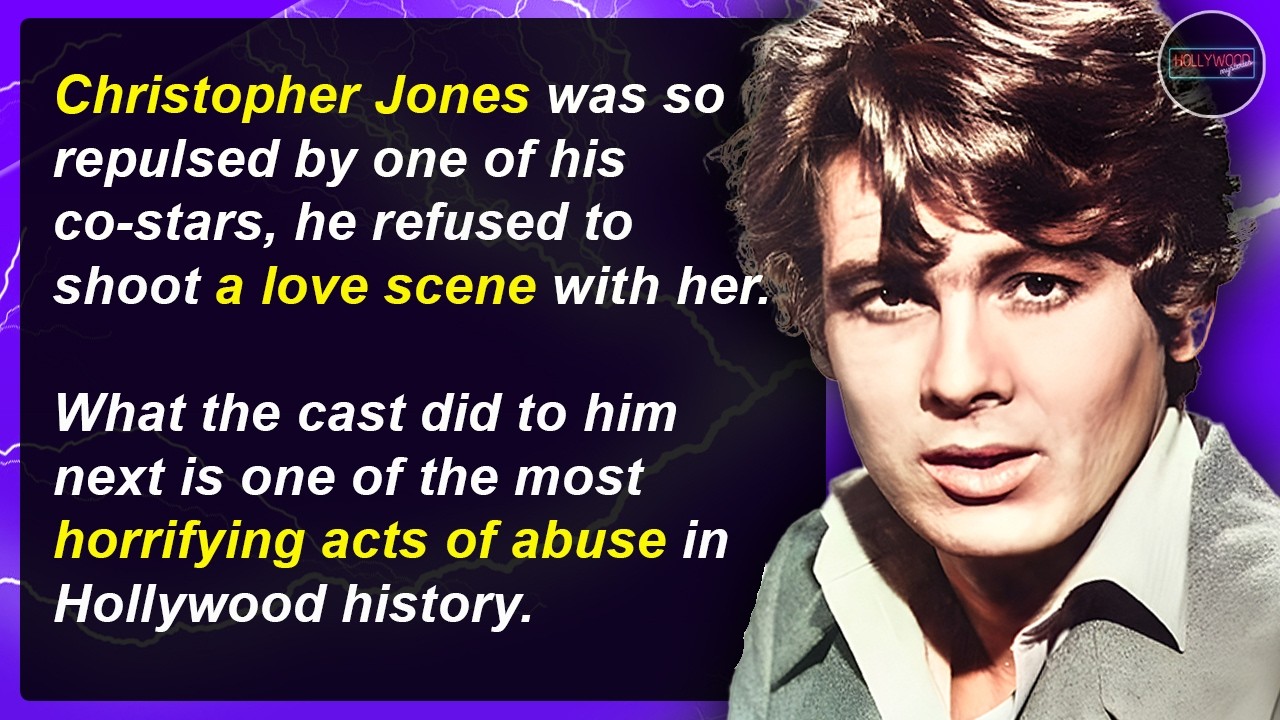
The production, far from offering support, allegedly compounded his psychological distress. According to the memoirs of his co-star Sarah Miles and others, the cast and crew secretly drugged Jones, spiking his breakfast cereal with sedatives in an attempt to loosen him up for a love scene, a fact that was kept from him for decades and that he furiously denied upon learning of it.
The consequences of that chemical manipulation were devastating. Jones, believing he was losing his mind, refused for weeks to film the central romantic sequence, leading to furious confrontations with the perfectionist director Lean. The final film bore an additional layer of erasure when Lean, dissatisfied with Jones’s performance, had all of his dialogue re-dubbed by another actor in post-production.
The star’s voice, his very identity on screen, was replaced, a symbolic act of annihilation that preceded his own withdrawal from the world. When the film was released in 1970, Jones was largely ignored by critics, a humiliating end to a project that was supposed to be his crowning achievement.
The emotional wreckage of the Ryan’s Daughter shoot was monumental. Following its completion, Jones was reportedly taken to a mental hospital, and his career, for all intents and purposes, was over. He retreated to California, turning down a mountain of offers, including a role in Quentin Tarantino’s Pulp Fiction, which he dismissed as “disgusting,” a choice his partner Paula McKenna attributed to the part’s sexual violence.
For nearly 25 years, he simply vanished, living a quiet life as a painter and father, a man who seemed determined to reclaim the anonymity that had been stripped from him in his youth. In his rare moments of reflection, he cited the deaths of Tate and his friend Jim Morrison as the twin pillars of his unraveling, stating, “I’d had a nervous breakdown over Sharon Tate’s death… I was tired, man.”
The public reassessment of Jones is now forced to hold two opposing truths. He was a man who claimed to be shattered by the murder of his supposed love, yet he is also accused of committing a horrific act of violence against another young woman in the shadow of that very crime scene. The allegations from Hussey, which were never pursued legally, have fundamentally altered how his story can be told, moving it from a simple narrative of a promising career destroyed by grief to a darker, more complicated account of 𝓪𝓫𝓾𝓼𝓮 and trauma.
His life remains a cautionary tale about the machinery of Hollywood stardom, a system that could both elevate a vulnerable orphan to the heights of fame and, in his telling, systematically 𝒹𝓇𝓊𝑔 him into submission, leaving him a shell of the rebel he once portrayed.