Stephen A. Smith and the crew on ESPN’s First Take erupted into a heated debate over the Los Angeles Lakers’ future, with one bold statement—”Lakers in five”—drawing immediate ridicule and calls for a drug test. But beneath the shouting, a more serious question emerged: are the Lakers actually better positioned than the public believes after losing LeBron James? The debate centered on a roster graphic posted by Pick a Side, showing the new-look Lakers: Luka Dončić, Austin Reaves, Quentin Grimes, Sandro Mamukelashvili, Walker Kessler, Collin Sexton, Cameron Carr, Ziaire Williams, Matisse Thybulle, and Kevon Looney.
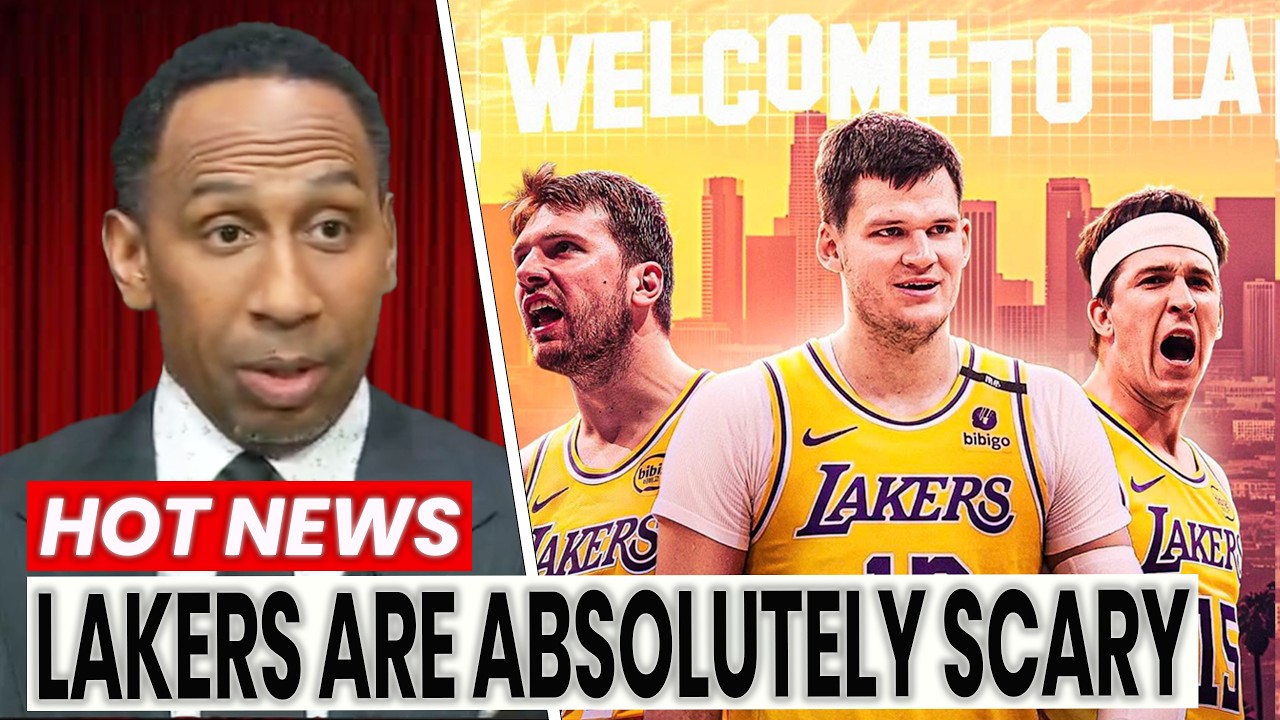
One analyst on the show responded to the graphic by calling the roster “doodoo stains,” a remark that drew significant pushback online. The bullish case for the Lakers starts with Dončić. The argument was made that he doesn’t need to score 40 points every night to control a game. Often, the contest is already decided by the third quarter, with Dončić posting 32 points, 10 rebounds, and 10 assists before sitting out the final period because the team is up by 25.
If he can sustain a stat line near 36 points, 10 rebounds, and 10 assists while dragging Los Angeles to a top-three seed in the Western Conference, the MVP conversation would become impossible to ignore. However, the counterargument was immediate and forceful. The Western Conference does not care about reputations, and individual brilliance does not automatically translate to team success. The lineup carries legitimate questions: Can Austin Reaves hold up defensively?
Can Quentin Grimes handle elite assignments every night? Can Mamukelashvili stay on the floor without becoming a target? And most critically, what happens when opposing offenses hunt Dončić on defense? The discussion then pivoted to the team’s biggest weakness: defense.
The panel noted the double standard applied earlier in the week when discussing the Philadelphia 76ers, where defense was the primary focus. The same standard must now be applied to Los Angeles. Walker Kessler, standing 7’2″ and weighing 245 pounds, provides a legitimate rim-protecting presence, something the Lakers desperately lacked. But Kessler cannot guard five positions at once.
If Dončić is isolated, the defense must collapse to help. If they collapse, someone becomes open. If that open player can stretch the floor, the help defense becomes even more dangerous, turning Dončić’s defensive limitations into a domino effect that compromises the entire unit. Yet there is another side to the argument.
The Lakers may not need Dončić to be a defensive savior; they need him to survive while the roster around him handles the dirty work. That is why Grimes, Thybulle, and Kessler matter. The entire season could come down to whether head coach JJ Redick can build a system that protects Dončić rather than exposing him. The debate took a sharper turn when the host asked a hypothetical question: remove Dončić from the roster and replace him with Collin Sexton.
What does this team look like? The answer was blunt: a significantly worse team. The follow-up translation was even harsher: “Garbage. Trash.
” That point underscored the central thesis—the roster cannot be evaluated as if Dončić is just another player. He isn’t. The supporting numbers support that view. Sexton averaged 15.
4 points, 2. 3 rebounds, and 3. 3 assists last season. Grimes averaged 13.
4 points, 3. 6 rebounds, and 3. 3 assists. Mamukelashvili posted a career-best 11.
2 points and 4. 9 rebounds before his playoff production dipped. Those statistics do not scream super team. But that is not the assignment.
The real question is whether these players can amplify Dončić, and that is a completely different consideration. Ultimately, the conclusion was not that the Lakers are guaranteed a top-three seed. “Lakers in five” was not treated as a serious prediction. But dismissing the roster as “doodoo stains” was called just as lazy.
The Lakers have a 27-year-old Dončić entering his eighth NBA season. They have shooting, secondary scoring, size, and perimeter defenders. Most importantly, they now have a legitimate rim protector in Kessler. The question is not whether Dončić can carry an offense—that is already known.
The question is whether Los Angeles can build enough defensive structure around him to prevent opponents from turning every possession into a hunting expedition. If they solve that, this is not a dead roster. It becomes a dangerous one. LeBron James leaving may have ended one Lakers era, but Dončić could be about to start something far more unpredictable.
The debate is nowhere near finished.