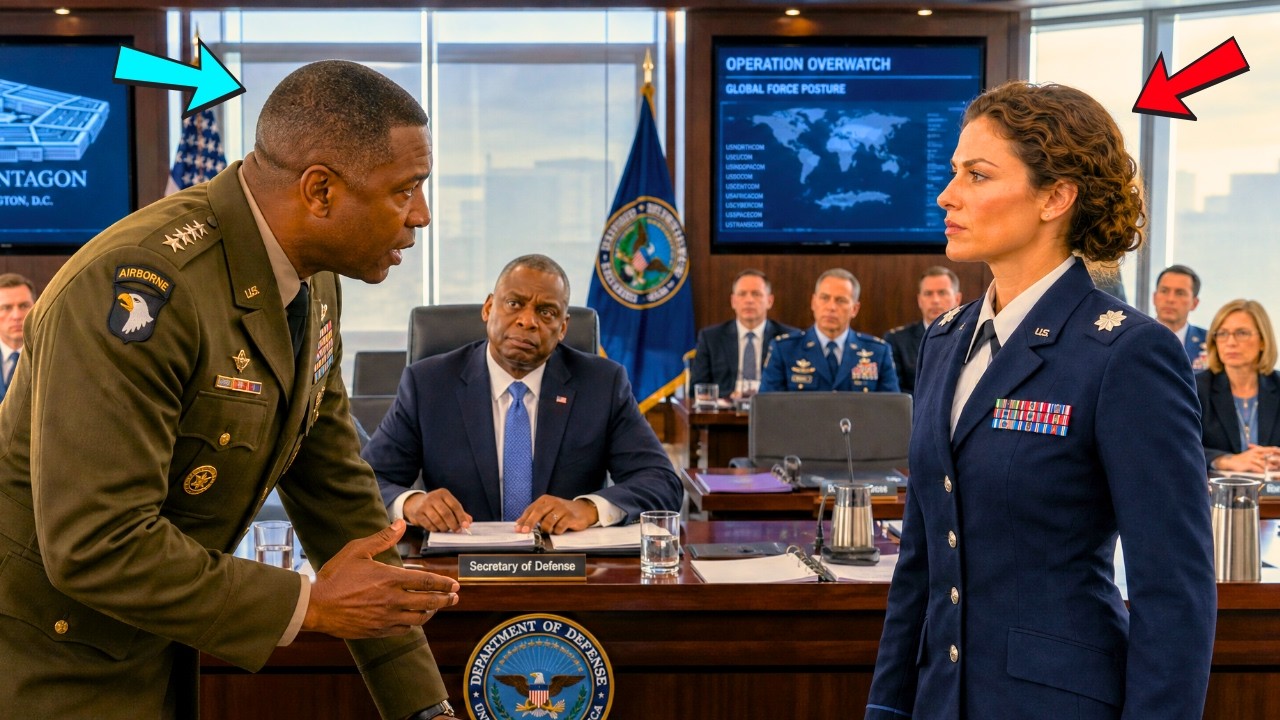
The slide on the screen behind me was wrong, and I was the only person in the room willing to say so. I had been speaking for less than two minutes. I know because I had timed my assessment the night before in a windowless office at 0500, reading it aloud to an empty room until it fit inside the window they had given me. Eight minutes was my allotment, eight minutes at the end of a ninety-minute briefing, after the people who owned the comfortable version had finished telling the Secretary of Defense what he wanted to hear.
I had used ninety seconds of that time to tell him the comfortable version was going to get people killed. “The indicators we are reading as posturing are not posturing,” I said. “They match a specific pattern. I have seen this pattern before.
When you see this sequence in this order, it is not a bluff. It is the forty-eight hours before. ”
I reached up to advance to the next slide, the one that laid the two timelines side by side, the one that would make a room full of people who outranked me deeply uncomfortable. My thumb found the clicker.
“You’re here to read slides, not give opinions. ” Colonel Grayson Teal did not look at me when he said it. He said it to the table, to the principals, with the easy authority of a man who had never once been told to sit down. He had a voice built for rooms like that one, smooth and carrying, the kind that made interruption sound like leadership.
“We’ll take the threat assessment from the people who own the account,” he went on. Now he glanced at me, a small, patient, almost kind glance, the way you look at a child who has wandered into a conversation. “Thank you, Colonel. We’re tight on time.
”
Somebody chuckled. It was not a cruel laugh. That was the part that landed. It was a small social laugh, the sound a room makes when a senior man has gently put a junior person in her place and everyone agrees the order of things has been restored.
I had heard a version of it in a hundred rooms over thirteen years. I want to tell you that I held my ground. I did not. My hands were already moving.
They had learned the motion the way you learn to flinch below the level of decision. I squared the edges of my papers against the table. Two taps, and I set the clicker down. And I felt the old familiar smallness come up in me like water finding its level, the smallness that had kept me employed and quiet and alive in the army for thirteen years.
A major standing against the far wall, a young officer named Sana Okonkwo, went very still. I remember that. She stopped breathing, and I thought distantly that she had not yet learned how this works. You do not hold your breath.
You simply fold yourself down small and wait for the room to move on, and one day you will not even notice you are doing it. I picked up the clicker again only to hand it across the table to Teal’s aide. That was all I meant to do. Hand it off, step back to the wall, disappear the way I had made an art of disappearing.
And then a man at the head of the table, who had not said a single word in ninety minutes, set down his pen. “Let her finish,” the Secretary of Defense said. “All of it. ”
He did not raise his voice.
He did not need to. The clicker stayed in my hand, and the whole room turned slowly, the way a field of grass turns in a changing wind, to look at a woman they had decided thirty seconds ago did not exist. To understand why my hands moved on their own, you have to understand the thirteen years. I was commissioned in the spring of 2005 at twenty-two years old into military intelligence, the branch of the army that exists to walk into a room full of people who have already made up their minds and tell them they are wrong.
It is good work. It is necessary work. It is also the loneliest work the army has, because the better you are at it, the more often you are the one bad smell at a good party. I was good at it.
I could read a pattern in a stack of fragments the way other people read a face. From the small things, the movement of money and trucks, the quality of a particular silence, I could tell you what a thing was going to become before it became it. It is not magic. It is attention, and attention is mostly just refusing to look away from the thing everyone else finds it more convenient to ignore.
Being right had never once made my life easier. It had only ever made me harder to be around. By the morning of the briefing, I had spent more than a decade in the billets you get when the system has quietly decided you are difficult. Not the punishment billets, nothing so clean as that.
The gray ones. The lateral moves. The desks where a sharp mind goes to be useful and unseen, three time zones from anywhere a decision is made. I had made lieutenant colonel on schedule, which surprised people who knew my reputation and surprised no one who understood that the army promotes even when it dislikes you.
I wore the rank, I did the work, and I had stopped somewhere along the way expecting the work to be seen. At 0500 that morning, I had been alone in the cell with the indicators, building the assessment nobody had asked me to build, because the asking had come from somewhere above the people who usually decided what I was allowed to look at, and I had not entirely believed the asking was real. Major Okonkwo brought me coffee at around 0530. She was new to the staff, young, the kind of officer who still thought being right was going to be rewarded.
I liked her too much to correct her. “They asked for you by name, ma’am. The front office, the principal himself. He wants the threat read by Lieutenant Colonel Faulkner.
”
“That’s a typo,” I told her. “Somebody will fix it before nine. Drink your coffee. ”
Because that is what thirteen years does.
It teaches you that the most likely explanation for your name in a place of importance is a clerical error. I had spent those years in offices that all had the same fluorescent hum. A windowless analysis cell at a training command where I wrote assessments that were filed and never read. A staff job at a headquarters where my reward for being the sharpest reader of patterns on the floor was to be given the patterns no one upstairs cared about.
I had been, in the language of the army, fully employed. I had also been, in every way the army actually measures a person, invisible. I had told myself a story in which the invisibility was a kind of monastic virtue, a clean, quiet life of doing the work for its own sake. The story had a hole in it the exact shape of a nineteen-year-old, and I had spent thirteen years arranging furniture so I would not have to look at the hole.
I had learned the habits of the invisible. I sat near the wall. I spoke last, if at all. I let other people carry my analysis into the rooms I was not invited to, watched them get the credit, and told myself the credit did not matter, that only the work mattered.
I had become genuinely excellent at being talked over. There is a skill to it, the way there is a skill to anything you practice ten thousand times. You learn to fold your face into something pleasant and neutral. You learn to let your hands gather your papers.
You learn to make your own disappearance smooth enough that no one ever has to feel the small discomfort of having erased you. Now I stood in the briefing room with the Secretary of Defense’s quiet sentence still hanging in the air. And I did the only thing I have ever known how to do when a room is looking at me, waiting to see whether I will shrink. I finished the brief.
I advanced the slide. I laid the two timelines side by side. I walked them through the pattern fragment by fragment, the money and the trucks and the quality of the silence. I told them in the flat voice I use for the truths people do not want exactly what I believed was coming and exactly how long they had.
I did not soften it for the rank in the room. I did not look at Teal. I watched the comfortable version come apart on the faces of the people who had authored it, and I felt nothing about that, because I had stopped years ago taking any pleasure in being right. When I finished, I set the clicker down for the second time.
This time it was a period at the end of a sentence I had been allowed to complete. The room was quiet. I had learned to wait inside that kind of quiet without needing it to resolve. I waited.
It was not the first time a colonel had told me to be quiet so that important men could keep their schedules. In the spring of 2013, I was a captain, thirty years old, the intelligence officer at a small partnered outpost at the bad end of a bad valley. We shared the wire with a company of partner force soldiers and a thin slice of an American infantry unit. My whole job, the entire reason the army paid me to be there, was to know what the valley was going to do before it did it.
For nine days, I had been watching the valley wind itself up. The traffic on the roads had changed. A particular family that always left before trouble had left. The chatter had gone from loud to quiet, and quiet was worse.
Quiet was the held breath before the thing. I had walked it up the chain twice, and twice it had stalled, because we had a problem that week that was bigger than my indicators. We had guests. A congressional delegation was coming.
Five members of the House and their staffs and a public affairs entourage flown out to stand in the dust and be photographed with the troops. The kind of visit that is good for everyone and a logistical migraine for the people who have to keep the visitors from being killed while they do it. The man running our end of the outpost was a colonel named Halford Stain. I found him in the operations tent the afternoon before the delegation landed and laid it out as plainly as I have ever laid anything out for anyone.
“Sir, I am telling you we are inside the window for a complex attack. The indicators are not ambiguous. I would not bring the delegation forward. If they are already coming, I would keep them one night and fly them out at first light, and I would put the outpost on its highest posture tonight.
”
Stain was a tall man with a politician’s instinct for which way the wind was blowing in any room, and the wind that week was blowing toward photographs. He looked at me the way you look at a weather report that is inconvenient. “Not today, Captain. We have guests.
I am not going to put this post on a war footing and have a member of Congress write home that the army scared him over nothing. Find me a threat that doesn’t ruin the schedule. ”
I had the picture. I just did not have the rank to make anyone look at it.
The delegation came in the heat of the afternoon. Five members of Congress in clean civilian clothes and brand new boots, blinking in the light. Most of them were exactly what you would expect. One of them was not.
One was a freshman representative named Lowell Garrity, a serious, quiet man who did not perform for the cameras, who asked the soldiers real questions and listened to the answers, who at one point got separated from his minders and ended up in my corner of the chow tent asking me what I actually did all day. I told him, I do not know why, maybe because he was the first person in a week who had asked. I told him I read the valley, and I told him more carefully than I had told my own colonel that I did not like what the valley was telling me. He looked at me for a long moment.
“Have you told someone who can do something about it? ”
“I’ve told everyone I’m allowed to tell. ”
That night I stood a watch I had been told not to stand. I took a position near the eastern wire with a radio and my own two eyes, and I watched the tree line at the dark base of the valley, certain with the flat, lonely certainty I had carried for nine days that I was right, and that being right was not going to be enough.
Near me on the wire that night was a nineteen-year-old specialist named Brett Mauer, who was supposed to be sleeping and was not. He kept me company in the dark and showed me a picture on his phone of a dog he was going to adopt when he got home, a big, foolish-looking dog with one ear up and one ear down. “You think it’s coming tonight, ma’am? ” he asked, quiet, not scared, just asking.
“I think it’s coming,” I said. “Go get some sleep. If it comes, I want you sharp, not tired. ”
He did not go.
He stayed on the wire. I have thought about that for thirteen years. It came at 0340 hours. It came the way I had told them it would come, which is the part I have never been able to make peace with, because there is no satisfaction in it, only the specific horror of watching a thing you predicted arrive on schedule.
It opened with indirect fire, mortars walking across the post from the high ground to the north, the first rounds landing exactly where you would put them if you wanted to drive people out of the strong positions and into the open. Then small arms fire came from the east, from the tree line I had been watching, and then from the south. In the first ten seconds I understood this was not harassment. This was a coordinated assault on three sides by a force that had spent days getting into position while we photographed congressmen.
I did the only useful thing I have ever done in my life in the next ninety minutes. The delegation was in the transient quarters near the center of the post, civilians in an attack, which is its own particular kind of nightmare. Colonel Stain was alive and unhurt, but the first volley had cut our communications to the high ground and scattered the chain of command. In the gap, in the dark, with rounds coming through the plywood, somebody had to decide things.
I had the picture. I had had the picture for nine days. So I decided things. I got the delegation into the hardened operations center, the one structure on the post that could take a hit, and put a sergeant on the door with orders that no one came out until I came for them.
I got on the one radio net that still worked and started building a defense out of the pieces I could reach. Calling positions by name, moving the partner force soldiers to plug the gaps, getting our heavy weapons turned to the east where the main effort was. I called for air. I called for the reaction force.
I gave the grid for the casualty collection point. I did all of it in the flat voice, the one I used for the truths people do not want, because the flat voice was the only thing I had that the men on the net could hold on to in the dark. The eastern wire was where it was worst, because the eastern wire was thin, because we had not gone to our highest posture, because a colonel had a schedule to keep. The second wall went a little after 0400.
A fighting position took a direct hit, the men in it were buried, and the line buckled, and for about ninety seconds there was a hole in our defense wide enough to lose the whole post through. I went to the hole. I am not going to dress it up into something cinematic. I went because there was no one else to send and because I could not give the order from behind a wall.
I spent the worst part of an hour on that eastern wire, pulling people out of collapsed positions, pushing people into the gap, keeping the line from coming apart by the force of refusing to let it. I pulled a staff sergeant out of a hole with two other men on top of him. All three alive. All three dug out by hand in the dark with rounds still coming.
Nineteen-year-old Specialist Brett Mauer held the breach. He should have been asleep. I had told him to sleep. Instead, he was on the wire when the wall went, and when the hole opened, he did the thing that nineteen-year-olds with a picture of a dog they will never adopt do.
He put himself in the gap and he held it. He held it while I got the line reformed behind him. He held it long enough for the reaction force to come over the southern ridge with their headlights and their guns. Long enough for the attack to break.
Long enough for every other soul on that eastern wire to live. He held it about four minutes longer than a person can hold a thing like that, and at the end of the four minutes, he did not come back. The attack broke at first light. We flew the delegation out at 0600 into a gray dawn, exactly the way I had asked Colonel Stain to fly them out the morning before, except now there was a different reason for the gray faces and the silence in the helicopter.
Representative Lowell Garrity was the last to climb aboard. He stopped at the ramp and looked back at the post, at the smoke and the medics and the row of people we had not been able to save. Then he looked at me and did not say anything, because there was nothing to say. He got on the helicopter and flew home.
I did not fly out. I stayed. The after action I wrote in my own head said, in the flat voice, that nineteen-year-old Brett Mauer was dead because I had the picture and not the rank. That was the true after action.
It was the one that never got written down. In the briefing room, in the present, Secretary Garrity set down his pen and looked at the people he had been listening to in silence for ninety minutes. And he began, very quietly, to take the room apart. “I want to tell you all something,” he said, “because most of you are about to make a decision based on a version of events that flatters us.
And I have a personal allergy to flattering versions of events. It cost me something once to learn the difference. ”
He had a low, unhurried voice, the voice of a man who has run large rooms for a long time and has nothing left to prove inside them. He did not look at me yet.
He looked at the four stars. “Thirteen years ago, I was a freshman congressman on a delegation to a forward outpost. A captain at that outpost, the intelligence officer, told the colonel in command, in plain words, that a complex attack was imminent and that the visiting delegation should not be brought forward or should be flown out at first light. The colonel had a schedule to keep.
He had members of Congress to photograph. He decided the captain was being difficult. ”
The room had gone the specific kind of still that rooms go when they realize a story is about to have them in it. “The attack came that night,” Garrity said.
“It came exactly the way she said it would, in exactly the window she said it would. I am sitting in this chair, and four other people who were on that delegation are alive in this country tonight, because that captain ignored the colonel who told her to be quiet and did her job and got us out. ”
He turned his head then and looked at me, and so did everyone else. “I never learned her name.
They moved her. The after action that came out of that night did not have much to say about the intelligence officer who called it. I spent thirteen years assuming the army had taken care of her, because that is what we tell ourselves. Three weeks ago, I read the real review, the classified one, and then I asked one question: where is she now?
And the answer was that she was a lieutenant colonel reading slides at the end of other people’s briefings. ”
The room turned to look at me as if I had appeared out of the floor. From the far end of the table, the Chairman of the Joint Chiefs, a four-star named Ezra Dunbar, spoke for the first time. He was an old infantryman with a face like a closed door.
“I’ve read the same review,” Dunbar said. “Mr. Secretary’s being generous to the army. It’s worse than he’s saying.
” He looked at me. “Continue your assessment, Colonel. The room is listening now. ”
Across the table, Colonel Grayson Teal sat very straight in his chair, his hand still half-raised toward a brief that was no longer his.
For the first time since I had walked into the room, the smooth certainty on his face had a crack running through it. I should tell you what it felt like to be named like that, because it was not the thing I would have predicted. I had imagined, over thirteen years, what it would be like to finally be seen. I had imagined it would feel like winning.
It did not feel like winning. It felt like being found, which is a different and stranger feeling. Closer to grief than to triumph. For thirteen years, I had been the only person who knew the true story of that night.
I had kept it the way you keep a thing you are ashamed of. Now a man at the head of the table was holding it up in the light and telling it correctly out loud. The first thing I felt was not vindication but a kind of vertigo, the floor tilt of having a private truth become a public fact. I had organized my entire interior life around being the keeper of that secret.
Now it was loose in the world, true and named, and I did not yet know who I was supposed to be without the weight of holding it alone. I kept my face still. Thirteen years of practice is good for something. But my heart was going like I had run a distance, and I understood dimly that the hard part was not going to be the room.
The hard part was going to be inside me. The secretary called a recess so the staff could pull the real files, the classified review, the original reporting, and bring the comfortable assessment into contact with the truth. The room broke up into the low, urgent murmur of people recalculating their positions. I gathered my papers, which did not need gathering, because I needed something to do with my hands.
Colonel Teal found me in the corridor outside. He had recovered. That is the thing about men like Teal. The recovery is the whole skill.
By the time he reached me, he was smiling, collegial, a hand coming up to almost touch my shoulder and then thinking better of it. His voice had dropped into the warm, confidential register that men use when they are about to threaten you as a friend. “Tamsin,” he said, as though we were close. “That was rough in there.
I want you to know there are no hard feelings on my end. The schedule pressure, the time hack, you understand how it is. We were tight. ”
I said nothing.
I had a great deal of practice saying nothing. “The secretary’s got a story he likes about the old days,” he went on, the warmth staying in his voice while the iron came up underneath it. “That’s fine. But you and I both know how this town actually works.
You made your point. You don’t want to be the officer who turned a scheduling disagreement into a hanging. People have long memories here, and they don’t remember the person who was right. They remember the person who made the room uncomfortable.
That follows you. I’d hate to see it follow you. ”
He smiled at me, and it was a genuinely friendly smile. And that was the most honest thing about the whole encounter, because he believed every word of it.
He had built an entire career on the certainty that the room rewards the smooth and punishes the difficult. And he was not wrong. It had been true for thirteen years. It had been true for me.
And here is the thing I am least proud of. For a moment, I wanted to take what he was offering. I wanted it the way you want to lie down when you are tired. He was offering me the comfortable silence, the smooth version, the small self I knew how to be.
He was offering to let me disappear again, gracefully, with no hard feelings. The pull of it was enormous, because disappearing was the only thing I had been truly good at for thirteen years, and a part of me had come to believe that my smallness was the same thing as my dignity. You have to understand that he was not entirely wrong. That is what made it so hard to stand there and refuse him.
He was describing the world as it had actually treated me. I had been right in a valley, and the world had moved me to a windowless room. Teal was not lying to me about how the room worked. He was inviting me to be reasonable about it, to be a grown-up, to understand that this was just the weather, and you did not argue with the weather.
You dressed for it. The most seductive thing in the world when you are tired is a person who tells you that the thing you have already surrendered to is just the way things are. I had dressed for that weather for thirteen years. I had a whole closet of it.
The pleasant neutral face, the gathered papers, the disappearance smooth enough that no one had to feel it. It would have been so easy to put it back on. “You’re right that people remember,” I said finally. “I’ve spent thirteen years counting on it.
”
He took that as agreement. He was already turning away, satisfied, when a voice came down the corridor. “Colonel Faulkner. ”
I turned.
A command sergeant major was walking toward me, a big, squared-away man in his middle forties with a chest full of combat patches and the particular stillness of someone who has been a long time at the serious end of the army. I did not know his face. And then I did, the way you recognize a song from one note, from thirteen years in a different light and a great deal of smoke. The bottom dropped out of me.
He had been a sergeant on that wire. He stopped a few feet from me and looked at my face for a long moment. His own face did a thing I will not forget. Went still, and then came apart, and then put itself back together.
“It’s you. Ma’am, it’s actually you. ”
His name was Oren Vale. He had been a staff sergeant at the outpost on the eastern wire in the worst of it.
I had pulled him and two others out of a collapsed fighting position after the second wall went, and I had not known in the years since whether he had lived. He was the joint staff senior enlisted leader now, the most senior non-commissioned officer in the building. “They told us you left the service,” he said, when we had stepped into a quiet alcove off the main corridor. He was having trouble keeping his voice level, this enormous, composed man.
“When we got back, we tried to find out who you were, who the captain was that called it and ran the evac. They told us he’d gotten out. Left the army. We had a whole story about you.
We figured you couldn’t take it after that night, that you’d gone home. ” He shook his head. “We were wrong about everything except the part where we couldn’t find you. ”
“I didn’t leave.
”
“I know that now. Ma’am, I need you to understand something. We buried Mauer. We carried his name home and gave it to his mother, and we have said it out loud every single year since.
The whole crew of us, the ones that lived. And every year we toasted you too. The captain who got us out, because we were told you were gone, and a toast was the only place we had left to put you. ” His jaw worked.
“You were never gone. You were just told to be. ”
I have been hit harder than that in my life, physically. I am not sure I have ever felt anything land with more weight than those four words.
You were just told to be. Because that was the whole of it, was it not? That was the thirteen years. I had told myself a story in which my silence was discipline, in which my disappearance was a kind of honor, in which being quiet about that night was how I respected the boy who died on the wire.
Standing in that alcove, I understood, finally, all at once, that it had never been any of those noble things. I had been told to disappear by men protecting themselves, and I had obeyed, and then I had spent thirteen years dressing up the obedience as virtue so I would not have to feel how much it had cost me. Mauer did not need my silence. The men I pulled off that wire did not need my silence.
Nobody had ever needed my silence except the people my silence protected. I had told myself for thirteen years that speaking up would be about me, that it would be ego, grievance, a woman who could not let a thing go, the difficult officer making the room uncomfortable to feed her own wounded pride. That story had kept me quiet better than any order ever could have, because I am not a person who wants things to be about me. The surest way to keep me from claiming something is to convince me that claiming it would be vain.
It was a very efficient cage. They had built it out of my own decency, and I had lived in it for thirteen years and called it character. Standing in that alcove with Vale’s stunned face in front of me, I finally saw the trick of it. Speaking the truth about that night was not about me.
It had never been about me. It was about a nineteen-year-old whose death had been written down as a tidy line in a report that erased the reason he died. It was about eleven people who had been told their rescuer had quit the army. It was about the next captain at the next outpost who would have indicators and no rank, and who deserved to serve in a world where the after action told the truth about what happens when you wave that captain off.
My silence had never been humility. It had been the most expensive thing I owned, and I had been paying for it with other people’s names. “Sergeant Major,” I said, “I need to go back in that room and finish a job. And I need to do something I should have done thirteen years ago, which is stop helping the people who buried that night keep it buried.
I’m not going to do it to destroy anyone. I’m going to do it because it’s true, and the truth has waited long enough. ”
Vale came to a position of attention I had not asked for, there in the empty alcove, and it was the first time in thirteen years that anyone had rendered me anything I felt I had actually earned. “Ma’am, the room’s down the hall.
I’ll walk you back. ”
I squared my papers one more time, the same motion my hands had made when I was trying to surrender. This time it was not surrender. This time it was a woman picking up a thing she was finally going to carry the right way.
The room reconvened with the real files on the table. I want to be careful here, because there is a version of this part that I refuse to tell. The version where I walked back in and destroyed Colonel Teal in front of the Joint Chiefs, the version with the cutting line and the room erupting. It did not happen that way.
It almost never happens that way, and when it does, it is not as good as you think it will be. The truth does not need a victory lap. It just needs to be allowed to stand. Secretary Garrity put it on the record in his flat, unhurried voice.
The classified review of the 2013 action would be reopened. The original after action, the one that had erased the intelligence officer who called the attack, would be examined for who wrote it and why. And the crisis cell standing up to deal with the current situation, the one my assessment had just blown the comfortable lid off, would be led by me. “Colonel Faulkner has read this pattern before and been right.
I am disinclined to repeat the mistake of putting her at the end of the table. She’s running it. ”
Then he did the thing I had spent thirteen years making sure no one would ever do. He looked at me and asked me the question out loud in front of everyone.
“Colonel, I’m going to ask you something, and I want the honest answer, not the careful one. Thirteen years ago, if you had been allowed to finish, if that colonel had listened and you had given your honest read and been believed, would Specialist Mauer be alive? ”
The room did not breathe. I had spent thirteen years constructing a life in which no one would ever ask me that, in which I would never have to say the answer out loud, because the answer was the thing I went around.
I answered it. “Yes, sir. I believe he would. If the post had gone to its highest posture that night, the eastern wire would have been manned at strength instead of thin.
The breach that killed him would have been covered. I have run it a great many times. I believe Specialist Mauer would be alive, and I believe the reason he is not is that I was told to read the slides and keep my opinion to myself. ”
It did not feel like vengeance.
It felt like setting down something I had been carrying so long I had stopped noticing the weight, and only knew it had been there by how strange my arms felt without it. General Dunbar spoke into the quiet. “For the record, the original after action was authored under the supervision of the ground commander, then Colonel Halford Stain. It does not mention Captain Faulkner’s warning.
We now have three independent accounts that it was given and dismissed. ” He let that sit. “The army got this wrong for thirteen years. We’re going to get it right starting today.
”
Sergeant Major Vale had been brought into the room. When Dunbar finished, Vale spoke on his feet, in the plain voice of a man stating a fact he had carried a long way. “I was on that wire. She called it.
The colonel waved her off, and when it came, she ran the whole evac and pulled me out of a hole with two other guys in it. Everything the secretary said is true, and I’ve been trying to find the officer who did it for thirteen years. ”
Across the table, Colonel Teal sat with nothing in front of him. He had a slide for every occasion, that man, a smooth sentence for every turn of a room.
He did not have one for this. He had built his whole self for a version of the world in which the smooth man wins and the difficult woman disappears, and he was watching, in real time, the floor of that world give way. Garrity let the silence do its work for a moment, and then he did one more thing, the thing that told me he was not performing. He turned the briefing back to the actual problem.
“Colonel, we have a live situation in about forty hours, by your own read. The history is settled. I’d like you to walk us through what you would do about the next forty hours, starting now. ”
And just like that, the room was working again, except this time I was the one running it, and the assessment I had been cut off from giving became the spine of the decisions we made in the next two hours.
I have thought a great deal about that choice of his, to move us back to the work so fast. I think it was the most respectful thing anyone had done for me in thirteen years. He did not turn me into a symbol. He did not make my being right into a ceremony.
He put me in the chair I had earned and asked me to do the job, which is the only form of respect that has ever meant anything to me, and the only one I had spent thirteen years convinced I would never be given. The reopening moved the way these things move, which is slowly and then all at once. Retired Lieutenant General Halford Stain had left the army with three stars and a reputation and a wall of photographs of himself standing next to important people. A good portion of that reputation rested on a record of steady command that included, near its foundation, a night in a valley that had been written down wrong on purpose.
When the review reopened, his name was in it. Not as the commander who had kept his guest safe through a hard night, which was the story he had told for thirteen years, but as the commander who had been warned and had chosen his schedule. People asked me in the weeks after whether I wanted him brought all the way down, stripped, dishonored, made an example. I understood why they asked.
I had thirteen years of reasons to want it. I did not want it. I did not need him ruined. I needed the truth to outrank him, finally, after thirteen years, and the truth had done that the moment it was allowed in the room.
What happened to Halford Stain after that was a matter for the record. It was not a load-bearing thing in my life anymore. I had carried him long enough. I set him down.
Colonel Teal was a different question, because Teal was present and current and mine to make a decision about. The institution, once it turns, has an appetite, and there were people who wanted to end him for what he had done at the table. It would have been easy. I had only to want it.
I asked that he be corrected and held to standard rather than destroyed. Not out of softness, out of a refusal to do the thing that had been done to me, which is to take a person and erase them. He had talked over the right officer in front of the wrong audience, and he would carry that, and he would be watched, and he would not advance the way he had planned to advance. That was enough.
That was proportion. He came to find me once after. He was not smiling this time. “You could have buried me,” he said.
There was something almost like respect in it, and something a great deal more like confusion, as though I had broken a rule he had organized his whole life around. “I’m not the one who buries people, Colonel,” I said. “That was always your half of the room. ”
He looked at me for a moment, then nodded once and walked away.
We settled into the permanent, correct distance of two people who will be civil in corridors for the rest of their careers and will never once be anything else. That was the right ending for us. Not every wrong needs a reconciliation. Some of them just need to be true and then over.
The thing that mattered more than either man in the end was the forty hours. Because there was a live crisis, and it did not care about my vindication or Teal’s career or Stain’s reopened file. It was going to do what it was going to do, and the only question was whether the people with the power to act would act on the comfortable assessment or the true one. This time the answer was the true one.
They listened to the pattern, and they moved early instead of late, and they put people in the right places before the thing arrived instead of after. When the window I had named went, it came and went without a list of names at the end of it. I will not tell you the details, because they are not mine to tell. I will only tell you that there is no medal for the attack that does not happen, no ceremony for the people who do not die because someone read the indicators right and was, this time, allowed to finish the sentence.
The reward for being right is entirely private. It is a quiet you carry around inside you. A list of names that does not exist. Vindication is not the same as restoration.
I want to be honest about that, because the version of this story that ends with the room turning is a lie of omission, and I have had enough of those. The room turning did not give me back thirteen years. I sat with that in the quiet of my own quarters on a night not long after, with the things I had kept in a drawer spread out on the table in front of me. There was a copy of the after action I had never been allowed to write, the real one, the one I had typed up for myself in the weeks after that night and never shown a living soul.
There was a photograph from the outpost taken two days before, a group of us squinting in the light, and Brett Mauer in the second row with that grin, nineteen years old and certain he was going to live forever and adopt a foolish dog. I had spent thirteen years thinking my silence was a way of honoring him. Sitting there, I understood that all my silence had ever honored was my own fear of the question I finally answered in that room. Being recognized did not give me the years back.
It only told me, with a clarity I could have done without, exactly how I had been spending them. I tried to be fair to the younger version of myself, the captain in the smoke and the lieutenant colonel near the wall. She had not been a coward. The first silence had been imposed on her by men with the power to end her career, and obedience in the face of that is not the same as cowardice.
But somewhere in the thirteen years, the silence had stopped being something done to me and started being something I did to myself. I could not find the exact day it changed, because it had no exact day. It had happened the way erosion happens. The honest accounting is that both things are true.
The army wronged me, and then I spent thirteen years finishing the job on its behalf. I let myself feel that. All of it. I did not use it to disappear again, which had always been my move, to take a hard feeling and let it justify going smaller.
I sat at the table with the photograph and the after action and the foolish dog, and I let the cost be the cost, and I did not look away from it, because looking away was the entire problem and always had been. Vale organized the reunion. Of course he did. He had been organizing that crew for thirteen years, the toasts, the phone calls, the keeping track that the senior non-commissioned officers of the army do so quietly that nobody above them ever understands it is the thing holding the whole structure up.
There were eleven of them in the room when I walked in. Eleven survivors of that outpost. Some still serving, some long out, in civilian clothes now with civilian lives. They had been a number to me for thirteen years, a count, the people I got out.
I had kept the count the way you keep a wound, carefully, privately, never letting it close. They were not a count. They were a man named Briggs who ran a hardware store now and had three daughters. They were a woman named Okafor, who had stayed in and made first sergeant.
They were a quiet man in the back who did not say much and shook my hand for a long time and then had to step outside. Eleven of them, with their marriages and their children and their hardware stores and their ordinary, enormous, continuing lives. And every one of those lives had a night in it where they should have ended and did not. “Ma’am,” Vale said, when the room had gone quiet and they were all looking at me and I did not know what to do with my hands, “every one of us in here is somebody’s husband, somebody’s wife, somebody’s father, somebody’s mother, because you wouldn’t keep your mouth shut when a colonel told you to.
We’ve been carrying you for thirteen years. You’ve been carrying us a lot longer than that. Stop standing watch over us. ” He pulled out a chair.
“Come sit down. ”
I sat down. It is a small thing to write. It was not a small thing to do.
I had spent thirteen years standing at the edge of every room, near the wall, ready to disappear, on watch over a grief I would not put down. I sat down in the middle of that one. I let them tell me about the daughters and the hardware store. And I let myself be a person who had done a good thing and lived, instead of a person standing guard over the one she could not save.
They told me things I had not known. That Briggs had named his second daughter after the post, more or less, had taken the call sign of the place and turned it into a girl’s name. That Okafor had gone to every re-enlistment of every soldier from that night that she could get to, on her own dime, because she had decided that staying in was the way she said thank you. They told me that for the first few years they had argued about who I was, that one of them had been convinced I was a reservist, another that I was some kind of special operations attachment, because the truth, that I was the post intelligence officer who had been told to be quiet, was somehow the least believable version.
They told me about Mauer. Not the death. The boy. The dog he was going to adopt, which it turned out half of them had heard about, because he had shown the picture to everyone.
The big foolish dog with one ear up and one ear down. One of them, the quiet man who had stepped outside earlier, came back in and sat down next to me and told me that after he got home, he had gone to the shelter in Mauer’s hometown and adopted that exact dog, or one close enough, and had kept him for eleven good years, and had buried him in the spring, and had named him after the kid. He told me this very simply, looking at his hands, and then he said, “I figured somebody had to. ”
A few days later I went to the wall.
It is a long wall in a quiet place with a great many names on it, and his is one of them. Specialist Brett Mauer. I went in daylight, in uniform, on purpose, because for thirteen years I had only ever gone to that kind of place in my head, in the dark, apologizing. I found his name and put two fingers on it.
I had carried his name like a debt for thirteen years, like a bill that came due every single day and could never be paid. Standing there in the daylight, I let it become what it always should have been: not a debt, a name. The name of a nineteen-year-old who stayed on a wire when I told him to go sleep, who showed me a picture of a dog he never got to adopt, who held a breach so that eleven people could become hardware stores and first sergeants and somebody’s father. I finished the brief, I told him.
Thirteen years late, but I finished it. Then I took my fingers off the wall and walked back to my car, and I did not look back over my shoulder for permission to go. I want to say something to you directly, because the whole reason I can finally tell this story is that someone, once, refused to let me leave a room with my opinion unsaid. If you have ever been the quietest competent person in the room.
If you have done the careful work, the unglamorous work, the work of being right when being right is inconvenient, and watched someone louder and emptier wave you off and take the floor. If you have been told, in so many words or in just a look, that you are there to read the slides and keep your opinion to yourself, and you have felt your own hands start to fold up your papers before your mind even decided to surrender. I am talking to you. Hear me.
Staying quiet to keep the peace is just another way of agreeing that you are nobody. I know how reasonable the silence feels. I know it can wear the costume of discipline, of dignity, of being the bigger person. I wore that costume for thirteen years.
It was a lie I told myself so I would not have to feel how much the silence cost. The truth does not need your permission to be true, but it does, sometimes, need your voice. It needs you to finish the sentence. It needs you to not hand off the clicker.
So take the chair that was always yours. Say the thing you can see that no one else will say. And on the day someone finally turns to you and says, “Let her finish,” do not give them the careful version.
Finish all of it.