She came to Los Angeles chasing a Hollywood dream.
Instead, Elizabeth Short became the center of one of America’s most disturbing unsolved murders.
She was only 22.
Young.
Striking.
Searching for opportunity in a city filled with thousands of others hoping for the same thing.
Then, on January 15, 1947, her body was discovered in a vacant Los Angeles lot.
The scene was so unusual that the woman who first noticed her reportedly thought she was looking at a discarded mannequin.
What investigators discovered would haunt Los Angeles for decades.
Elizabeth’s body had been severed at the waist and deliberately positioned. Investigators concluded she had been killed elsewhere before her remains were left in the field.
There was very little blood at the scene.
Someone had apparently taken considerable time with the body.
This did not look like a spontaneous act of violence.
And almost immediately, the mystery became a sensation.
But before she became “the Black Dahlia,” she was simply Elizabeth Short.
Born in Massachusetts, Elizabeth endured health problems while growing up and eventually spent time in warmer climates.
Like many young women of her generation, she was drawn toward California.
Hollywood represented possibility.
Movies.
Glamour.
Reinvention.
Elizabeth dreamed of becoming an actress, although the glamorous career later associated with her in newspapers never truly materialized.
She moved between hotels, apartments, friends, and acquaintances.
Her life was unsettled.
Then she disappeared.
Days later, her body was found.
The Los Angeles Police Department launched an enormous investigation.
But newspapers quickly transformed the murder into something larger.
Elizabeth Short became the “Black Dahlia.”
Her appearance, relationships, clothing, and private life were dissected for an audience hungry for every new detail.
The real young woman increasingly disappeared behind the nickname.
Meanwhile, detectives faced a nightmare.
They interviewed countless people.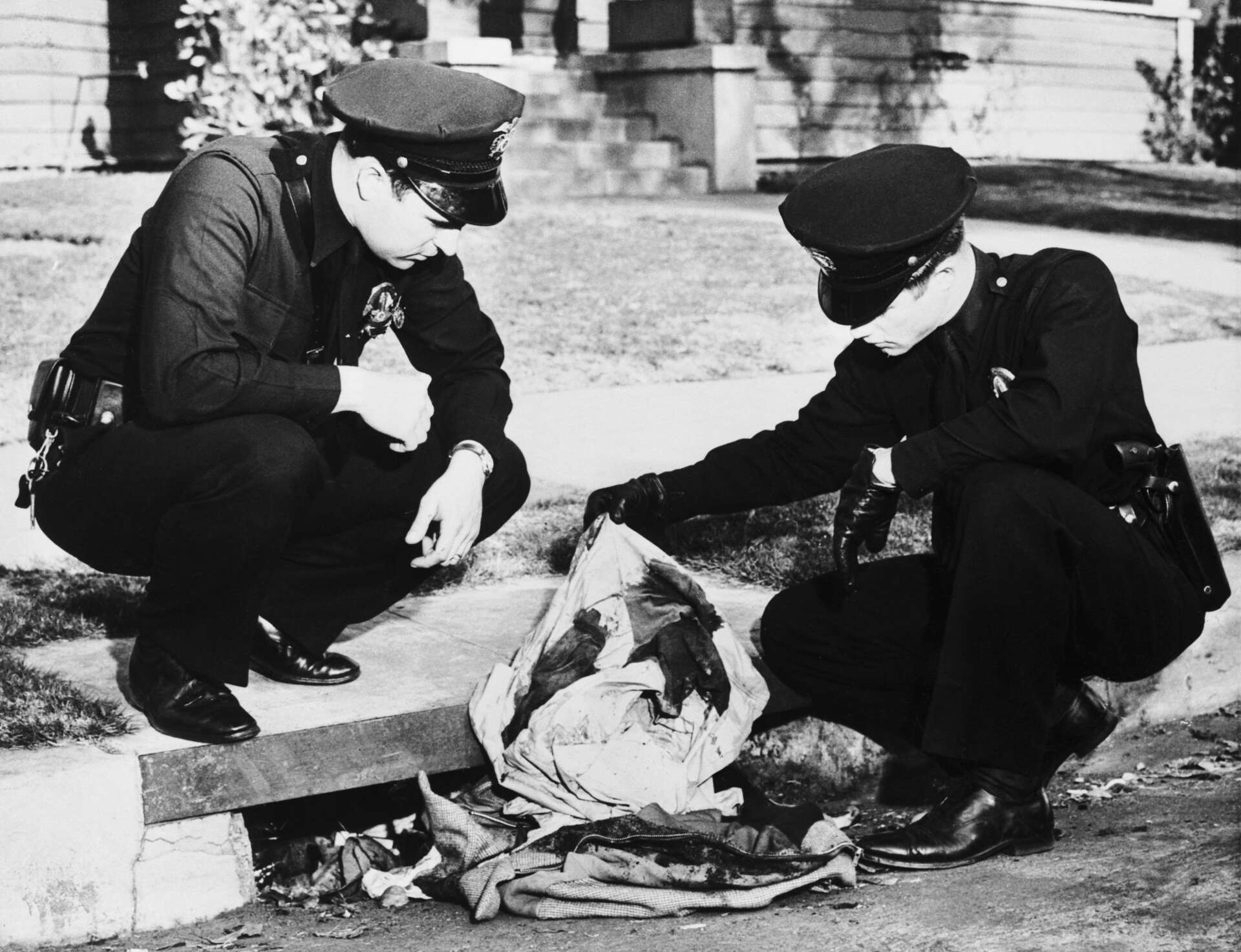
They examined Elizabeth’s final movements.
They tried to determine where she had been killed and who had enough knowledge or confidence to leave her body in such a calculated condition.
Then came the confessions.
Dozens of people claimed responsibility or inserted themselves into the investigation.
Many accounts were false.
Each one consumed time and complicated an already difficult case.
The publicity that might have helped detectives was also creating chaos.
And as the years passed, theories multiplied.
Doctors.
Criminals.
Acquaintances.
Strangers.
People connected to Hollywood.
Numerous names entered the story, but no one was convicted.
One suspect would become particularly famous decades later.
Dr. George Hodel.
Hodel was a Los Angeles physician who came under police scrutiny during the original era of the investigation, although he was never charged with Elizabeth Short’s murder.
Years later, his son Steve Hodel—a former LAPD detective—became convinced that his father had killed Elizabeth.
Steve pointed to his father’s medical background, aspects of the crime, and other circumstantial connections.
George Hodel’s striking Los Angeles residence, the Sowden House, also became deeply associated with the theory.
The idea generated books, documentaries, and enormous public interest.
But suspicion is not proof.
No court ever established that George Hodel murdered Elizabeth Short, and competing researchers have challenged parts of the theory.
That uncertainty defines almost every chapter of the Black Dahlia case.
There are suspects.
There are theories.
There are disturbing coincidences.
But there is no definitive answer.
And more than seven decades later, the central question remains exactly where it began.
Who killed Elizabeth Short?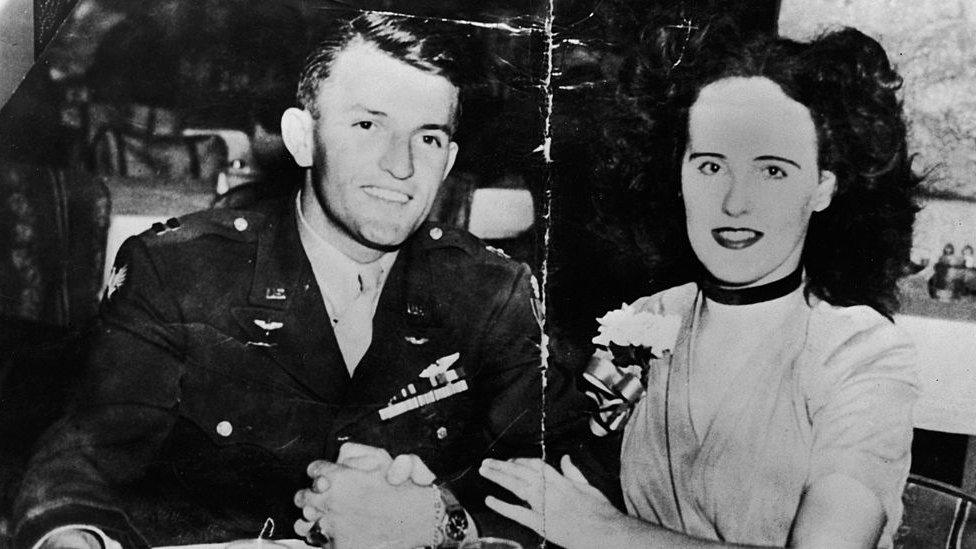
Perhaps that is why the case refuses to disappear.
It combines Hollywood dreams with something horrifying.
A young woman arrived in California hoping for a future.
Instead, her death became entertainment for newspapers and generations of true-crime audiences.
Her nickname became more famous than she ever was while alive.
And somewhere inside the mythology, Elizabeth herself was almost lost.
She was not a mysterious movie star.
She was not simply “the Black Dahlia.”
She was a 22-year-old woman whose life ended violently before she had the opportunity to build the future she wanted.
The investigation produced thousands of pages.
Countless interviews.
False confessions.
Suspects.
Books.
Films.
And theories that continue to appear decades later.
Yet none produced the one thing Elizabeth Short deserved most.
An answer.
The murder remains officially unsolved.
No definitive killer has ever been established.
And that may be the darkest part of the Black Dahlia story.
Los Angeles remembers the crime.
The world remembers the nickname.
But whoever killed Elizabeth Short was never brought to justice.