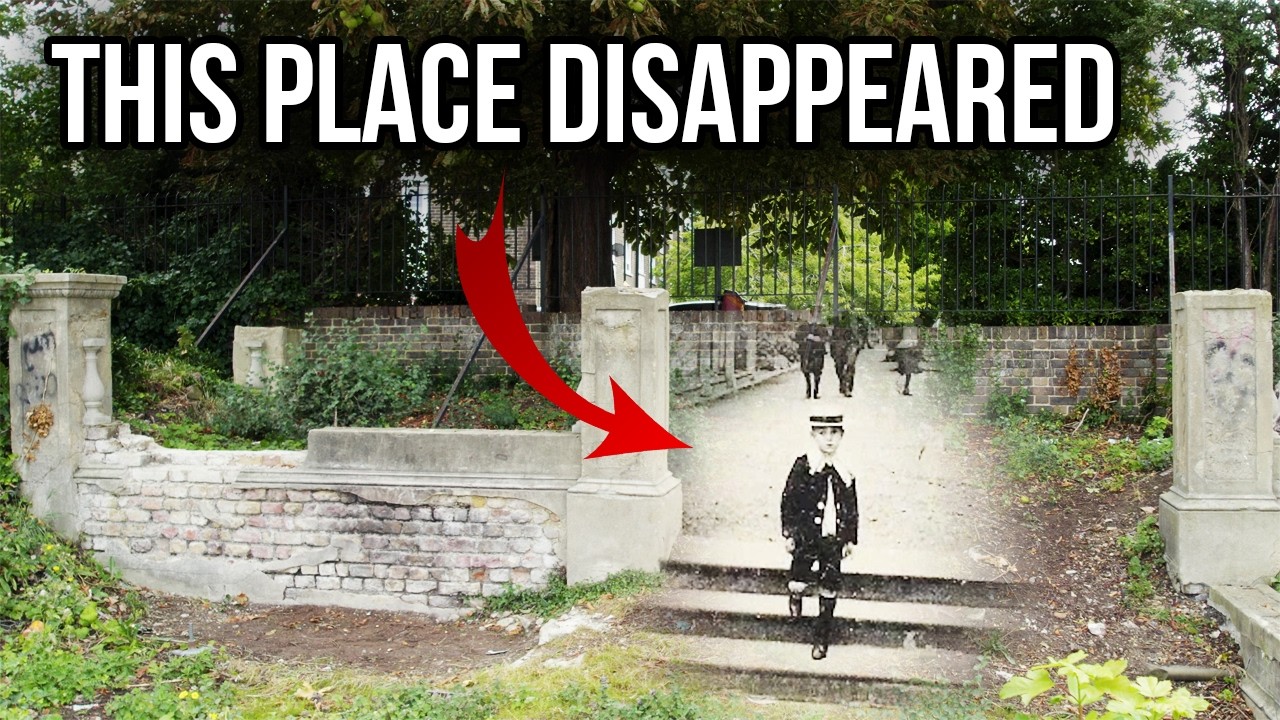
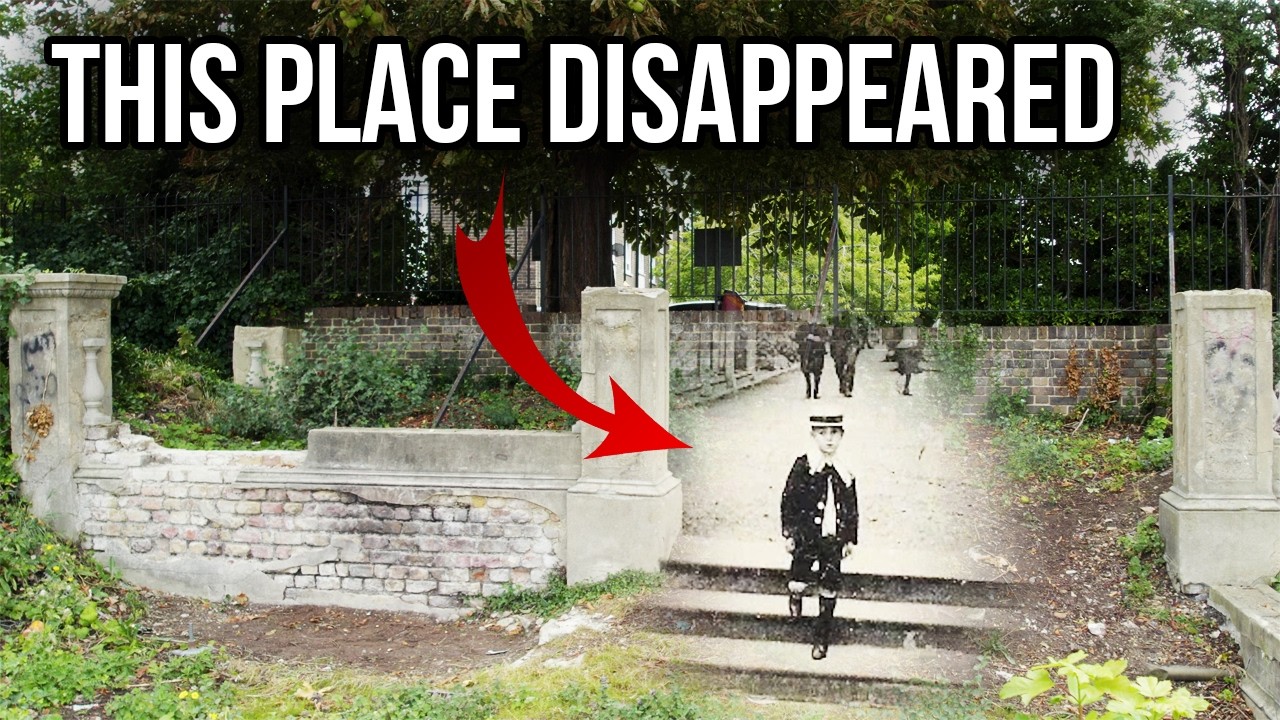
The final remnants of what was once hailed as the “Disneyland of Victorian England” have been all but erased from the landscape of Kent, leaving behind only a scattering of hidden ruins and a housing estate where over a million visitors a year once flocked to witness the spectacle of Rosherville Gardens.
Once a sprawling 16-acre pleasure ground carved into the chalk cliffs between Northfleet and Gravesend, the site now lies buried beneath modern flats and industrial concrete. A recent exploration of the area reveals that the grand entrances, the iconic clock tower, and the famous bear pit—once the beating heart of this Victorian leisure empire—have vanished, replaced by the mundane realities of 21st-century suburbia. The only surviving markers of the gardens’ former glory are a few crumbling sections of wall, a single decapitated statue, and a graffiti-covered plaque marking the old pier entrance, a stark contrast to the opulent destination that once drew Londoners down the Thames in their thousands.
 The story of Rosherville Gardens begins in the 1830s, a tale of entrepreneurial vision set against the backdrop of a disused chalk pit owned by the Rosher family. Desperate to offload the worthless wasteland, they leased the land to a businessman named George Jones in 1837. Jones, harboring aspirations of creating a cultured and educational retreat, formed the Kent Zoological and Botanical Gardens Company.
His initial plan was to build a sophisticated attraction, a hybrid of Kew Gardens and the Zoological Gardens in Regent’s Park, complete with rare plants and exotic animals. However, the high entry price and lack of entertainment proved a commercial failure, forcing a rapid pivot just a few years later. By 1841, the gardens were reborn as a pleasure park, swapping botanical lectures for jugglers, sword swallowers, and military bands, a move that finally secured their popularity.
The transformation was explosive. With the introduction of fireworks displays, a resident master of ceremonies, and the construction of iconic structures like the Gothic Hall—later renamed the Baronial Hall—Rosherville Gardens became the premier destination for day-trippers. The gardens were accessible via paddle steamers that docked at the dedicated Rosherville Pier, allowing thousands of Londoners to escape the smog of the capital for a day of revelry.
At its peak, the gardens attracted an estimated 14,000 visitors per week during the summer season, with the Prince of Wales himself reportedly visiting incognito. The main entrance on Birch Road was a grand affair, leading to a high terrace where a famous caged cockatoo would greet arrivals before they descended into the Italian Gardens, a meticulously landscaped area leading down to the infamous bear pit.
The layout of the gardens was as unique as its attractions. Squeezed between existing roads, the site was wide at the eastern end, narrowed dramatically in the middle, and petered out at the western edge. This unusual topography housed a variety of distinct zones.
 The entertainment district, located at the base of the cliff, featured the open-air theater, the Bijou Theater, and the Baronial Hall, where Baron Nathan, a dancing master and self-styled poet, held court. His famous blindfolded egg-dancing routine became a signature act until it was abandoned after spectators began stealing the eggs. Beyond the dancing platforms, the gardens transitioned into a “wilderness” area, a more natural space with a lake, a maze, and a gypsy tent where a fortune teller named Avis Lee reportedly earned a handsome living.
The cliffs themselves were honeycombed with caves, initially intended for animals but later used for bear dens and a hermit’s cave, while the iconic watchtower, perched on a jutting spur of chalk, housed a Peruvian mummy and offered panoramic views of the Thames for a penny.
Despite its success, the seeds of Rosherville’s destruction were sown in tragedy. In 1878, the Princess Alice, a paddle steamer that had just picked up passengers from the gardens, collided with a collier on the Thames, sinking in minutes and claiming the lives of between 600 and 700 people. The disaster, which occurred directly after a day at the gardens, cast a long shadow over the attraction.
The public’s trust in Thames paddle steamers was shattered, and the subsequent shift towards railway travel allowed day-trippers to venture further afield to coastal resorts. The clientele began to change, with reports of drunken brawls and cruelty to animals becoming more frequent, marking a decline in the gardens’ respectability.
 The gardens struggled on for a few more decades, but the glory days were over. In 1901, the owner declared bankruptcy, and the fixtures and fittings were sold off. The animals were disposed of; the bear, Rosie, was sold and ultimately shot when her new owner refused to keep her.
The gardens reopened under new management in 1903, but the magic was gone. The once-grand structures were repurposed or demolished, and the site became a shadow of its former self. The First World War delivered a final blow, and by the 1920s, the gardens were largely in ruins.
In 1939, the site was cleared for an industrial estate, with the chalk cliffs cut back and the iconic clock tower demolished, erasing the final physical vestiges of the 102-year-old attraction.
Today, the only clues to the site’s storied past are the hidden ruins and the memories preserved in historical photographs. The urban explorers who have managed to access the overgrown cliffside steps and tunnels provide a glimpse of what once was, but for the average visitor, the site is unrecognizable. The recent exploration of the area highlights just how complete the transformation has been.
 The grand terrace is now a car park, the Italian Gardens are a housing estate, and the bear pit, which was discovered during excavation for the new development, was simply buried again to protect its status as a listed structure. A modern art installation now stands where the bear pit once held a live bear, a symbolic but pale imitation of the original.
The decline and disappearance of Rosherville Gardens is a cautionary tale of changing tastes, technological progress, and the relentless march of time. It serves as a poignant reminder that even the most popular and beloved attractions are not immune to the forces of history. The site’s legacy, however, lives on in the tales of its eccentric entertainers, the grandeur of its fireworks displays, and the memory of a time when a trip down the Thames could transport you to a world of wonder and spectacle.
The final journey home from the site, as documented in the exploration, was fittingly made aboard the PS Waverley, the world’s last seagoing paddle steamer, a living relic of the very era that gave birth to Rosherville Gardens. As the steamer chugged past the site of the Princess Alice disaster, it served as a final, poignant link to a lost world of Victorian leisure and the gardens that once defined it.