Blood type is one of those biological facts most people memorize for a medical form and never think about again. But beneath the simple A, B, AB, and O labels lies a 20-million-year evolutionary mystery that scientists are only now beginning to fully unravel. The A and B blood groups did not evolve independently in each primate species. A landmark genetic study led by Laura Segurel at the University of Chicago traced the blood type gene across humans, chimpanzees, bonobos, gorillas, orangutans, and multiple monkey species.
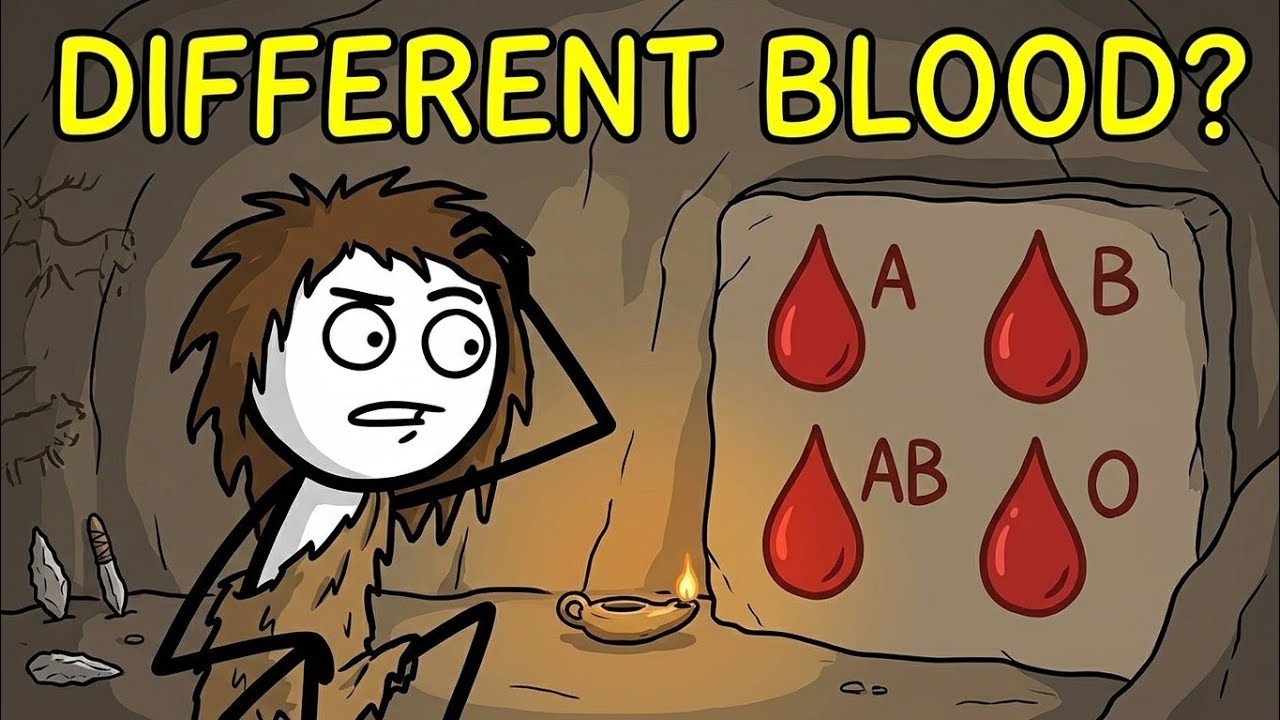
The researchers found that these variants were inherited from a shared ancestor that lived roughly 20 million years ago, long before the Homo genus existed. “Their evidence is rather convincing that this is a shared, very old capability that has remained throughout the divergence of the species,” said Martin Olsson, a transfusion specialist at Lund University in Sweden, commenting on the study. If these molecular features have been maintained across tens of millions of years and dozens of species, evolution must be keeping them for a reason. Blood types refer to sugar molecule structures, called antigens, that sit on the surface of red blood cells.
Type A cells display one flag, type B cells display another, AB displays both, and type O displays neither. The immune system maintains a precise registry of what is self and what is not. It automatically generates antibodies against blood type flags it does not carry. If type A blood enters a type B individual, the immune system launches an attack that can be fatal.
But the immune system did not evolve this aggression in anticipation of hospitals. Blood transfusion was not reliably survivable until Karl Landsteiner mapped the system in 1900. It was preparing for pathogens. Many parasites, bacteria, and viruses carry surface molecules that resemble human blood type antigens.
If a pathogen wears a convincing type A disguise, a type A individual’s immune system hesitates because it classifies the antigen as self. A type O individual carries anti-A antibodies permanently loaded and attacks immediately. The clearest documented example is malaria. Plasmodium falciparum, the most lethal malaria parasite, uses A and B antigens as anchors to clump infected red blood cells into rosettes that obstruct brain blood vessels.
Type O cells lack those structures, making rosettes smaller and less obstructive. A study of 567 Malian children found type O present in only 21% of severe malaria cases, compared to 44 to 45% among children with uncomplicated malaria and healthy controls. That translates to a 66% reduction in the odds of developing severe malaria for type O individuals. This sustained selective pressure is likely why type O is both the oldest major blood type variant and the most globally common today.
Malaria disproportionately killed type A and B individuals in endemic regions, generation after generation. As humans moved into colder climates where malaria pressure dropped, different pathogens took over. A study published in Scientific Reports examined genetic data from 22 ancient Homo sapiens individuals and 14 Neanderthal specimens. Researchers found that early humans spent roughly 15,000 years on the Persian Plateau, described as a genetic incubator, where new blood type variants emerged by chance and spread if they offered advantages against local diseases.
The global blood type map today reflects these ancient migrations. Type O dominates where malaria shaped survival. Type A is most common in Central and Northern Europe. Type B forms a belt from northern India through Central Asia into northern China.
AB remains rare everywhere. Then there are the Neanderthals. Researchers at Aix-Marseille University analyzed seven blood group systems across three Neanderthal genomes and one Denisovan genome, publishing in PLoS One. The Neanderthals had type O and carried A and B alleles, but their Rh system variants were peculiar.
They encoded partial forms of the antigens, missing molecular components found in complete versions in modern humans. When Homo sapiens arrived and interbred with Neanderthals, Neanderthal mothers carrying hybrid fetuses with complete Rh antigens from Homo sapiens fathers may have had immune systems that recognized those antigens as foreign and attacked them. Pregnancies would fail, hybrid offspring would die, and reproductive success among already-stressed Neanderthal populations would crash further. “Neanderthals have an RH blood group that is very rare in modern humans,” lead author Stephan Mazieres told Live Science.
The blood type incompatibility may have been part of why interbreeding with modern humans was ultimately more dangerous for Neanderthals than for us. The same trade-offs still run inside modern human bodies. Type O protects against severe malaria but creates elevated vulnerability to severe cholera. A gastrointestinal outbreak in Scotland in 1996 found that 87.
5% of patients who died were type O. Type A individuals face elevated risk from certain cardiovascular conditions and some cancers. Researchers have found associations between blood type and COVID-19 severity, venous thromboembolism risk, and gastric cancer rates. None of these associations are simple or fully understood, but none appear coincidental either.
Every one of your approximately 25 trillion red blood cells carries on its surface a molecular record of your ancestors’ worst enemies. Your blood type was shaped by the parasites that killed people with different flags, by plagues that swept through ancient populations, by migrations through disease incubators, and by interbreeding events between species whose blood was incompatible. The answer to why humans have different blood types is that the specific combination of molecular flags on your red blood cells was, at some point in your lineage’s history, what the most dangerous pathogen of the moment was worst at attacking.
Your ancestors carried that combination, survived when others did not, and passed it forward.