When a wild animal is caught in fishing line or trapped in a snare, and a human approaches to help, does the animal understand what is happening? The question sounds simple, but the answer opens into one of the most fascinating areas of animal cognition research. For centuries, the dominant scientific view held that animals were biological machines that respond to stimuli without deeper understanding. A rule known as Morgan’s Canon, established in the late 1800s, instructed scientists to never attribute complex mental processes to animals if simpler explanations could account for their behavior.
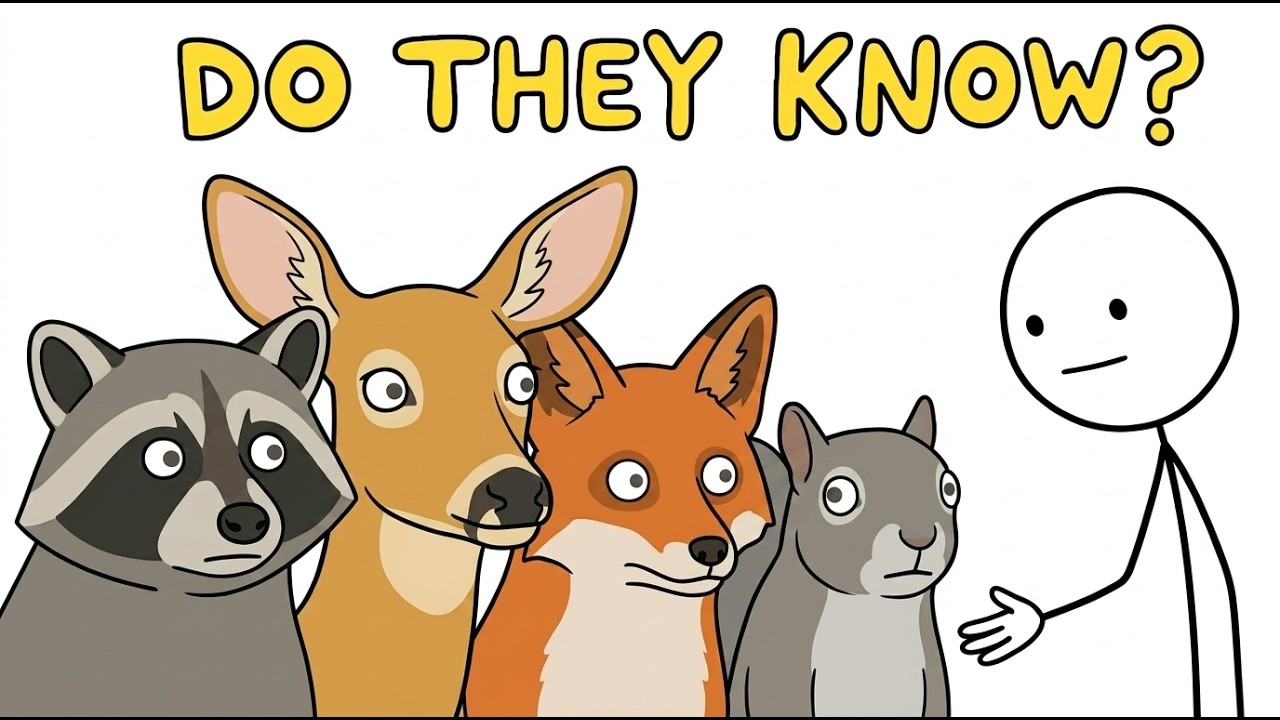
That principle encouraged scientific caution, but researchers now say it led to a massive overcorrection, dismissing the possibility that animals have rich inner lives, process intentions, or read social dynamics. The evidence that animals do far more than react has accumulated across decades and species. Wild dolphins have been documented actively seeking help from human divers in numerous verified incidents. One of the most famous cases occurred off the coast of Hawaii in 2013, when a wild bottlenose dolphin approached a group of night divers with a fishing hook embedded in its pectoral fin and a long line wrapped around it.
The dolphin swam directly to one specific diver, Keller Laros, and held still while he worked on removing the hook. When the line was tangled in a way that made it hard to reach, the dolphin repositioned its own body to give the diver better access. After the hook was removed, the dolphin stayed near the divers for several more minutes before swimming away
Corvids, ravens and crows, present even more striking evidence. Researchers at the University of Washington conducted experiments where they wore specific masks while trapping crows, then walked around campus wearing either neutral masks or the trapping mask at different times.
The crows not only remembered the threatening face, they recruited other crows, including those that had never witnessed the trapping event, to mob that mask. They built reputational profiles of humans, shared them socially,and updated them over time. But the flip side is equally important. Crows also remember kindness.
People who regularly feed crows report receiving gifts, shiny objects, buttons, and small pieces of glass, left in exchange in the places where food usually appears
Skeptics raise a legitimate concern. Maybe animals in distress are simply too exhausted or traumatized to flee, and their stillness does not indicate understanding. Researchers acknowledge that acute stress responses, including a behavior called tonic immobility, can make an animal appear calm and cooperative when it is actually in a state of involuntary shutdown. Wildlife rehabilitators, who work with injured animals daily, say there is a qualitative distinction between an animal in tonic immobility and one that has truly settled.
In genuinely relaxed animals, breathing, muscle tone, and eye behavior change, and the animal may lean into contact rather than simply enduring it. One raptor rehabilitator with over 15 years of experience described birds that, by the time they were ready for release, would turn their head toward the sound of her footsteps specifically, not toward strangers or other workers, because she had consistently represented safety and predictability
A series of experiments with wild-born capuchin monkeys in Japan tested whether animals evaluate humans based on observed treatment of others, not just personal experience. Monkeys watched scenarios where a human either helped or obstructed an attempt to reach food, sometimes involving a completely different third party. Afterward, the monkeys overwhelmingly chose food from the helpful human and rejected food from the obstructive one, even when the obstructive behavior had been directed toward a stranger rather than toward them personally.
The monkeys appeared to be making moral evaluations of humans based on witnessed behavior toward others
Perhaps the most dramatic documented case of a wild animal responding to rescue effort involved a humpback whale off the coast of San Francisco in December 2011. The whale was entangled in crab trap lines that were cutting into its body, wrapped across its mouth and pectoral fins. It had been strugglingfor what appeared to be hours. A team of divers spent over an hour working around the 50-foot, 50-ton animal, cutting through thick lines with specialized knives.
The whale held completely still throughout the procedure. When the last line was cut, the whale did not immediately swim away. It circled back and approached each diver individually, slowly, deliberately. One diver described being nudged gently with what felt like intentional contact.
Another said the whale positioned itself so its eye was level with his face and held eye contact. Marine biologists note alternative explanations, including that the whale may have been recalibrating its position after hours of restriction, or investigating the neoprene-covered divers. But they also note that the whale distinguished between divers, behaving differently toward the individuals who had worked on freeing it than toward the surrounding water
Evolutionary biologists point out that animals that live in complex social groups, dolphins, elephants, primates, corvids, and wolves, need sophisticated cognitive mechanisms for reading intentions, evaluating hierarchies,and building working models of other minds. That machinery, designed to read behavioral cues like approach without threat posture, slow movements,and non-aggressive vocalizations, may simply transfer to humans because the underlying signals read the same regardless of species.
A dolphin reading a diver’s body language may be doing something very ordinary, applying a social-intelligence tool designed for its own species to an unusual subject
Wildlife rehabilitators also describe the limits of this phenomenon. Some animals never relax in human care, remaining at maximum threat response from intake to release. They show no sign of registering the help being given, and they leave without a backward glance on release day. Researchers say they do not know whether those animals lack the cognitive capacity to recognize helping intent, whether trauma overwhelms any capacity for nuanced processing, or whether it is simply individual variation.
There is also a darker complication. Some animals become too comfortable with humans, learning to associate them with safety and food, and carrying that association back into the wild where it makes them dangerously approachable and vulnerable to people who do not mean well. Serious wildlife rehabilitation therefore involves deliberate management of human contact, feeding animals from behind barriers, using puppets for some species rather than bare hands, and minimizing exposure to human voices, faces,and scent. Rehabilitators must help without letting the animal know it is being helped by a human specifically
The question of whether wild animals understand human kindness points toward a conclusion that researchers describe as genuinely astonishing.
Wild animals show sensitivity to helping intent in real, measurable,and behaviorally observable ways. They calibrate social trust based on experience. They carry memories of kindness that influence behavior long after the moment has passed. The crow remembers a face for years.
The dolphin repositions its body to help a diver help it. The capuchin monkey refuses food from someone it watched be unkind to a stranger. The whale circles back to make eye contact
These behaviors have consequences for humans as well. Every encounter a person has with a wild animal contributes to that animal’s data set on what humans are,and those data sets spread through corvid warning networks, elephant herd memory,and the behavioral modeling of young animals watching adults.
When a person stops to move a turtle off a road, calls a wildlife hotline about an injured bird, or slows a car for an animal crossing, that action echoes through social networks humans cannot see. And somewhere, a crow is watching, running a facial recognition algorithm it built entirely by itself,filing the person in a mental folder, deciding what kind of creature they are