Barry Gibb spent more than 60 years on stage, but the most important story of his life never played out under the spotlight. It happened quietly at home. For decades, rumors swirled about his wife, Linda—claims that she once forced him to choose between his marriage and the Bee Gees. Now, at 79, after losing all three of his brothers, Barry has finally opened up about the woman who stood beside him through everything, and the truth is far more powerful than the gossip ever was.
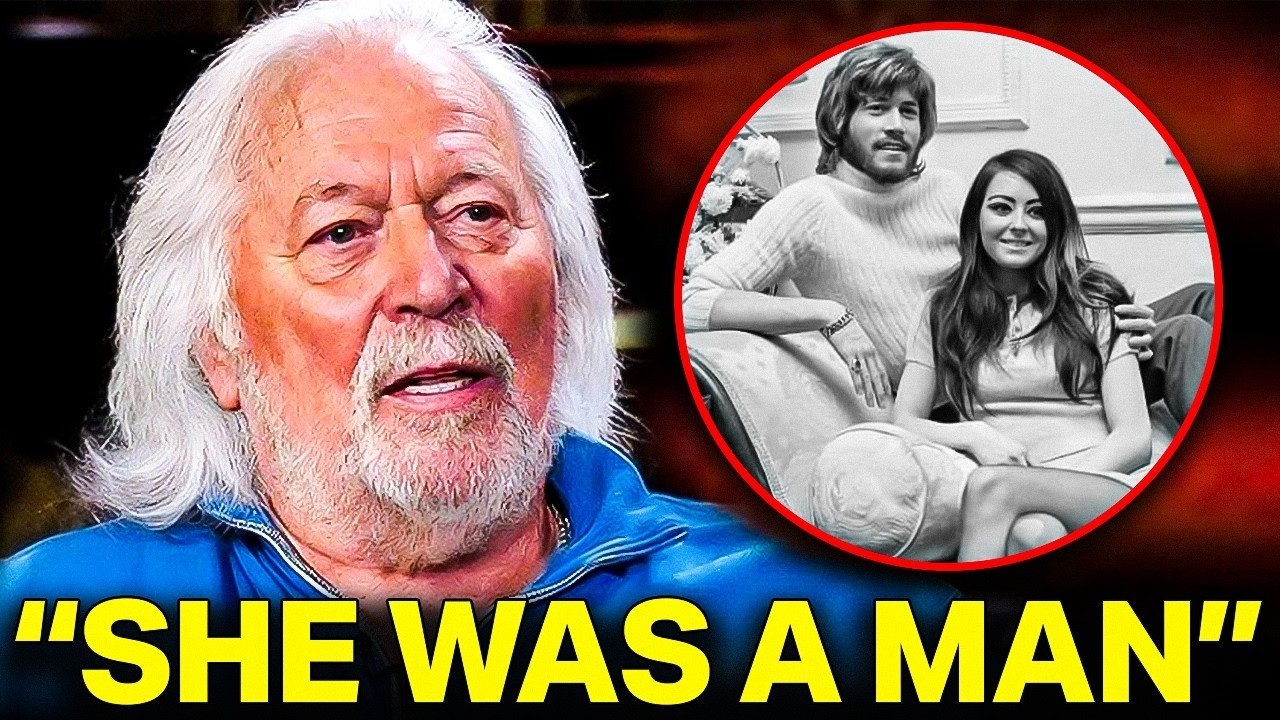
Barry was born on September 1, 1946, on the Isle of Man. Music surrounded him from the beginning, as his father, Hugh Gibb, was a drummer. But stability did not. The family moved constantly during Barry’s childhood, and by the time they settled in Manchester in the early 1950s, Barry already felt disconnected from normal routines.
School became something he hated, with reports claiming he skipped classes for nearly an entire year. That rebellious energy eventually found a direction. In 1955, Barry formed a group with his younger brothers Robin and Maurice, calling themselves the Rattlesnakes. At first, they performed simple skiffle songs inspired by artists like Cliff Richard and The Everly Brothers.
But something bigger was already forming. In 1958, the Gibb family moved to Australia, settling near Brisbane. Life there was far from glamorous. The brothers performed anywhere they could, including Speedway events and outdoor gatherings where crowds had not even come for music.
Sometimes they sang from the back of trucks just to get attention. That experience hardened them, teaching Barry how to command a room, survive pressure, and keep pushing no matter who was listening. Eventually, the Bee Gees were born. While music gave Barry direction, his personal life remained complicated.
In 1966, he married Maureen Bates while still very young. The relationship quickly became troubled, and before long, the marriage collapsed. That failure revealed something important about Barry—beneath the ambition and fame, he desperately wanted stability and a home that felt safe and permanent. Then everything changed in 1967.
The Bee Gees returned to England carrying demo tapes and enormous dreams. Their song “New York Mining Disaster 1941” sounded so similar to the Beatles that some radio DJs believed it was secretly a Beatles record. Overnight, attention exploded around them. During that same period, Barry met Linda Gray, beautiful, confident, and already used to attention after being crowned Miss Edinburgh.
Barry later recalled seeing her across the room and instantly feeling something special. Their first conversations were simple and natural, but one strange detail from those early days became legendary. According to stories from the time, Barry and Linda once shared a private moment inside a Doctor Who TARDIS prop backstage. It sounded playful and innocent, but for Barry, it became the beginning of something life-changing.
As the Bee Gees rose higher, pressure inside the group intensified. Barry carried much of the songwriting responsibility, and the pace became brutal. He later admitted that many songs were written while using amphetamines and alcohol just to keep functioning. Behind the polished harmonies was exhaustion, stress, and nonstop pressure.
By 1969, tensions between Barry and Robin had grown so severe that Robin temporarily left the group. At the same time, Barry’s first marriage completely fell apart. His career looked unstoppable from the outside, but privately, everything was unstable. Then Barry made one of the fastest and most important decisions of his life.
His divorce from Maureen was finalized in July 1970. Just six weeks later, on his 24th birthday, Barry married Linda. That timeline shocked many people, but it showed something powerful—Barry knew exactly where he wanted his life to go, and Linda was already becoming the steady force he had been searching for his entire life. After marriage, Linda stepped away from public attention almost completely.
While Barry lived inside the chaos of fame, Linda focused on building a stable home and raising their five children. That decision may have saved Barry’s life. The Bee Gees world was surrounded by temptation, excess, and addiction. Barry later admitted the group relied heavily on pills and alcohol during their peak years, but Linda refused to let that chaos enter their home.
Barry openly revealed that if drugs appeared in the house, Linda would flush them down the toilet. That one detail explained everything. She was not interested in glamorous celebrity behavior. She created boundaries and refused to let Barry disappear into the same destruction that consumed so many others around him.
Soon, the Bee Gees reached heights almost nobody had ever seen before. When Saturday Night Fever exploded in the late 1970s, the Bee Gees became global superstars. The soundtrack sold millions upon millions of copies and completely dominated the charts. Songs like “Stayin’ Alive,” “Night Fever,” and “How Deep Is Your Love” became cultural landmarks.
But behind the scenes, the pressure grew darker. Barry later admitted many of those legendary songs were created during periods fueled by stimulants and exhaustion. What audiences heard as smooth perfection was often being built inside chaos. And that is where Linda’s role became even more important.
People loved the rumor that she once gave Barry an ultimatum. But the truth was quieter and far more powerful. There was no dramatic Hollywood showdown, no screaming fight. Instead, Linda protected Barry through thousands of smaller moments repeated over decades.
She refused to normalize addiction inside their home. Barry later admitted something heartbreaking when reflecting on his brothers. He said, “I was lucky. ” Those words carried enormous weight because Barry understood exactly why he survived while so much around him collapsed.
Then came the backlash. In 1979, Disco Demolition Night turned disco music into a public target. Almost overnight, the Bee Gees went from dominating the world to becoming symbols of something people suddenly mocked. Radio stations stopped playing their songs.
Critics attacked them relentlessly. For Barry, the experience was devastating. Saturday Night Fever had made him legendary, but it also trapped him inside an image the public later rejected. And during those difficult years, Linda remained beside him.
When fame faded, she stayed. When the industry moved on, she stayed. When the spotlight became painful instead of glamorous, she stayed. Barry survived partly because he never stopped writing.
Even after the Bee Gees faced backlash, he continued creating hit songs for stars like Barbra Streisand, Kenny Rogers, and Dolly Parton. But then the tragedies inside his family began. In 1988, his younger brother Andy Gibb died at just 30 years old after years of drug abuse weakened his body. Then came Maurice’s sudden death in 2003 during emergency surgery.
And finally, Robin died in 2012 after battling cancer. One by one, Barry lost every brother he had built his life beside. Those losses shattered him. And through every funeral, every hospital visit, and every moment of grief, Linda remained there.
She watched Barry lose almost everyone who had shaped his world. That is why Barry speaks about her differently now—not like a celebrity wife, not like a glamorous figure standing beside fame, but like the person who helped keep him alive emotionally. In 2018, Barry was knighted at Buckingham Palace. It should have been one of the proudest moments of his life, but Barry admitted he nearly fell over from emotion.
Standing beside him was Linda—not just during the fame, not just during the success, but after decades of grief, survival, and endurance. Later, during his emotional Glastonbury performance, Barry publicly dedicated the moment to Linda. For a man who spent most of his life protecting his private world, that meant everything. By then, the message was clear: Linda was not simply part of Barry Gibb’s story.
She was one of the main reasons the story survived at all. In 2021, Barry released Greenfields, a softer country-inspired album revisiting Bee Gees classics. The project carried a very different feeling from the glittering disco era that once defined him. It sounded reflective, older, haunted by memory, but it also showed something remarkable—even after losing his brothers, Barry kept going.
And once again, Linda was credited as one of the people encouraging him to continue creating. That is why the real story behind Barry and Linda matters so much. The tabloids wanted a scandal. The truth was endurance.
Linda did not save Barry with one dramatic ultimatum. She saved him through consistency, boundaries, honesty, and decades of refusing to let fame destroy their family. And maybe that is the most surprising part of Barry Gibb’s legacy. After all the awards, records, and global success, the thing he seems to value most is not the spotlight.
It is home. Barry and Linda celebrated 55 years of marriage in 2025, something almost unheard of in the entertainment world. Together, they built a life strong enough to survive fame, addiction, backlash, heartbreak, and unimaginable loss. Barry once explained the secret in the simplest way possible.
He said Linda never wanted to be famous. She wanted to be Linda. And in the end, that may have been exactly what saved him.