Studies of the Hadza people in northern Tanzania have upended a long-held assumption about why ancient humans stayed lean. Researchers expected that these hunter-gatherers, who cover vast distances on foot daily and live without modern conveniences, would burn dramatically more calories than sedentary Westerners. They don’t. A study published in PLOS One found that total daily energy expenditure among the Hadza was statistically indistinguishable from adults in the United States, the United Kingdom, the Netherlands, and Japan.
This happens because of metabolic adaptation. The body behaves less like a simple machine that burns more fuel with more output and more like a cautious accountant. When physical activity increases, the body quietly reduces energy spent on other functions—basal metabolic rate, certain cellular maintenance, and immune activity—to keep the total daily budget nearly the same. A Hadza woman walking miles across the savanna and digging for tubers burns roughly the same calories as an American woman sitting at a desk for eight hours.
The implication is significant. Physical activity alone was never the primary reason ancient humans remained lean. The real constraint was scarcity. Anatomically modern humans, Homo sapiens, lived between roughly 300,000 and 10,000 years ago as hunter-gatherers with wildly varied diets.
They ate when food existed and often went days or weeks without it. Without a prolonged caloric surplus, the body cannot store enough fat to reach clinical obesity. Scarcity was doing the heavy lifting. The ancient human body was not neutral about fat storage.
It was aggressively wired to accumulate it. The thrifty gene hypothesis, first proposed by geneticist James Neel in 1962, holds that natural selection favored individuals who efficiently stored energy as fat during periods of abundance because those individuals survived the inevitable famines. Those genes became the norm in every human alive today. A stark natural experiment illustrates what happens when that biology meets a new food environment.
The Pima people of Arizona lived for thousands of years as farmers and foragers in the Sonoran Desert. They were lean and active. In the late 19th century, upstream settlers diverted the rivers they relied on, collapsing their traditional farming systems. The U.
S. government stepped in with food assistance dominated by refined flour, lard, canned goods, and sugar. Within one or two generations, the Pima developed some of the highest rates of obesity and type 2 diabetes ever recorded in a human population. Their genetics had not changed.
Their food environment had. The Pima who lived across the border in the Sierra Madre Mountains of Mexico, the same ethnic group with the same ancestral DNA, continued eating a traditional diet. They remained significantly leaner and metabolically healthier. The thrifty gene became a liability only when the environment it was designed for ceased to exist.
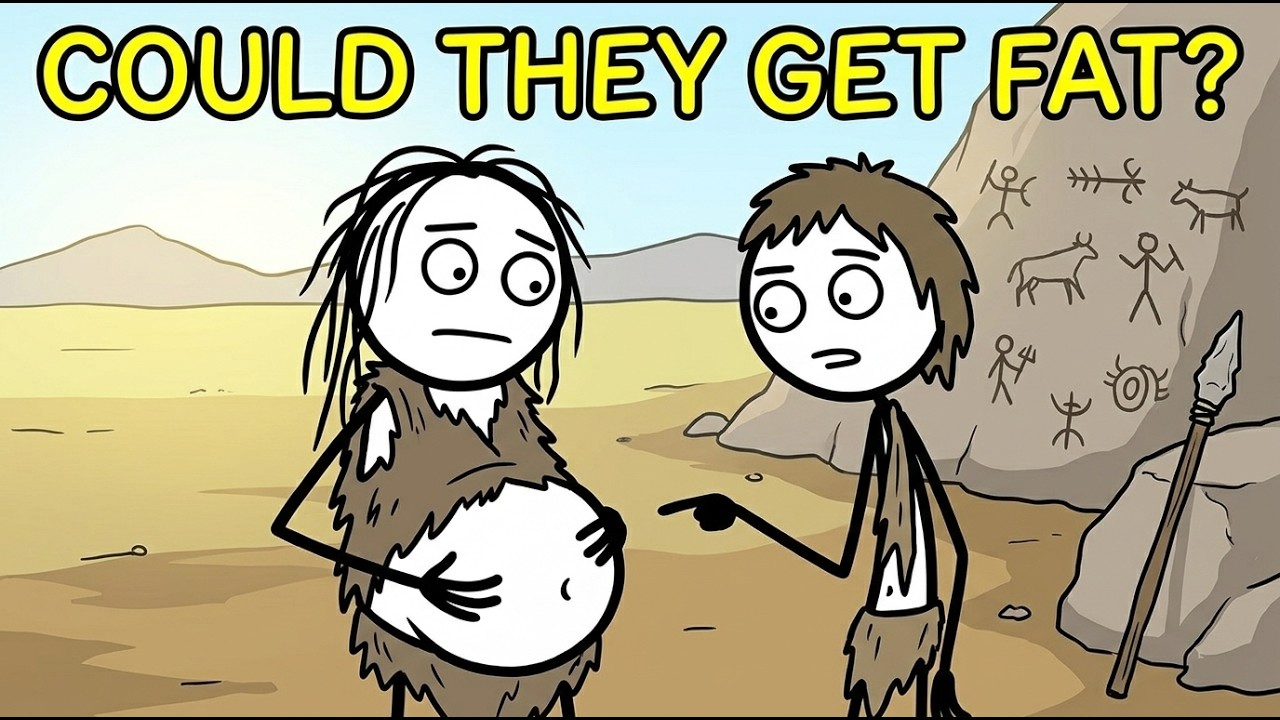
Could ancient humans become obese in their own environment? Almost certainly not. Coastal and riverine populations occasionally had access to concentrated seasonal abundance, like salmon runs in the Pacific Northwest. It is biologically plausible that individuals could carry more body fat during such periods.
But even rich natural food engages satiety signals. Fat in wild salmon triggers hormonal responses that signal fullness. Protein in game meat is satiating. Fiber in tubers slows digestion.
Nature never produced a bliss point food—the calibrated combination of salt, fat, and carbohydrate in ultra-processed products that maximizes pleasure while minimizing fullness signals. Only an industry that profits from continued consumption has that incentive. The archaeological record supports this. Skeletal remains from Paleolithic hunter-gatherers show generally impressive metabolic health: high bone density, minimal cavities, no evidence of chronic metabolic disease.
After the agricultural transition around 10,000 years ago, the record shifts. Average height dropped, bone density decreased, cavities appeared with new frequency, and signs of nutritional deficiency emerged. Agriculture created the first prolonged caloric surplus, removing the biological constraint that had kept the thrifty gene in check. Hunter-gatherers do show higher muscle mass and lower body fat percentages than modern sedentary populations.
Older Hadza adults outperform much younger Western adults on cardiovascular fitness measures. But research suggests that if the Hadza gained access to a Western diet while maintaining their traditional lifestyle, they would still gain weight. The calorie math would shift on the intake side, not the burn side. The answer to whether ancient humans could become obese is that they almost certainly could not in their own environment.
Their bodies desperately wanted to store fat, but the world would not provide enough raw material to do so at scale. Dropped into the modern food environment—ultra-processed products engineered to defeat satiety, sedentary work, disrupted sleep, chronic stress, and delivery apps—that same ancient human would be just as vulnerable as anyone today. Possibly more, having no cultural framework for restraint or understanding of serving sizes. Every ancient instinct would respond to a drive-thru menu as the greatest caloric windfall in the history of the species.
We carry the same genes, the same metabolic architecture, the same thrifty biology as a Homo sapiens from 48,000 BCE. The body that evolved to survive scarcity is navigating a world of engineered abundance. Difficulty stopping after a few chips is not a character flaw.
It is a nervous system that evolved to maximize caloric intake encountering food specifically designed to prevent satisfaction.