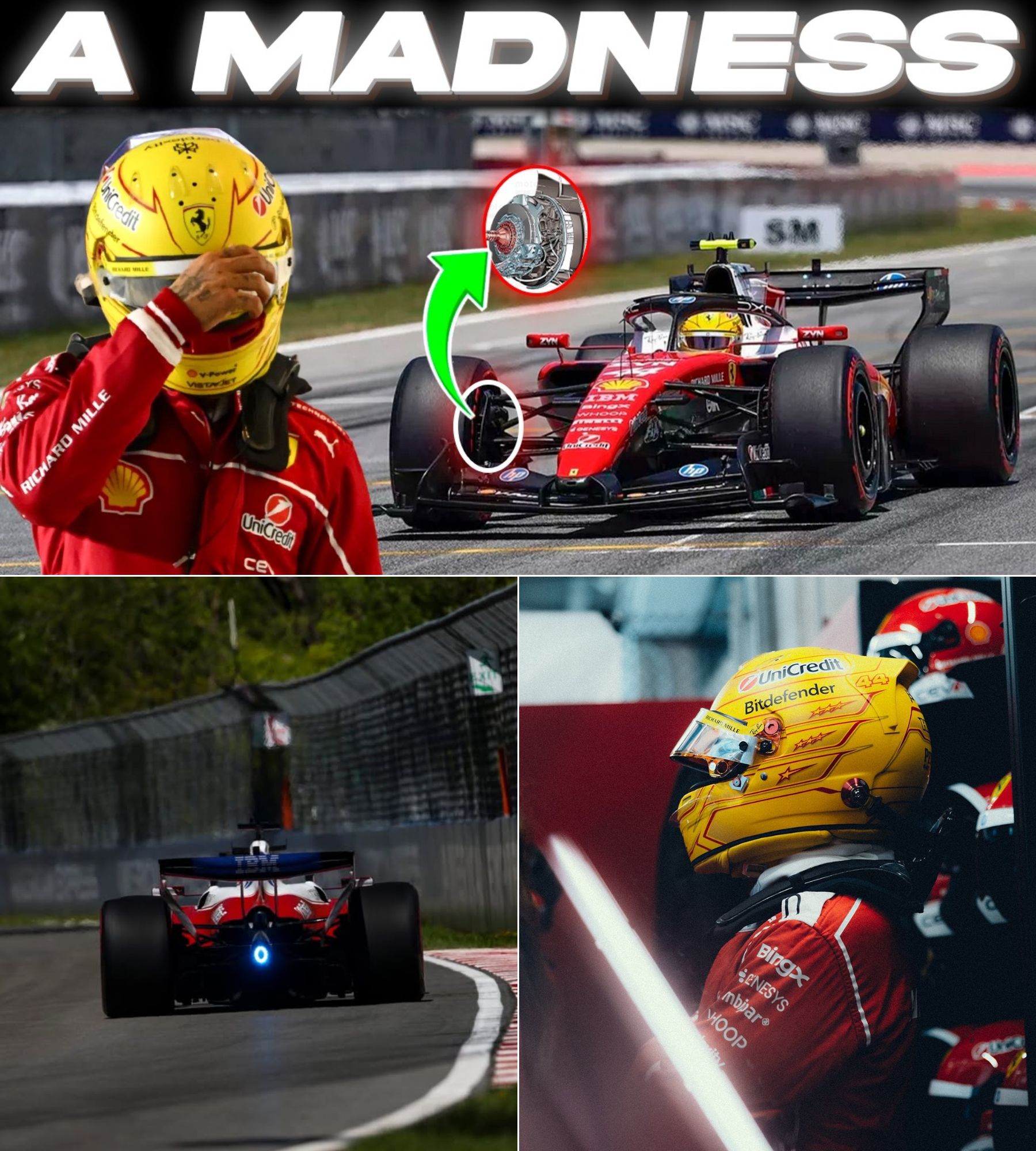
Ferrari’s recent struggles at the Austrian Grand Prix have raised serious concerns about the team’s championship aspirations. Charles Leclerc’s candid remarks about tire degradation revealed a troubling chain reaction that could threaten everything they’ve worked for this season. The question now looms: is this a one-off setback or a sign of deeper issues?

Leclerc, who started the race in second place, noted that the problems were not merely due to a single corner or an unfortunate setup. Instead, he pointed to a broader issue affecting the car’s performance. Ferrari was losing valuable time on the straights while the corners failed to deliver the expected results. The rear tires were overheating, leading to a loss of grip, which ultimately diminished their race pace just when they needed it most.
After Lewis Hamilton’s recent victory in Spain, expectations were high for Ferrari to prove they were back in contention. With two cars in the top three, the mood in the garage was optimistic. However, Austria unveiled a troubling reality about the SF-26 that could not be ignored. A car might shine for a single lap, but if it can’t maintain that performance over a race distance, it becomes a liability.
Leclerc’s warning was particularly alarming because it indicated that Ferrari’s tire degradation was interconnected with other performance weaknesses. The car struggled on the straights and failed to recover in the corners, creating a vicious cycle that put immense stress on the tires. Each attempt to regain lost time only exacerbated the issue, leading to an even greater decline in grip.

The qualifying session may have painted a rosy picture, but the race revealed the harsh truth. A single fast lap can mask underlying problems, but a Grand Prix demands consistency and endurance. Ferrari found themselves unable to keep the tires alive, which shifted their strategy from one of aggression to mere survival.
With Leclerc in a prime position to challenge for the lead, the team should have had the upper hand. Instead, they were forced to rethink their approach, prioritizing tire management over outright speed. This reactive stance is a dangerous place for any team, especially one with championship ambitions.

The underlying issue is not just tire wear; it’s the interconnectedness of Ferrari’s performance weaknesses. The track at the Red Bull Ring demands a car that can excel in both acceleration and cornering, and Ferrari’s struggles in these areas were painfully evident. The pressure to perform only intensified as rivals sensed vulnerability.
Leclerc’s insights are not just a reflection of frustration; they highlight a critical moment in the championship race. The team must now navigate the fine line between belief in their potential and the pressure of reality. If they can’t address these issues, the fear is that the promising pace seen in qualifying could quickly fade away.

Ferrari’s next steps are crucial. They must transform Leclerc’s qualifying speed into a race-winning advantage, ensuring that their performance remains strong throughout the entire race. The challenge lies in creating a car that can withstand the rigors of competition, responding effectively even under pressure.
As the team grapples with these revelations, the stakes have never been higher. The hidden problems are now out in the open, and the pressure to respond is mounting. Will Ferrari rise to the occasion, or will Austria be remembered as a pivotal moment in their title hopes?