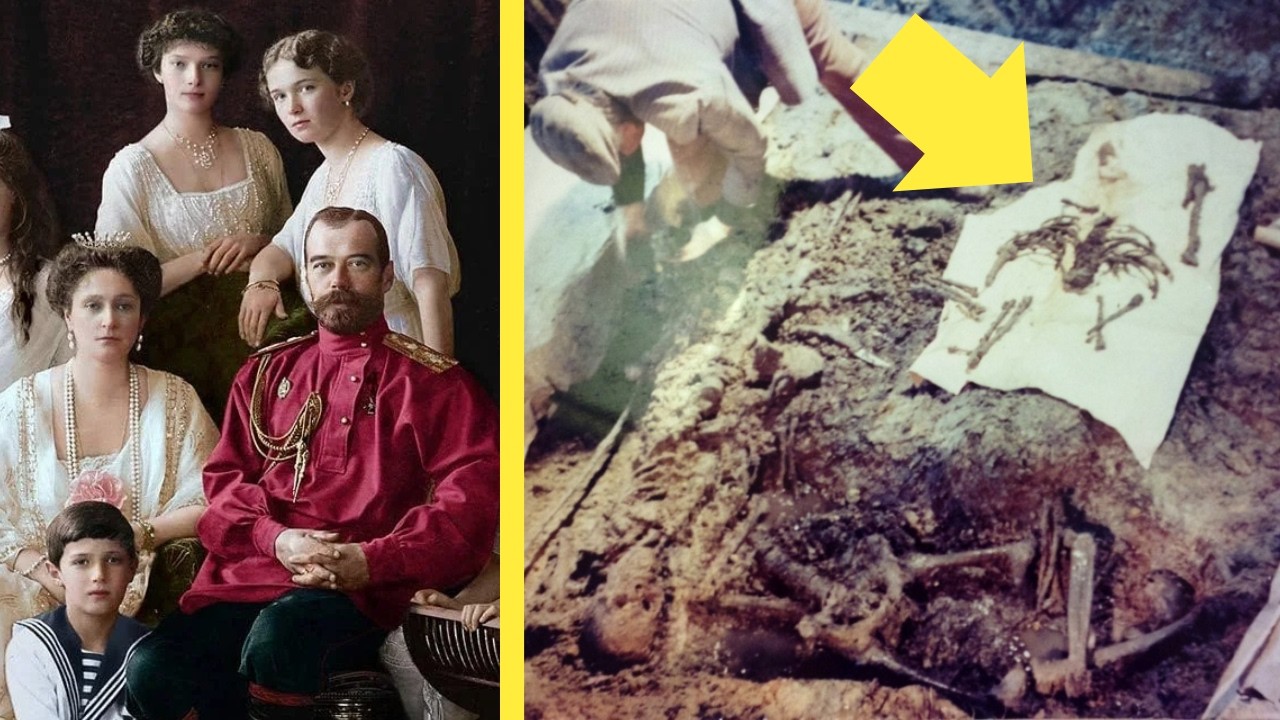
In a monumental breakthrough, the long-hidden truth behind the fate of Russia’s last royal family has been finally unveiled as forensic teams opened the Romanov graves near Yekaterinburg. Centuries of conspiracy and mystery now yield to revealing DNA evidence confirming the tragic 1918 execution and burial of Tsar Nicholas II’s entire family.
The story begins amid revolutionary chaos. In July 1918, Tsar Nicholas II, his wife Alexandra, their five children, and loyal servants were executed by Bolshevik forces inside the Ipatiev House. This brutal act, intended to erase Imperial Russia’s bloodline, ignited decades of rumors questioning if any Romanovs had survived or if the Soviet regime obscured the truth.
For years, Western fascination grew around possible survivors, fueled by incomplete Soviet accounts and sensational claims such as that of Anna Anderson, who alleged she was Grand Duchess Anastasia. These stories captured imaginations worldwide but lacked definitive proof, keeping the mystery alive through much of the 20th century.
The collapse of the Soviet Union in 1991 opened new possibilities. Secret burial sites identified by amateur historians in the late 1970s could finally be examined openly. Excavations recovered nine bodies believed to be Nicholas, Alexandra, three daughters, the family doctor, and servants—yet two children’s remains were missing, intensifying lingering doubts.
Experts employed cutting-edge DNA testing, comparing samples from the remains with living relatives—including Prince Philip—to confirm identities. Scientific results irrefutably matched the Romanovs, exposing bullet wounds, acid damage, and burn marks consistent with a violent execution and attempted cover-up by Bolshevik killers.
The verified discovery culminated in a solemn 1998 reburial ceremony with state honors, signaling Russia’s reckoning with a dark chapter long overshadowed by Soviet propaganda. President Boris Yeltsin publicly condemned the murders, marking a dramatic shift in official attitudes toward the Romanov legacy.
Yet controversy persisted. Skeptics within the Russian Orthodox Church and monarchist circles questioned DNA findings, holding onto survival myths. This debate was quashed in 2007 when a secondary grave was uncovered containing the remains of the missing children, Alexei and one daughter—most likely Maria. DNA tests sealed the fate of any speculation.
Further examinations authorized in 2015 deepened forensic certainty. Scientists directly compared the bones to Tsar Alexander III’s remains, reaffirming the identities within. These rigorous modern analyses eradicated remaining doubts, conclusively solving a historical enigma that haunted Russia and the world for nearly a century.
The Romanov graves stand as a pivotal forensic milestone. More than a cold scientific achievement, the uncovering symbolizes Russia confronting its turbulent past, exposing the layers of political violence, secrecy, and propaganda that once sought to silence this royal tragedy forever.
Beyond identification, the grim findings evoke the human cost behind the fall of an empire. The chaotic, brutal nature of the executions—jewels as bulletproof armor, frantic attempts to conceal the bodies—tells a harrowing story of desperation and fear amid revolutionary upheaval.
This historic revelation reverberates globally, closing a dramatic saga of imperial collapse, brutal revolution, and myth-making. It demonstrates how forensic science can pierce shrouds of mystery, bringing clarity and closure generations after silence and secrecy reigned.
The Romanov case is now a profound lesson in the endurance of truth despite political agendas. The graves, once clandestine, now stand as a stark testament to history’s unstoppable march and humanity’s relentless pursuit of justice and knowledge.
As Russia continues to wrestle with its complex identity, the opening of these graves offers a rare moment of reckoning and reflection on the price of power, revolution, and the inescapable shadows they cast across time.
Today, the legacy of the Romanovs is no longer fiction or folklore but a documented reality etched in bones and DNA, reshaping public memory and historical discourse about a dynasty extinguished a century ago but never forgotten.