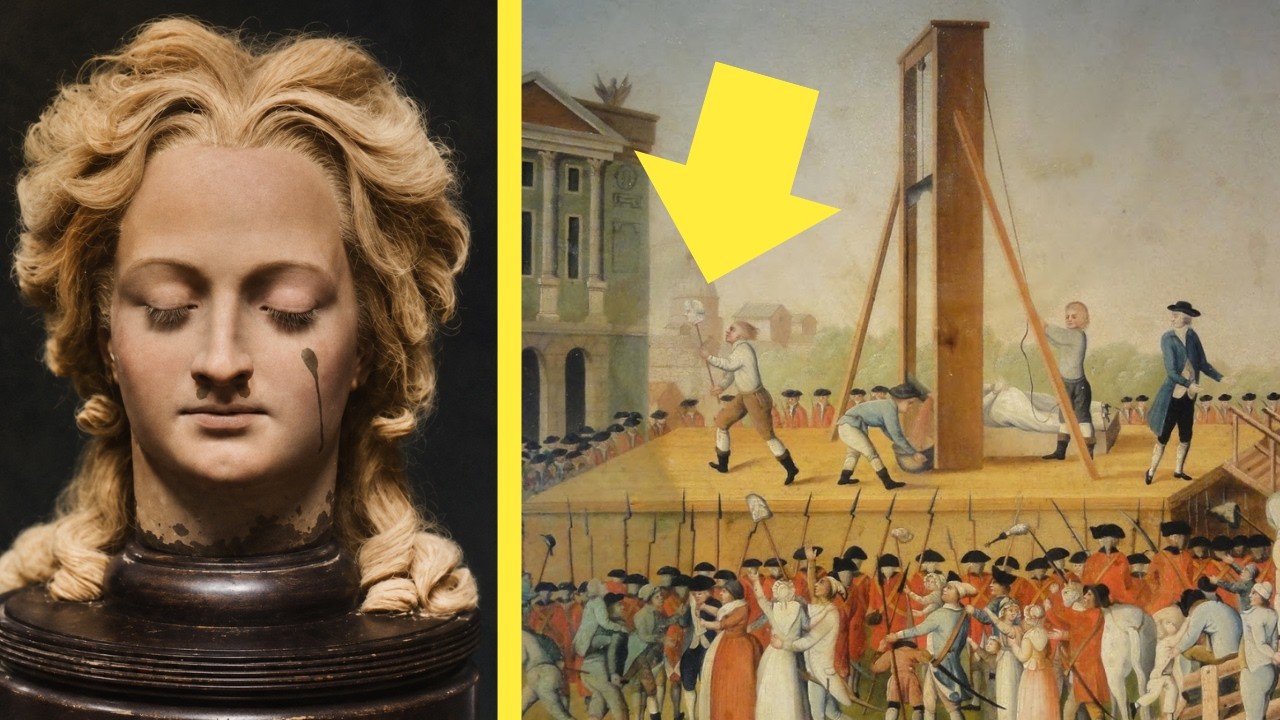
The severed head of France’s executed queen, Marie Antoinette, remains one of history’s most chilling relics, symbolizing the brutal justice of the French Revolution’s Reign of Terror. Her dramatic fall from royal splendor to a grisly public execution haunts collective memory centuries later. What became of her head after the guillotine’s blade fell?
Marie Antoinette’s trajectory from Austrian archduchess to Queen of France was marked by extravagant luxury and growing public resentment. Initially welcomed warmly, she soon became a scapegoat for France’s financial crises and social unrest. The monarchy’s fall from grace culminated in her infamous trial and execution in 1793.
By autumn 1793, the former queen was transported through the streets of Paris in an open cart, her regal dignity stripped away amidst jeers and silent stares. The route led to the Place de la Révolution—now Place de la Concorde—a gruesome stage for hundreds of executions during the revolution’s most violent phase.
Marie Antoinette’s execution by guillotine was swift and symbolic. Witnesses report her calm composure moments before death, even stepping on the executioner’s foot and uttering a polite apology. The fatal blade severed her head instantly, which was then displayed to the crowd, transforming her death into a chilling public spectacle.
The guillotine had become a grim emblem of revolutionary equality and justice, yet Marie Antoinette’s execution was no mere act of justice; it was a political statement aimed at obliterating the old monarchy. Public reaction was mixed—some cheered, while others silently mourned the fallen queen’s fate.
What happened next to Marie Antoinette’s severed head has long fascinated historians. Unlike earlier eras when heads were displayed on spikes, revolutionary France treated royal remains with cold efficiency. Her head was reattached to her body, and her corpse was hastily buried in the Madeleine Cemetery among thousands of other guillotine victims.
The burial was deliberately unceremonious. Quicklime was poured over the body to accelerate decomposition and prevent the grave from becoming a shrine for royalist sympathizers. Over time, this caused rapid decay, making positive identification during later exhumations extremely challenging.
For years, Marie Antoinette’s grave was lost amidst mass burials in the chaotic upheaval of revolutionary France. The cemetery became a grim testament to the bloodshed of the Reign of Terror, where thousands met identical anonymous fates beneath the same relentless guillotine.
Hope for recovering the royal remains emerged after Napoleon’s fall and the Bourbon Restoration in 1814. King Louis XVIII, brother of the executed Louis XVI, ordered the exhumation of the royal victims, seeking to restore dignity to their final rest and serve as a symbolic rebirth of the monarchy.
Locating the graves was a daunting task, but an elderly man named Desclozeaux aided the effort by revealing burial spots he had secretly marked years earlier. Excavations in 1815 uncovered skeletal remains believed to belong to Louis XVI and Marie Antoinette, although decomposition hindered absolute certainty.
Marie Antoinette’s skull had separated from her skeleton underground, a natural consequence of decay and quicklime. Yet, fragments of clothing and personal effects found with the bones aligned with historical accounts, providing enough evidence to assert the royal identity despite the absence of modern forensic technology.
The remains were carefully reinterred with royal honors at the Basilica of Saint Denis—a centuries-old necropolis of French kings and queens. This solemn reburial marked a dramatic reversal from their anonymous mass graves, reestablishing the monarchy’s historical legacy after years of revolutionary erasure.
Over the centuries, myths and legends about the fate of Marie Antoinette’s head have swirled: stories of theft, secret collectors, and relics abound, but no credible evidence supports these claims. Historians agree her remains decomposed naturally and were reburied alongside her husband and ancestors.
The chaotic burial conditions and lag between death and exhumation leave some uncertainty, but the prevailing scholarly consensus holds that the bones in Saint Denis are indeed those of the queen. Her skull’s fate reflects the tumultuous transformation of France during and after the revolution.
Marie Antoinette’s life and death encapsulate the violent upheaval that shattered centuries of monarchy. Once Europe’s glamorous queen, she died despised and discarded, only to be later mourned as a tragic figure 𝒄𝒂𝓊𝓰𝒉𝓉 in a maelstrom of political hatred and revolutionary fury.
Her execution remains one of history’s starkest symbols of revolutionary justice and terror. The image of her severed head raised high before a jeering crowd endures as an iconic, haunting emblem of both the revolution’s ideals and its brutal excesses.
Ultimately, Marie Antoinette’s severed head did not vanish mysteriously or survive as a macabre trophy. Instead, it became buried beneath centuries of historical legend, a stark reminder of the ruthless forces that reshaped France and reshuffled its royal destinies forever.