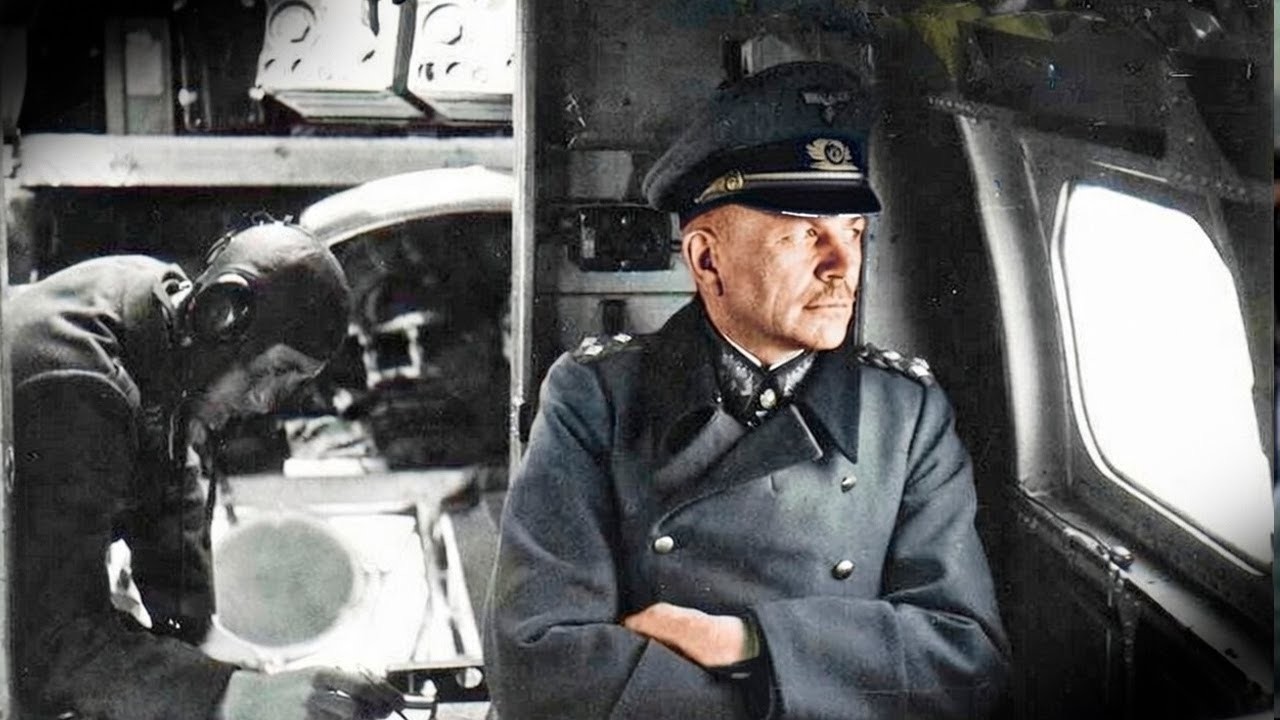
In the dying days of April 1945, as the Third Reich faced total collapse, German Foreign Minister Joachim von Ribbentrop embarked on a secret, last-ditch peace mission to Britain, allegedly under Adolf Hitler’s orders. This desperate covert initiative sought to fracture the Allied alliance and forge an Anglo-German bloc against the Soviets, rewriting the closing chapter of World War II.
Amidst the rubble of a crumbling Berlin, Hitler clung to hope that the Allied powers would fracture, especially between the Americans and Soviets. In April 1945, with Soviet forces violently encircling Berlin and Allied troops advancing, Hitler’s bunker became a nerve center of strategic despair and fragile plans. Intelligence intercepted by the Germans fed Hitler’s delusions of an imminent clash between Western Allies and the Soviet Union.
After the death of U.S. President Franklin D. Roosevelt on April 12, 1945, Nazi morale saw a brief surge, with propaganda minister Joseph Goebbels interpreting the event as a sign of Allied disunity. Meanwhile, Ribbentrop, once sidelined and scorned within Hitler’s inner circle, sought to reassert his relevance as Germany’s foreign minister amid the chaos.
On April 3, Ribbentrop made one of the final high-profile visits to the Oder front, a grim attempt to bolster flagging troop morale by witnessing combat positions firsthand. As Soviet artillery pounded closer to Berlin, Ribbentrop’s position deteriorated, yet he maintained a physical proximity to Hitler even as many staff evacuated to safety further south.
Ribbentrop had been secretly circulating a detailed memorandum outlining Stalin’s postwar plans for Europe, questioning Britain’s tolerance of Soviet expansion into key imperial routes and warning of America’s eventual pullback from Western Europe. This dangerously prescient document underscored his drive to wed diplomacy with strategic desperation.
As the Soviet offensive began on April 16, ripping through the Seelow Heights and barreling towards Berlin, Hitler, undeterred, celebrated his 56th birthday in the Reich Chancellery. That day marked the first Soviet artillery bombardment on the city itself—a symbol of the desperate last hours of the Nazi leadership.
Tensions within the Nazi leadership reached new heights as Ribbentrop’s attempts to engage with Hitler were met with venom and avoidance. Yet on April 23, in a rare concession, Hitler summoned Ribbentrop and tasked him with a clandestine peace overture to the British. Ribbentrop was to propose an Anglo-German alliance against Bolshevism—a cynical bid to split the Allies in their final drive.
Historians debate the authenticity of this mission; some view it as Hitler’s ploy to remove Ribbentrop from Berlin, others as Ribbentrop’s last grasp at survival and influence. Regardless, Ribbentrop zealously drafted a lengthy letter to Winston Churchill, pitching peace and realignment designed to combat the Soviet threat.
On April 24, Ribbentrop narrowly escaped the encirclement of Berlin, embarking on a treacherous journey northwest toward Plön, where Admiral Karl Dönitz was establishing a rump government. His progress was painfully slow, and at times he even sought to return to Berlin—only to be denied the fatal solidarity he requested from Hitler.
Ribbentrop’s arrival at Dönitz’s headquarters was met with cold dismissal. Though shouting his own claim to the foreign ministership, Dönitz refused to reinstate him, later appointing Count Schwerin von Krosigk instead. Meanwhile, Ribbentrop veered south toward Hamburg, yet instead of connecting with British forces, he disappeared into hiding as the city became an active battleground.
For six weeks, Ribbentrop lived covertly in Hamburg under an assumed name while laboring over his peace letter. The war’s end rendered his missive useless—even as the British intensified their manhunt for one of the Third Reich’s last senior leaders. His capture would come not by military might but through a betrayal born of blackmail fears.
On the night of June 14, 1945, British Field Security officers stormed his hiding place. Found asleep and disheveled in pajamas, Ribbentrop was seized and subjected to medical examination, revealing a concealed cyanide capsule—an emblem of his readiness for suicide if capture meant death. Instead, he became a key prisoner.
During interrogation, Ribbentrop recounted his secret mission and presented the 5,000-word letter to Churchill, which rapidly circulated among Allied commanders including Field Marshal Montgomery and Stalin. When asked why he had avoided British authorities for weeks, Ribbentrop claimed fear of postwar British hatred toward Germans as his excuse.
To allay concerns over his identity, the British brought in his sister for confirmation. Verified as the former Nazi Foreign Minister, Ribbentrop was transported to Camp Ashcan, the holding center for war crime suspects before the monumental Nuremberg Trials. Here, his fate would be sealed alongside other Nazi leaders.
Whether Ribbentrop’s final mission was a genuine peace initiative or a desperate fiction remains uncertain. Scholars speculate it may have been an act of self-preservation or an opportunistic gambit with no real intent of execution. Regardless, it underscored the deep fractures and last desperate maneuvers as Nazi Germany collapsed.
Ribbentrop was ultimately convicted at Nuremberg for crimes against peace, war crimes, and crimes against humanity. His execution by hanging on October 16, 1946, famously botched and prolonged, marked the final extinguishment of a man who had long served as the diplomatic voice of Nazi aggression.
This dramatic episode reveals the fractured, frantic final days of the Third Reich, where diplomacy intertwined with delusion and survival. Ribbentrop’s secret mission is a stark testament to the desperate attempts by one dying regime to rewrite the final alliances of a destroyed Europe.
As Soviet tanks rolled relentlessly through Berlin’s streets and Allied forces carved up a broken Germany, Hitler’s last peace gambit embodied the failure of a world at war, clinging to illusions even as total defeat became inevitable and irreversible.