Lewis Hamilton’s fourth-place finish at the Belgian Grand Prix tells only half the story—the other half is a five-alarm fire inside Ferrari that exposed a deep operational rot no upgrade package can cure, and the championship clock is ticking.
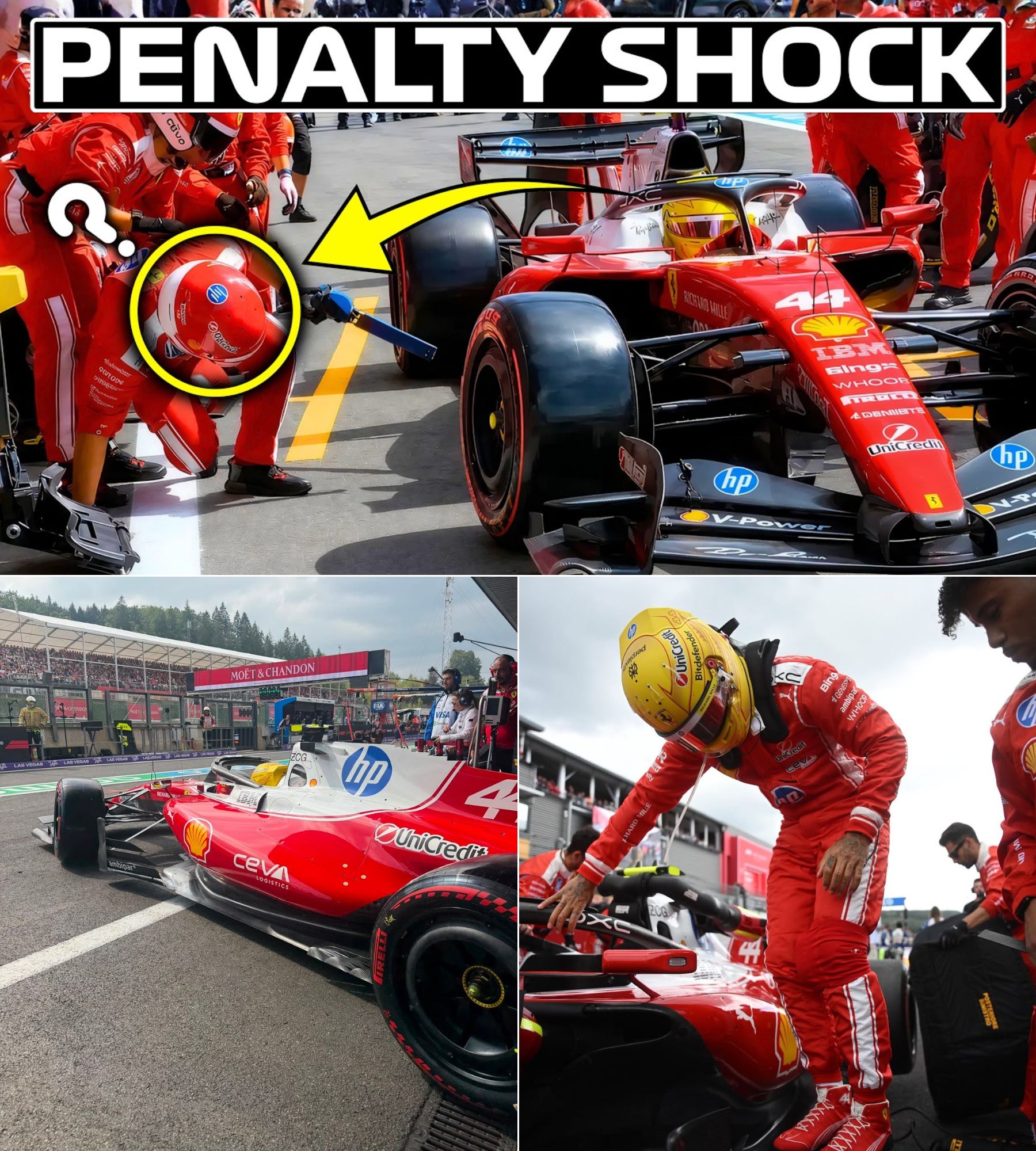
A single weekend at Spa-Francorchamps produced five separate FIA investigations or incidents involving Ferrari, a tally that would be staggering for any team over an entire season, let alone one race. The list is damning: a tire return procedure breach between FP1 and FP2, a first-lap collision with George Russell that earned Hamilton a 5-second penalty, an unsafe pit release that physically endangered a mechanic, contact between Charles Leclerc and Oscar Piastri that was cleared, and the rebuild required after Hamilton’s FP3 crash at Fagnes. Each incident alone is manageable.
Together, they paint a picture of a team operating at the edge of chaos.
The cost was brutal. Before the weekend, Kimi Antonelli led the championship by 25 points over Russell and Hamilton. After Spa, that lead swelled to 45 points—a 20-point swing from a potential Ferrari victory to a reality where Russell retired on lap one and Hamilton limped to fourth with a penalty.
The Math is simple: a championship opportunity converted into damage control.
Start with the tire return breach, the incident most coverage ignored. Between FP1 and FP2, Ferrari electronically registered the return of two sets of dry tires for both Hamilton and Leclerc. The physical tires never reached Pirelli before FP2 began.
Article B6. 4 of the sporting regulations requires both electronic and physical return. Ferrari failed one of the most basic operational procedures.
Championship-winning teams do not miss this. Mercedes has not faced a single tire return investigation all season.
The first-lap collision with Russell is the most visible blow. Hamilton came out of Eau Rouge behind Russell, closed the gap approaching Les Combes, and made contact at the apex. Russell spun into the gravel and retired.
The stewards penalized Hamilton. Russell’s immediate radio call—“racing incident”—reflected the traditional leniency for lap-one contact. The stewards disagreed.

The consequence was seismic: Russell, 25 points behind Antonelli entering the weekend, is now 50 behind. That 25-point swing in a single lap is the most significant individual event of the 2026 season.
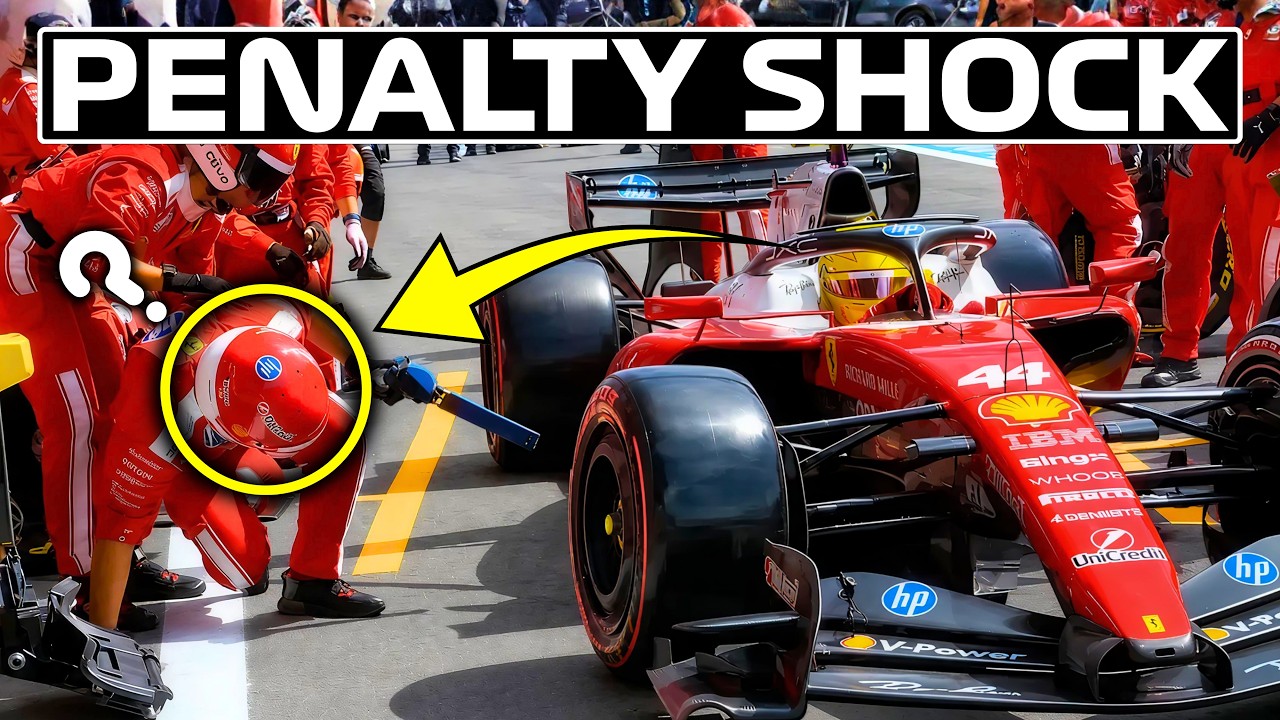
But the unsafe release is the story that reveals Ferrari’s deepest wound. Hamilton pitted to serve his 5-second penalty. After the stop, he asked the pit wall if a front-wing adjustment had been made.
The wall confirmed none was done. Yet a mechanic was standing in Hamilton’s path as the car left the pit box, waiting for a wing change that had been discussed but never completed. The communication breakdown between the pit wall and the crew left a human in the path of a departing Formula 1 car.
Hamilton struck the mechanic. The release was unsafe. Not because Hamilton made an error—he followed the green light—but because Ferrari’s operational communication failed at the most critical moment.
This pattern is not a one-off. At Silverstone, Hamilton received a reprimand for a yellow flag infraction while battling Russell for the podium. The stewards noted his attention was occupied by the fight.
The same competitive instinct that makes Hamilton one of the fastest drivers on the grid pushes him into marginal situations. At Spa, that instinct collided with Russell in a championship context that amplified every consequence.
The FP3 crash at Fagnes adds another layer. Hamilton ran wide at the exit of the chicane, clipping the barrier and destroying the suspension, rear wing, and floor. Ferrari rebuilt the car in two and a half hours.

Hamilton said afterward the car did not feel the same. Whether the crash was driver error or the same trap that caught Pierre Gasly 24 hours earlier, the operational burden fell entirely on Ferrari. A team rebuilding a car between practice and qualifying is a team operating under maximum pressure before the sessions that matter most.
The underlying pace is not the problem. Leclerc led the race until lap 34. Ferrari’s SF-26 was fastest through the corners all weekend at a circuit that was supposed to expose its straight-line weakness.
Hamilton’s qualifying performances have been consistently stronger than Leclerc’s. The car is good enough to win. The issue is the gap between car capability and championship points conversion.
That gap has two parts. The first is the performance deficit to Mercedes that Ferrari’s third aerodynamic package at Zandvoort and second ADUo token at Monza are designed to close. That fix is confirmed, timed, and arriving.
The second is the operational maturity gap—pit communication, procedure discipline, incident management—that no upgrade token can address. Operational maturity is not a component that can be homologated. It is built through relentless process review.
Mercedes has that process. Russell’s radio message after the Spa retirement—“not good enough”—referred to his own performance, not the team’s. Mercedes did not let Russell down.
The team’s management of Antonelli’s race, including the pit strategy and energy deployment after the virtual safety car, worked flawlessly. Antonelli hunted down Leclerc and passed him around the outside of the Kemmel Straight on lap 34. The championship leader is not leading by accident.

The standings after Spa are precise: Antonelli leads Hamilton by 45 points, Russell by 50. Twelve races remain, with 300 points available. Hamilton needs to outscore Antonelli by roughly four points per race to close the gap.
That is mathematically possible if Ferrari’s upgrades deliver, but it requires Antonelli to produce worse results than he has managed since Monaco. He has not had a bad weekend in months.
Ferrari’s operational problem does not have a technical fix arriving in Hungary. The third aero package and second ADUo token address performance, not the kind of breakdown that put a mechanic in danger. Building operational standards while running the most aggressive upgrade program in the paddock is the challenge Fred Vasseur has called Ferrari’s primary focus for the second half of the season.
Hungary is Ferrari’s strongest circuit on the calendar, identified since the start of the year as the venue where the SF-26’s chassis advantage should be most visible. The operational reset that Spa demanded must happen within nine days. Whether it does will determine not just the Hungarian Grand Prix result, but whether the second half of 2026 belongs to the team with the fastest car or the team that knows best how to use it.
The Belgian Grand Prix produced a timing sheet that says P4. It does not capture the 20-point championship swing caused by a first-lap collision, the operational breakdown that endangered a mechanic, the tire procedure breach that opened the weekend under FIA investigation, and the pattern of incidents that has now appeared at Silverstone and Spa in consecutive weekends. Hamilton’s pace is not the problem.
The SF-26’s performance is real. The problem is the gap between how good the car is and how effectively Ferrari is converting that goodness into championship points.
That gap has two components. The first is performance, and the fixes are confirmed, timed, and coming. The second is operational, and it has no homologation number.
It is built through process, through review, through the kind of discipline that championship teams develop over years. Ferrari is trying to build that discipline while simultaneously fighting for a title. Spa proved that the building is not yet complete.
The fix will not come in nine days. It will come if Ferrari learns from every incident, every weekend, every session—starting now.