4 September 2026
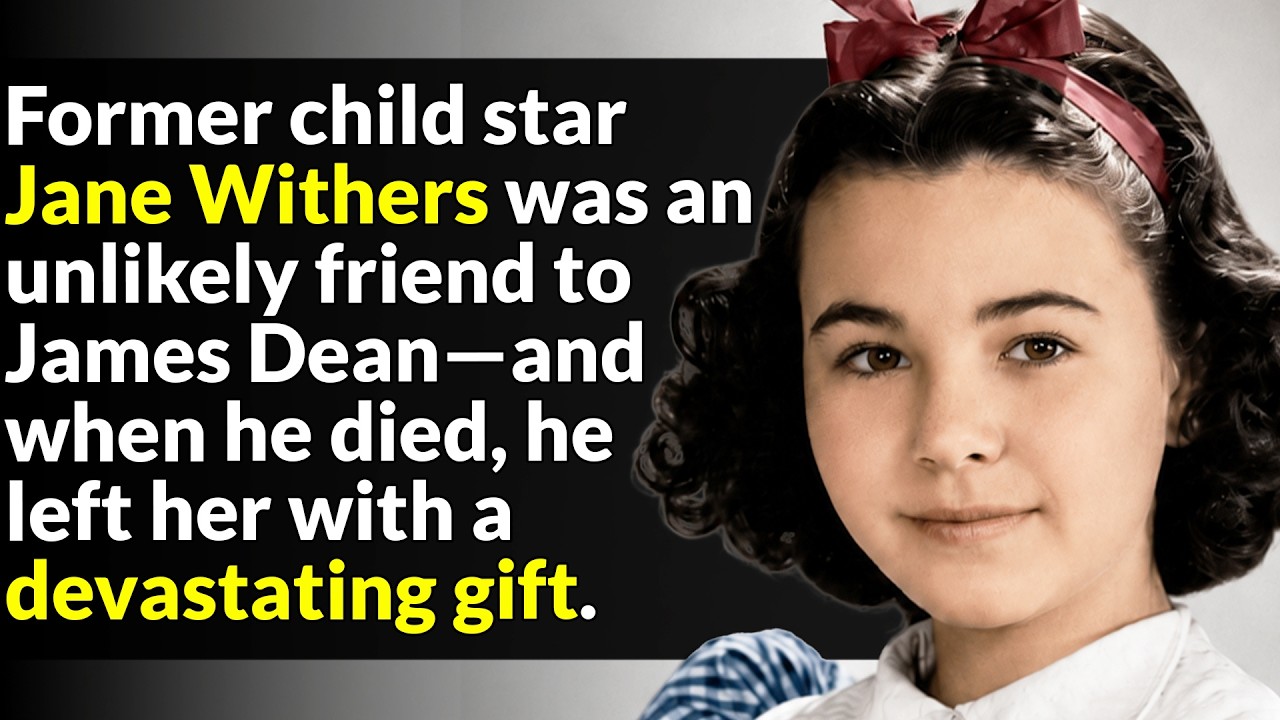
Jane Withers, one of the most bankable child stars of Hollywood’s Golden Age, died peacefully in her sleep on August 7, 2021, surrounded by her family. She was 95 years old. The actress, who rose to fame in the 1930s as the bratty foil to Shirley Temple, leaves behind a complex legacy that defies the tragic arc so often associated with child stardom. Her death marks the end of an era, but her life story, filled with unexpected friendships, devastating loss, and a quiet resilience, remains a testament to a woman who navigated the cruelest machinery of Hollywood without losing herself. Born on April 12, 1925, in Atlanta, Georgia, Jane’s destiny was written before she could even speak. Her mother, Ruth, harbored a lifelong, unfulfilled dream of becoming an actress. Denied that path by her own parents, Ruth devised a meticulous backup plan: marry well, have a daughter, and live vicariously through her child’s success. She chose the name "Jane" specifically because she believed it would look striking on a movie marquee. From the age of three, Jane was thrust into the spotlight, starring in a local Atlanta radio show where she interviewed celebrities, her tiny voice a harbinger of the fame to come. The siren call of Hollywood proved irresistible to Ruth, who moved the family west while Walter, Jane’s father, remained in Atlanta, sending a modest $100 monthly stipend to support their dream. In Los Angeles, the Withers duo discovered that local fame meant little. They were a dime a dozen, just another mother and daughter pounding the pavement at every studio gate. Jane was relegated to extra work, occasionally earning a single scrap of dialogue. The odds were crushing, but Ruth, a devout Christian, clung to a singular belief: God had a plan for them, and they would not fail. That faith was rewarded in 1934 when eight-year-old Jane landed a role in Bright Eyes. It was a supporting part, however, with the film’s lead belonging to the reigning queen of the box office, Shirley Temple. The two child stars shared the screen but never shared a single conversation. Ruth and Shirley’s mother, Gertrude, a failed ballerina who managed her daughter’s career with iron-fisted intensity, kept the girls apart, forbidding even a simple hello. Jane’s character, Joyce, was written as a spoiled, malevolent brat, a role Jane was convinced would make audiences despise her. She was wrong. Instead of hatred, Jane’s performance ignited a firestorm of critical acclaim. Many reviewers declared she stole the movie from Shirley Temple. The character was a villain audiences loved to hate, and Hollywood could no longer ignore Jane’s raw talent, charm, and relentless work ethic. Fox Studios quickly signed her to a seven-year contract, but a catch existed: Shirley Temple already held a deal with the same studio. An unofficial rivalry was born, one where Jane would always be second fiddle, yet she consistently punched above her weight, making several films a year and proving immensely profitable. In 1936 and 1937, theater owners named her one of the most lucrative stars in the industry. Jane and her mother did not view acting as a mere job; they treated it as a high art. While other children played, Jane was perfecting ice skating, voice training, horse riding, foreign languages, and swimming. This expensive training was an investment, and it paid off. Jane was no longer just Ruth and Walter’s kid; she was the family’s primary breadwinner. Her studio salary, endorsements, and licensing deals—her name plastered on dresses, dolls, and jewelry—earned the family a fortune. She worked hard so the entire family could play hard, but the price of fame was steep and sometimes terrifying. When Jane was just ten years old, she began receiving anonymous letters threatening to abduct her and kill her mother unless a $50,000 ransom was paid. The threats were taken seriously. Jane was assigned round-the-clock bodyguards who shadowed her every move. The stardom they had dreamed of was not the glamorous fantasy they had imagined. Despite the fear, Jane remained an anomaly in an industry rife with scandal. She earned a reputation as one of the most likable and well-behaved child stars, a direct result of Ruth’s master plan. Her parents insisted she give back, performing at orphanages and hospitals, and donating dolls from her vast collection to children less fortunate. As Jane grew into her teenage years, the studio system began to fail her. Her roles remained static, stuck in the juvenile mold that had made her famous. In 1941, she starred in Small Town Deb, a film about a teenage girl whose mother prevents her from spreading her wings. The screenplay was credited to Jerry Walters, a pseudonym for Jane herself, who at 16 was already demonstrating a sophisticated understanding of her own predicament. She signed with Republic Pictures, but it was too late. The child star genre was declining, and her career had peaked. Fox had pigeonholed her so thoroughly that the public could not imagine her in mature, dramatic roles. Jane, however, had made peace with the expiration date, always dreaming of a normal ending: marriage, children, and a quiet life. At 19, she met Bill Moss, a 25-year-old film producer and businessman who appeared to be Mr. Right. They married, and Jane retired from acting to live on a ranch and start a family. Unlike many of her peers, her earnings had not evaporated. Ruth had been militant about saving her daughter’s money, and when Jane turned 21, her parents handed over a fortune totaling several million dollars. But the fairy tale unraveled. Bill Moss, who looked like a catch on paper, was a drinker and a gambler. After six years of marriage, they separated. The stress of the divorce was catastrophic. In 1953, at 27, Jane collapsed emotionally and physically, developing severe rheumatoid arthritis that led to complete paralysis. She spent five months in the hospital, eventually recovering without long-term damage.…