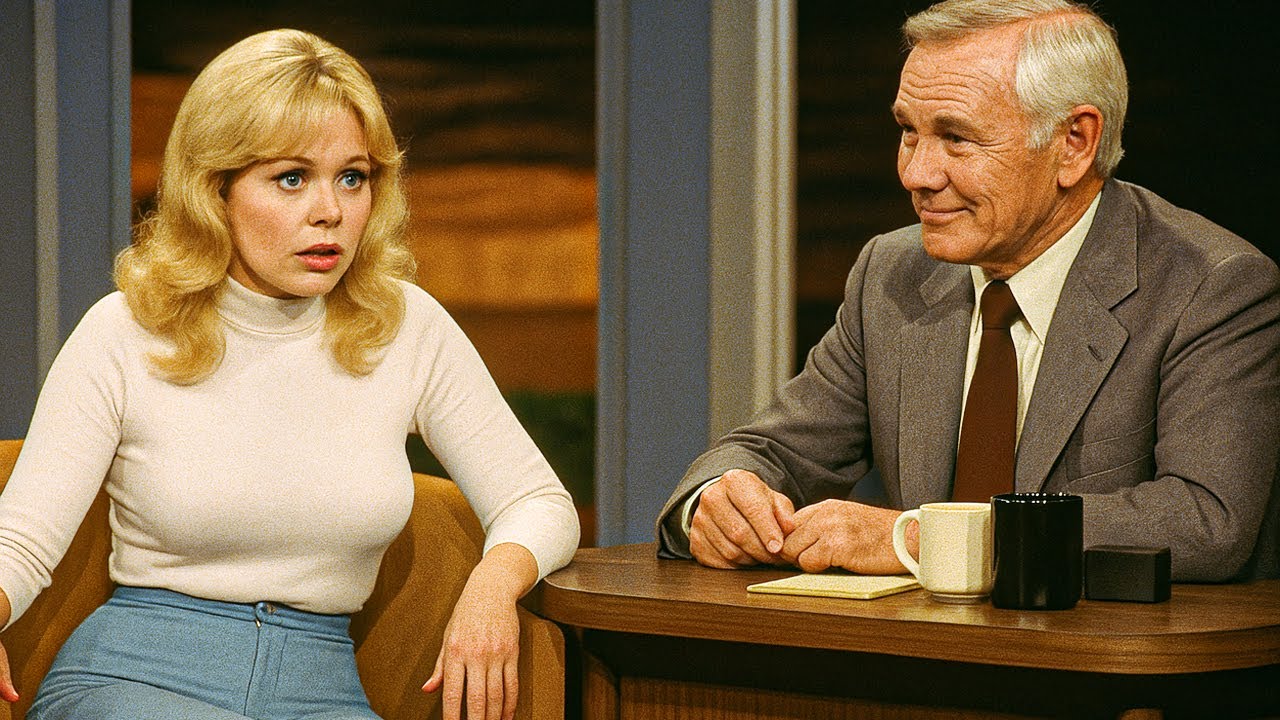
The legend of Johnny Carson, the king of late night, has always been built on charm, wit, and an almost effortless ability to make America laugh. But behind the curtain of “The Tonight Show,” a very different man ruled with an iron fist and a long memory. For decades, the golden ticket to Hollywood success was a seat on Carson’s couch, but crossing that line meant instant exile.
One woman learned this the hard way, and her story is just the tip of a very dark iceberg.
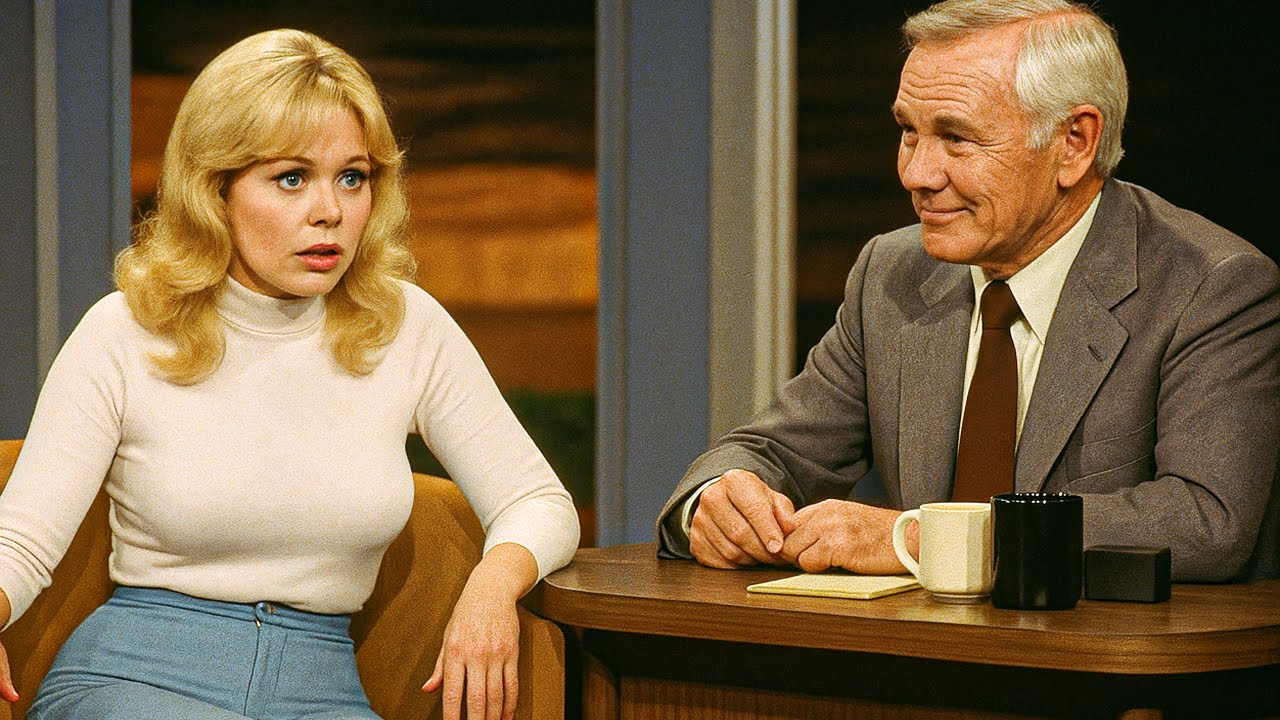 Joan Rivers, the trailblazing comedian who had become a beloved fixture and permanent guest host on Carson’s show, thought she was making a career move. In 1986, she accepted an offer to host her own late-night show on the upstart Fox network. But she made a fatal mistake: she did not tell Johnny Carson first.
When he found out, the news hit him like a thunderbolt. Carson, who had personally mentored Rivers, considered her move a betrayal of the highest order.
What happened next was ruthless, swift, and total. Carson not only banned Rivers from “The Tonight Show” for life, but he also issued an unspoken edict to the entire industry. Anyone who appeared on Rivers’s new show would never be welcome on his stage.
For a rising comedian or actor, that was professional suicide. Rivers later admitted she tried to mend fences, but Carson never spoke to her again. Not once.
He died in 2005, and the wall between them remained standing.
The ban on Rivers lasted until 2014, when current host Jimmy Fallon finally lifted it. But Rivers’s banishment was not an isolated incident. A deep dive into the archives reveals a pattern of swift, vengeful banishments that paint a portrait of a man who could be charming on camera but vindictive off it.
The list of casualties is long, and the reasons range from the absurd to the genuinely shocking.
Rich Little, the master impressionist, was once a staple of Carson’s show. He was so good at impersonating Carson that he did it everywhere—at clubs, award shows, and even on the show itself. At first, Carson laughed along, but behind the scenes, he seethed.
By 1982, Little’s invitations dried up completely. He later claimed he was banned for mocking Carson too much. The message was clear: make the king look foolish, and you disappear.
 Then there was Bobcat Goldthwait, who took the term “lit” far too literally. On May 9, 1994, during a live taping of “The Tonight Show” with Jay Leno (who by then had taken over the franchise), Goldthwait decided to set his chair on fire. It was not a stunt.
It was pure, chaotic anarchy. The audience screamed, security swarmed, and Goldthwait was arrested. He was fined $2,700 and narrowly avoided jail time by agreeing to do public service announcements about fire safety.
He was never invited back.
Howard Stern, the shock jock who had once been a defender of Leno, showed up in 1995 flanked by two bikini-clad models. The antics became so explicit that Leno actually walked off stage. Stern’s more graphic moments were edited from the broadcast, and he was banned.
Stern then spent years trashing Leno publicly. They eventually made peace, but the damage was done.
Kathy Griffin didn’t just get banned from “The Tonight Show.” She collected bans like trophies. Leno was not a fan of her uncensored comedy and raw language.
But Griffin’s most infamous late-night moment came on David Letterman’s show, where she stripped down to her underwear live. Leno never gave her a second chance. Griffin, of course, reveled in the controversy, calling it a badge of honor.
Howie Mandel made 21 successful appearances on “The Tonight Show.” On his 22nd, he brought a 12-foot saber-tooth tiger prop onto the stage. The bit was clunky, the logistics were a disaster, and worst of all, Carson had not been warned.
 Carson hated being caught off guard. He sat there, stone-faced, making no effort to hide his displeasure. That was Mandel’s last appearance.
Dana Carvey, the “Saturday Night Live” star, made the fatal error of impersonating Johnny Carson right to his face. Carvey first mocked him in an SNL sketch called “Carsenio,” portraying Carson as an aging, out-of-touch host. Carson hated it.
When Carvey dared to do the impression during a “Tonight Show” appearance, the ban was instant. Carvey was not even allowed back to promote “Wayne’s World,” one of the biggest comedies of the era.
Lola Falana, the stunning Vegas performer, fell afoul of Carson by speaking openly about race and bigotry. Carson liked light, easy conversation. A serious discussion about discrimination caught him off guard, and the audience was tense.
She was never invited back. Another factor? She was connected to Wayne Newton’s Aladdin Hotel, putting her in the crossfire of Carson’s legendary feud with Newton.
Wayne Newton himself had been a regular with 30 appearances. But in 1980, when Newton outbid Carson for control of the Aladdin Hotel, everything changed. Carson’s monologues turned from friendly jokes to sharp, cutting barbs.
Newton marched into Carson’s office and delivered a direct threat: “You ever say my name again, and I will kick your ass.” Carson mostly stopped, but Newton was never invited back.
These stories reveal a man who was not just the king of late night, but also a deeply complicated, often wounded figure. Carson’s personal life was a shambles of four marriages, three divorces, and a strained relationship with his children. His oldest son, Rick, struggled with mental illness, and Johnny distanced himself.
 When Rick died in a car accident in 1991, Johnny dedicated a monologue to him, but the damage was done.
Carson’s second wife, Joanne Copeland, had an affair with football star Frank Gifford. Carson armed himself with a revolver while hunting for evidence, and his lawyer later revealed he sobbed openly over the betrayal. Yet Carson himself was no saint, showering his wife with lavish gifts to cover his own affairs, including rumored dalliances with Joan Rivers.
His third wife, Joanna Holland, endured his dangerous relationship with alcohol. Carson admitted in a 1979 “60 Minutes” interview that when he drank, he became the opposite of fun. Holland eventually left him in 1985.
His fourth and final wife, Alexis Moss, seemed to bring him peace. They married quietly in a private ceremony, and Carson spent his final years traveling the world with her.
Johnny Carson died in 2005 at age 79 from empyema. He left behind a legacy as the greatest host in television history, but also a trail of broken friendships, banned comedians, and personal demons. The bans were not just about protecting the show or his ego.
They were about control. And in the world of late night, control was everything.
For every guest who lit a chair or mocked his mannerisms, there was a lifetime ban. For every rumor of an affair or a secret late-night deal, there was a door slammed shut forever. The king of late night built his throne on laughter, but he defended it with an iron will.
And anyone who forgot that was never allowed back.