For decades, Suzanne Pleshette was remembered as one of Hollywood’s most distinctive actresses. With her unmistakable voice, sharp intelligence, and effortless elegance, she became a performer who could move between drama and comedy with rare skill.
Audiences knew her as the unforgettable Emily Hartley from The Bob Newhart Show. They remembered her as a sophisticated, witty woman who brought warmth and humor to television screens across America. But long before she became a beloved sitcom star, Suzanne Pleshette experienced a very different side of Hollywood—one filled with pressure, expectations, and a marriage that ended almost as quickly as it began.
Her six-month marriage to actor Troy Donahue became one of the most talked-about relationships of the 1960s. At the time, it seemed like the perfect Hollywood romance: two attractive young stars at the height of their popularity. But behind the magazine covers and public appearances was a relationship struggling under the weight of fame, personal differences, and lives moving in different directions.
Suzanne Pleshette’s journey to Hollywood began in Brooklyn, New York, in 1937.
She was born into an entertainment family. Her father worked in theater, and her mother was involved in the dance world, giving Suzanne an early connection to performance. From a young age, she was drawn to acting and pursued training seriously.
She attended the High School of Performing Arts in New York and later studied at the Neighborhood Playhouse, where she trained under legendary acting teacher Sanford Meisner.
Unlike many performers who relied only on appearance, Pleshette developed a reputation for discipline and emotional depth.
She wanted to be respected as an actress.
Her Broadway debut came in 1957, marking the beginning of a professional career that would span decades. Soon after, Hollywood noticed her talent.
Her breakthrough on the big screen came in 1963 when Alfred Hitchcock cast her in The Birds. The film became one of Hitchcock’s most famous works, and Pleshette’s performance as schoolteacher Annie Hayworth showed audiences that she could bring intelligence and vulnerability to complex roles.
But while her career was rising, her personal life was entering one of Hollywood’s most intense spotlights.
In 1964, Suzanne Pleshette married Troy Donahue.
At the time, Donahue was one of the biggest young stars in Hollywood. Known for his roles in romantic dramas and his classic leading-man appearance, he had become a teen idol with a huge fan following.
Their relationship attracted enormous media attention.
To the public, they represented a glamorous Hollywood couple. Photographers followed them, magazines covered their romance, and fans were fascinated by every detail of their marriage.
But fame can create pressure that ordinary couples never experience.
Behind closed doors, the two actors faced challenges that were difficult to overcome.
Their careers were heading in different directions. Donahue was known primarily as a romantic leading man, while Pleshette was focused on building a more diverse acting career. Their personalities and lifestyles were also different, creating tension in a relationship that was already being heavily watched by the public.
Pleshette later suggested that the marriage moved too quickly and that the reality of being married under constant attention was very different from what they imagined.
The relationship lasted only about six months.
Their divorce became another example of how difficult Hollywood marriages could be when two people were trying to balance personal life with demanding careers.
But the end of that marriage did not define Suzanne Pleshette.
In fact, it became only one chapter in a much longer story.
After her divorce, Pleshette continued building an impressive career. She appeared in films, television programs, and stage productions, proving that she was much more than a glamorous Hollywood figure.
Her greatest television success came in 1972 when she joined The Bob Newhart Show as Emily Hartley.
The role became one of the defining performances of her career.
Emily was intelligent, independent, and supportive, representing a different kind of television wife during the 1970s. She was not simply a background character supporting the male lead. She had her own personality, opinions, and sense of humor.
Pleshette’s chemistry with Bob Newhart became one of the reasons the series remained popular.
Years after the show ended, audiences continued remembering Emily Hartley as one of television’s most realistic and beloved characters.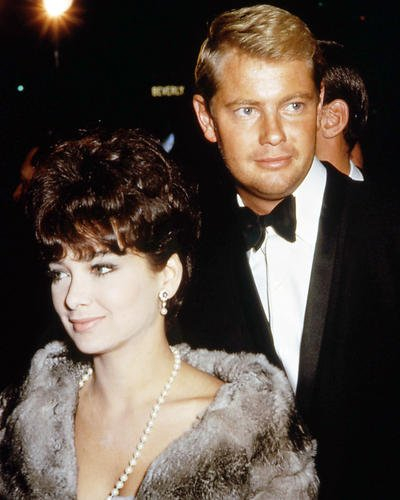
Despite the difficulties she experienced early in her personal life, Suzanne eventually found lasting happiness.
In 2001, she married actor Tom Poston, whom she had known for many years. Their relationship brought her the stability and companionship she had searched for earlier in life.
Unlike the intense media attention surrounding her marriage to Troy Donahue, her relationship with Poston was quieter and more private.
They remained together until his death in 2007.
For Suzanne, it represented a very different kind of love—one built on friendship, understanding, and shared experiences.
Sadly, Pleshette’s own health began declining soon afterward. She was diagnosed with lung cancer and passed away on January 19, 2008, at the age of 70.
Hollywood remembered not only a talented actress but a woman who refused to be defined by one role, one marriage, or one difficult chapter.
The story of Suzanne Pleshette and Troy Donahue is often remembered because it ended quickly.
But the larger story of Suzanne’s life is about resilience.
She experienced the pressures of fame, the disappointment of a failed marriage, and the challenge of rebuilding her personal life. Yet she continued working, continued creating, and continued proving herself as one of the most versatile performers of her generation.
Her legacy was never about a six-month marriage.
It was about a career that lasted more than five decades.
It was about talent, independence, and the ability to reinvent herself.


