My 9-Year-Old Woke Up on Christmas Eve and Found a Note: “We Needed a BREAK from You. Don’t Call.”
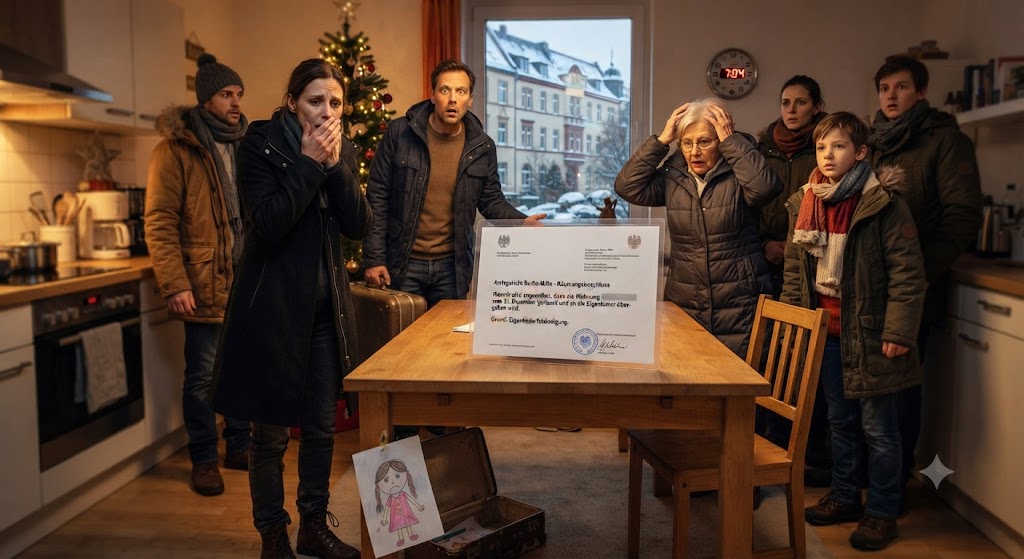
The first thing I heard on Christmas Eve morning was the soft sound of paper being unfolded.
Not the usual creak of the hallway floorboards or the hum of the coffee maker. Just paper. Careful. Hesitant.
I opened my eyes. The clock on the nightstand said 6:12 a.m. The house was still dark except for the thin line of light under my bedroom door.
My nine-year-old daughter, Lily, stood in the doorway holding a folded piece of paper with both hands. Her hair was messy from sleep. Her face was pale. She wasn’t crying yet, but her lower lip was pressed so hard it had gone white.
“Mama,” she whispered. “I found this.”
I sat up slowly. Something in her voice told me not to ask if she’d had a bad dream.
She walked over and placed the paper in my lap like it might burn her if she held it any longer.
The handwriting was my mother’s. Neat. Controlled. The same careful script she used for birthday cards and grocery lists.
We needed a break from you. Don’t call. We’ll be in touch when we’re ready.
No signature. No “Love, Grandma.” No explanation. Just those three short lines, left on the kitchen table where Lily always sat to eat her cereal.
I read it twice. Then a third time, because my brain refused to accept what it was seeing.
Lily’s voice was barely audible. “Is it because of me?”
I looked up at her. She was standing very still, the way she does when she’s trying not to take up space.
“No,” I said immediately. The word came out harder than I meant it to. I softened it. “No, baby. This is not about you.”
She didn’t look convinced. Her eyes stayed on the paper.
“They left last night,” she said. “After I went to bed. I heard the door. I thought maybe they were getting more presents.”
I pulled her onto the bed and wrapped my arms around her. She was trembling.
“I checked their room,” she continued into my shoulder. “The suitcases are gone. Grandpa’s coat is gone. Grandma’s blue scarf is gone.”
I closed my eyes and breathed in the smell of her hair—strawberry shampoo and sleep. Outside, the sky was just beginning to lighten. Christmas Eve. The day that was supposed to be full of cookies and carols and the kind of ordinary magic that makes childhood feel safe.
Instead, my parents had left a note telling my daughter they needed a break from her.
I didn’t shout. I didn’t cry in front of her. I did the only thing that made sense in the moment.
I folded the note carefully, set it on the nightstand, and said, “We’re going to have Christmas. Just us. And it’s going to be okay.”
Lily pulled back enough to look at me. “Are they mad at me?”
“No,” I said. “They’re mad at something else. Grown-up things. Not you.”
She nodded, but her eyes stayed shiny. I kissed the top of her head and told her to go brush her teeth. I needed sixty seconds alone to stop my hands from shaking.
In the kitchen the evidence was quiet and complete. Two coffee mugs rinsed and turned upside down in the dish rack. The travel bag that always sat by the back door was missing. The calendar on the fridge still had “Christmas Eve – family dinner” written in my mother’s handwriting, now crossed out with a single line.
I called my mother. Straight to voicemail. I called my father. Same. I texted. No response.
Then I called my younger sister, Claire.
She answered on the second ring, voice bright and slightly out of breath, like she’d already been awake for hours.
“Hey,” she said. “You’re up early.”
“Where are Mom and Dad?”
A short pause. Then a careful little laugh. “They needed some space, Ellie. You know how it is.”
“No,” I said. “I don’t know how it is. Explain it to me.”
Claire sighed, the sound of someone who had already decided the conversation was inconvenient. “They’ve been overwhelmed. Lily’s… a lot sometimes. The questions. The energy. Mom said she just needed a break. They’ll be back after the holidays.”
“They left a note for a nine-year-old saying they needed a break from her.”
“Don’t be dramatic.”
“I’m not being dramatic. I’m reading the note they left on the kitchen table for my child to find on Christmas Eve.”
Claire’s voice sharpened. “You make everything about Lily. It’s exhausting for them. They’re allowed to have boundaries.”
I stared at the empty driveway through the window. “Boundaries don’t look like abandoning a child on Christmas with a note that says ‘don’t call.’”
“They’re not abandoning anyone. They’re taking a trip. Adults do that.”
“Where?”
Another pause. Longer this time. “The cabin. Up north. Just for a week or so.”
The cabin we had all paid into years ago. The one that was supposed to be for family holidays.
“And they couldn’t tell me themselves?”
“They thought it would be easier this way. Less conflict.”
I laughed once, short and humorless. “Less conflict for who?”
Claire didn’t answer.
I ended the call before I said something I couldn’t take back in front of Lily, who was already coming down the hallway in her Christmas pajamas, trying very hard to look normal.
We spent the day at my friend Mara’s house. Mara has two kids close to Lily’s age and the kind of home that smells like cinnamon and actual warmth. No one asked questions when I showed up with a hastily packed bag and a child who was too quiet. Mara just handed Lily a mug of hot chocolate with extra marshmallows and said, “We’re making cookies that look terrible on purpose. You’re in charge of the sprinkles.”
Lily managed a small smile. It was enough for the moment.
While the kids were in the living room watching a movie, I sat at Mara’s kitchen table and told her everything. The note. The empty driveway. Claire’s dismissive voice. The years of small cuts that had somehow become normal.
Mara listened without interrupting. When I finished, she said the only useful thing anyone had said all day.
“They’re not allowed to treat your child like that. Not even once.”
I nodded. My throat was too tight for words.
That night, after Lily finally fell asleep on Mara’s pull-out couch, I opened my laptop and started making lists. Practical ones. Bank accounts. Shared passwords. The automatic payments I had set up years ago when helping my parents still felt like the right thing to do.
There were more of them than I wanted to admit.
The car insurance I paid because “Dad’s rates went up.” The phone plan that included both of them. The monthly contribution to the cabin maintenance fund. The grocery money I still transferred every other week “just to help with the extras.”
I had told myself it was temporary. That families support each other. That one day it would even out.
It never had.
By midnight I had canceled every single one. No angry messages. No explanations. Just clean, quiet removals. Confirmation emails stacked up in my inbox like receipts for a decision I should have made years earlier.
The next morning—Christmas morning—Lily woke up in a house that smelled like pancakes and pine. Mara’s kids dragged her into the living room to open the small pile of gifts they had insisted on including her in. Someone had even written her name on a tag in glitter pen.
She looked at me across the room with an expression I hadn’t seen in a long time. Not fear. Not careful hope. Just ordinary childhood surprise.
I took a picture of her face in that moment and saved it under a folder labeled “Keep.”
Two days after Christmas, my mother finally called.
I let it ring three times before answering.
“Ellie,” she said, voice already tight. “What did you do to the accounts?”
“I removed myself from them.”
“You can’t just— We needed those. You know how expensive everything is.”
“I know exactly how expensive everything is,” I said. “I’ve been paying for a lot of it.”
“This is about the note, isn’t it? You’re punishing us.”
“No,” I said. “I’m protecting my daughter.”
“It was just a break. You’re making it into something it isn’t.”
I looked at Lily, who was sitting on the floor of Mara’s guest room building a Lego set with intense concentration. She had slept through the night for the first time in two days.
“You left a note for a nine-year-old that said you needed a break from her,” I said. “On Christmas Eve. And told her not to call. That is exactly what it is.”
My mother’s voice rose. “She’s difficult sometimes. The constant questions. The clinging. Claire said the same thing. We’re not young anymore, Ellie. We needed space.”
“Then you call me,” I said. “You talk to me. You do not leave a note for my child.”
“You’re overreacting.”
“I’m done,” I said. “No more money. No more automatic help. No more treating Lily like an inconvenience you can schedule around. If you want a relationship with her, it will be through me, and it will be respectful. Until then, don’t call.”
I hung up before she could answer.
Claire texted an hour later. A long paragraph about how I was tearing the family apart and how Mom and Dad were “heartbroken.” I didn’t reply.
The cabin fund sent a notice that the quarterly payment had failed. My father’s phone plan sent a past-due alert. The car insurance company emailed to say the policy would lapse unless someone else took over the payments.
None of those emails were my problem anymore.
In January I found a small two-bedroom apartment fifteen minutes from Mara’s house. It wasn’t fancy. The kitchen was narrow and the bedroom closets were shallow. But the lease had only my name on it, and the door locked with a key that no one else had a copy of.
Lily walked through the empty rooms on the day we got the keys and said, “It’s quiet here.”
“Is that okay?” I asked.
She nodded. “I like quiet when it’s the good kind.”
We moved the following weekend. I took only what was ours. The furniture I had paid for. The books. Lily’s art supplies. The Christmas ornaments we had made together the year before, when my parents still pretended they wanted us around.
On the last trip out of the old house, I left the original note on the kitchen table where I had found it. I didn’t add anything. I didn’t need to.
Spring came slowly. Lily started sleeping through the night again. She stopped asking if Grandma was still mad at her. One afternoon in March she looked up from her homework and said, “I don’t think I want to call them. Is that okay?”
“Yes,” I said. “That’s okay.”
She went back to her worksheet like the question had been simple.
My parents tried once more in April. A card arrived with no return address, just my mother’s handwriting on the envelope. Inside was a short note: We miss our granddaughter. Please don’t keep her from us.
I showed it to Lily.
She read it, folded it back up, and handed it to me. “Can we throw it away?”
“Yes,” I said.
We did.
I don’t know if my parents ever understood what they broke that Christmas Eve. I don’t know if Claire still tells people I overreacted. I don’t check. Their opinions stopped mattering the morning my daughter stood in my doorway holding a note that told her she was too much.
What I do know is this: Lily laughs louder now. She takes up space in rooms without apologizing for it. She falls asleep without checking the driveway for cars that aren’t coming back.
And every Christmas Eve since, we stay home. We make the terrible cookies. We watch the same movie twice. We leave no notes on the table except the ones that say I love you in glitter pen.
Some breaks are permanent.
This one needed to be.

