For years, the laughter that poured from the screen of The Fresh Prince of Bel-Air felt like a refuge, a bright, comforting escape that seemed immune to darkness. But behind the infectious jokes, Will Smith’s dazzling smile, and the family chemistry America fell in love with, there were moments of humiliation, silence, betrayal, and pain that never made it to air. Some of those involved staggering debt, others involved toxic power dynamics, and a few nearly destroyed careers forever.
Tonight, we are not looking at the jokes. We are looking at what the cast carried when the cameras stopped rolling.
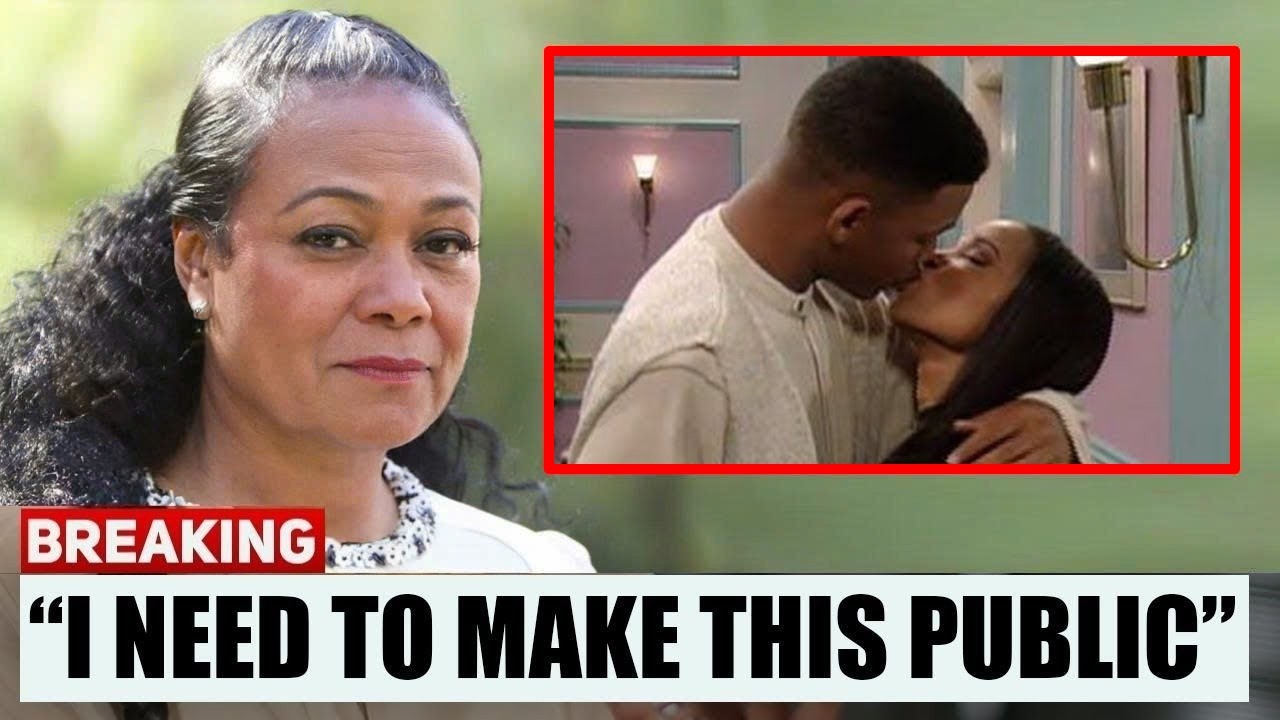 The show that launched a global superstar was built on a financial cliff. When The Fresh Prince of Bel-Air began production, Will Smith was not chasing stardom. He was running from collapse.
In the late 1980s, his music career with DJ Jazzy Jeff had exploded, with their album going triple platinum and turning a teenage rapper into a millionaire almost overnight. Will believed the success would last forever. He spent freely on luxury cars and designer clothes, and made one catastrophic mistake.
He did not pay his taxes. By the time the music slowed, the damage was done. The IRS came knocking for roughly $2.
8 million in back taxes, a staggering sum for someone whose career had not yet transitioned into acting.
The turning point came during a trip to the Arsenio Hall Show, where Will met Benny Medina, a music executive with a story that mirrored the show audiences would later recognize. Medina pitched an idea for a television series inspired by his own life. Will was not interested.
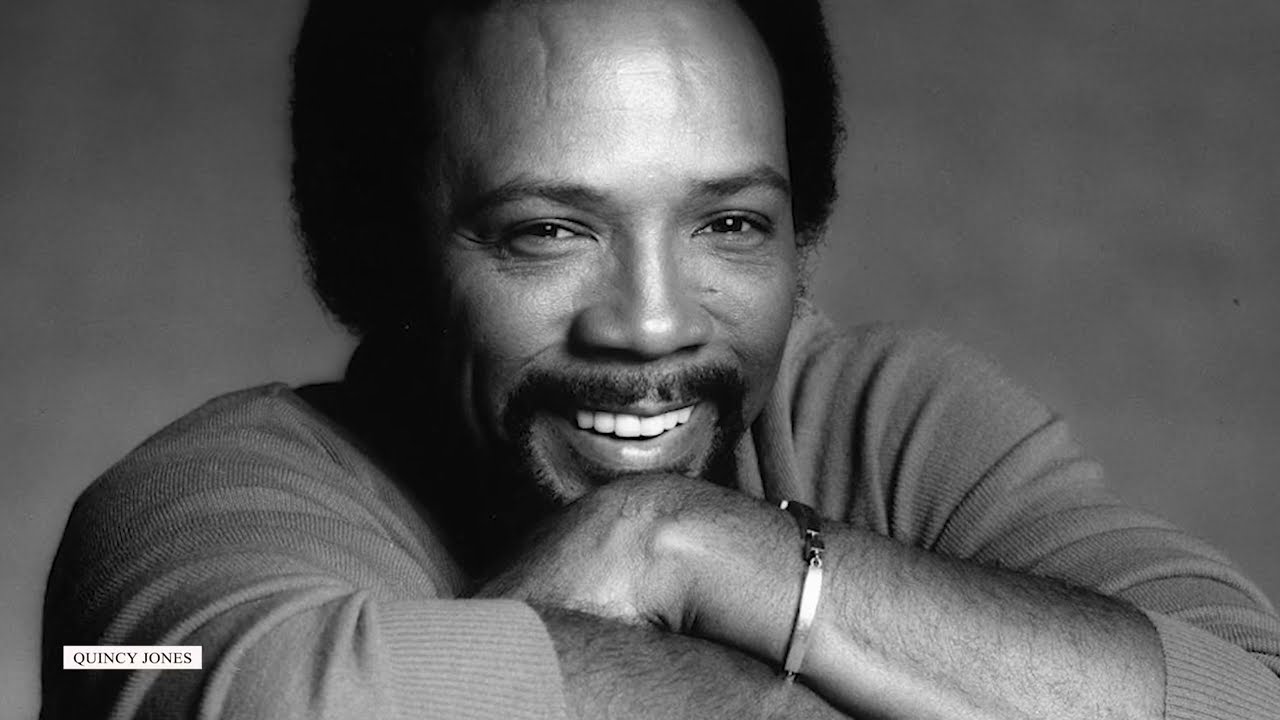
He had never acted and did not see himself as a sitcom lead. Everything changed at a party hosted by Quincy Jones. What began as a casual introduction turned into an impromptu audition in a living room with industry executives watching.
Within three months, the pilot was filming. What viewers did not know was that for the first three seasons, the IRS seized approximately 70% of Will Smith’s paycheck. Every joke, every episode, every laugh track was built on financial survival.
The show that launched one of Hollywood’s biggest stars was also the job that kept him from financial ruin.
Behind the scenes, the show’s writers’ room developed a reputation that most sitcoms never recover from: chaotic, hostile, and quietly abusive. This was not rumor passed between fans years later. It came directly from people who worked inside that room.
Former staff writers described the environment as exhausting and volatile, defined by constant arguments, endless hours, and power dynamics that had little to do with creativity. Will Smith was not just the star. He was protected.
Members of his inner circle, including a bodyguard and a cousin, were part of the writing staff. Their presence blurred professional boundaries and created a climate where criticism did not travel upward. Writers knew which voices mattered and which ones did not.
Challenging ideas was not just risky. It could cost you your place in the room.
 As pressure mounted to maintain ratings, the atmosphere deteriorated. Writers were pushed to work extreme hours, often rewriting material under stress while personal conflicts played out openly. Instead of collaboration, survival became the priority.
The situation crossed into something darker through so-called pranks. One incident involved a colleague discovering that someone had urinated in a bottle of tequila intended for shared use. It was humiliating, cruel, and symbolic of how little accountability existed behind closed doors.
No one took responsibility. No one was punished. The message was clear: endure it or leave.
The room was also deeply isolating for those who did not fit the dominant profile. One female writer, the only white woman in the room, later revealed she was given a nickname that mocked both her race and religion. It was not subtle.
It was tolerated. In an industry already hostile to women and outsiders, the silence around that behavior spoke louder than any punchline.
Janet Hubert did not quietly fade out of The Fresh Prince of Bel-Air. She was pushed out of the story, and then blamed for disappearing. From the first season, Hubert’s Aunt Viv was a sharp, politically aware, emotionally dominant force in the Banks household.
On screen, she was one of the show’s strongest forces. Off screen, that strength made her dangerous. As the series gained popularity, the balance of power shifted.
Will Smith was no longer just the lead actor. He was the brand. According to Hubert, tension began when disagreements on set were professional, not personal.
Yet a different story quietly took hold. By the end of the third season, negotiations for her return stalled. She was offered a contract she could not accept, terms that restricted her growth and limited her compensation.
When she refused, the decision was made to replace her.
Publicly, no explanation was given. Privately, whispers began circulating that she was difficult. That word followed her for decades.
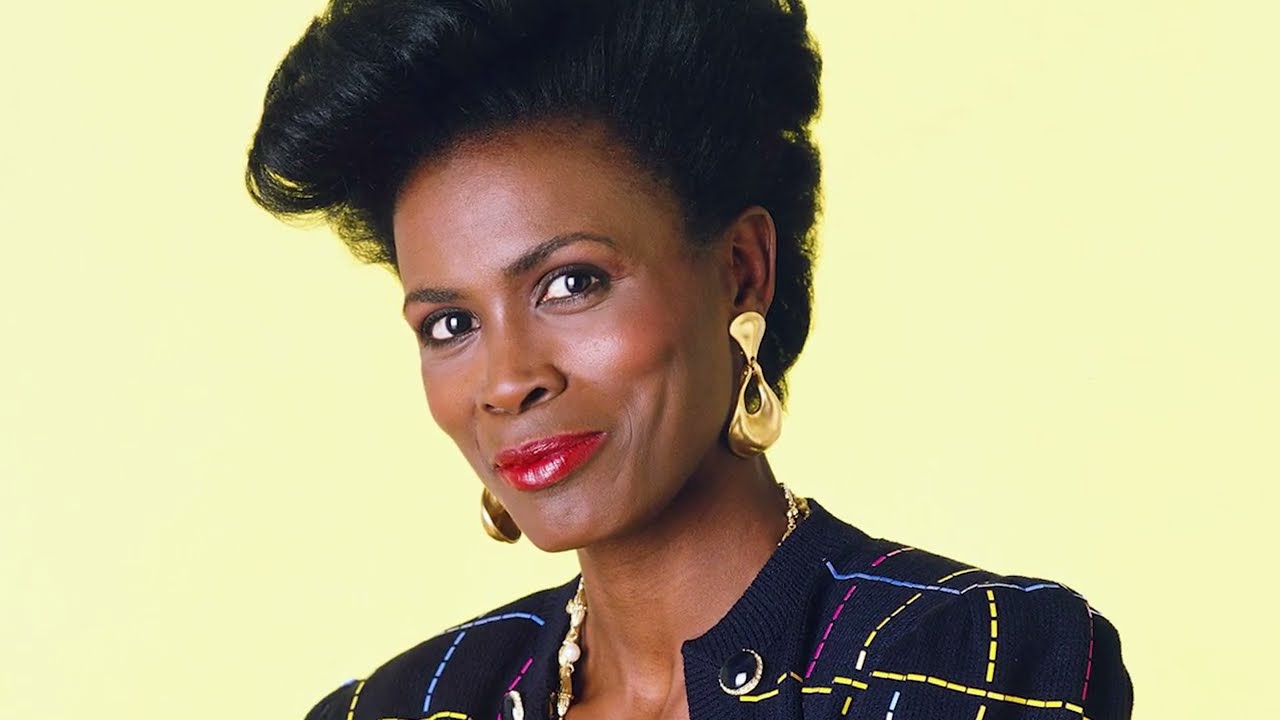 Other cast members later described the set as feeling like a family, with one exception. Statements suggested Hubert clashed with colleagues and caused tension. Those claims hardened into accepted truth.
In Hollywood, being labeled difficult, especially as a black woman, was not criticism. It was a career death sentence. When Daphne Maxwell Reid stepped into the role, Aunt Viv became quieter, softer, and less central to the story.
Her political ambition vanished. Her authority faded. For Hubert, the damage was irreversible.
She later revealed she was enduring an abusive marriage at the time, struggling privately while watching her professional reputation collapse publicly. When her father and brother died, she reached out to the show’s leadership, asking for the truth to be told. No one answered.
Decades later, everything cracked open during a reunion special marking the show’s legacy. Hubert finally sat face-to-face with Will Smith. She spoke openly about what the word difficult had cost her: work, dignity, and stability.
Will admitted he had been overwhelmed by fame, unable to handle conflict, and complicit in letting the narrative stand. That moment of public reckoning was a rare glimpse into the personal cost of a beloved show.
There is one moment in The Fresh Prince of Bel-Air that audiences still struggle to watch without breaking down. It was raw, 𝓮𝔁𝓹𝓸𝓼𝓮𝓭, and devastating, and it was never meant to unfold the way it did. The episode centered on Will’s estranged father, a man who had been absent for most of his son’s life, suddenly reappearing with promises of change.
When the father left again, breaking his word, the story reached a point no script could fully prepare for. What followed was not written as it aired. Will erupted.
He questioned his worth. He asked why his father did not want him. Those lines were not in the script.
They came from somewhere deeper. The studio audience fell silent. Crew members stopped working.
The moment shifted from performance to confession.
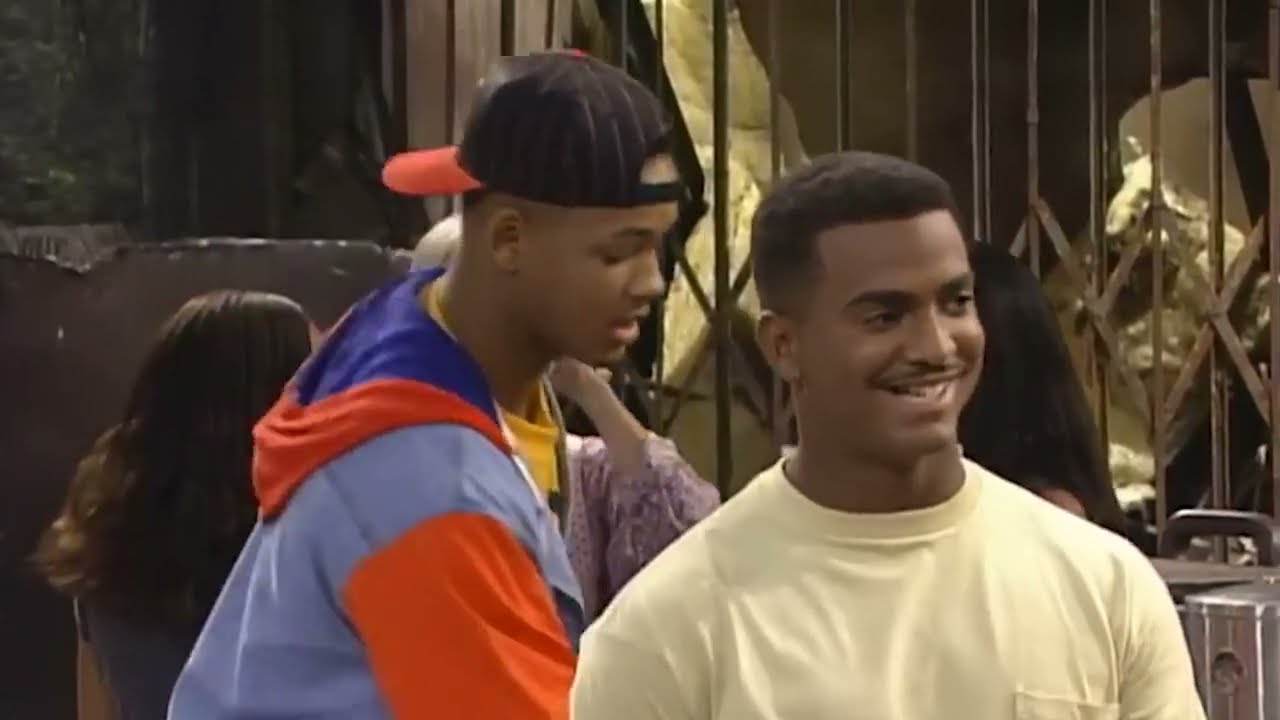 Contrary to what many viewers later assumed, Will Smith did not draw from a broken relationship with his own father. The emotion came from imagination and vulnerability, and from the man standing in front of him. James Avery, who played Uncle Phil, saw what was happening in real time.
During rehearsals, Will struggled. Avery pulled him aside and gave advice that would define Will’s growth as an actor: stop performing and start listening. When the take finally rolled, Avery did not interrupt.
He simply stayed present. When Will collapsed emotionally, Avery embraced him, not as a character, but as a protector. As the cameras rolled, he whispered something to Will that would stay with him forever.
That was acting. Behind the scenes, Avery was a stabilizing force on a set full of pressure, ego, and instability.
For Tatyana Ali, the show was never just a job. It was her childhood, broadcast weekly to millions of people. She joined the show at a very young age, growing up in front of a live audience.
On screen, Ashley Banks was sweet and protected. Off screen, moments that should have belonged only to her were treated as content. One of the most uncomfortable examples surfaced years later when Ali spoke openly about filming her first on-screen kiss.
At the time, it was her real first kiss. Instead of a controlled environment, the moment unfolded under intense scrutiny. Cameras were everywhere.
Co-stars who were not required to be on set showed up anyway, standing behind the cameras, watching. Ali later described how 𝓮𝔁𝓹𝓸𝓼𝓮𝓭 she felt. No one cleared the set.
No one asked if she was comfortable. She admitted she felt humiliated and overwhelmed, wanting the moment to disappear. At the time, she laughed it off because that was what was expected.
Only years later did she fully articulate what it meant to be a child navigating adult expectations in a professional environment that prioritized production over protection.
The Fresh Prince of Bel-Air made millions of people laugh, but behind that laughter were moments of fear, silence, and personal cost that most viewers never knew about. Fame saved some careers, but it also protected mistakes and buried uncomfortable truths for years. Looking back now, the show feels less like a perfect memory and more like a reminder of how success can hide real pain.
The question lingers: does the success of a show ever justify what the people behind it went through?