The true story behind Kevin Costner’s departure from Yellowstone is far more complex than the simple narrative of a star chasing his own movie project, according to the actor himself, who now reveals months of production delays, missing scripts, shifting timelines, and behind-the-scenes confrontations that forced one of television’s biggest stars out the door.
For years, fans were told that Kevin Costner left Yellowstone to concentrate on his own film project, Horizon: An American Saga. The story seemed straightforward, and many accepted it without question. But as more interviews, insider accounts, and public statements have emerged, a vastly different picture is forming.
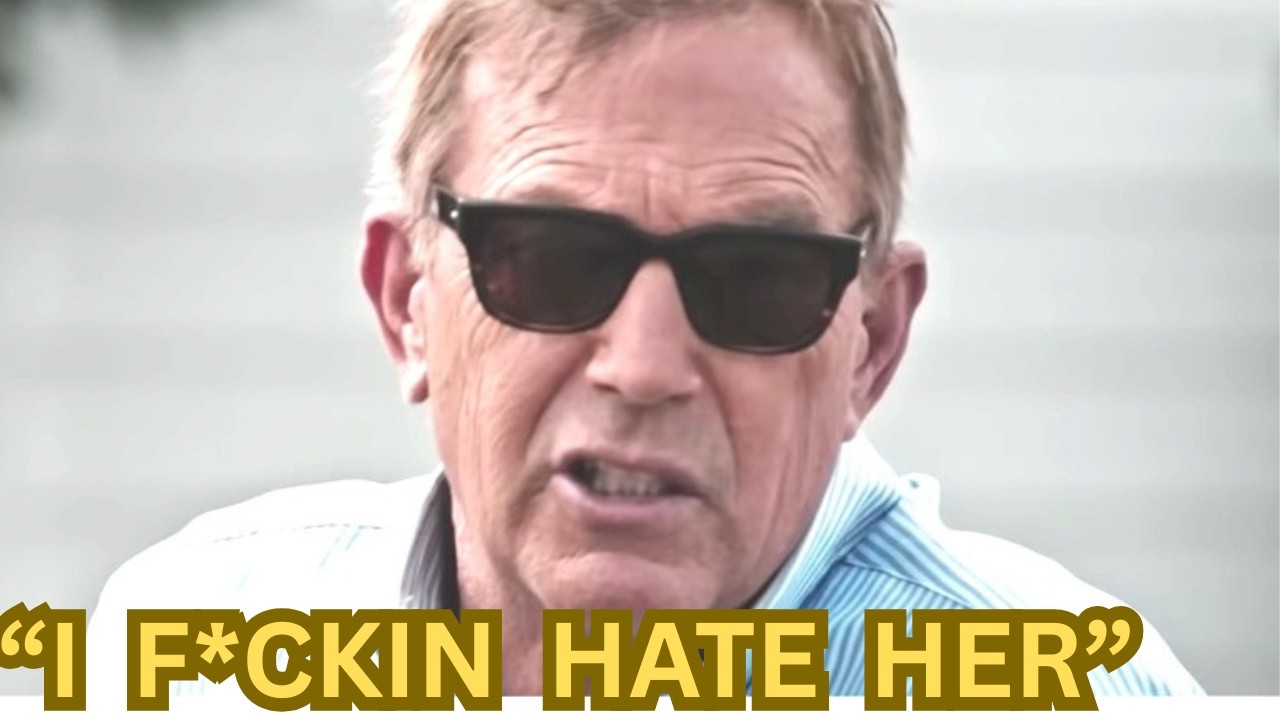 When Yellowstone first premiered, few predicted its dominance. The series transformed Paramount into a major player in original programming, becoming a modern Western phenomenon and one of the most talked-about shows in the United States. This success rested heavily on the shoulders of Kevin Costner, who portrayed ranch patriarch John Dutton.
Costner wasn’t just another TV actor joining a popular series. He was already one of Hollywood’s most respected stars, known for iconic films like Dances with Wolves, The Bodyguard, Open Range, and Field of Dreams. For many viewers, Kevin Costner was Yellowstone as much as creator Taylor Sheridan was.
As the show’s popularity grew, Costner became inseparable from the Yellowstone brand. John Dutton was the heart of the series. Every great battle, every family conflict, and every land dispute ultimately revolved around him and his moral compass.
Industry analysts frequently noted that Costner’s involvement helped attract older audiences who might not otherwise have watched a televised Western. The ratings proved this success. Each season brought larger audiences, and Yellowstone became one of the most-watched cable dramas in American history.
But behind the curtain, creator Taylor Sheridan was no longer focused solely on Yellowstone. As his television empire expanded, he was simultaneously managing numerous initiatives including 1883, 1923, Mayor of Kingstown, Special Ops: Lioness, Landman, and Tulsa King.
Sheridan had become one of the busiest men in television production. This achievement, however, enhanced Paramount’s relationship with him while also creating scheduling issues that would become a key source of later tension.
Costner says he remained dedicated to Yellowstone and expected the series to run for several more seasons. In interviews he gave to Deadline and other media outlets, Costner stated he originally agreed to a schedule spanning seasons 5, 6, and 7.
At that moment, there was no public hint that the episode count would end with season 5. John Dutton’s story was expected to continue for years to come. But as audiences enjoyed one of television’s biggest achievements, serious problems began occurring off camera.
Those problems would ultimately ignite months of negotiations, public accusations, contradicting media reports, and one of the most controversial departures in modern television history. The first warning sign came when Yellowstone’s production schedule stopped resembling a normal television series.
The tipping point came when Yellowstone season 5 was halted. The subsequent production model bore no resemblance to what Costner had originally promised to do. In multiple interviews, including discussions with Deadline, GQ, and the Today Show, the actor described working within an increasingly unpredictable framework.
Costner thought he was operating within a clear structure that would allow him to balance Yellowstone with other projects. But what he didn’t expect was for the production schedule to become increasingly unreliable, creating months of not knowing when filming would actually take place.
The dispute centered on why Paramount decided to split season 5 into two separate parts. In theory, the idea seemed straightforward. Splitting TV seasons is a standard approach throughout the entertainment industry.
But this move created a chain reaction affecting every aspect of scheduling.
Rather than ending the season within a predictable production period, the work spread across a far longer timeframe. The delays began accumulating, and the future schedule remained unclear. Costner subsequently said he constantly revised his own plans to accommodate Yellowstone’s changing demands.
One of the most significant aspects the media has missed is that Horizon was not supposed to fit into Yellowstone’s schedule. It was the opposite, Costner insists. He stated that Yellowstone always led the way and that his Horizon plans worked around the television series.
When Yellowstone changed its schedule, Costner tried to adjust his film obligations accordingly. But eventually, a point arrived where the uncertainty became impossible to manage. In his interview with GQ, Costner revealed he proposed numerous solutions to complete the second half of season 5.
He insisted he would finish the story and fulfill his obligations. But by his account, the necessary scripts never arrived. Without completed scripts, there was no real way to lock filming dates, coordinate crew, or schedule his participation.
The situation grew increasingly frustrating as negotiations continued while production plans remained unresolved. As delays persisted, media reports started telling a different story. Many entertainment outlets published stories implying Costner was restricting his availability and demanding special treatment.
Anonymous sources claimed he was requiring specific accommodations and causing scheduling issues for the producers. These reports traveled rapidly across Hollywood newspapers and social media, altering how the public perceived the conflict.
 Costner vehemently dismissed those assertions. He contended the reports ignored what was actually happening behind the scenes. According to his explanation, he could only offer limited availability toward the end of talks because so much time had already been lost.
What had been a solvable scheduling issue developed into a logistical nightmare. According to Costner, he was being blamed for problems that had been building for months. The argument was no longer about dates on a calendar.
The fight became about public perception and responsibility, and who would be blamed if Yellowstone’s future plans fell through. The more stories emerged in the news, the more the conflict entered the public sphere. What followed became one of television’s most controversial moments.
Kevin Costner trained on data up to October 2023 had largely kept his silence as entertainment sources dominated the discussion. Insiders steered the narrative. Headlines continued implying he was responsible for Yellowstone’s production problems.
Many viewers gradually accepted that account as fact. Sources consistently said Costner was unwilling to spend enough time on the series because he was focused on Horizon, the ambitious Western saga he had spent years trying to bring to life.
He was portrayed in numerous articles as difficult, demanding, and driven to put his own project before the television series that had reshaped his career. This narrative defined Costner in the public eye for months.
Costner eventually chose to respond publicly. In interviews, he directly contested the story that had been circulating. Speaking with Deadline, he expressed frustration that so many of the stories were simply not true.
He said people were talking about the situation without knowing what had really transpired behind the scenes. As Costner puts it, the portrayal of him as the villain in Yellowstone’s tale dismisses months of production problems beyond his control.
One of the most powerful statements came during an appearance on the Today Show. Costner said that after five years on the series, he expected a professional production schedule that would allow him to plan for future projects.
He said Yellowstone instead constantly suffered delays that left everyone waiting. At some point, a full year was effectively lost, Costner explained. He told the show he wanted to work a couple times a year and couldn’t keep putting his professional life on indefinite hold.
Costner also dismissed the allegation that Horizon jammed Yellowstone’s schedule. He said each time he tried to schedule Horizon around Yellowstone, conflicts arose. It was not vice versa, he insisted.
He stated that Horizon became a convenient explanation that diverted focus from the real problem. He said he had made himself available and had continually sought methods to complete his obligations to the franchise.
Arguably the most telling assertion involved the actual scripts. After lengthy negotiations and delays, Costner said he arrived with the expectation of proceeding with production only to find there was no script prepared for him.
He said that moment epitomized the failure of the entire process. Without finished scripts, there was nothing specific to shoot and no dependable timeline for next steps. Later, Costner would describe the scenario as simply exploding.
The actor was also disappointed by what he saw as a lack of support from the production team. In subsequent interviews, he hinted that no one made an effort to rectify the public record when stories accusing him circulated.
He had, in his eyes, committed to the show, changed his schedule more than once, and was ready to go to work. But public debate centered on allegations that he had caused Yellowstone’s difficulties.
Costner publicly defended himself, suggesting there was something else happening beneath the surface. The circumstances were no longer simply a struggle between a performer and a production timetable.
Observers increasingly began to emphasize the ties between Costner and Taylor Sheridan, the creator of Yellowstone. Reports emerged about behind-the-scenes disputes, and several insiders described the relationship between the two most influential figures as increasingly strained.
 The more details revealed, the clearer it became that this tale involved far more than scheduling delays. As the row over Kevin Costner’s exit continued, more attention turned toward Taylor Sheridan.
Sheridan was no longer just the man who created Yellowstone. He had become one of the most powerful people in television, supervising multiple hit shows while extending the Yellowstone universe into a massive franchise.
With so much of Paramount’s success connected to Sheridan’s work, industry people began to suspect whether his friendship with Costner had reached its breaking point. In public, neither man directly attacked the other.
But the news coming out of Hollywood hinted that tensions had been brewing for some time. Entertainment reporters began describing two very successful and determined personalities working hard to maintain control of one of television’s most valuable properties.
Costner focused on protecting his schedule and fulfilling his commitments. Sheridan was running a growing television empire that required his attention across numerous productions. This resulted in a situation where even minor disputes could escalate into major conflicts.
One of the most talked-about reports after Costner’s exit emerged as law. According to industry coverage, mounting frustrations behind the scenes involved production timelines, creative choices, and the future direction of Yellowstone.
Though many elements remained impossible to verify independently, stories from different outlets indicated the relationship between the show’s star and its creator had become increasingly strained.
Then another controversy emerged. In late 2025, The Hollywood Reporter published a story including claims of a confrontation between Costner and actor Wes Bentley, who plays Jamie Dutton.
According to a source quoted in the report, Bentley expressed frustration that the series remained very Costner-centric. The source claimed the disagreement turned into a fight involving some pushing and shoving before others intervened.
No punches were landed, but the narrative quickly received widespread attention since it added to the story that on-set tensions had reached an exceptional degree. Bentley’s representative later acknowledged a disagreement over work in an emotionally difficult scene.
Few details emerged beyond that declaration. In common with many Hollywood issues, distinguishing fact from rumor grew increasingly difficult. Some reports relied heavily on unnamed sources while others claimed to detail specific episodes.
What was evident was that Yellowstone’s final years were being eclipsed by off-screen 𝒹𝓇𝒶𝓂𝒶 nearly as much as by the story unfolding on television.
Meanwhile, a second startling finding indicated that Sheridan himself was growing unhappy with his circumstances. News stories revealed he had secured a significant deal with NBC Universal that would begin after his Paramount contract expired.
Industry coverage suggested the agreement might be worth as much as one billion dollars over five years. Multiple reports claimed Sheridan had grown disappointed with Paramount’s new leadership, limited budgets, and what some sources described as a lack of respect from management.
The irony was not lost on anyone. For years, public discussion had focused on Kevin Costner exiting Yellowstone. But now Sheridan was also preparing to leave Paramount.
While both men were in distinct circumstances, both ultimately appeared unhappy with the situation involving one of the biggest television franchises. But by then, Yellowstone had passed the point of no return.
Costner was gone. The series was on its way toward its conclusion. Attention was starting to turn toward what would happen after Yellowstone finally ended.
Looking back at everything that happened, the most conspicuous feature of Kevin Costner’s departure depends on how differently the story is told by different people. To many casual viewers, the reason appeared simple.
 Costner wanted to make Horizon. Yellowstone became an obstacle, and he left. That version was repeated so often that it became accepted as the standard explanation.
But when Costner finally opened up at length about the matter, he described something far more complex. In many interviews with Deadline, GQ, and the Today Show, Costner kept returning to the same basic reasoning.
He said that Yellowstone’s production schedule had become increasingly unstable, creating the conditions that eventually forced him to leave. He said the series experienced repeated delays, shifting timetables, and scripts that were not ready when expected.
Time was wasted in stretches while everyone waited for decisions to be made. Whether viewers agree with his explanation or not, his interpretation remained remarkably consistent each time he discussed the controversy publicly.
What is also impressive is that Costner never completely closed the door on Yellowstone. Unlike many high-profile television exits that finish with public feuds and bitter words, Costner repeatedly said he loved the series.
Yellowstone, he said, was essential to him, and he recognized the impact John Dutton had on his career. In his Today interview, he explicitly mentioned he would be ready to return under the right circumstances.
That statement left many fans shocked, for it implied the relationship was damaged but not irreparably broken. When Costner exited Yellowstone, he focused heavily on Horizon, a project he had spent decades trying to bring to the screen.
The first several chapters were released but experienced commercial difficulties. Reports indicate subsequent problems in financing plans for future chapters. Costner admitted publicly that completing the remaining chapters would be difficult.
In entertainment reports and comments, he compared the process to pushing a large rock uphill every week and not letting it roll back down. The comment illustrated how personally involved he remained in the project.
Meanwhile, Yellowstone moved forward without its main character. John Dutton’s departure forced writers to significantly change the final chapter of the series. Fans realized immediately that the ending was not what was filmed or planned when Costner was still expected to participate.
The conclusion of Yellowstone, in many ways, was characterized by the absence of the man who had helped make the show a cultural phenomenon.
Perhaps the largest takeaway from this entire story is that Hollywood disputes are seldom as straightforward as they appear in headlines. Rumors circulated in the public eye. Anonymous leaks, contradictory reports, and allegations came from all sides.
But underneath all of this was a complex business conflict involving contracts, timelines, scripts, production hold-ups, creative priorities, and two powerful individuals trying to protect initiatives they deeply cared about.
So when people ask why Kevin Costner left Yellowstone, the answer is far more complex than a single film or a single source of friction. Costner says he did not walk away because he lost interest in Yellowstone.
He left because after years of delays and ambiguity, he no longer believed the production could provide the stability he required. Whether viewers accept that explanation or not, one thing is certain.
The loss of Kevin Costner changed Yellowstone forever. Kevin Costner’s departure remains one of the most controversial moments in the history of Yellowstone.
Depending on which side of the narrative you believe, he either caused the show’s shift in direction or was the victim of a production system that could not be scheduled. What we do know is that when John Dutton was away, Yellowstone was never quite the same.
Was Kevin Costner justified in walking away? Or could he have found a way to stay? The answer depends entirely on which version of events you choose to believe.