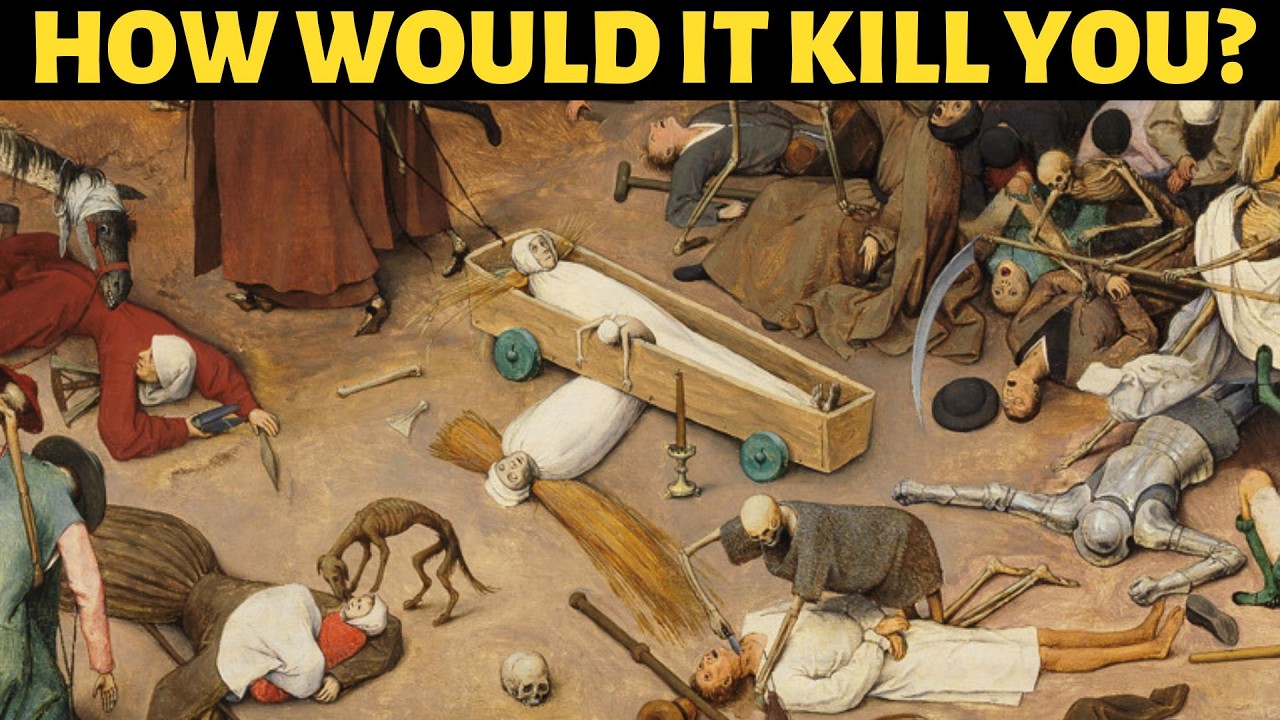
The stench of rotting flesh hung over Europe like a shroud of death as the most devastating pandemic in human history swept across the continent, leaving tens of millions dead in its wake. The Black Death, a name that still evokes primal fear nearly 700 years later, was not merely a plague but an apocalypse that reshaped the medieval world, killing between one-fifth and two-thirds of Europe’s population in a mere four years. Contemporary accounts describe a horror so profound that survivors believed the Last Judgment had arrived, as bodies piled in streets, mass graves overflowed, and the living fled in terror from an invisible demon that struck without warning or mercy.
The culprit behind this catastrophe was a bacterium called Yersinia pestis, a pathogen that has haunted humanity for millennia. Genetic evidence has traced its presence back to Bronze Age skeletons from 5,000 years ago, but the mid-14th century outbreak that ravaged Europe may have originated in Kyrgyzstan in 1338, where gravestones explicitly list pestilence as the cause of death. From there, it likely reached China by the early 1340s before hitching a ride along trade routes into Europe, though historians caution that the exact provenance remains impossible to establish with certainty.
 What is clear is that the disease lived in fleas that infested rats, rabbits, dogs, and other animals, with the rodents serving as the primary vector for its rapid spread across the continent.
When an infected flea bit a rat, the animal would sicken and die, forcing the flea to seek a new host, often a human. Rats, small and adept at concealing themselves from humans, would board ships, infiltrate homes, and carry the infected fleas across vast distances, unleashing the plague on unsuspecting populations. Once established, the disease could also spread directly from person to person through respiratory droplets coughed or sneezed into the air, or through cuts in the skin, making it a relentless and multifaceted killer.
Some historians have also suggested infected grain, clothing, human fleas, and lice as additional modes of transmission, but the consensus remains that the rat population was the primary driver of the initial explosion.
The scale of death was staggering. The word decimate, often used loosely today to describe great destruction, historically meant removing 10 percent of a population. Europe would have been fortunate if the Black Death had only decimated its people.
Instead, estimates vary wildly, but even the most conservative figures place the death toll in the tens of millions out of a pre-outbreak population of roughly 100 million. Mortality rates varied dramatically by location and occupation. In Florence, Venice, and Paris, half the population perished, while Milan, Poland, and the Basque country suffered relatively lighter losses.
Doctors and priests were particularly vulnerable, as their duties brought them into constant contact with the sick, and soon, finding a cleric to administer last rites or a physician to offer treatment became nearly impossible.
One of the most chilling accounts of the plague’s spread comes from the Italian writer Gabriele de’ Mussi, who described how infected bodies were used as biological weapons during the siege of Caffa in 1346. The Tartar army, ravaged by the disease, reportedly loaded corpses into catapults and hurled them over the city walls, hoping the stench would 𝓀𝒾𝓁𝓁 the defenders. De’ Mussi wrote that mountains of dead were thrown into the city, and the Christians could not hide or flee from them, though they dumped as many bodies as they could into the sea.
Soon, rotting corpses tainted the air and poisoned the water supply, and the stench was so overwhelming that hardly anyone could escape. The fleeing Tartars and citizens then carried the plague with them, spreading it to Genoa, Venice, and beyond, as if they had brought evil spirits with them.
 Historians have debated the veracity of this account, questioning whether trebuchets could have been positioned close enough to the walls without suffering defensive fire, and why such a tactic was not repeated in other sieges. But whether or not the story is accurate, the plague’s journey by ship is well documented. A Franciscan monk named Michele da Piazza recorded that in October 1347, twelve Genoese ships arrived at Messina in Sicily, carrying such a deadly disease that anyone who spoke with a sailor was infected and could not avoid death.
From the Mediterranean, the illness spread like wildfire, reaching France, Spain, Bavaria, and southern Austria in 1348, then England and Ireland by the end of that year, and Scandinavia and Scotland by 1350.
The plague was a great leveler, indifferent to wealth, power, or political importance. Among its victims was Princess Joan of England, daughter of King Edward III, who died in 1348 at the age of fourteen while traveling to marry Philip of Castile. Her father wrote to Philip’s father with intense bitterness of heart, describing how this destructive death, which seizes young and old alike, sparing no one and reducing rich and poor to the same level, had lamentably snatched away his dearest daughter.
In Kilkenny, Ireland, the chronicler John Clyn recorded that 14,000 people died in Dublin between August and Christmas 1348, and he left parchment for continuing his work in case anyone should still be alive in the future. On the original manuscript, a note reads, here it seems the author died.
The symptoms of the Black Death were as terrifying as its mortality rate. Giovanni Boccaccio, writing in Florence shortly after the outbreak, described the earliest signs as swellings in the groin or armpit, some egg-shaped, others the size of a common apple. These swellings, known as buboes, gave the disease its medical name, bubonic plague.
From these areas, the swellings would spread randomly across the body, and later, dark blotches and bruises would appear on arms, thighs, and other parts, serving as infallible signs of impending death. Boccaccio wrote that against these maladies, all the advice of physicians and all the power of medicine were profitless, and few who caught it ever recovered, with death typically occurring within three days of symptom onset.
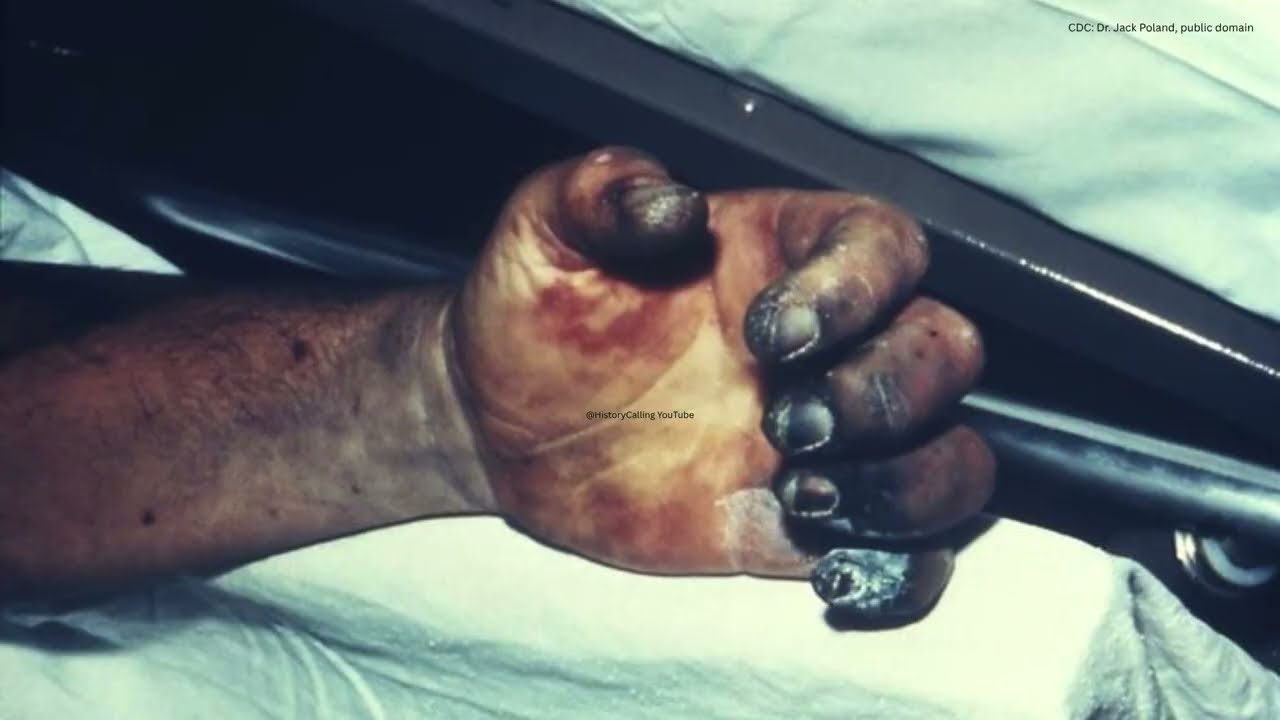
The name Black Death originated from the fact that as tissue died, the extremities of the body, such as fingers, toes, lips, and nose, turned black, a telltale sign still seen in modern cases. Modern medical science has since identified three major clinical forms of the plague. In the most common bubonic subtype, infected persons develop sudden high fevers, terrible pains in their limbs and abdomen, and headaches within three to seven days of exposure.
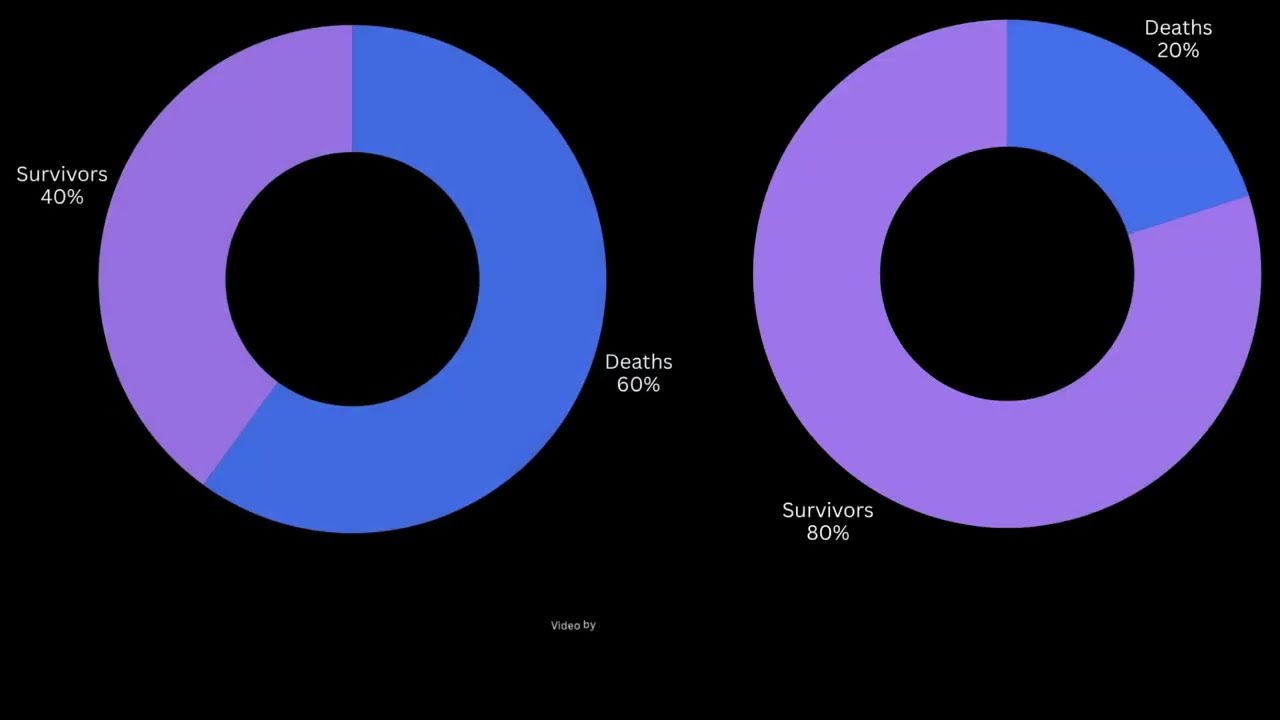
 The bacteria reproduce rapidly in lymph nodes, leading to painful swellings that can enlarge to the size of an egg or up to ten centimeters. About 60 percent of untreated victims die within one week as the buboes fill with pus and the patient succumbs to overwhelming infection. The rarer septicemic form, occurring in 10 to 15 percent of cases, involves bacteria multiplying in the blood, triggering disseminated intravascular coagulation and gangrene of the extremities, ears, or nose.
The infrequent pneumonic plague syndrome is the only form with efficient human-to-human transmission, as inhalation of aerosolized droplets leads rapidly to hemoptysis and death.
With no understanding of germs or bacteria, medieval people searched desperately for explanations. Some blamed the alignment of heavenly bodies, while others saw it as divine punishment for sin. In Padua, infected people, living and dead, as well as houses and clothing, were blamed.
Michele da Piazza recognized what is now called pneumonic plague, noting that breath spreads the infection among those speaking together. Jewish communities were scapegoated and subjected to horrific persecution, with thousands tortured and burned alive on accusations of poisoning wells and rivers. In the south of France, similar punishments were meted out to other groups.
Some observers, like the Carmelite friar Jean de Venette, realized that no poison could have caused such widespread devastation, concluding that the will of God or corrupt humors must have been the cause.
No medicines worked, and people turned to religion with desperate fervor. The Pope allowed confessors special powers to absolve the sins of the dying, and in the spring of 1348, he himself participated in devout processions attended by thousands who walked the streets barefoot, wearing hair shirts and smeared with ashes, flagellating themselves. The chronicle of Newberg reported that men gathered from cities and towns, walking two by two, totally naked except for a white cloth covering them from loins to ankles, singing hymns and beating themselves so hard with knotted whips that drops of blood spattered the roadway.
Despite these efforts, the deaths continued unabated.
 The sheer number of corpses overwhelmed all normal burial procedures. Boccaccio described how in Florence, when all graves were full, huge trenches were excavated in churchyards, and new arrivals were placed in their hundreds, stowed tier upon tier like ship’s cargo, each layer covered with a thin layer of soil until the trench was filled to the top. In Avignon, the Pope had to purchase a field near the Durance River to use as a mass grave, and by March 1348, it contained 11,000 bodies.
In Paris, more than 500 bodies a day were taken in carts to the cemetery of the Holy Innocents, and the Great Chronicle of France estimated that 800 died daily in the city, with 50,000 perishing over 18 months. In Vienna, countless people died, and scarcely a third of the population remained alive, with bodies buried in five big deep pits outside the city due to the stench and horror.
In England, the chronicler Robert of Avesbury reported that in Dorset, 20, 40, or 60 bodies might be committed to the same pit on a single day, and in London, more than 200 corpses were buried almost every day in a new burial ground near Smithfield. The author of the Historia Roffensis noted that no one could be found to carry the bodies of the dead to burial, and men and women carried their own little ones to church on their shoulders, throwing them into mass graves from which arose such a stink that it was barely possible to go past a churchyard. Archaeological digs in London in the late 1990s uncovered a huge pit with thousands of bodies flung in pell-mell, though analysis showed that the victims had been laid east to west in line with Christian customs, with charcoal placed on top to soak up liquids, indicating that some care was still taken despite the horrific circumstances.
DNA analysis of teeth and bones from the Smithfield site confirmed the presence of Yersinia pestis, and comparison with modern strains proved that the Black Death strain was the ancestor of all present-day pathogenic strains of the bacterium. The plague has never truly gone away, though it has mutated, and it still kills hundreds of people each year in the modern era. The worst of the Black Death had passed by the start of the 1350s, but its aftereffects reshaped European society in profound ways.
Survivors often found themselves in a world transformed, with labor shortages driving up wages and empowering the lower classes. Jean de Venette wrote that after the epidemic, men and women married each other, and women conceived more readily than usual, though he also noted that children born after the plague commonly had only 20 or 22 teeth instead of the usual 32, a phenomenon that remains unexplained.
In England, the chronicle of the Abbey of Meaux reported that most women who survived remained barren for many years, and if any did conceive, they generally died along with the baby in childbirth. Continuing outbreaks of plague, though not matching the Black Death in ferocity, depressed the birth rate for centuries, with Venice struck 22 times between 1361 and 1528, and London famously hit in 1665 and 1666. The last major European outbreak was in Marseille in 1720.
The plague faded due to a combination of factors, including quarantine procedures, better rat poisons, climate changes affecting rat migration, and improved hygiene and nutrition in the modern era.
The Black Death was a cataclysm that defies easy comprehension, a horror that killed tens of millions and left survivors grappling with a world turned upside down. It was a time when death entered through windows, when cities and towns were depopulated, and when the living mourned their dead neighbors while wondering if they would be next. The pandemic reshaped economies, societies, and religious practices, and its legacy continues to echo through history.
As we reflect on this medieval disaster, we are reminded of the fragility of human life and the resilience of those who endure unimaginable suffering. The Black Death was a nightmare from which Europe took centuries to awaken, and its scars remain etched into the fabric of our collective memory.