Michael Madsen left Quentin Tarantino a voicemail more than three decades before he died. At the time, it was just a message to a frightened director. At the memorial, it was the memory Quentin chose to carry. Reservoir Dogs was one week into production when Tarantino fired the veteran actor Lawrence Tierney and went home convinced he had destroyed his first movie.
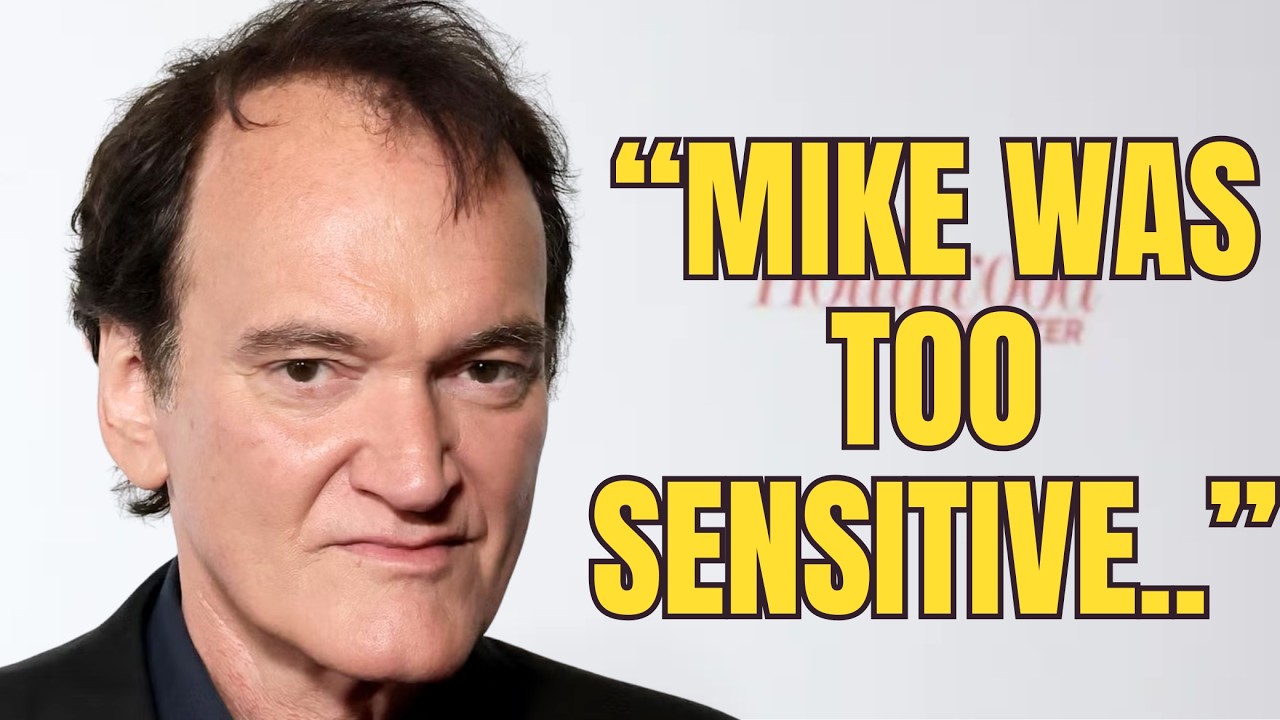
A short, private message was waiting for him. It had nothing to do with fame. Michael Madsen, the actor who had argued for a different role, was calling to say he respected Quentin as a director, a captain, and a man. Then he said five words Quentin would repeat for the rest of his life.
“I’m on your side, buddy. ”
Michael was born in Chicago in 1957 to Calvin, a firefighter and Navy veteran, and Elaine, who left finance to become a writer. His parents separated, and Michael grew up between his father’s practical view of work and his mother’s willingness to reinvent herself. He pumped gas, fitted pipes, repaired cars, maintained a hotel, and worked as a hospital orderly before acting became possible.
That changed after he saw John Malkovich play Lenny in Of Mice and Men at the Steppenwolf Theater. Michael went backstage and admitted he could not afford classes. A program later arrived with a note allowing him to delay payment. That was his first real opening.
His father was not immediately convinced acting counted as honest work. Michael admired him anyway. Years later, when Calvin was older, Michael returned to Chicago with his youngest son and arranged a motorcycle escort to take three generations of Madsen men to a Fourth of July celebration. It had the noise and theatricality people expected from Michael, but the purpose was private.
By then, Michael had already begun worrying about what his children would see when they watched him. He knew a son could turn on a television and find his father threatening someone, carrying a gun, or dying violently. He once said actors became more careful as they aged because their children eventually asked what they had put into the world. That tension ran beneath his entire career.
He needed to keep working for his family. Yet the work most readily available strengthened an image he did not want his sons to confuse with the man at home. Before Quentin arrived, Michael had already shown flashes of what made him unusual. But Hollywood mostly saw the heavy voice and the suggestion of danger.
Quentin noticed something else. Michael became most compelling when he lowered the volume. Michael originally wanted to play Mr. Pink in Reservoir Dogs.
The role had more dialogue, and Michael was trying to avoid another character defined by violence. He read for it and argued his case. Quentin listened, then told him he was Mr. Blonde.
If he would not play Mr. Blonde, there would be no other part. The decision required trust in a director who had never completed a feature. It also required Michael to accept the possibility that one role might follow him forever.
Quentin had recognized that Michael’s stillness could do what another actor’s shouting could not. Mr. Blonde seemed most dangerous when he behaved as though nothing important was happening. The production had little money to create distance between life and performance.
Michael supplied his own Cadillac. Kirk Baltz, playing the captured police officer, asked to be driven around inside the trunk so he would enter the warehouse frightened and disoriented. Michael took him over rough roads and stopped for food before returning to the set. When the trunk opened, Baltz had already spent enough time without control to bring that feeling into the scene.
A smaller detail exposed Michael more clearly. During the confrontation, Baltz pleaded that he had a child at home. Michael was already a father, and he later admitted the line made him reluctant to continue hurting the character, even in make-believe. The finished scene presents Mr.
Blonde as almost cheerful. Underneath it, Michael was resisting what the scene demanded. That resistance became part of its power. Another crisis during the first week created the memory Quentin would carry longest.
After a final confrontation, Quentin fired Lawrence Tierney in front of the crew. People applauded, but Quentin went home certain the financiers would blame him and replace him before the film was finished. Michael called that night. Reservoir Dogs had not made either man famous.
Quentin had no position from which to reward loyalty, and Michael had no reason to flatter him. He said the firing had been necessary. He said Quentin had earned the right to lead. Then he said, “I’m on your side, buddy.
”
Harvey Keitel later helped calm the dispute enough for Tierney to return. But Michael’s message had already done something the production company could not. It told Quentin that one member of the cast believed in him at the moment failure still appeared more likely than success. Their friendship began not at a premiere, but at the edge of collapse.
Reservoir Dogs changed their lives, but not in the same way. Quentin became the filmmaker everyone wanted to watch. Michael became the man everyone thought they already understood. A few roles allowed him to show warmth or weariness, but many offers simply repackaged Mr.
Blonde. The more visible he became, the narrower Hollywood’s idea of him grew. Michael accepted an extraordinary amount of work. Some projects were strong, many were forgettable, and several embarrassed him.
He rarely pretended otherwise. He had children, former partners, legal expenses, school costs, mortgages, and more than one household depending on his income. He once explained that he was not going to move his sons into a trailer because the next script was poor. That reflex led to the most famous fracture between him and Quentin.
Tarantino wanted Michael to play Vincent Vega in Pulp Fiction, linking the character to Mr. Blonde’s real name. Michael had already committed to Wyatt Earp. He had grown up admiring western stars and wanted the chance to play a traditional figure rather than another modern criminal.
The schedules collided, and the western would not release him. John Travolta took the role. Pulp Fiction became one of the defining films of the decade and transformed Travolta’s career. Wyatt Earp did not give Michael the future he imagined.
For years, the decision was retold as a joke about terrible judgment. For Michael, it was harder than that. The choice cost him Vincent Vega and created a distance from Quentin that lasted for years. Quentin was hurt, and the two men spent years apart.
Their careers moved according to opposite instincts. Quentin protected his name by making very few films. Michael protected his family by taking almost every job. One became more powerful through scarcity.
The other became easier to overlook through constant visibility. Their reunion came through Bud in Kill Bill. Quentin did not pretend the missed role or the silence had never happened. Instead, he offered Michael a character shaped by everything that had happened between them.
Bud was a former killer living in a trailer, working a humiliating job, carrying old pride in a body that no longer convinced anyone. By the time Kill Bill arrived, Michael had lived through years of professional disappointment that were not yet part of his life when Reservoir Dogs was made. That experience helped him understand a man who could still be dangerous while already feeling defeated. Quentin did not ask him to repeat Mr.
Blonde. He gave those intervening years a place inside Bud. Missing Pulp Fiction had appeared to remove Michael from Quentin’s rise. Instead, the disappointment became part of the performance that brought them back together.
Mr. Blonde frightened people because life seemed unable to reach him. Bud held attention because life had reached him everywhere. Michael called Bud his best role since Reservoir Dogs.
The part restored more than professional credibility. It proved that their friendship could absorb resentment without pretending it had never existed. They were not loyal because neither had disappointed the other. They were loyal because disappointment had not been given the final word.
Michael later returned in The Hateful Eight and briefly in Once Upon a Time in Hollywood, but the titles mattered less than the invitation itself. Quentin was known for keeping a small circle of performers he trusted, and Michael remained inside it. Outside Quentin’s films, Michael’s private life was far less controlled. His second marriage ended amid a prolonged custody dispute, one of several periods when family conflict became public.
The man audiences associated with violence was also trying to remain present in his children’s lives while work, money, and legal problems pulled in different directions. Alcohol-related incidents and legal trouble remained recurring parts of his public life. The part of him least visible on screen survived in poetry. He wrote about parents, sisters, children, hotel rooms, old dogs, failed relationships, and the loneliness of waiting on a production that did not deserve the effort.
He wrote on scraps of paper, receipts, and whatever was near when a line arrived. Poetry was not a late attempt to soften the outlaw image. It was the place where the outlaw image had never been necessary. His sister Virginia later described him as both thunderous and tender.
That contradiction was not merely a family’s affectionate correction of a famous persona. It was the engine of his acting. Michael could make a violent man interesting because some part of him always understood the cost of violence even when the character did not. The deepest cost arrived in January 2022.
His 26-year-old son Hudson, an Army veteran living in Hawaii, died suddenly. Michael had spoken with him only days earlier. Hudson had talked about the future, his marriage, and the possibility of having children. Their final text exchange ended with the words, “I love you, Dad.
”
Michael said he had not recognized a warning. That absence of explanation became part of the grief. He kept returning to the plans Hudson had described, looking for a sign inside ordinary conversation. For an actor whose movies often treated death as sudden but readable, his son’s death offered no scene that could be replayed until it made sense.
The public statement Michael released was painfully direct. Losing a child, he said, was the most difficult experience a parent could endure. He did not turn the loss into a lesson or claim that work could heal it. His son Luke later called him his hero.
The word mattered because Michael had spent years fearing that his children would judge him through the men he played and the mistakes strangers could read about. Luke remembered something broader. The father who introduced him to movies and motorcycles. The man whose voice filled a room and the person whose flaws did not erase the love his sons had received.
Near the end of his life, Michael was preparing a new collection titled Tears for My Father, Outlaw Thoughts and Poems. Its title returned to Calvin, the firefighter, whose practical view of work had shaped Michael long before acting became his profession. It also returned to a question that ran through much of Michael’s writing: what happens when men inherit love, but not the language to express it? Quentin wrote the foreword.
He did not center Mr. Blonde’s dance or the glamour of cinematic danger. He wrote about Michael’s attention to small family memories, a mother’s arms around a father, the way a sister looked in a dress, the absurdity of an actor stranded on a bad location. Quentin understood that these details were not separate from Michael’s screen presence.
They were what gave it weight. Hollywood had treated Michael’s sensitivity as something hidden beneath the tough guy exterior. Quentin saw that the sensitivity was the reason the exterior worked. Michael’s pauses felt dangerous because they also carried shame, loyalty, fear, and a tenderness the character did not know how to reveal.
Michael was still working on independent films and preparing the poetry collection when he was found unresponsive at his Malibu home on July 3rd, 2025. He was 67. His death was attributed to cardiac arrest with serious heart disease and chronic alcoholism listed among the contributing conditions. The first images repeated across the news were predictable.
The black suit, the razor, the cowboy hat, the exhausted face of Bud. Quentin refused to let those images become the entire obituary. He did not release an immediate social media tribute. When he finally spoke, he admitted that Michael’s death had affected him more deeply than he was accustomed to showing.
“The loss of Michael really, really hits hard,” he said. Then he proved what Michael had meant to him in a way only Quentin would choose. He prepared 10 Madsen performances from films and television episodes he had not directed and spent nearly four hours discussing them. The filmmaker most responsible for Michael’s public image deliberately moved his own work aside.
Michael had not been valuable only when Tarantino was directing him. At the private memorial in the Vista Theater, with Michael’s children, relatives, and former colleagues gathered around him, Quentin returned to the answering machine. He told the story of firing Lawrence Tierney, going home certain that his first movie was over, and hearing Michael’s voice tell him he was not alone. In the end, Quentin’s truth about Michael Madsen was not that he had discovered a perfect muse.
Michael had wounded him, missed opportunities, taken work beneath his ability, and spent years fighting problems Quentin could not solve. He was also the actor who trusted Quentin before Hollywood did. The friend who found his way back after pride and silence, and the performer whose hidden sensitivity gave Quentin some of his most enduring characters. Their connection survived because it was never reduced to admiration.
It contained gratitude, resentment, regret, humor, work, and the knowledge that each man had seen the other before the public version was complete. Michael had once stood beside a director who expected to be fired. After Michael died, Quentin spent hours standing beside the actor others had reduced to a single scene. The message had traveled for more than three decades.
First, it crossed a telephone line to a frightened filmmaker. Then, it returned inside a theater filled with Michael’s family. “I’m on your side, buddy,” had begun as reassurance.
In Quentin’s hands, it became the last honest description of their friendship.