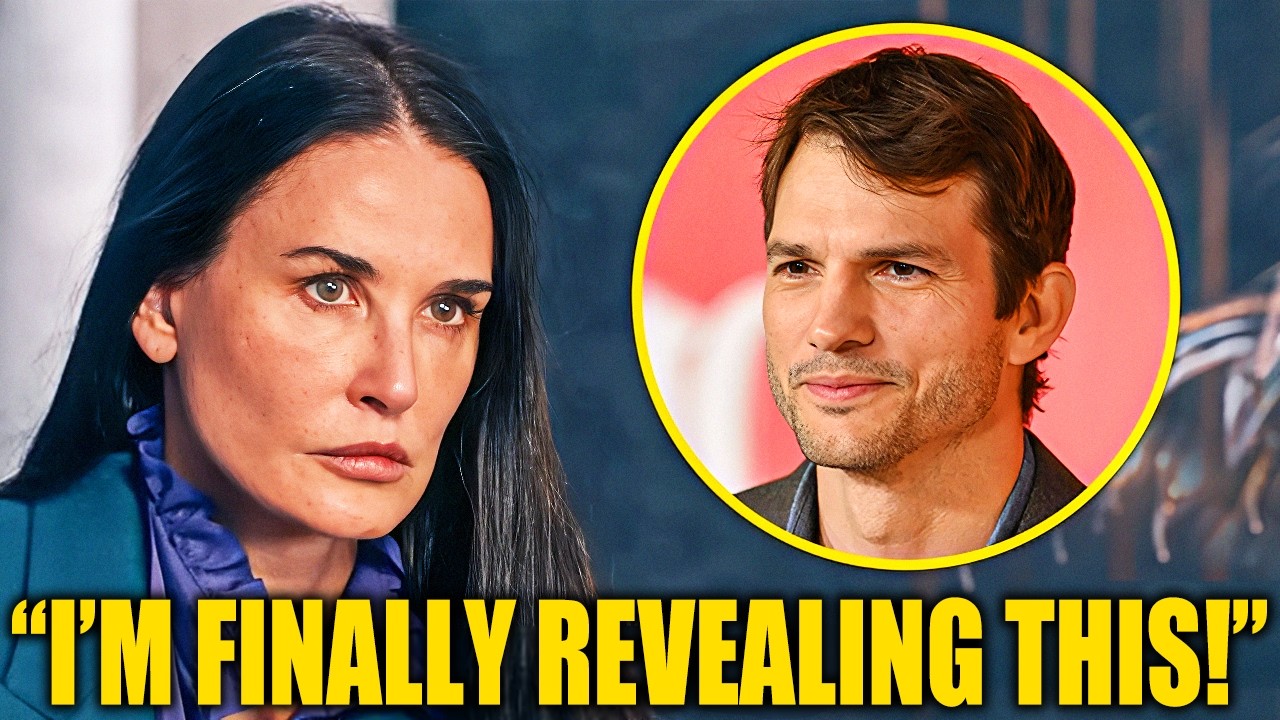
She was Hollywood royalty, a trailblazer who demanded equal pay and shattered box office records. But behind the iconic image of Demi Moore lay a life marked by profound betrayal, addiction, and a desperate search for love that nearly destroyed her. Now, at 62, the actress is laying bare the raw, unfiltered truth about the relationship she says broke her, revealing a story far darker than any film script.
In a deeply personal and sweeping new narrative, Moore has opened up about the marriage to Ashton Kutcher, a 15-year age-gap romance that began as a fairy tale and ended as a catastrophic unraveling of her sense of self. It was a relationship she once called a do-over, a chance to reclaim a youth she never had, but it ultimately became the catalyst for a devastating relapse and a confrontation with the deepest wounds of her past.
 The actress, who rose from a traumatic childhood in Roswell, New Mexico, to become the highest-paid actress in the world, has spent decades looking fearless on screen. Yet her private life tells a rougher story, one of broken marriages, painful family wounds, and years when love seemed to cost her more than it gave. Her latest revelations paint a portrait of a woman who, despite global fame, was still fighting the battles of a frightened child.
Moore’s childhood was anything but safe. Born Demetria Gene Harmon, her biological father left before she was born, and she was raised by a stepfather whose work kept the family moving. Her mother, Virginia, struggled with alcohol and had a long arrest record.
At just 12, Demi had to pull pills from her mother’s mouth during a suicide attempt. By 15, she was sexually assaulted by a much older man who claimed he had paid her mother for access.
This early betrayal set a pattern. Moore learned to bend herself around other people’s needs, seeking validation in relationships that often mirrored the instability of her youth. She married musician Freddy Moore at 18, a union that ended in divorce amid her own infidelity and growing struggles with drugs and alcohol.
Her career, however, was skyrocketing, with roles in St. Elmo’s Fire and About Last Night cementing her as a Brat Pack icon.
Her marriage to Bruce Willis in 1987 seemed to offer a different path. They were a Hollywood power couple, raising three daughters while both careers boomed. Ghost, A Few Good Men, and Indecent Proposal made her a global superstar.
But the pressure of fame, the constant public scrutiny, and the demands of her career took a toll. Willis later admitted he was unsure he wanted to stay married, and they separated in 1998.
 The divorce from Willis, coupled with her mother’s death, sent Moore into a period of retreat. She moved to Idaho, focused on her daughters, and largely disappeared from Hollywood. It was during this quiet period that she met Ashton Kutcher, a 25-year-old actor who seemed to offer a second chance at youth and happiness.
She later described the relationship as a do-over, a chance to feel young in a way she never had.
But the relationship quickly became a pressure cooker of insecurity and grief. Moore became pregnant, but suffered a devastating miscarriage at nearly six months. The loss decimated her, and she became consumed with the desire for another child.
After nearly two decades of sobriety, she began drinking again, a decision she now says was rooted in a desperate need to seem easy, young, and fun for her younger husband.
The drinking spiraled. She began using Vicodin, taking up to 12 pills a day. She agreed to threesomes, a decision she later called a mistake, all in an effort to prove she could be open and fun.
The more she pushed aside her own limits, the harder it became to separate what she wanted from what she feared losing. The relationship that once made her feel young was now touching every old fear she had spent years trying to outrun.
 Then came the betrayal she could not ignore. In her memoir, Inside Out, Moore revealed that she learned through a tabloid report that Kutcher had been with another woman in their marital home while she was away. He admitted it, arguing that their earlier decision to bring a third person into the marriage had blurred the boundaries.
Another allegation arrived in 2011, around their sixth wedding anniversary.
Moore said a notification on her phone told her Kutcher had been caught cheating again. When she called him, he admitted it immediately. Her response was simple and furious: Are you kidding me?
She had to step onto a red carpet almost immediately afterward, describing having an emotional Iron Man suit that allowed her to disconnect and keep functioning while something inside her was falling apart.
In November 2011, she announced she was ending the marriage. But for Moore, the breakup reached far beyond the end of one marriage. She later told Diane Sawyer that it brought her back to the frightened child who had never felt safe.
It touched the belief that she was not lovable or deserving. The impact was severe, with sources saying the split damaged her confidence and took years to recover from.
 The aftermath was a public unraveling. In January 2012, Moore suffered a seizure at a party after using synthetic cannabis and nitrous oxide. She later admitted her life was unraveling.
She had no relationship, no career, and her daughters became estranged from her. She entered treatment for substance abuse, trauma, and codependency, beginning the slow, painful work of rebuilding her life and her relationships with her children.
The divorce was finalized in November 2013. Moore spent years in therapy, looking at the deeper patterns that had followed her through different stages of her life. She realized how often she had put another person’s needs ahead of her own, a pattern she traced back to her childhood.
She said people are often trained to focus on being desired while forgetting they have desires of their own.
In September 2019, Moore published Inside Out, a memoir that became a number one New York Times bestseller. She wrote about the assault, the addiction, the marriages, and the painful choices she made while trying to feel wanted. She made clear the memoir told events from her point of view, and Kutcher did not publicly answer her specific claims at the time.
Years later, Moore has found a different kind of peace. She has spoken about staying close to Bruce Willis as his health declines from frontotemporal dementia, saying she sees him every week and treasures the time their family shares. Her career has entered an unexpected new chapter, with her role in The Substance earning her a Golden Globe, a Critics Choice Award, and an Academy Award nomination.
In 2025, People named her the world’s most beautiful, and Time placed her among its 100 most influential people. Her family remains central to her story, with her daughters speaking about handling difficult relationships with grace and love. Even Kutcher has spoken warmly about her comeback, saying he was proud of her performance in The Substance.
But the question remains: Was Ashton Kutcher truly the relationship that broke Demi Moore the most? Or did it simply reopen wounds that were already there? Looking back at everything she has revealed, the real turning point may not have been a single act of betrayal, but the moment she realized she had given away her power, trying to become what someone else wanted instead of trusting what she already knew about herself.
