When John Travolta stepped onto the Oscars stage in March 2023 to introduce the in memoriam segment, midway through his opening lines, his voice gave out. He never said Olivia Newton John’s name. He didn’t have to. Instead, he quoted directly from “Hopelessly Devoted to You,” the ballad she had made immortal in “Grease,” telling the audience that those they had lost “touched our hearts, made us smile, and became dear friends who we will always remain hopelessly devoted to.
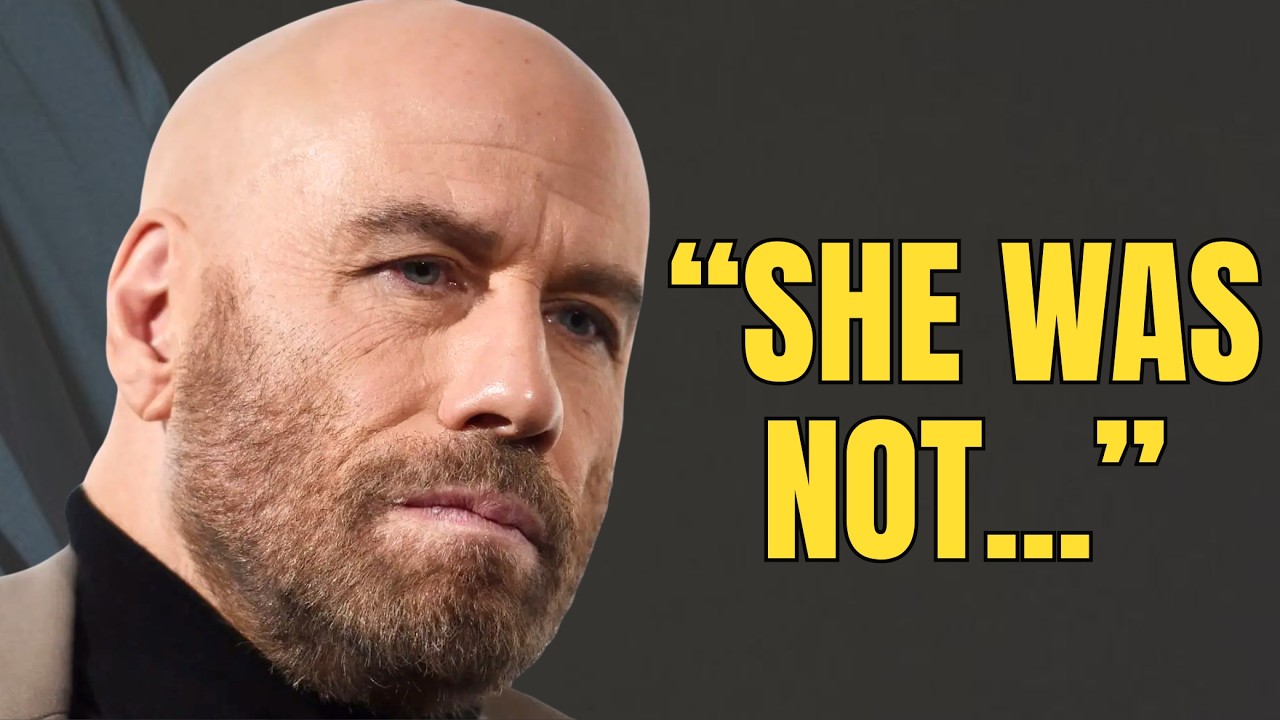
” The cameras captured an audible gasp from the audience and the tears Travolta could no longer hide. It was a moment that landed so hard not only because of Olivia’s loss, but because by then, Travolta had spent barely three years absorbing one devastating loss after another. His wife of nearly three decades, Kelly Preston, died of breast cancer in July 2020, a battle the couple had kept almost entirely private. His close friend and “Look Who’s Talking” co-star Kirsty Alli died of cancer in December 2022, just four months after Olivia.
And underneath all of it was the grief that never fully leaves a parent: the 2009 death of his son Jet, lost to a seizure at 16 during a family vacation in the Bahamas. Travolta later said that loss reshapes a person permanently. The friendship at the center of that Oscars moment began long before Greece was even a possibility. Travolta first fell for Olivia Newton John from a photograph: the cover of an album where she wore a simple blue denim shirt.
He developed what he later called a full-blown crush off that image alone. When Paramount began casting the film adaptation of the Broadway musical, Travolta told studio executives there was no other human being on Earth who could play Sandy Olsen except Olivia. She, however, needed convincing. At 29, she was terrified of playing a 17-year-old, especially after a previous film in England had not performed well.
She insisted on meeting him first and doing a screen test before committing. The two clicked instantly during that test, and the rest became cinema history. Greece became the highest-grossing movie musical of all time at its release, and Travolta and Newton John became one of the most beloved on-screen pairings of the 20th century. Songs from that soundtrack—”You’re the One That I Want,” “Summer Nights,” “Hopelessly Devoted to You”—became so permanently woven into both of their identities that decades later, audiences would still shout Greece lyrics at them wherever they went.
Four years later, in 1983, the two reunited for a second film together, “Two of a Kind. ” The movie never matched Greece’s success, but it cemented a friendship that had nothing left to prove. By their own description, decades later, they might see each other only a couple of times a year and speak on the phone perhaps five times more. Travolta joked that people would stop him on the street asking where Olivia was, as if the two were physically inseparable.
Their bond simply didn’t need proximity to stay real. It was, he said, the kind of friendship you don’t have to rush. In 2012, nearly 35 years after Greece first hit theaters, they reunited to record a holiday album together, their first proper collaboration in over three decades. They spent an entire summer working on it, gathering guest performances from artists including Barbara Streisand, James Taylor, Tony Bennett, and Kenny G.
with every proceed funneled into their respective charities:Travolta’s Foundation supporting families dealing with autism and seizure disorders, established in memory of his son, and Olivia’s Wellness Center back in Australia. It was, in hindsight, one of the last extended public moments the two would share while Olivia was still healthy. But Olivia’s story didn’t stop at Sandy. She used the momentum from Greece to reinvent herself, most famously with “Physical” in 1981, a song so suggestive for its era that several radio stations in Utah refused to play it.
Olivia responded by releasing a workout-themed music video, insisting the song was about exercise all along. That same era brought Xanadu, a film that didn’t perform especially well commercially, but gave her her first husband, dancer Matt Lattanzi, 11 years her junior. Together, they had her only child, a daughter named Chloe Rose. The years that followed tested Olivia in ways her early fame never had to.
In 1992, her goddaughter, Colette Chuda, was diagnosed with an aggressive kidney cancer, and Olivia stood beside the child’s mother as she absorbed the news, watching a five-year-old lose her life to the disease. That same year, a recession collapsed Koala Blue, the clothing business Olivia had built with a close friend. Her father died just two weeks before doctors delivered news that would define much of the rest of her life:breast cancer, discovered when Olivia was 44, requiring a partial mastectomy and reconstructive surgery. Her marriage didn’t survive the strain, ending amid rumors of infidelity.
Rather than retreat, Olivia turned the diagnosis into purpose, founding what would eventually become the Olivia Newton John Cancer Wellness and Research Center in Australia, a facility built around the idea that healing needed to address the whole person, not just the disease. Her personal life took an even stranger turn in the years that followed. She entered a relationship with a boat captain named Patrick McDermott. In 2005, McDermott vanished during a fishing trip off the coast of California and was never definitively found.
Olivia hired her own private investigators, convinced there was more to the disappearance than the official story suggested. Theories swirled for years:that he’d fled to South Korea to dodge child support payments, that he’d faked his death entirely for a modest life insurance payout. Investigators working with “Dateline NBC” believed by 2009 they’d traced him to Mexico, living under his birth name. Olivia herself later said plainly that she doubts anyone will ever know the full truth of what happened.
An unresolved ending to a relationship that, unlike her career, she never got to close on her own terms. Eventually, stability found her in a man named John Easterling, a conservationist she met at an environmental conference and stayed close friends with for over two decades before the relationship became romantic. They married in 2008, and by every account, it was the steadiest partnership of her adult life. But even with a strong marriage, Olivia’s family carried its own private struggles.
Her daughter Chloe has spoken openly about how difficult it was growing up under her mother’s fame, developing an eating disorder rooted in a need to be perfect, which later compounded into substance struggles severe enough that she was by her own account spending significant money daily just to get through it. Olivia stood by her daughter through treatment and a stint in a sober living facility. Cancer returned in 2013, and Olivia largely kept the recurrence private. It came back again in 2017, this time metastasizing into her lower back, forcing her to postpone performances and quietly admit herself into the very cancer center that bore her name.
There was a period, she later revealed, when doctors feared she might never walk again. She pushed through it, choosing eventually to speak publicly about the struggle so other patients could see someone surviving it in real time. In 2019, she lost her older brother, Hugh, making her the last surviving sibling in her family. That same year, she made the decision to part with her iconic black leather jacket and pants from Greece, auctioning them off with proceeds going straight to her cancer center, noting almost as an aside that she’d checked and yes, she still fit into them.
By the time her cancer reached stage four incurable, Olivia had already decided how she wanted to spend whatever time remained. She refused to find out how long she had left, refusing to let a number dictate how she lived. She kept working, kept advocating, kept insisting that surviving cancer three separate times was itself something worth celebrating. On August 8, 2022, at 73 years old, Olivia Newton John died at her ranch in Southern California, surrounded by John Easterling and her daughter Chloe.
Travolta’s first public words came almost immediately, posted the same day. “My dearest Olivia,” he wrote, “You made all of our lives so much better. Your impact was incredible. I love you so much.
We will see you down the road and we will all be together again. Yours from the first moment I saw you and forever. Your Danny, your John. ” Seven months later, standing on the Oscars stage, he tried to say something similar out loud.
And this time, his composure simply didn’t hold. Viewers at home described hearing the audience itself groan in sympathy as his voice cracked, an unscripted collective reaction no producer could have planned. He let the emotion show because there was no version of hiding it that would have been honest. And in doing so, he gave an entire audience of people who’d lost their own spouses, siblings, and friends something rare:permission to grieve visibly, publicly, without apology.
It wasn’t polished or rehearsed grief performed for cameras. It was a 72-year-old man, one of the most recognizable faces in film history, standing in front of millions of people and simply refusing to pretend he was fine. It’s worth remembering that this wasn’t the first time Travolta had shown that kind of restraint dissolve in public. Those who watched him in the years surrounding Kelly Preston’s death and Kirsty Alli’s passing describe a man who never tried to project strength he didn’t feel, choosing instead to let his grief exist openly in interviews, in social media posts, in quiet moments caught by photographers he no longer bothered to perform for.
Travolta simply stopped pretending that composure was the only way to carry loss.