Delta Biggs spent more than two decades living inside Graceland, witnessing Elvis Presley’s life from closer than almost anyone else. She was there during his greatest triumphs, there when the world learned of his death, and even after Graceland became a museum, she quietly remained behind the scenes for another 11 years. Before she was known as Graceland’s final resident, Delta Mae Presley was simply Elvis’s aunt, the sister of Vernon Presley. After her husband, Pat Biggs, passed away, she had no children and nowhere that truly felt like home.
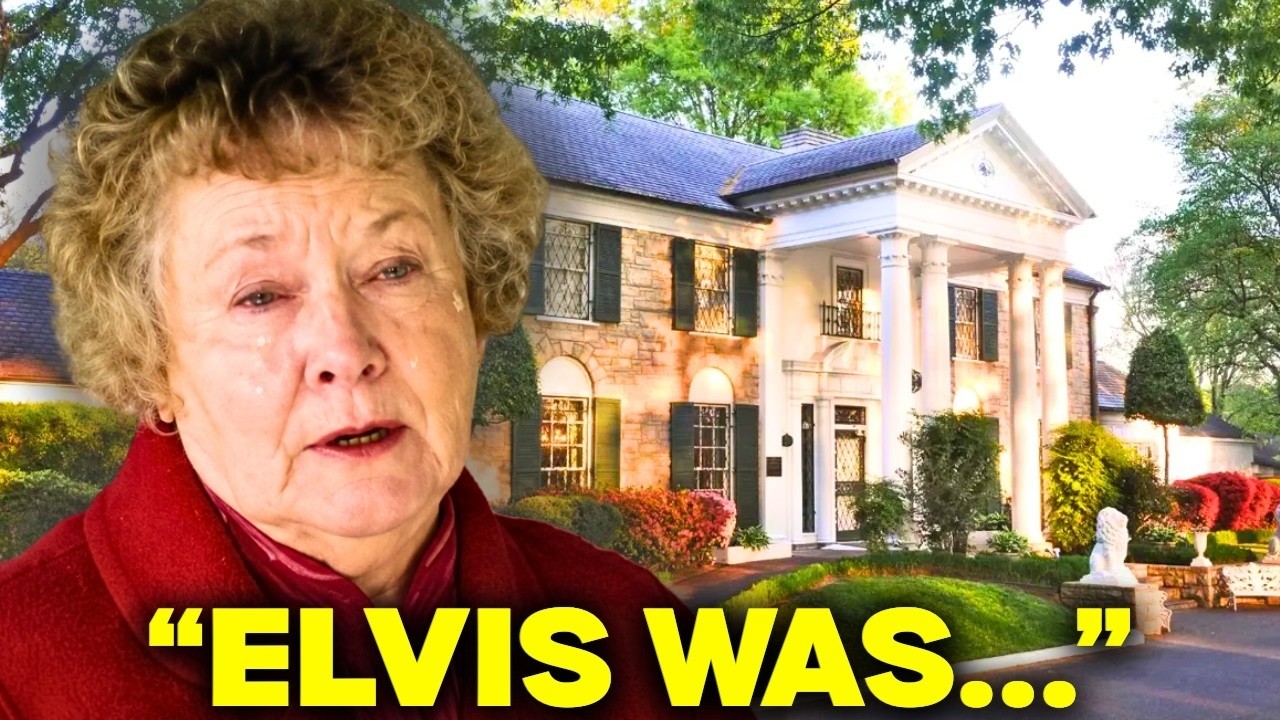
So, in 1967, she moved into Graceland to be with her family. At that time, Graceland wasn’t the famous tourist attraction known today. It was still a family home filled with Elvis, his parents, and his beloved grandmother, Minnie Mae. Delta found herself living under the same roof as the biggest entertainer in the world, witnessing his Hollywood years, his legendary comeback, and his Las Vegas success from just a few rooms away.
Like so many who knew Elvis personally, Delta experienced his incredible generosity. He believed in keeping family close and made sure those he loved were cared for. But living inside Graceland also meant living with constant pressure. Fans crowded outside the gates every day.
Privacy became almost impossible, and fame slowly transformed the peaceful home into something much more complicated. Delta saw both sides of Elvis. She knew the global superstar, but she also knew the tired, quiet man who simply wanted moments of normal life. Behind the headlines was a family trying to stay together while carrying the weight of worldwide fame.
Everything changed on August 16th, 1977, when Elvis died at just 42 years old. His passing marked the end of one chapter, but Graceland’s story wasn’t over. Over the next few years, Elvis’s father, Vernon, passed away, followed by Minnie Mae. One by one, the family members who had filled the mansion disappeared.
Only Delta remained. By 1982, Priscilla Presley made the difficult decision to open Graceland to the public. The estate had become too important to remain closed, and thousands of fans lined up to visit Elvis’s home. Yet, while tourists explored the mansion every day, they had no idea someone was still living inside.
Delta’s bedroom, located near the kitchen, remained private and off-limits to visitors. During the day, crowds walked through the famous rooms, but just behind a closed door, Delta continued living her quiet life. Family members later shared that Delta had a wonderful sense of humor. When visitors occasionally recognized her and asked if she was Aunt Delta, she’d sometimes jokingly reply that Aunt Delta died last night, leaving confused tourists completely speechless.
After the final tour ended each evening, Graceland became her home once again. She would walk through the silent mansion, sometimes even rearranging furniture because, to her, it wasn’t just a museum—it was still the family home she’d lived in for decades. Despite countless rumors over the years, Delta never revealed shocking secrets or hidden scandals about Elvis. Her greatest contribution was something far more meaningful.
She showed that behind the music icon was a generous man who loved his family, struggled with extraordinary pressure, and never stopped trying to provide for those closest to him. Her memories reminded everyone that Graceland wasn’t built as a monument. It was built as a home. When Delta passed away in 1993, the final private corner of Graceland disappeared with her.
Her room was restored, the kitchen was opened to the public, and for the first time, every part of the mansion became a museum. Perhaps that is Delta’s greatest legacy. She quietly preserved the last piece of Graceland that still felt like a real home. She never chased fame, never wrote a tell-all book, and never tried to profit from her unique place in history.
Instead, she simply lived her life with dignity, protecting the ordinary moments hidden behind one of America’s most famous front doors.