Richard Jenkins did not become a leading man until he was 60 years old. Before that, he spent three decades as one of Hollywood’s most recognizable yet nameless faces, appearing in films like *Silverado*, *The Witches of Eastwick*, and *There’s Something About Mary* before landing his first sustained spotlight as the dead patriarch on HBO’s *Six Feet Under*. Born in 1947 in DeKalb, Illinois, Jenkins spent 14 seasons at the Trinity Repertory Company in Providence, Rhode Island before an agent spotted him in his mid-30s. For the next two decades, he built a reputation as a dependable character actor, but few could name him.
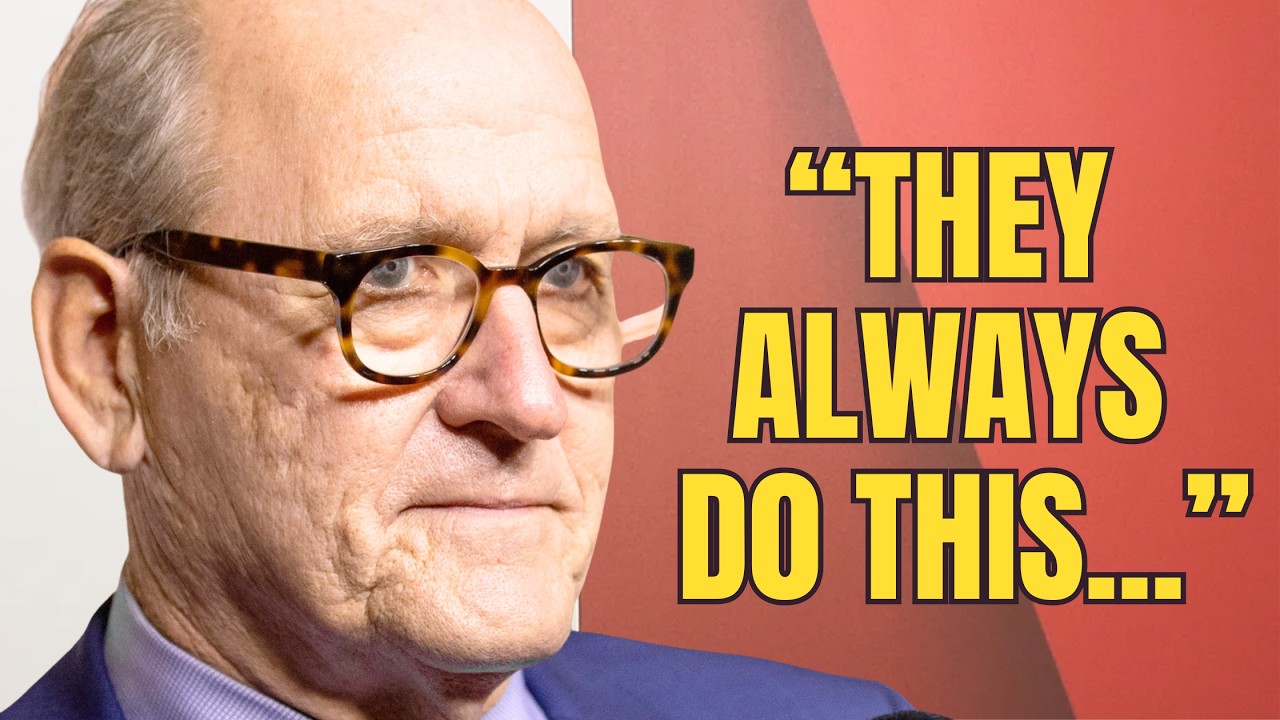
In 2007, director Tom McCarthy cast Jenkins as the lead in *The Visitor*. At 60, Jenkins played a grieving widower slowly pulled back into life by an unlikely friendship. The restrained performance earned him his first Oscar nomination at an age when most careers are winding down. What followed has been a late-career renaissance almost entirely devoted to portraying the realities of growing older in America.
His roles have repeatedly circled back to aging fathers, widowers, outcasts, and working-class men, handled with a level of honesty that has made him a favorite among the industry’s most respected directors. In 2017, Guillermo del Toro cast him as Giles in *The Shape of Water*. The character is a lonely aging illustrator, closeted his entire life and quietly falling behind in a world that has moved on without him. Jenkins has said the script felt like a rare gift from page one.
Jenkins has shared lighter stories from that set, including a disagreement with del Toro over reshoots. The director insisted, only half joking, that they were not the kind of men who change their minds, only to return two minutes later to approve the reshoot. There was also the matter of the film’s key lime pie scenes. Jenkins said the prop pie handed to him on day one was genuinely disgusting, forcing him to wipe his tongue off between takes.
He joked that the crew simply told him, “You can eat it,” as if that settled the matter. Underneath the humor, Giles became one of modern film’s more quietly devastating portraits of old age. In the film, the character tells the mute creature he befriends that he sometimes feels he was born too early or too late for his own life, and that they may both be relics. The role earned Jenkins his second Oscar nomination, this time for best supporting actor, along with Golden Globe and Screen Actors Guild recognition.
In 2020, Jenkins took on a role few list among his career highlights, but one that speaks directly to anxieties about retirement. In *The Last Shift*, he played Stanley, a fast-food night manager at a regional chain who has worked the same drive-thru window for 38 years. Stanley makes $13 an hour after starting at $3. 10 in the early 1980s.
He has run the same graveyard shift so long that locals half-jokingly call him a legend. His last shift is not a victory lap. He is leaving to care for his aging mother in Miami, trading one kind of unpaid labor for another. Jenkins drew on his own experience for the role, having spent three years making pizzas as a young man.
During press for the film, he traded fast-food war stories with his co-stars, joking about their time at Fuddruckers and Burger King. He has also spoken seriously about the character’s emotional core. Stanley takes genuine pride in work the world treats as beneath consideration. Jenkins described a man who owes his young trainee everything but cannot bring himself to say it, calling that failure the real tragedy of the story.
That same year, Jenkins appeared in Miranda July’s *Kajillionaire* as Robert, a small-time con artist father who spent his daughter’s childhood teaching her to distrust warmth and connection. The performance played almost as a dark mirror to Stanley, one man broken by giving everything to an unpaying system, the other broken by refusing to trust any system at all. July has said Jenkins gave her a piece of advice on set that she still repeats to her crews: a scene does not have to be right, it just has to be alive. In 2021, Jenkins reunited with del Toro for *Nightmare Alley*, which he said he adored.
In *The Humans*, he played Eric Blake, a father whose family Thanksgiving curdles into an unflinching reckoning with failing health, disappearing savings, and the terror of losing control over your own life. The film remains one of the most unsparing portraits of late-life anxiety American cinema has produced in years. Jenkins carries almost all of its dread without raising his voice, letting silence and small flinches do the work a lesser performance would have handed to a monologue. In 2022 came the role that tested him more than any other.
When Ryan Murphy asked him to play Lionel Dahmer, father of serial killer Jeffrey Dahmer, in Netflix’s *Monster: The Jeffrey Dahmer Story*, Jenkins’ first reaction was simply, “Oh God. ”
Murphy told him to read the first three episodes before deciding. Jenkins read Lionel Dahmer’s memoir, *A Father’s Story*, and one question stopped him cold: if your son is Jeffrey Dahmer, do you stop loving him? He said the answer, and the reason he took the role, was simple: “No, you don’t.
” He has said that if the book had shown a father who stopped loving his son, or never really cared, he does not think he would have accepted the part at all. Jenkins has spoken about the role with plain empathy that never tips into excuse-making. “It’s all life,” he said, “whether you’re a father to two gigantic children in *Step Brothers*, or a father to a serial killer, it’s just life. ”
He has also said he believes the real Lionel Dahmer still blames himself to this day, describing an interview in which the elderly man teared up talking about his son decades after the crimes.
Jenkins called the moment kind of beautiful and noted there is no off switch for parental instinct. He summed up the project bluntly: “It’s a sad tale all around. There’s just no happy outcome here. ”
The role earned Jenkins a Primetime Emmy nomination, arriving when he was already deep into his 70s.
He has admitted the work left him needing a real break from acting afterward, an exhaustion few performers his age are willing to name out loud. Even his reflections on his own career carry that same candor. Jenkins has admitted there was a stretch when he bored himself on stage, watching his own performance from outside himself and wondering what the profession was even for. He went back to an old acting coach, Harold Guskin, who told him plainly to stop trying to hide who he actually was, because that was the only thing he had to offer anyone.
Jenkins has said it took years to believe that, and that some part of him still is not fully convinced. He traced that breakthrough to a single night performing David Mamet’s *American Buffalo* in Philadelphia, when he told his scene partner he refused to do the play the same way one more time. His co-star shrugged and said it sounded good to him. Jenkins called that the first time he truly jumped off the cliff as an actor, when the work stopped being muscle memory and started being something he genuinely lived through in front of an audience.
By the numbers, the career is remarkable: two Oscar nominations, a Primetime Emmy win for *Olive Kitteridge*, and multiple Golden Globe and SAG nominations. Director Tom McCarthy has said there isn’t an actor alive who doesn’t massively respect him, calling him a genuinely blue-collar actor who shows up and does the work without needing the spotlight. Jenkins’ reputation was built one honest, unglamorous performance at a time. He has played aging fathers, aging widowers, aging outcasts, and an aging night manager, roles almost nobody else in Hollywood volunteered to take on with this much care.
The answer to whether Richard Jenkins is famous depends on how fame is measured. He never chased movie-poster fame. What he built instead is rarer: a body of work almost entirely devoted to telling the truth about growing older in America. He earned the right to tell those stories by living through 30 unglamorous years first, bored, uncertain, and unrecognized.
By the time Hollywood started listening, he had nothing left to prove. His performances feel less like acting exercises and more like a man finally trusted to put the fears of an ignored generation directly on screen. Fear about money, about health, about being forgotten, and about loving someone you cannot save. Jenkins did not spend his 60s and 70s chasing one last shot at youth.
He spent them becoming the actor most willing to look directly at everything about aging the rest of the industry would rather cut away from, with more warmth and honesty than performers half his age usually manage.