For decades, Connie Smith was known for one of the most unmistakable voices in country music.
The heartbreak.
The purity.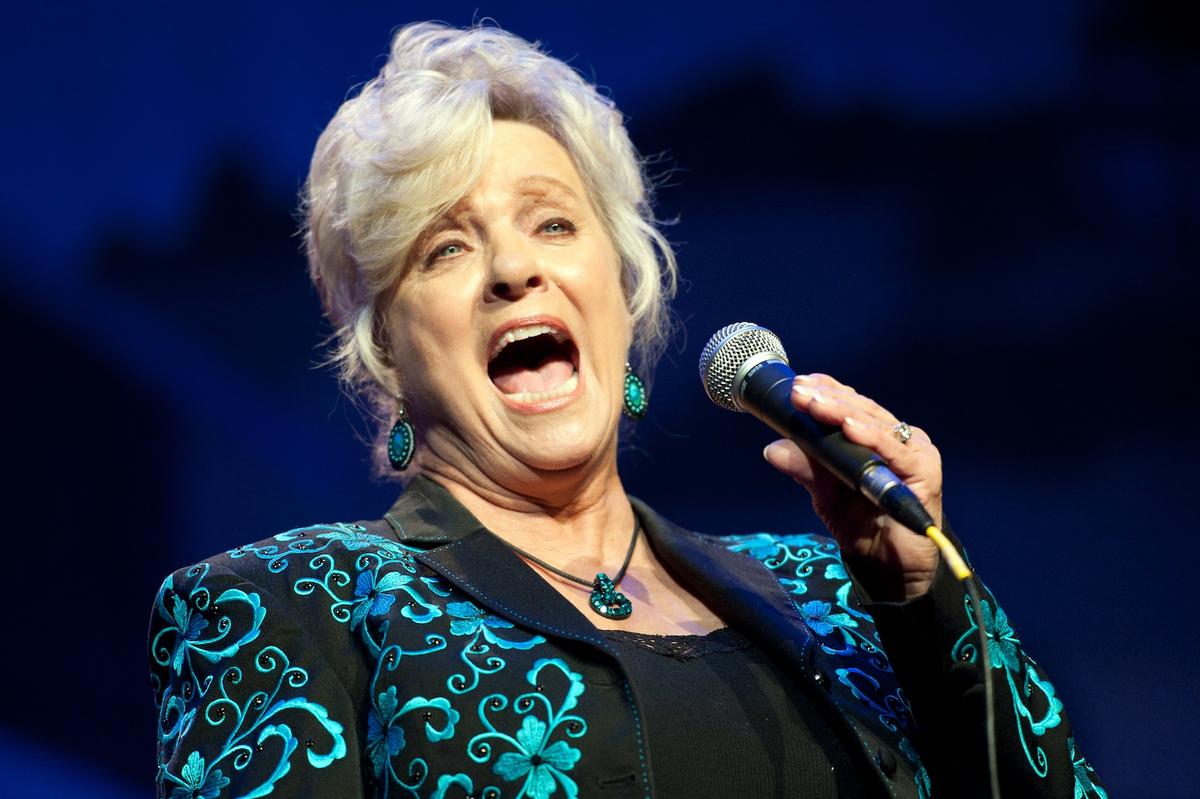
The emotion that seemed to come from somewhere deeper than the song itself.
To fans, she became the woman behind Once a Day, the singer whose voice could make even the simplest lyric feel painfully personal.
But behind that legendary career was one man whose influence reached far beyond a single hit song.
Bill Anderson.
The songwriter who discovered her.
The mentor who understood her instincts.
The collaborator who seemed to know what she needed to sing before she could always explain it herself.
And now, looking back across more than six decades in country music, Connie Smith’s reflections reveal just how important that relationship really was.
Not a sensational Hollywood-style scandal.
Not a secret romance.
Something quieter.
Something deeper.
A bond built on trust, music, and the rare feeling of being completely understood by another artist.
Before Connie Smith became one of country music’s most respected voices, her life was far from glamorous.
Born in Elkhart, Indiana, in 1941, she grew up in difficult circumstances.
Music became more than entertainment.
It became an escape.
A place where emotion could be transformed into something meaningful.
That sensitivity would later become one of the defining qualities of her singing.
Smith did not perform songs as though she were simply delivering lyrics.
She inhabited them.
Every disappointment sounded real.
Every longing felt personal.
Every line seemed connected to something she had lived.
But in the early 1960s, she was still far from becoming a household name.
Then Bill Anderson heard her sing.
That moment changed everything.
Smith was performing in Ohio when Anderson, already an established country songwriter, recognized something unusual in her voice.
It was not merely technical ability.
There was honesty in it.
A directness.
A sense that she was not trying to sound like anyone else.
Anderson saw potential immediately.
That discovery opened the door to Nashville.
Soon, Connie Smith was stepping into a world that would change her life.
In 1964, she recorded Once a Day.
The song became an extraordinary success.
It reached number one on the country chart and stayed there for eight weeks.
For a new female artist, the achievement was remarkable.
Almost overnight, Connie Smith became one of the biggest names in country music.
But the success of Once a Day was not simply the result of a powerful voice.
The song fit her.
Its emotional restraint.
Its sadness.
Its simplicity.
Everything about it seemed naturally connected to the way Smith communicated pain.
And Bill Anderson understood that.
He was not simply handing her songs.
He was helping shape a musical identity.
That collaboration became one of the foundations of her career.
Smith continued recording throughout the 1960s and 1970s.
Her catalog expanded.
More than 70 of her songs reached the charts.
She became recognized as one of the defining voices of traditional country music.
Her style remained unmistakable.
Clear.
Emotional.
Unforced.
Other country artists took notice.
George Jones, himself one of the most revered singers in the genre, famously regarded Connie Smith as his favorite female country singer.
Praise like that reflected something important.
Smith’s greatness was never built on spectacle.
It came from authenticity.
She could take a lyric and make it sound as though it had happened to her minutes earlier.
And Bill Anderson’s writing often gave her exactly the kind of material that allowed that gift to shine.
The connection between them worked because they understood the same emotional language.
Anderson wrote stories.
Smith lived inside them.
He understood structure, phrasing, and how to turn ordinary human disappointment into something unforgettable.
She understood how to make those words hurt.
Together, they created music that felt less like performance and more like confession.
But Connie Smith’s life outside the recording studio was far more complicated.
Success came quickly.
And fame brought pressures she had not necessarily prepared for.
Her personal life included four marriages.
Each relationship represented a different period in her life.
Different priorities.
Different struggles.
Different versions of who she was becoming.
As the years passed, Smith began reconsidering what she wanted.
Country music had given her extraordinary success.
But success also demanded time.
Travel.
Performances.
Constant attention.
By the late 1970s, she made a decision that surprised many people in the industry.
She stepped back.
Family became more important.
Faith became more important.
The woman who had once been one of country music’s most visible stars gradually withdrew from the pace that had defined much of her adult life.
For some performers, disappearing from the spotlight can mean being forgotten.
That did not happen to Connie Smith.
Her reputation remained.
Her recordings continued influencing younger artists.
And her voice was still recognized as one of the genre’s finest.
Eventually, Smith returned more fully to music.
In the 1990s, she experienced a renewed creative period.
And another important relationship entered her life.
Marty Stuart.
The country musician had admired Connie Smith long before they became a couple.
Their age difference drew attention, but their connection developed around a shared devotion to traditional country music.
In 1997, they married.
For Smith, the relationship represented a different stage of life.
A period shaped less by chasing success and more by appreciation.
 Music remained central.
But the meaning of success had changed.
By then, she no longer had anything to prove.
Her place in country music history was already secure.
In 2012, Connie Smith was inducted into the Country Music Hall of Fame.
The honor recognized decades of influence.
Not merely hit records.
Not merely longevity.
But the impact of a voice that had helped define traditional country music.
Yet even after all those years, Bill Anderson remained an essential part of the story.
Because without that early recognition, the path might have looked very different.
Anderson did more than introduce Smith to Nashville.
He understood her.
That is the part of the relationship she has emphasized most strongly.
He understood that she was a storyteller.
And he wrote songs that allowed her to tell stories naturally.
Their connection was based on mutual respect.
Trust.
An instinctive musical understanding.
There was no need to force it.
He knew how she phrased a lyric.
He knew what emotional territory suited her voice.
He knew what kind of story she could make believable.
And she trusted his instincts.
That kind of artistic relationship is rare.
Especially in an industry where songs can pass through countless hands before reaching a singer.
With Connie Smith and Bill Anderson, there was something more direct.
He could hear her voice while writing.
She could understand the emotional truth inside his words.
The result was a body of work that helped shape both of their legacies.
And that is why Smith’s reflections on Anderson matter.
Looking back at 84, she is not simply remembering the man who wrote songs for her.
She is remembering someone who recognized who she was before the rest of the world did.
Someone who saw possibility in a young singer performing far from the center of the country music industry.
Someone who helped turn that possibility into a career.
Hollywood and Nashville often celebrate dramatic stories.
Betrayals.
Feuds.
Broken friendships.
Secret romances.
But the truth about Connie Smith and Bill Anderson is compelling for another reason.
Their story is about artistic trust.
About the power of one person recognizing something in another before fame arrives.
About the strange magic that happens when the right songwriter finds the right voice.
Connie Smith went on to experience enormous success.
She became a country music icon.
She survived personal upheaval.
She stepped away from fame.
She returned on her own terms.
She built a lasting life with Marty Stuart.
And she entered the Country Music Hall of Fame.
But Bill Anderson remains connected to the beginning of everything.
The discovery.
The breakthrough.
The songs.
The trust.
And perhaps most importantly, the feeling that someone truly understood what her voice was capable of saying.
Their story reminds us that behind every legendary career are moments that could easily have gone another way.
A performance.
A chance encounter.
Someone listening closely enough to recognize something special.
For Connie Smith, that person was Bill Anderson.
And more than six decades later, the respect she still carries for him says as much about their friendship as any chart record ever could.
Not every defining relationship is dramatic.
Some simply change the direction of a life.
And never stop mattering.


