Maureen McCormick, who played Marcia Brady on the iconic sitcom, flatly refuses to watch a specific episode from 1969. The episode in question is the one in which her character happily declares that getting the measles is not so bad. Decades after the cameras stopped rolling, that single line was pulled from the archives and turned into a weapon in a modern public health controversy. The thirteenth episode of the first season, titled “Is There a Doctor in the House?
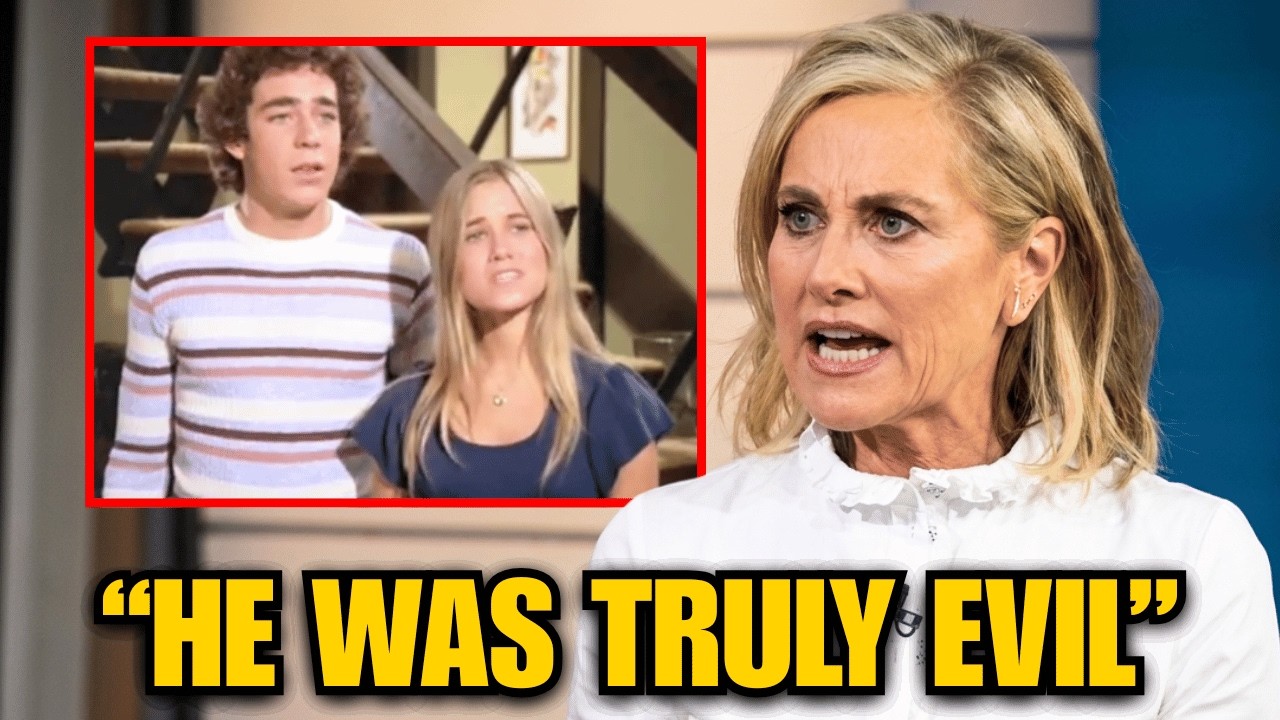
“, aired on December 26, 1969. The plot followed a classic sitcom setup: one child gets sick, and soon all six Brady kids are quarantined in bed. Rather than depicting a realistic illness, the show framed the situation as a cozy indoor vacation. The children played board games, laughed, and ate soup under warm studio lights, with McCormick delivering the line: “If you have to be sick, there’s nothing like the measles.
”
At the time, the moment was harmless entertainment. The studio audience laughed on cue, filming continued, and the cast moved on. The episode was designed to comfort families during the holiday season, presenting a starkly idealized version of suburban life to a nation dealing with the turmoil of the late 1960s. It was a fantasy, not a medical guide.
The show itself was created by Sherwood Schwartz as a deliberate escape from reality. The set featured bright colors and fake grass, and the storylines rarely reflected the real world. Critics initially dismissed the show as artificial, but audiences embraced it for the comfort it provided. The six child actors were marketed as perfect role models, appearing on albums, lunch boxes, and in touring musical acts, blurring the line between their on-screen personas and their real lives.
McCormick’s real life stood in sharp contrast to her character’s perfection. After the show was abruptly cancelled in 1974, she struggled to find serious acting roles, as directors only saw her as Marcia Brady. She faced feelings of inadequacy, anxiety, and body dysmorphia, and later turned to substance abuse. In her darkest moments, she battled addiction and depression, a far cry from the pristine image she projected on television.
Compounding the irony, McCormick had actually suffered a severe case of the measles as a child before the show began. Her real experience involved high fevers, intense body aches, and terrifying light sensitivity that forced her to stay in a completely dark room for days. She knew firsthand that the disease was painful and dangerous, carrying risks of brain swelling, hearing loss, and even death for vulnerable children. McCormick eventually rebuilt her life through rehabilitation, therapy, and the support of loved ones.
She married, found stability, and wrote a bestselling memoir about her struggles. She seemed to have made peace with her past, focusing on a calm and balanced future. Yet, years later, the internet had other plans for her. With the rise of social media and the modern anti-vaccination movement, online groups began searching for cultural references to support their claims that childhood viruses were harmless.
In the 1969 episode, they found what they believed to be a perfect artifact. Screenshots of McCormick as Marcia Brady, smiling in bed with the measles, were turned into memes and shared tens of thousands of times. The line “If you have to be sick, there’s nothing like the measles” was used as propaganda to suggest that contracting the disease was a fun rite of passage. The campaign deliberately ignored the fact that sitcom writers in 1969 were creating light entertainment, not medical advice.
They also overlooked the fact that real-world measles outbreaks caused hundreds of deaths and serious complications for children every year. Instead, they used Marcia Brady’s cultural power as a symbol of innocence to lend credibility to their message. For McCormick, discovering these viral campaigns was a horrifying shock. Friends and acquaintances began sending her links to the posts.
She was looking at her own thirteen-year-old face being exploited without her knowledge or consent as a front for a message that contradicted both medical science and her personal beliefs. The people sharing the posts had no interest in the real girl behind the character, nor in her painful real-life experience with the disease. Her image had become a tool in an ideological war she never asked to join. McCormick realized that silence was no longer an option.
She publicly confronted the groups using her image. She stated clearly that she was angry that her face was being weaponized without her consent. She affirmed her complete trust in medical science and her belief in life-saving vaccines, and she confirmed that her own daughter was fully vaccinated. She urged the public to draw a sharp line between television fiction and real-world medicine.
She explained that the episode was a script written for a 1969 comedy, meant only to entertain families for thirty minutes. It was not a medical document, a historical record, or a public health guide. To reinforce her point, she spoke openly about her own terrifying bout with the measles, contrasting the cozy studio set with the dark, isolated room she endured as a sick child. Her forceful response sent shockwaves through the online community, forcing social media platforms to address the misuse of old television clips.
By speaking out, she stripped the anti-vaccination campaigns of their favorite pop culture shield. However, the emotional cost of the ordeal permanently altered her relationship with that specific part of her past. The once-forgotten episode became tainted by controversy and misuse. This is precisely why McCormick now draws a firm, unyielding boundary.
She refuses to watch that 1969 episode ever again. Seeing herself laughing in bed and delivering that playful line is no longer a neutral trip down memory lane. It has become an uncomfortable reminder of how easily innocence can be distorted and how a fleeting line spoken in a studio can haunt its speaker for decades. Her refusal to watch the episode is part of a broader, healthier philosophy toward her past.
In interviews, she has said she generally does not rewatch Brady Bunch episodes. While she holds deep affection for her former co-stars, whom she considers a second family, she feels no desire to relive her on-screen adolescence repeatedly. As she simply put it: “If I watch the work once, I’ve had enough, and I want to move forward. ”
By closing that vault and refusing to indulge in self-serving nostalgia, McCormick has reclaimed ownership of her life.
She has proven that she is defined by who she chooses to be in the present, not by the ghost of a fictional teenager preserved on film. The girl in the pajamas may forever belong to television history, but the woman who stood up to reclaim her voice belongs entirely to herself. Looking forward, McCormick has shifted her focus to passionate projects that reflect her true personality and talents. She successfully transitioned into home renovation and lifestyle television, starring in the HGTV series “A Very Brady Renovation,” where she reunited with her on-screen siblings to restore the famous North Hollywood house to its 1970s glory.
She also showcased her interior design skills alongside contractor Dan Vickery in the series “Frozen in Time. ”
Beyond her design projects, she remains an active public advocate for mental health awareness, addiction recovery, and animal welfare. She lives a quiet, fulfilling life in Southern California with her husband, Michael Cummings.
McCormick has proven that while you cannot control the past, you hold absolute power over your future, a narrative defined not by a character written in 1969, but by an independent and persevering woman.


