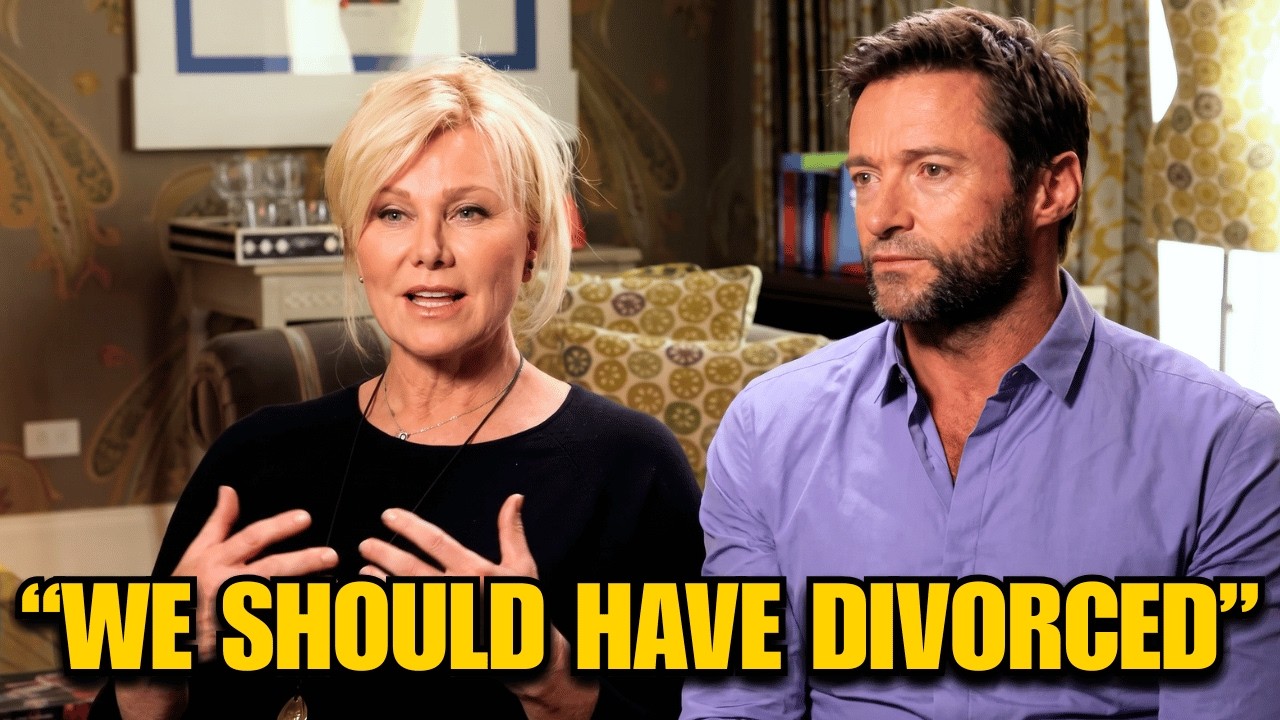
For nearly two years, Deborra-Lee Furness has remained a figure of stoic silence, a quiet counterpoint to the swirling speculation that followed the collapse of her 27-year marriage to Hugh Jackman. That silence has now been broken, and the word she has chosen to describe her experience cuts through the carefully managed public narrative with startling force: betrayal.
In her first extended public comments since the September 2023 separation announcement, Furness has painted a picture of profound emotional devastation, describing the period as a “traumatic journey” marked by a “wound that cuts deeply.” The language is a stark departure from the measured, mutually agreed-upon statement that first announced the couple’s split, which spoke only of “individual growth” and a shared desire for privacy. This new revelation reframes the entire narrative, suggesting that behind the facade of Hollywood’s most enduring love story lay a fracture far more painful than a simple drifting apart.
 The initial shock of the separation was compounded by the sheer unexpectedness of it all. For decades, Jackman had been the most vocal advocate for his marriage, frequently lauding Furness as the cornerstone of his life and the source of his stability. Their public appearances were a masterclass in coupledom, a testament to a partnership that had weathered the storms of fame, career pressures, and the challenges of building a family through adoption.
The joint statement released on September 15, 2023, was a masterwork of diplomatic language, but it left a vacuum of unanswered questions that the public and press have been trying to fill ever since.
Furness’s decision to remain silent in the immediate aftermath was, in itself, a significant choice. In an era of tell-all interviews and social media salvos, her restraint was almost anachronistic. She did not engage with the rumor mill, nor did she offer a counter-narrative to the stories that began to emerge.
This silence, however, was not a sign of indifference. Those close to the situation suggest it was a period of intense processing, a time for her to grapple with the private reality of a public ending. It was a silence that spoke of deep hurt, and it made her eventual words all the more resonant.
 The context for that hurt has become increasingly clear through a timeline that has emerged since the separation. The focus of public scrutiny has inevitably shifted to Jackman’s relationship with his former The Music Man co-star, Sutton Foster. The pair’s on-stage chemistry during the Broadway revival was palpable, but it was largely viewed as professional admiration.
However, the timeline of events has raised difficult questions. Foster filed for divorce from her husband, Ted Griffin, in October 2024, and by January 2025, she and Jackman were photographed holding hands in public, confirming a romance that had been the subject of intense speculation.
For observers, the chronology suggests a connection that may have begun to blur the lines of professional collaboration long before the public announcement of the Jackman-Furness separation. While neither Jackman nor Foster has confirmed the precise nature or start date of their relationship, the perception of an overlap has fueled the narrative of betrayal that Furness now articulates. The rapid progression of Jackman’s new relationship, culminating in reports of a proposal to Foster during a New Year’s vacation in Costa Rica, stands in stark contrast to the lengthy, complex process of dissolving a three-decade-long marriage, adding a layer of public pain to Furness’s private grief.
 The legal and financial dimensions of the divorce further underscore the complexity of untangling a shared life of such magnitude. Furness filed for divorce in New York on May 23, 2025, with the proceedings finalized just days later on June 3. The speed of the legal process indicates that terms were largely settled out of court, a testament to the couple’s ability to navigate complex financial negotiations.
Their combined wealth, built on Jackman’s global stardom as Wolverine and his ventures in theater and endorsements, includes significant real estate holdings in New York, the Hamptons, and Australia. The division of these assets, while handled privately, represents the dismantling of a financial empire that was also a shared life’s work.
Beyond the headlines and legal filings, it is crucial to remember the woman at the center of this story. Before she was known as Hugh Jackman’s wife, Deborra-Lee Furness was an accomplished actress in her own right, with a career that included a Best Actress award from the Australian Film Critics Circle for her role in the 1988 film Shame. She met Jackman in 1995 on the set of Corelli, and her career and identity were always independent of his.
 Her passionate advocacy for adoption reform, born from her own struggles with IVF and miscarriages, has been a defining feature of her public life, showcasing a commitment to causes far beyond the red carpet.
This independent spirit makes her current testimony all the more compelling. She is not a woman defined solely by her marriage, but one who chose to share her life with a partner who would go on to achieve extraordinary fame. Her decision to speak now, with the weight of reflection and the clarity of hindsight, suggests a woman reclaiming her own narrative.
She is no longer content to be a silent figure in a story written by others. Her use of the word “betrayal” is not just a personal accusation; it is a challenge to the public to look beyond the carefully curated images and acknowledge the human cost of a very public unraveling.
The story of Hugh Jackman and Deborra-Lee Furness serves as a powerful reminder of the chasm that can exist between public perception and private reality. For years, their marriage was held up as an ideal, a bulwark against the cynicism of Hollywood. The reality, as it now emerges, is far more nuanced and painful.
Furness’s silence was a shield, but her words are now a key, unlocking a new understanding of a relationship that was, for so long, defined by its outward perfection. As she begins to share her side of the story, the public is left to reconcile the image of a devoted husband with the portrait of a woman nursing a deep and abiding wound. The final chapter of this story is far from written, and Furness has made it clear that she intends to have her voice heard in its telling.