Maureen O’Hara, one of Hollywood’s most iconic leading ladies, spent much of her career battling the very industry that made her a star. Born Maureen FitzSimons on August 17, 1920, in the Dublin suburb of Ranelagh, she grew up in a creative Irish household and trained at Ireland’s prestigious Abbey Theatre before catching the attention of actor Charles Laughton in the late 1930s. Laughton signed her to a production contract and cast her in the 1939 Alfred Hitchcock film *Jamaica Inn*. That same year, she starred as Esmeralda in *The Hunchback of Notre Dame*, opposite Laughton’s Quasimodo.
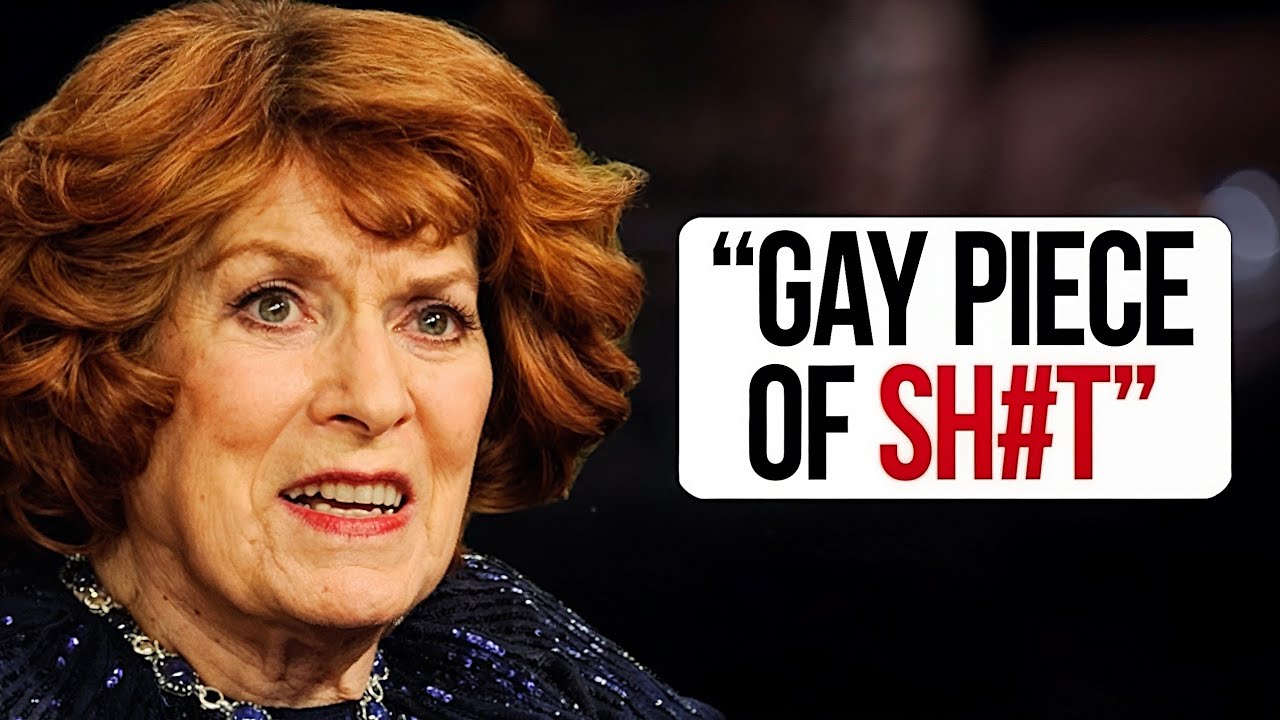
The role launched her smoothly into Hollywood, where her striking red hair, green eyes, and porcelain skin became legendary once Technicolor arrived. Audiences admired O’Hara not only for her beauty but also for the strength and dignity she brought to her characters. She deliberately avoided playing passive, helpless women, choosing instead roles that required guts, intelligence, and independence. Her performances in films such as *How Green Was My Valley* (1941), which won the Academy Award for Best Picture, *The Black Swan* (1942), and *Sinbad the Sailor* (1947) cemented her status as a true leading lady of Hollywood’s golden age.
She formed lasting partnerships with director John Ford and actor John Wayne. Their on-screen chemistry produced classics including *Rio Grande* (1950), *The Quiet Man* (1952), and *McLintock! * (1963). *The Quiet Man*, in which she played the fiery and proud Mary Kate Danaher, remains one of the most beloved romances in film history.
Off screen, O’Hara was equally known for refusing to bend to studio pressure. She demanded fair pay, good working conditions, and respect. She turned down roles she considered shallow or demeaning to women and refused to dye her famous red hair or hide her Irish roots. She once proudly noted she was the only leading lady in Hollywood allowed to keep her natural Irish accent.
That independence came at a cost. For years, O’Hara privately endured harassment and unethical behavior from powerful executives and producers. She later revealed that her career suffered because she refused to give in to what was commonly called the “casting couch culture. ” In a direct statement in 1957, she said she had been insulted, humiliated, and effectively blacklisted for rejecting unwanted advances.
Having grown up with strong Catholic values in Ireland, she carried her conviction that personal dignity came before career advancement into the American film industry. She also spoke openly about her difficult working relationship with director John Ford, a man widely celebrated for masterpieces such as *The Grapes of Wrath*, *Stagecoach*, and *The Searchers*. Despite giving her some of her best roles, Ford was, by her account, emotionally cruel, manipulative, and abusive toward her. She recalled him yelling at her and humiliating her in front of crews for no reason.
She believed Ford harbored a one-sided obsession with her that he never expressed directly and turned into anger when she did not reciprocate. In one especially painful memory, she said he slapped her on set and tried to pass it off as his directing style. She refused to accept it. O’Hara was married three times.
Her first marriage, to English film producer George H. Brown, happened in secret in 1939 while she was only nineteen and working on *Jamaica Inn*. The couple annulled the marriage in 1941. That same year she married American film director William Houston Price.
Their relationship was strained by Price’s alcoholism, but they had a daughter together, Bronwyn Bridget Price, born on June 30, 1944. Motherhood became one of the greatest joys of O’Hara’s life. After nearly ten years of struggling to make the marriage work, she divorced Price in 1951. From 1953 until 1967, O’Hara had a long romance with Mexican banker and political figure Enrique Parra.
They never married, but she spoke of him warmly for years afterward. In 1968, at age 48, she married Charles F. Blair Jr. , a brigadier general in the U.
S. Air Force, a chief pilot for Pan American World Airways, and the founder of Antilles Airboats. He encouraged her to step away from acting, and she soon retired to support his flying business. They moved to the U.
S. Virgin Islands and built a calm life together until 1978, when Blair died in a plane crash while piloting one of his own seaplanes. That same year, O’Hara was diagnosed with uterine cancer; she underwent surgery, fought the disease, and made a full recovery. She later wrote an autobiography titled *’Tis Herself*, sharing the full arc of her life and career.
In 2014, the Academy of Motion Picture Arts and Sciences presented her with an honorary Oscar celebrating her lifetime of work. She accepted it with the same elegance and calm that defined her public presence. Decades before movements like #MeToo, O’Hara had already exposed the toxic side of Hollywood’s power structures. At the time, many dismissed her accounts or refused to believe her.
History later validated her warnings, and in her final years she gained renewed respect not only for her performances but for her moral courage. On October 24, 2015, Maureen O’Hara died peacefully in her sleep at her home in Boise, Idaho. She was 95 years old.
She was laid to rest at Arlington National Cemetery beside her beloved husband Charles Blair, a final tribute to a partnership that brought her joy and companionship after decades of professional battles and personal loss.