Terrence Howard’s appearance on The Joe Rogan Experience in May 2024 produced one of the most widely shared moments in the show’s recent history, but the detail that went viral was not the one backed by real numbers. During episode 2152, the Empire actor made a specific claim about his own pay: he said the same agency that represented him also represented actors on another show. His series drew roughly 28 million viewers, while the other program attracted 11 million. Howard said those actors were earning approximately $2–3 million per episode, while he was paid $325,000 per episode.
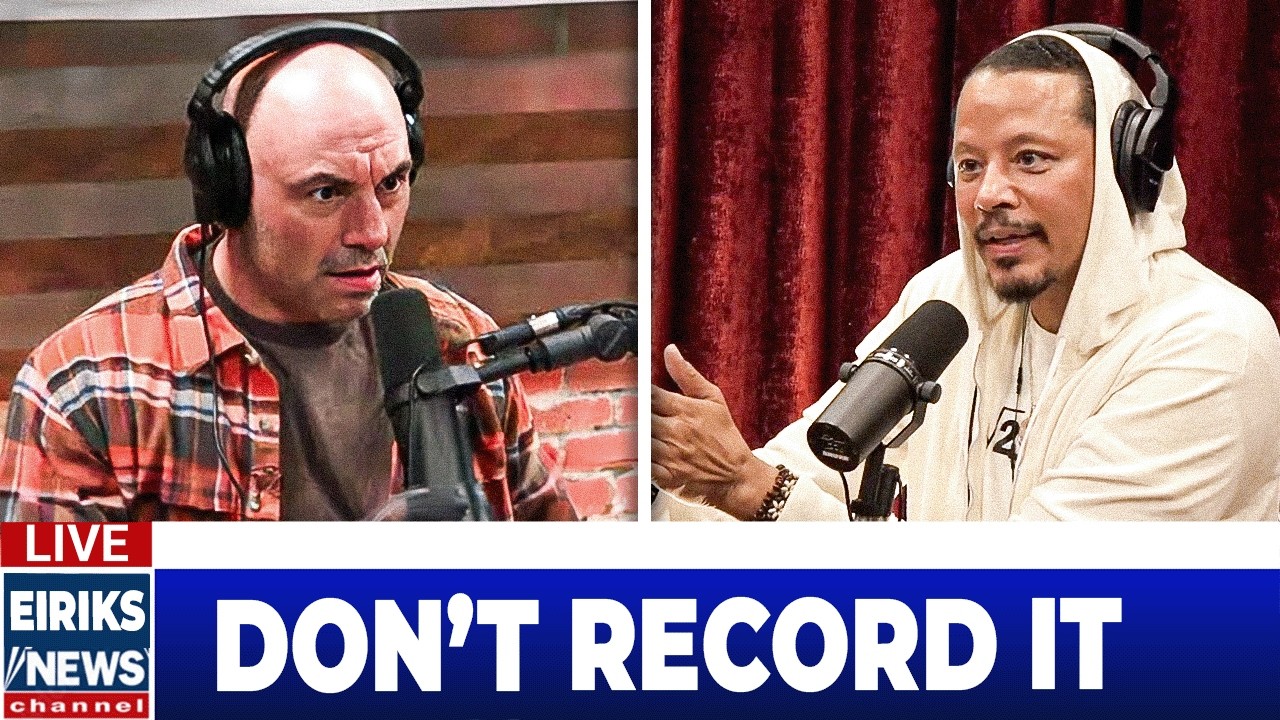
That claim involved a named agency, a known series, and figures that could be checked. It received little news coverage. The reason, according to observers of the episode, was that Howard had also said in the same conversation that he was close to eliminating gravity, that he held 97 patents, and that he remembered being inside his mother’s womb during his own birth. Those statements dominated headlines and buried the verifiable pay disparity.
Joe Rogan himself appeared uncertain, later telling his audience that Howard was clearly intelligent and that if he was right, it would change the world, but adding that Howard should sit down with a real physicist so people could properly assess his claims. That meeting happened in July 2024, when Howard returned to the show with mathematician Eric Weinstein. Weinstein interrupted Howard mid-explanation and told him he was using a real scientific term incorrectly, warning that there was a price for that kind of error. It was one of the few times a guest on this list was corrected live on air.
The pattern was clear: a specific, verifiable claim about pay received almost no attention, while an unprovable claim about gravity spread quickly. Months earlier, in February 2024, comedian Katt Williams appeared on episode 2110, shortly after the most-watched interview of that year. Williams claimed Hollywood had an agenda to spread propaganda, arguing the industry deliberately shaped beliefs rather than merely entertaining audiences. He then moved into less defensible territory, saying the pyramids could not have been built by human workers at all, and hinting at otherworldly involvement.
Rogan’s response was a shrug; he said they had smoked good things that day and moved on. Headlines afterward were harsh, with one outlet saying Williams had damaged his credibility in that single conversation. Russell Brand appeared on Rogan’s show multiple times, including episode 1949. He spoke directly about what he described as hidden control in media and entertainment.
Brand said YouTube would quietly demonetize videos based on specific words, forcing creators to change their language just to stay online. He said he moved to another platform to escape what he called algorithmic censorship. He went further, claiming there were centralized corruption systems that bypassed democracy entirely, and that media was beholden to advertisers who gave it vast sums of money. His argument was that once you started questioning those systems, you noticed the same pattern everywhere.
In September 2023, a joint investigation by a British broadcaster and newspaper reported that four women had publicly accused Brand of sexual assault, with allegations said to involve incidents between 2006 and 2013. Brand denied all allegations, insisting any relationships were consensual. As of the time of the report, no criminal charges had been filed. The irony was difficult to ignore: a man who spent hours warning about hidden forces and predators in entertainment became the subject of the kind of investigation he claimed to expose.
That did not prove or disprove his original claims, but it made the entire story harder to process. Accounts of the old studio system describe a different kind of control. There is a widely repeated story about an old-school Hollywood producer said to have kept a full bedroom inside his office. The story goes that aspiring stars had to go through that door to make it.
Industry insiders reportedly described it simply as a “deal with the devil,” something that had always existed in the business. Reports describe child actors suffering the most, with parents often fully aware of what was happening but staying silent because the money kept flowing. Everyone on set, it was said, knew what a director or producer expected in exchange for a role, yet no one spoke as long as the checks cleared. The name Harvey Weinstein appears in this context in a specific way.
According to reports, his contracts included a financial penalty structure tied to harassment claims, starting at around $100,000 for a first offense and reaching hundreds of thousands, reportedly up to $1 million for repeat claims. That would amount to a financial plan built directly into a contract to handle future accusations, a documented artifact rather than mere rumor. Roger Avary, director and co-writer of Pulp Fiction, appeared on the podcast and said everything described in the Epstein files about Hollywood was true. He said he was surprised no one else seemed surprised, as if the industry accepted the whole thing as normal.
Eddie Bravo, a recurring Rogan guest, floated a theory about an alleged Epstein list, suggesting hidden cameras and carefully kept guest lists may have allowed powerful organizers to blackmail influential figures across Hollywood, politics, finance, and academia. That remains a theory, not a confirmed fact. Even Rogan’s guests themselves disagreed about whether any circulating list was genuine. A frequently shared moment involves comedian Chris Tucker.
Asked directly why his name had been linked to Epstein, Tucker said on a podcast that he was on a flight to Africa with a group of diplomats and had no idea at the time who else was involved. Whether one finds that explanation convincing or not, it illustrates how easily a famous name becomes attached to a story simply by being in the wrong place at the wrong time. In 2014, Jim Carrey made a hand gesture live on air and told the hosts it represented something deeper, practically challenging them to admit they knew what it meant. No one on stage acknowledged knowing it.
The moment has circulated online for years as one of the stranger live moments connected to the broader subject. Reports and commentary have raised questions about why Oprah did not speak publicly about Weinstein before his arrest, despite working with him for decades. Only after other first-row names began facing criticism over their associations with Weinstein did Oprah begin addressing the situation publicly. There is also the story of Stephen “Twitch” Boss, an executive producer on The Ellen DeGeneres Show for roughly eight years until the show ended in 2022.
Twitch died in December of that year, and a note was reportedly found afterward. Some online sources claimed it referenced things he knew about people connected to Ellen’s show and to Diddy. That part of the story warrants caution, not speculation. What was confirmed is that Twitch left a note.
Dave Chappelle is often described as someone who saw the dark side of Hollywood and chose to walk away entirely. He reportedly turned down $100 million, and Oprah was said to have questioned his decision at the time. Chappelle later explained his choice with a story about how some cultures trap baboons: salt is placed inside a small hole, the baboon reaches in, and its fist becomes too large to pull out. The baboon refuses to release the salt, even though letting go is the only way to be free.
Chappelle said he felt like that baboon, but was smart enough to let go of the salt before it was too late. What holds up and what does not? Howard’s pay figures are specific, named, and verifiable. Brand’s warnings about hidden systems became unsettling in hindsight, but that irony is not proof his original claims were accurate.
Williams’ claims about pyramids and magic, along with Howard’s physics theories, fall apart the moment an actual expert responds. The quieter stories about contracts, silence, and people who stayed close to power without speaking often carry the most real evidence. The pattern across every guest is the same: those who supported their claims with names and numbers received almost no attention, while those who spoke in vague, unprovable terms about secret agendas received the most views precisely because there was nothing solid enough to verify.
That may be the actual dark secret running through all these conversations, not a hidden symbol or secret ritual, but a documented pay gap, a pattern of silence, and a system in which the wildest claim always outperforms the quieter truth.