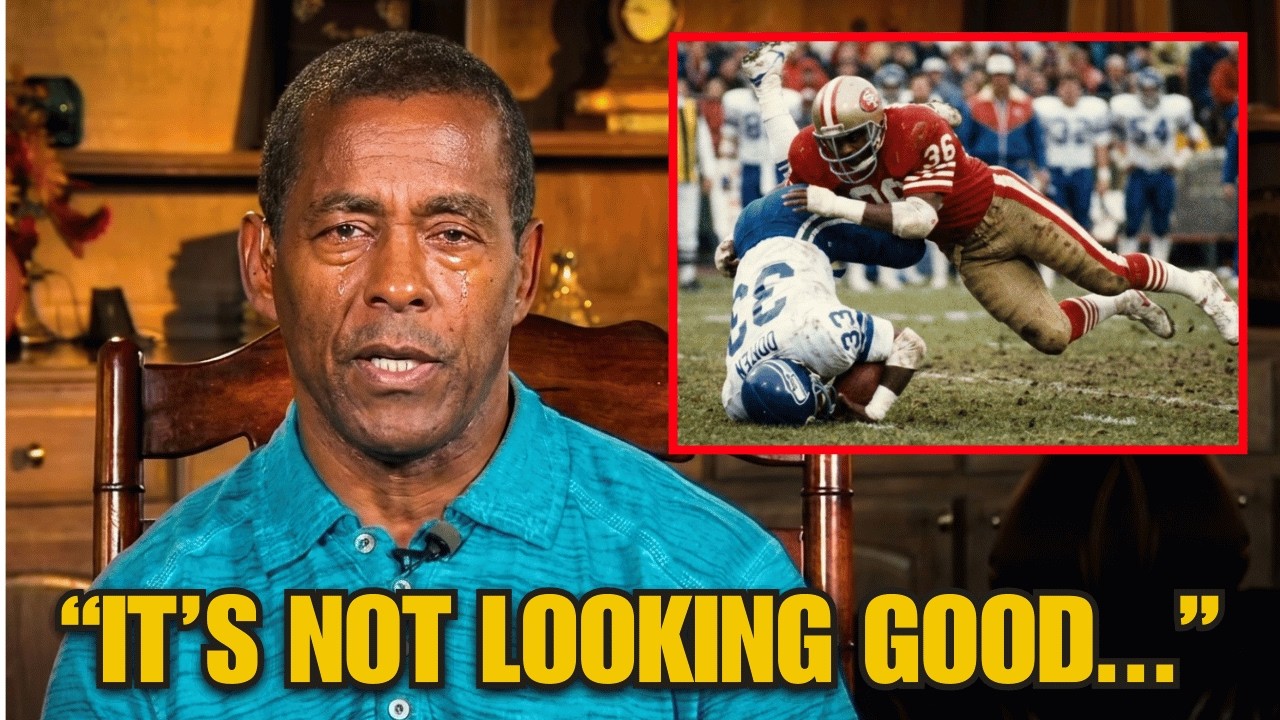
When Tony Dorsett was diagnosed with signs of chronic traumatic encephalopathy, or CTE, in 2013, the Hall of Fame running back did not hide from the findings. He went public, telling reporters there was no doubt in his mind that his years as a football player were now affecting him. The diagnosis came after advanced brain imaging at UCLA, and it turned a quiet research study into a national story about the long-term toll of the sport. Long before that diagnosis, Dorsett’s life had already been shaped by struggle as much as by success.
Born April 7, 1954, in Rochester, Pennsylvania, he grew up in Hopewell Township near Aliquippa, a steel town where hard work was a way of life. His father, Wesley Dorsett, worked exhausting shifts at the Jones & Laughlin Steel Mill, and the family faced real economic hardship. For young Tony, the local sandlots were more than a playground. Football became his path to a better future.
At Hopewell High School, Dorsett established himself as an all-state running back, but college recruiters hesitated, worried his lean frame would not survive the punishment of big-time football. He signed with the University of Pittsburgh in 1973 anyway, and immediately his life took an unexpected turn. On September 14 of that year, just as his freshman season was beginning, 19-year-old Tony and his girlfriend Karen Castelo welcomed their first son, Anthony Dorsett Jr. A young athlete adjusting to college sports suddenly had to provide for a newborn.
The pressure nearly broke him. During his first semester at Pitt, Dorsett felt overwhelmed, homesick, and close to leaving the program. Honest conversations with his mother and encouragement from the coaching staff convinced him to stay. Once he committed fully, he rewrote the college record books.
From 1973 through 1976, he became the first player in NCAA history to rush for at least 1,000 yards in four straight seasons. He set a national benchmark with 33 games over 100 yards and became the first college player to gain 1,500 rushing yards in three separate seasons. His senior year in 1976 was historic. Dorsett rushed for 1,948 yards and scored 21 touchdowns, carrying the Pitt Panthers to an undefeated season and a national championship.
He won the Heisman Trophy, the Maxwell Award, and the Walter Camp Award, and earned first-team All-American honors all four years. He finished his college career with 6,082 rushing yards, an NCAA record that stood for 22 years. Pitt retired his number 33 jersey. In the 1977 NFL Draft, the Tampa Bay Buccaneers held the first pick but passed on Dorsett, worried that at 192 pounds he was too small for the pros.
Dallas Cowboys head coach Tom Landry traded four draft picks to Seattle for the second overall selection and brought Dorsett to Dallas. The team signed him to a five-year rookie contract worth $1. 1 million, making him the first player in Cowboys history to sign a contract over a million dollars. The adjustment was not smooth.
Landry ran a rigid offensive system called the flex offense, which demanded precise hole-hitting from running backs. Dorsett’s natural style relied on instinct and open space. Landry eventually adapted, telling his linemen to hold their blocks longer and letting Dorsett choose his lanes. Once set free, Dorsett exploded.
He finished his 1977 rookie season with 1,007 rushing yards and 12 touchdowns, earning the AP NFL Offensive Rookie of the Year Award and setting a Cowboys rookie rushing record that stood for 39 years. In January 1978, Dorsett helped the Cowboys beat the Denver Broncos 27-10 in Super Bowl 12. That win made him the first player ever to win a college national championship and a Super Bowl in back-to-back years. He rushed for over 1,000 yards in eight of his first nine NFL seasons, with his only miss coming in the strike-shortened 1982 season.
His best year came in 1981, when he ran for a career-high 1,646 yards and earned first-team All-Pro honors. Dorsett’s most famous play came on January 3, 1983, in a Monday Night Football game against the Minnesota Vikings at the Metrodome. The Cowboys were pinned at their own 1-yard line. The original call was supposed to be a fullback dive, but fullback Ron Springs had taken his helmet off on the sideline, assuming the team would punt.
Quarterback Danny White, seeing the clock running out, called a sweep to Dorsett with only 10 men on the field. Dorsett took the handoff inside his own end zone, found a seam along the left sideline, and ran 99 yards for a touchdown. It remains the longest rushing touchdown in NFL history, a record that can be tied but never broken. Derrick Henry finally tied it in 2018.
Even with his on-field accomplishments, significant problems were building in Dorsett’s personal finances. Like many athletes of his era, he trusted financial advisers who pushed him into aggressive tax shelters tied to oil, gas, and real estate. Federal tax authorities eventually rejected those shelters, and in 1985 the IRS filed tax liens against him totaling more than $400,000 in unpaid taxes, interest, and penalties. The government placed liens on both of his Dallas-area homes and began garnishing his game paychecks directly from the Cowboys organization.
Dorsett had few endorsement deals to soften the blow, partly because of persistent media rumors about his personal life. Relying almost entirely on his football salary, he staged a contract holdout before the 1985 season, demanding a renegotiation. He also felt team officials had leaked details about his private financial troubles. The experience showed how quickly wealth could disappear when bad advice met strict government audits.
Personal loss compounded the financial strain. In 1984, Dorsett’s marriage to his wife Julianne ended in divorce. Shortly after, his father Wesley Dorsett died. His father had been his hero and moral anchor, and losing him during such a stressful period left Dorsett feeling deeply isolated.
Still, he was expected to lead the Cowboys every Sunday. In 1986, Dallas signed Heisman Trophy winner Herschel Walker, and head coach Tom Landry introduced a two-back system. The shared workload reduced Dorsett’s carries and playing time, and he did not hide his frustration. He openly criticized the coaching staff, and the tension made it clear his time in Dallas was ending.
In 1988, after 11 seasons, 12,036 rushing yards, and a Super Bowl title with the Cowboys, the team traded Dorsett to the Denver Broncos for a fifth-round draft pick. The fresh start went well at first. Dorsett led Denver in 1988 with 703 rushing yards and five touchdowns, passing Jim Brown to become the second-leading rusher in NFL history. Only Walter Payton had more career yards at that point.
Then, in August 1989, during a routine training camp practice, Dorsett tore the anterior cruciate ligament in his left knee. Reconstructive surgery and months of rehab followed, but he could not regain his explosive speed. He officially announced his retirement from professional football in 1989. Dorsett finished his NFL career with 12,739 rushing yards, 398 receptions, 16,326 total scrimmage yards, and 91 touchdowns.
In 1994, he was inducted into both the College Football Hall of Fame and the Pro Football Hall of Fame. He married his wife Janet in 2000 and settled into a quieter life with his daughters. But decades of absorbing hits as a running back were taking a hidden toll. Years after retiring, Dorsett began noticing frightening changes in his brain function.
He could recall specific play calls and game moments from his rookie season with perfect accuracy, yet he could not remember a conversation with his family just five minutes after it happened. He experienced sudden, unprovoked outbursts of anger and frustration. On several occasions, he got in his car to drive to familiar places like his daughter’s school and then could not find his way home. He fell into depression and admitted to loved ones that he had dark, persistent thoughts of ending his life.
In November 2013, Dorsett traveled to UCLA for advanced neurological evaluations along with fellow NFL veterans Joe DeLamielleure and Leonard Marshall. Over three months, medical researchers ran specialized brain imaging and clinical tests. The scans revealed cellular markers and protein buildups consistent with CTE, a progressive brain disease that scientists had previously only been able to confirm through autopsies. For Dorsett, the scans provided a scientific explanation for his memory lapses, mood swings, and frustration.
Dorsett chose to share his diagnosis publicly. In interviews, he stated plainly, “There’s no doubt in my mind that what I went through as a football player is taking an effect on me today. There’s no ifs, ands, or buts about that. I’m just hoping and praying I can find a way to cut it off at the pass.
” His decision to speak out made him the most prominent living symbol of football’s growing brain-health crisis. He turned his diagnosis into advocacy, joining hundreds of retired players pushing for league accountability, complete medical care, and better safety standards. He referenced the tragic deaths of peers like Junior Seau and Dave Duerson, both of whom had been found posthumously to have CTE. Dorsett pushed for support to protect retired players and their families.
Now at 72, Dorsett manages daily life with memory aids, calendar reminders, and the support of his wife Janet and his daughters. He takes things one day at a time. He remains honest about football’s price, acknowledging the fame and financial security the sport gave him while never hiding the physical and mental cost. He speaks out in favor of reducing head contact for young players and supporting stronger concussion safety rules.
His on-field achievements remain untouched. He is in the Dallas Cowboys Ring of Honor and the Pro Football Hall of Fame. But his legacy now extends beyond trophies.
His willingness to speak openly about his condition helped remove the shame surrounding mental health for retired athletes and helped turn player safety from a quiet medical issue into an urgent national conversation.