Even at the height of his fame, John Belushi had no illusions about how the entertainment industry worked. He had watched talent go unrecognized and the wrong person take the spotlight. What frustrated him most, however, was that the man he blamed for it wasn’t a distant executive—it was someone standing right next to him on the Saturday Night Live stage: Chevy Chase. Long before television made Chase a household name, Belushi had already built an impressive comedy resume.
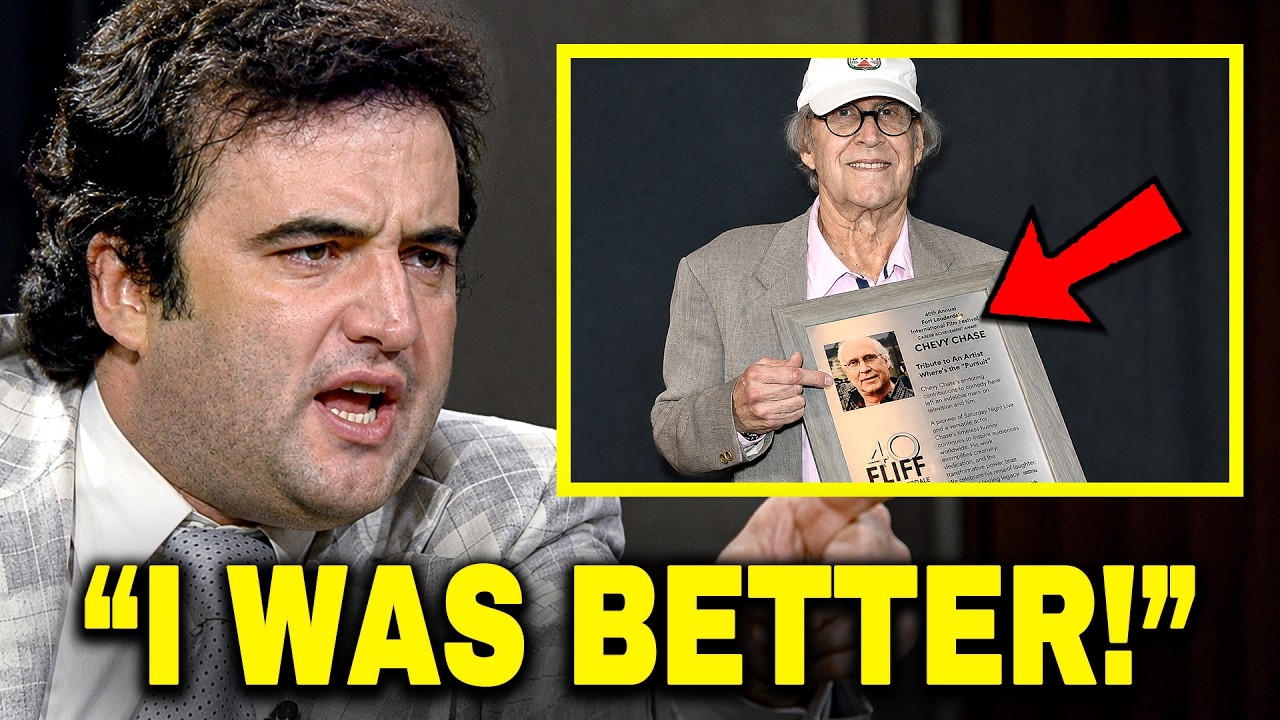
He co-founded the West Compass Trio in Chicago, performed at the legendary Second City, and starred in National Lampoon’s stage productions. He also helped create the Lampoon Radio Hour. Yet when both men joined the original cast of Saturday Night Live in 1975, it was Chase who quickly became the show’s first breakout star. Belushi was recommended for the show by Chase and writer Michael O’Donoghue.
Producer Lorne Michaels was initially unsure about Belushi’s loud, physical comedy style, but a single live performance erased those doubts. Belushi hesitated before accepting the job, but that decision changed both his life and the future of television comedy. While Belushi and Dan Aykroyd formed an instant creative partnership, his relationship with Chase was a completely different story. According to The Telegraph, Chase built a reputation for being arrogant and unnecessarily cruel to those around him.
His quick wit was often aimed directly at his fellow cast members. Former co-star Laraine Newman later said that Chase teased people like a mean older brother, always knowing exactly what to say to hurt someone’s feelings the most. One of his favorite targets was Belushi. As Belushi’s biography and Grantland both recount, Chase would mock Belushi’s working-class background and his weight, joking about having to shave Belushi’s back or teach him how to use silverware.
To Chase, they were jokes. To everyone else, they were insults. At first, Belushi found the behavior frustrating, but as Chase’s fame grew while Belushi remained in his shadow, that frustration turned into genuine resentment. Belushi believed he was the stronger performer.
In his eyes, he had done the hard work and proven his talent, but Chase was receiving the praise, the publicity, and the attention. Chase left Saturday Night Live during the show’s second season to pursue film opportunities, but he occasionally returned as guest host. According to The Telegraph, he openly claimed the show wasn’t as good without him—a comment that reinforced the image many already had of his oversized ego. Belushi’s own rise to stardom eventually came.
He created unforgettable characters week after week, from his over-the-top Henry Kissinger impression to his samurai sketches. He and Aykroyd also created The Blues Brothers as a simple warm-up act, which grew into a recurring sketch, a real band, and eventually a cultural phenomenon. Behind the scenes, however, Belushi was struggling. According to his wife, Judith, the insecurities that haunted him existed long before fame arrived.
As a kid from the Midwest, the son of Albanian immigrants, overweight, and a college dropout, he felt like an easy target among bigger personalities. Those experiences left deep scars. By the show’s second season, heavy drinking and drug use had become a regular part of his life. In 1977, after a serious knee injury, Belushi was prescribed powerful painkillers.
At the time, doctors routinely handed out these medications without fully understanding their addictive potential. Decades before the opioid crisis became national news, Belushi was already living through it. His addiction became impossible to ignore. The question “Where’s John?
” echoed through the studio halls as Belushi regularly showed up late for rehearsals or didn’t show up at all. According to head writer Michael O’Donoghue, Belushi once used cocaine during a live sketch while the cameras were rolling. Michaels began firing Belushi when his behavior became too disruptive, only to hire him back because the show wasn’t the same without him. After four seasons, Belushi walked away.
The decision surprised many, including his younger brother Jim, but Belushi compared it to finishing senior year of high school. He felt he had learned everything he could there. Aykroyd left as well, giving both men complete control over their careers. The next few years became the greatest stretch of Belushi’s career.
Animal House became one of the biggest comedy hits ever made. The Blues Brothers grew into a successful movie, a chart-topping album, and one of the most beloved comedy franchises of its era. Professionally, Belushi couldn’t have been doing better. Personally, he was falling apart.
The production of The Blues Brothers became infamous for its drug culture. Cocaine was everywhere, treated almost as casually as coffee during overnight shoots. Aykroyd later admitted many people on set used it. The difference was that most of them could walk away.
Belushi couldn’t. He would regularly disappear in the middle of filming. Once, Aykroyd searched a nearby neighborhood and found that Belushi had wandered into a stranger’s home, helped himself to food, and fallen asleep on the couch. Director John Landis reached his breaking point when he discovered a massive amount of cocaine in Belushi’s trailer.
He pleaded with his star to stop, then flushed the drugs down the toilet. The two men wrestled before breaking down in tears, with Belushi admitting he had lost control. Producers hired Smokey Wendell, a former Secret Service agent who had protected presidents, to watch over Belushi. Nothing prepared him for the job.
Watching Belushi became a full-time crisis, and after roughly a year, Wendell gave up, physically and emotionally exhausted. For a brief period, life seemed to settle down. While filming Continental Divide and Neighbors, Belushi stayed sober and spent quiet days with Judith at their home on Martha’s Vineyard. That peace didn’t last.
During the production of Neighbors, he relapsed. Separated from Judith and staying at the Chateau Marmont in Hollywood, Belushi entered the final chapter of his life. Between February 27th and March 4th, 1982, he spent nearly every day partying across Los Angeles. Despite everything, he remained optimistic, talking excitedly about reinventing his career and believing his best work was still ahead.
On March 4th, Belushi visited his manager Bernie Brillstein, asking for $1,500 to buy a new guitar. Brillstein didn’t believe him, suspecting the money was meant for drugs. He refused at first, but later that day, not wanting to embarrass his client in front of others, he reluctantly handed over the money. The decision would haunt him for years.
That afternoon, Belushi invited Cathy Smith to his bungalow. Smith wasn’t just supplying him with drugs—because Belushi was afraid of needles, she was also injecting them for him. That night, Robert De Niro and Harry Dean Stanton stopped by but left quickly, uncomfortable with the scene. Robin Williams also visited briefly before leaving.
None of them realized they had seen Belushi for the last time. The binge continued through the night. Even after Belushi complained he felt sick and congested, the drug use didn’t stop. He eventually passed out.
The following morning, Smith checked on him before leaving. Later that day, Belushi’s trainer Bill Wallace arrived to deliver items Belushi had requested and found his friend dead. The official cause of death was an overdose caused by multiple drugs in his system. John Belushi was 33 years old.
His death gave heartbreaking new meaning to an early Saturday Night Live sketch called Don’t Look Back, in which Belushi played an elderly version of himself visiting the graves of his fellow cast members. Smith initially might have escaped legal consequences, but she spoke openly to reporters, admitting she had supplied the drugs and injected Belushi that night. She dismissed it as just another part of Hollywood’s party culture. Those statements became her downfall.
Authorities extradited her from Canada and charged her with second-degree murder. In 1986, she pleaded guilty to involuntary manslaughter and multiple counts of administering controlled substances and served 15 months in prison. Belushi’s fame grew even larger after his death, but that popularity came with a heartbreaking consequence: his grave became a tourist destination. Visitors left empty liquor bottles and drug paraphernalia at his grave, believing it was a tribute.
They were celebrating the very thing that had destroyed him. Eventually, Judith made the painful decision to have his remains quietly moved to a secret location known only to the family. Hoping to set the record straight, Judith and Brillstein approached journalist Bob Woodward about writing a book about Belushi. Woodward, famous for his role in uncovering the Watergate scandal, was expected to tell an honest and balanced story.
Instead, those closest to Belushi felt betrayed. When Wired was published in 1984, they barely recognized the man described in its pages, believing the book focused almost entirely on his addiction while overlooking his warmth, generosity, and talent. Aykroyd made no secret of his hatred for the film adaptation of Wired, openly wishing for it to fail. It did.
Judith published her own memoir, Samurai Widow, in 1990, sharing a more personal picture of the man she loved. Aykroyd’s anger never faded. While filming Loose Cannons in 1990, he learned that actor J. T.
Walsh had appeared in Wired and pushed to have him removed from the film, reportedly delaying production and costing the studio thousands of dollars. In the years that followed, another comedian began following a strangely familiar path. Chris Farley adored Belushi. He trained at Second City, joined Saturday Night Live, built his career around fearless physical comedy, and even wore some of Belushi’s old costumes.
Farley admitted Belushi was his hero. As Farley’s own addiction grew worse, Jim Belushi pleaded with him to stop trying to become another John Belushi. Adam Sandler warned him he was heading toward the same tragic ending. Farley brushed the warnings aside.
In 1997, Farley died from a drug overdose at 33—the same age Belushi had been. Belushi’s legacy has also become more complicated over time. Jane Curtin later claimed that Belushi often believed women weren’t as funny as men and resisted performing in sketches written by female writers or centered around female comedians. Judith offered a more nuanced view, acknowledging her husband wasn’t perfect and carried attitudes from his era, but she believed he recognized those flaws and genuinely tried to overcome them.
Belushi’s death also changed Saturday Night Live forever. During the show’s early years, drug use was common, and Michaels took a relatively hands-off approach. Belushi’s death changed that. Decades later, during John Mulaney’s intervention, Michaels reflected on Belushi’s death, explaining the pain never truly disappeared.
Despite the controversy, Belushi’s talent has never been questioned. In 2015, Rolling Stone ranked every Saturday Night Live cast member in the show’s history. Out of more than 140 performers, Belushi finished at number one. The magazine argued that no one captured the spirit of live television quite like he did.
More than four decades after his death, during the show’s 50th anniversary celebration, Belushi remained one of the centerpieces.