Billy Abbott has spent years trying to prove he is more than the mistakes people remember. Now, standing in the middle of a battle over Chancellor, he faced the one person who knows exactly how dangerous his obsession can become—and Nikki Newman was not about to let him rewrite Katherine Chancellor’s legacy without a fight. When the two met at Crimson Lights, their exchange began politely enough. Nikki said she was glad to see Billy looking well.
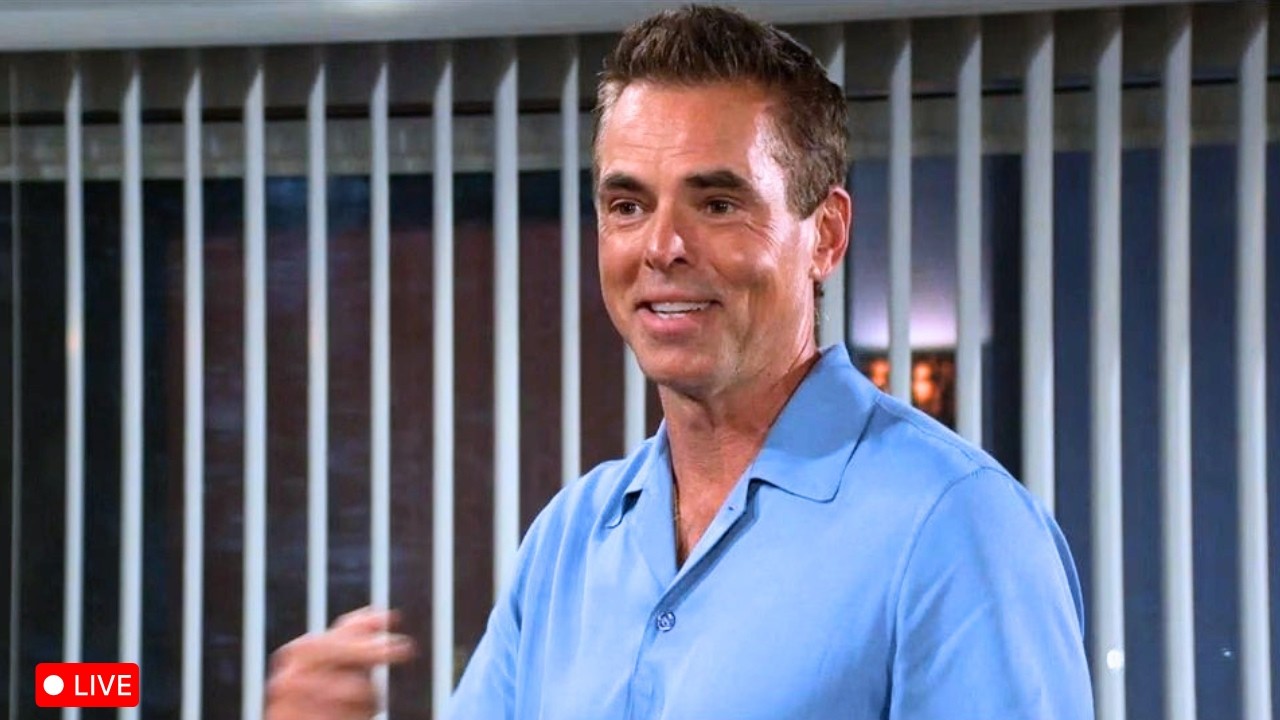
But she quickly made her position clear: “Don’t mistake my being here for approval of what you’re doing. ” When Billy asked if she meant the company, Nikki corrected him. She meant Katherine’s company—the one he seemed determined to take control of by making her look incapable of handling her own affairs. Billy denied the accusation, insisting he was protecting what Katherine built.
Nikki shook her head. “That’s what you keep telling yourself. ”
The confrontation highlighted a pattern that has defined Billy for years. He is talented, creative, and passionate, but a part of him has always felt like people are waiting for him to fail.
That insecurity has pushed him into risky decisions. This fight, Nikki suggested, was not really about Chancellor. It was about respect—about finally wanting people to see him as someone who can lead instead of someone who needs to be rescued. When Billy argued that Philip made decisions and maybe Jill was involved too, Nikki pushed back.
Katherine never told her about any loan arrangement. She never said she was trapped or that she needed someone to save her company. Billy tried to stay calm, saying it would not get that far. Nikki was not convinced.
“You are the last person Katherine would have wanted running Chancellor,” she told him. Later, Billy faced a different kind of conversation with his brother, Jack Abbott. Unlike Nikki, Jack was not attacking him—and that almost made it harder. With Diane stepped away for a meeting, the brothers talked alone.
Billy admitted Lily had tried to make him jump through hoops to keep control of Chancellor, and that bothered him because everyone acts like he needs permission to prove he is capable. Then Billy revealed something important. Sally changed things, and the pregnancy scare changed things. He started thinking about what actually matters.
He told Jack he was stepping away, at least until after the baby is born. Jack nodded, saying that sounded like the right decision. But Billy was not finished. “That doesn’t mean I’m giving up on Chancellor.
”
That was the moment Jack realized the fight was still alive. Jack understood Billy’s need to make his mark, but he warned that this obsession with Chancellor would hurt him. Billy became defensive. Jack paused before answering, and that pause mattered.
“I believe in you more than you realize,” Jack said. “You’re smart. You’re creative. You have passion.
You’ve always had that. But you don’t have to prove your worth by winning this fight. ”
From Billy’s perspective, walking away did not feel like peace. It felt like losing.
Jack then made an unexpected offer. He told Billy he was prepared to help him start something new—his own company. No family expectations, no old grudges, no fighting over Katherine’s legacy. Just Billy creating something that belonged completely to him.
But Billy looked almost disappointed. Jack had missed the point. “I appreciate that,” Billy said quietly. “But you don’t understand.
Everyone thinks I’m going to fail. This isn’t just about Chancellor. This is about showing everyone that I can actually do this. ”
Billy also revealed a deeper motivation.
He told Jack he thought their father wanted this—that maybe John Abbott made the deal with Philip because he wanted his sons running Chancellor together. Jack understood the emotion behind that, but he warned Billy he could not build his future around what might have happened. “Fix things with Jill,” Jack urged him. “Find a way to heal this.
” Billy looked away because feelings were harder than business arguments, especially when family was involved. Jack repeated his offer. “You want to build something? I’ll help you build it.
I’ll even do it with you. ” For a moment, Billy seemed affected. This was not Jack trying to control him. This was Jack trying to save him from himself.
But Billy was not ready. His phone buzzed with a message from the wedding planner. He looked at the message, then back at his brother. Jack’s face showed disappointment—not anger, not frustration, just sadness—because he knew Billy was walking away without truly hearing what he was saying.
The conflict between the brothers raises a bigger question. If Billy finally gets what he wants, will it actually give him the confidence he is searching for? Or will he discover that the approval he has been chasing was never something a company could provide? For Billy Abbott, the biggest battles have rarely been about money or power.
They have always been about identity. Meanwhile, a separate development has surfaced regarding the Abbott family’s future. Jack Abbott has spent decades protecting Jabot like it was an extension of his own blood. So when the decision is made about Billy’s name on the will, the weight of it feels heavier than any boardroom fight the Abbotts have ever had.
Jack sits alone in his study at the Abbott mansion, at the same desk where John Abbott once signed papers that shaped the family for generations. The pen does not shake, but something in his posture does. He looks at the line that should have carried a different name, and he writes Billy. This was not a decision made lightly.
Jack has watched Billy crash through every version of responsibility the company ever offered him—the affairs, the gambling, the impulsive decisions that cost Jabot more than money. Yet here he is, putting the future of the family business into those same hands. It feels less like forgiveness and more like a final, complicated act of faith. When Jack finally speaks about the decision, it is to the one person who has always known how to read the spaces between his words.
“I put Billy’s name down. ” The pause that follows is long enough to feel deliberate. “You’re sure? ” “No, but I’m doing it anyway.
”
That exchange reveals where Jack is right now. Certainty has never been the point. Survival of Jabot has. Somewhere in the calculation, Jack has decided that Billy—flawed, restless, still capable of surprising everyone—might be the only one left who can keep the company from becoming something the family no longer recognizes.
Billy finds out the way these things always seem to happen in this family. Not in a formal reading, not with lawyers present. He walks into the office one afternoon, and the conversation finds him. Jack does not soften it: if anything happens to Jack, the will names Billy as CEO.
Billy stares at him like the words have not landed yet. “You’re joking. ” Jack replies, “I don’t joke about Jabot. ” Billy points out he has given Jack every reason not to do this.
Jack acknowledges the honesty in that. He is not pretending those years did not happen. He is choosing to look past them anyway. Billy walks to the window the way he always does when he needs space to think.
Nothing outside has changed. Inside, everything has. “What if I mess it up again? ” Jack’s voice stays even.
“Then you’ll fix it. That’s the difference this time. You’re not the same man who walked away from every hard choice. ”
The timing stands out.
Jack is not a man who does anything without weighing consequences three steps ahead. Naming Billy CEO is not a sentimental gesture. It is a calculated risk that says Jack believes the company needs someone who still feels the hunger for it—someone who has lived both the privilege and the damage of being an Abbott. The family will not take this quietly.
Ashley has spent her career proving she belongs at the top of Jabot. The idea that Billy could step into that role will cut deep. Victoria has her own complicated history with both men. And the next generation will have their own opinions once the news travels.
But the real tension sits between Jack and Billy themselves. Later that same evening, they end up in the living room with drinks neither of them really wants. The conversation turns quieter, more careful. “I keep waiting for the part where you tell me there’s a condition,” Billy says.
Jack looks at him for a long moment. “The only condition is that you don’t become me. ”
That line carries weight. Jack has always measured himself by how tightly he held the company together.
Now he is asking Billy to lead without the same armor, without the same need to control every outcome. Billy almost smiles, but it does not reach his eyes. “You sure you want that? ” Jack answers, “I’m sure I want Jabot to survive longer than my need to run it.
”
There is a kind of exhaustion in Jack’s voice that feels new. Not defeat—something closer to acceptance. The man who once would have fought anyone who suggested he step aside is now preparing for that day. Billy then asks the question that has always lived under the surface between them: “Do you actually trust me?
” Jack does not answer right away. When he does, the words are measured. “I trust that you love this family enough to try harder than you ever have before. ”
It is not a full endorsement.
It is something more honest. And in the world of the Abbotts, honesty has always been rarer than power. The days ahead will test both brothers. Billy will have to decide whether he can carry the weight without the old patterns pulling him under.
Jack will have to live with the decision he made when the house was quiet and the pen was in his hand. The story is not about a sudden crisis or a boardroom ambush. It is about a man looking at the end of his own chapter and choosing to rewrite the next one in a way no one expected.
The question at the center of it all: Is Jack protecting the company, or the last chance to believe his brother can still surprise him?