For decades, the world has remembered Apollo 11 as the ultimate triumph of human courage.
Neil Armstrong took manual control.
Buzz Aldrin watched the instruments.
Mission Control held its breath.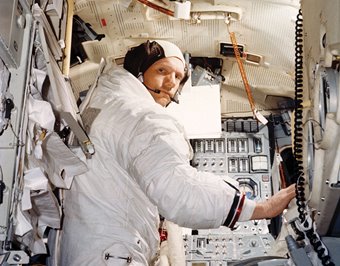
And with only seconds of fuel remaining, the Eagle landed on the Moon.
But behind that legendary moment was another story—one rarely told with the same intensity.
It was the story of a machine.
A computer no more powerful than a modern calculator.
A stack of source code nearly five feet tall.
And a female software engineer named Margaret Hamilton, whose work may have saved the most important mission in human history.
In the final minutes before Apollo 11 touched down, something went wrong inside the lunar module.
Alarm codes suddenly flashed across the system.
To the astronauts, the warnings were terrifying. To Mission Control, they meant the guidance computer was being overloaded with more information than it could process.
A radar switch had been left in the wrong position, sending unnecessary data into the computer at the worst possible moment.
Under normal conditions, a computer from the 1960s should have frozen, crashed, or failed.
If that had happened, the Eagle could have lost its ability to calculate position, speed, and altitude.
At that point, Armstrong and Aldrin were already descending toward the Moon.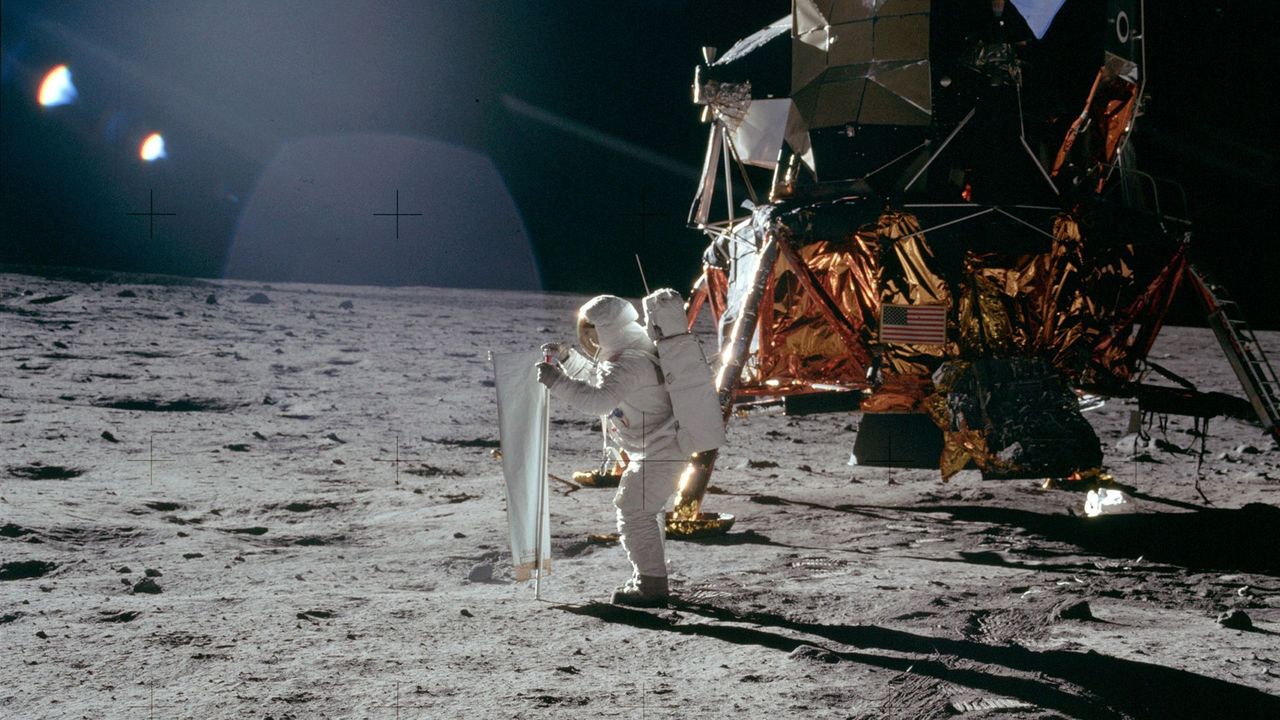
There was no room for error.
No second chance.
No rescue mission waiting nearby.
But the Apollo Guidance Computer did not collapse.
Instead, it did something extraordinary.
It began sorting tasks by priority.
It ignored nonessential information.
It protected the most important commands.
It kept the landing program alive.
In those final seconds, the computer made a ruthless decision: survival came first.
That feature had not appeared by accident.
Years earlier, Margaret Hamilton and her team had realized something NASA did not fully want to admit.
The greatest danger was not always space.
Sometimes, the greatest danger was human error.
The lesson came from an unexpected moment. During a simulator test, Hamilton’s young daughter accidentally pressed keys on the control panel. The system followed the command exactly—but because the command happened at the wrong time, the simulation crashed.
To many engineers, it was a strange accident.
To Hamilton, it was a warning.
Astronauts were brilliant, disciplined, and highly trained. But they were still human. Under pressure, humans could make mistakes. And in space, one mistake could kill everyone.
So Hamilton’s team built software that could protect the mission even when the system was overwhelmed.
The computer would not simply obey every command blindly.
It would decide what mattered most.
And on July 20, 1969, that hidden design faced its greatest test.
As the Eagle descended toward the lunar surface, alarms filled the cockpit. Armstrong and Aldrin needed answers fast. Mission Control had only seconds to decide whether to continue or abort.
Then came the call.
“Go.”
The computer was still doing the essential work.
It was still guiding the spacecraft.
It was still alive.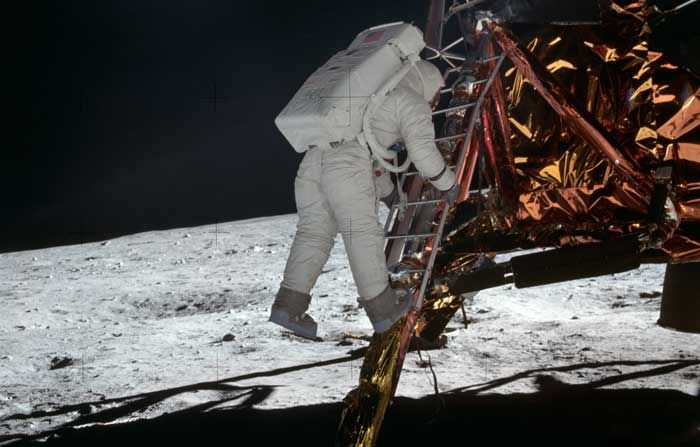
Armstrong guided the Eagle away from a dangerous field of rocks and brought it down safely on the surface.
The world heard the words:
“The Eagle has landed.”
But what the world did not fully understand was that the landing had not been saved by human skill alone.
It had been saved by software.
By code.
By a system designed to stay calm when humans had no time left.
NASA later celebrated the bravery of the astronauts, and rightly so. Armstrong and Aldrin performed under unimaginable pressure.
But hidden inside that heroic story was another kind of courage—the courage of engineers who dared to trust software at a time when many still saw it as secondary.
Margaret Hamilton helped prove that code was not just a support tool.
It could become the difference between life and death.
Apollo 11 did not just reveal what humanity could find on the Moon.
It revealed something equally powerful here on Earth.
The future would not belong only to pilots, rockets, and machines of steel.
It would belong to software.
And in the final minutes before humanity touched another world, it was that invisible code that helped carry us safely across the impossible.