When Claudine Longet died in May 2026 at the age of 83, the headlines revived one of America’s most enduring celebrity mysteries. But reducing her to a single tragic event hardly tells the full story. Decades before the courtroom drama, she captivated Hollywood, married one of the country’s biggest entertainers, and built a successful recording and acting career. She seemed to be living the glamorous life millions only dreamed about.
The question that followed her for half a century: how did it all end in a shooting that divided the nation? The criminal trial concluded in 1977, but the legal consequences did not end there. Spider Sabich’s parents, Hal and Ruth Sabich, later filed a wrongful death lawsuit against Longet. A civil case required a lower standard of proof than a criminal trial and carried the possibility of financial liability regardless of the earlier verdict.
Before the case reached trial, both sides agreed to a confidential settlement. The financial terms were never publicly disclosed, but multiple contemporary reports stated that one condition of the agreement barred Longet from publicly discussing the shooting or profiting from her version of events. From that point forward, she would almost never speak publicly about it again. That silence marked a dramatic break from the life she had once known.
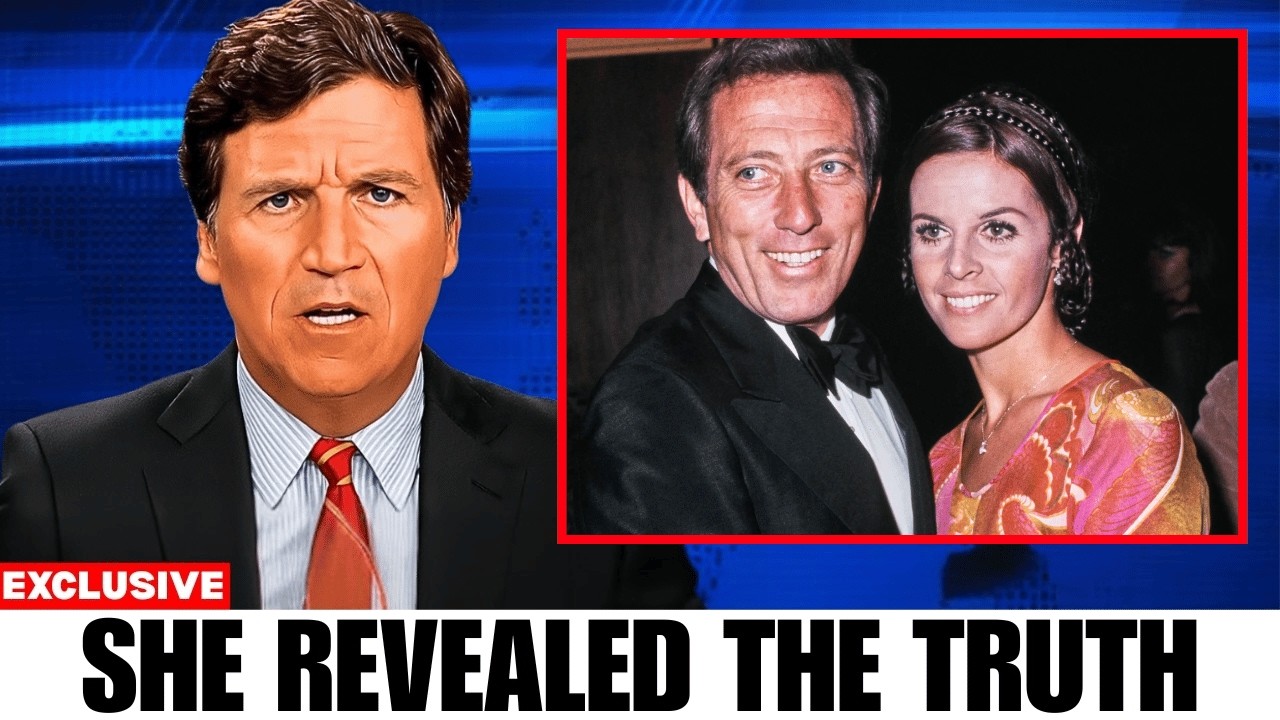
During the 1960s, Longet became almost impossible to avoid. Millions of Americans welcomed her into their living rooms each week on The Andy Williams Show, one of the decade’s highest-rated television variety programs. With her distinctive French accent, understated charm, and breathy vocal style, she cultivated an image that stood apart from the era’s powerhouse singers. Between the mid-1960s and early 1970s, she recorded numerous albums for A&M Records, several of which reached the Billboard album charts.
Songs such as “Love Is Blue,” “God Only Knows,” “Small Talk,” and “Nothing to Lose” became closely associated with her. Critics sometimes questioned the technical strength of her voice, but many praised the intimacy she brought to her performances. Her success extended beyond music. She became a familiar face on network television through guest appearances on programs hosted by Dean Martin, Perry Como, and Carol Burnett.
Hollywood soon followed, with film roles including Blake Edwards’s 1968 comedy The Party, where she shared the screen with Peter Sellers. At the same time, her marriage to Andy Williams made the couple one of American entertainment’s most glamorous families. Fan magazines chronicled their holidays, their Beverly Hills home, their three children, and the seemingly effortless elegance of their public life. After the Sabich case, that visibility disappeared with startling speed.
Unlike many public figures who attempt a comeback after scandal, Longet made virtually no effort to reclaim her place in the entertainment industry. There were no reunion specials, farewell concerts, or tell-all memoirs. She stopped recording music, accepted no significant acting roles, and rarely appeared before cameras again. Not long after the settlement, she married Ronald Austin, one of the attorneys who had defended her during the trial.
The couple settled into a quiet life together in Aspen, deliberately avoiding the celebrity world. One person continued speaking publicly on her behalf. Andy Williams never abandoned his support despite the fact that the two had divorced years before the shooting. He attended the trial, remained close to the family, and repeatedly defended her in later interviews.
Asked directly whether he believed her explanation, Williams answered simply: “I know it was an accident. ” He also explained why he stood by her throughout the ordeal: “She’s the mother of my children. ”
By the mid-1970s, Longet’s life had shifted from television studios to the snow-covered peaks and exclusive social circles of Aspen, Colorado. To outsiders, it looked like a perfect fresh start.
But beneath the glamour, her marriage was unraveling. She and Andy Williams officially divorced in January 1975 after nearly 14 years together. By Hollywood standards, however, it was anything but a bitter separation. They remained close friends, continued raising their three children together, and maintained regular contact long after the legal proceedings ended.
Williams later explained simply: “We just didn’t want to be married anymore. ” Their continued friendship puzzled many observers who expected the usual tabloid warfare. As Longet settled into her new life, another charismatic figure was capturing America’s imagination. Vladimir “Spider” Sabich was not merely an accomplished skier.
He was among the first athletes to become a genuine celebrity outside his sport. Born in California to Croatian immigrant parents, Sabich rose through competitive skiing with remarkable speed, winning national championships and representing the United States internationally. His fearless style, movie-star looks, and magnetic personality made him a favorite of sponsors and television producers. His decision to leave the U.
S. ski team before the 1972 Winter Olympics surprised many. But it reflected a larger shift in the sport. He embraced the rapidly expanding professional skiing circuit, where prize money, sponsorships, and television exposure offered opportunities Olympic competition could not.
The gamble paid off. He became one of the highest-profile figures in professional skiing while building friendships with actors, musicians, and business leaders. It was in Aspen that Longet and Sabich first crossed paths. By the mid-1970s, they were living together in Sabich’s chalet outside town.
Newspapers eagerly photographed them at social events and on ski slopes. They appeared carefree and deeply in love. Behind that polished image, however, friends later described a more complicated reality. Sabich was known for his independent streak and active social life.
Longet, who had spent years balancing fame with motherhood, sought greater stability. Several friends recalled arguments between the couple, though descriptions varied considerably. Some believed the disagreements were ordinary tensions. Others suggested the relationship had entered a more uncertain phase in the months leading up to the tragedy.
On the afternoon of March 21, 1976, a single gunshot shattered the quiet of Aspen. The sound came from inside Sabich’s chalet. Within hours, the incident had become one of the most closely watched celebrity investigations of the decade. Longet and Sabich were alone inside the home when a German-made Luger-style semi-automatic pistol discharged, striking Sabich in the abdomen.
According to Longet’s immediate account, Sabich had been showing her how to operate the handgun when it accidentally fired as she handled it. She consistently maintained that she did not intend to shoot him and described the incident as a terrible accident. Emergency assistance was summoned almost immediately. Doctors attempted emergency surgery, but despite their efforts, Sabich died later that day.
He was 31 years old. Investigators quickly secured the residence and began documenting the scene. National media organizations descended on Aspen with remarkable speed. Newspapers placed the story on front pages while television networks dispatched correspondents to the Colorado resort town.
By the time Longet’s case reached trial in Pitkin County in early 1977, the shooting had already become one of the most discussed celebrity stories in America. Public opinion was deeply divided before a single witness took the stand. Prosecutors charged Longet with criminally negligent homicide, a lesser offense than murder but one that required the state to prove her conduct had been reckless enough to cause death. The case presented unusual challenges.
Only two people had been inside the chalet when the pistol discharged, and one of them was no longer alive to testify. When Longet took the witness stand, she offered the same basic explanation she had given investigators from the outset. She testified that Sabich had been showing her how to use the pistol and that she believed she was handling it safely when it suddenly discharged. She said she did not realize the weapon was in a firing position and never intended to pull the trigger.
She described the shooting as a horrifying accident that happened in mere seconds. She maintained that she loved Sabich and had no reason to harm him. One of the most closely debated issues was the bullet’s trajectory. Medical testimony established that the bullet entered Sabich’s abdomen, traveled upward through his body, passed through several vital organs, and lodged near his back.
Prosecutors argued that this upward path was difficult to reconcile with the explanation that the gun had discharged accidentally during a casual demonstration. The defense responded that a bullet’s path through the body cannot by itself establish how a firearm was being held. The firearm itself became one of the trial’s most technically contested pieces of evidence. The weapon was a German-made 7.
65mm Luger semi-automatic pistol, an older military design with operating controls unfamiliar to most modern handgun users. Defense firearms experts demonstrated the pistol before the jury, arguing that its relatively light trigger pull and manual controls required familiarity and that an inexperienced person manipulating the safety could unintentionally discharge it. Prosecutors challenged those demonstrations, arguing that the pistol still required sufficient pressure on the trigger to fire. Forensic specialists examined powder residue and ballistic evidence to estimate the range.
Their analysis indicated the gun had been fired from close proximity, a finding neither side seriously disputed. The disagreement centered on what that close distance meant. The prosecution also scrutinized Longet’s descriptions of the incident, arguing that some details about how she was holding the pistol and where Sabich was positioned appeared to vary. The defense countered that such differences were relatively minor and should be expected from someone recalling an intensely traumatic event that unfolded in seconds.
Complicating the prosecution’s case were investigative errors that prevented jurors from hearing certain evidence. Shortly after the shooting, investigators obtained a blood sample from Longet and seized her personal diary without first securing the warrants required under the Fourth Amendment. Before trial, the judge ruled that both had been obtained in violation of constitutional protections and could not be presented to the jury. Day after day, Andy Williams appeared beside his former wife in the courtroom gallery, a presence that surprised many observers.
After hearing weeks of testimony, the jury found Longet guilty of criminally negligent homicide. She received a fine and a brief jail term structured to be served on weekends, allowing her to continue caring for her children during the week. To many Americans, the punishment seemed remarkably lenient. Perhaps no piece of evidence has generated more speculation than Longet’s personal diary, even though almost no one outside the investigation has ever seen it.
Within days of the shooting, prosecutors reviewed its contents while deciding what charges to pursue. According to United Press International reports published in early April 1976, District Attorney Frank Tucker told reporters the diary suggested the romance between Longet and Sabich had recently cooled. His office believed the entries reflected growing tension and hoped to show that Longet feared Sabich was pulling away. Months later, after the diary had been ruled inadmissible, Tucker offered his personal interpretation.
He made the now-famous remark: “She was an over-the-hill glamour puss and she was not going to lose another man. Andy Williams had already dumped her and she was not going to be dumped again. ”
What is crucial to remember is that this was Tucker’s interpretation, not a quotation from the diary. No authenticated pages have ever been released.
No verbatim entries have been published, and no independent historian has been able to verify whether Tucker’s characterization fully reflected what Longet actually wrote. One of the loudest voices keeping suspicion alive was not a journalist but popular culture itself. The Rolling Stones’ unreleased song “Claudine” mocked the official accident explanation with lyrics that implied disbelief. Because of concerns about legal action, the band delayed releasing the song for years.
Likewise, Saturday Night Live aired the infamous “Claudine Longet Invitational Ski Championship” sketch, which treated the shooting as a joke. As the story moved into the internet age, the line between documented history and speculation became increasingly blurred. The investigation produced very little genuinely new evidence after the trial, yet that absence of fresh information did not slow public interest. It encouraged people to fill the gaps themselves.
One of the most common theories claimed that Longet escaped a far more serious conviction because of her celebrity status and connections to influential figures, particularly Andy Williams. Supporters pointed to what they considered an unusually lenient sentence and Williams’s highly visible support. However, no credible historical evidence has ever shown that Williams exercised improper influence over the prosecution, the judge, or the jury. When Longet died in May 2026, renewed media attention demonstrated how enduring the uncertainty had become.
Despite decades of speculation, the most substantial account she ever gave remained the testimony she delivered in a Colorado courtroom during her 1977 trial. Everything that followed, countless books, documentaries, and debates, was built upon those few carefully recorded words. On the stand, she described the events as a tragic accident that unfolded in seconds. She told the court they loved each other deeply and had shared a meaningful life together.
After the jury convicted her, reporters surrounded Longet outside the courthouse. Instead of an emotional explanation, she delivered only a handful of brief remarks. “There is not really much to say,” she told the waiting press. She added that she had too much respect for living things before concluding with perhaps her most quoted statement: “I’m not guilty.
”
Those few sentences effectively marked the end of her public discussion of the shooting. Ronald Austin, the attorney she later married, largely avoided discussing the case publicly. Journalists repeatedly searched for hidden interviews, private confessions, or unpublished manuscripts that might shed fresh light on the shooting. None ever emerged.
When Longet died, her family issued a statement that reflected the approach she had maintained for nearly half a century. Rather than reopening old controversies, they remembered her as a loving mother, grandmother, and someone who embraced life with warmth and humor. They chose not to revisit the shooting or respond to decades of speculation. That decision echoed Longet’s own lifelong refusal to engage publicly with the case.
No amount of explanations would convince skeptics otherwise.