A close look at classic episodes of “The Waltons” reveals a surprisingly large number of production mistakes that made it to air, from actors calling each other by their real names to vanishing wardrobe pieces. During the fast-paced filming of the 1970s series, reshoots were costly and time-consuming. If a scene was mostly good, directors often approved it and moved on, allowing small errors to slip through. In the second-season episode “The Sinner,” a fire breaks out in the barn, sending the family into a panic.
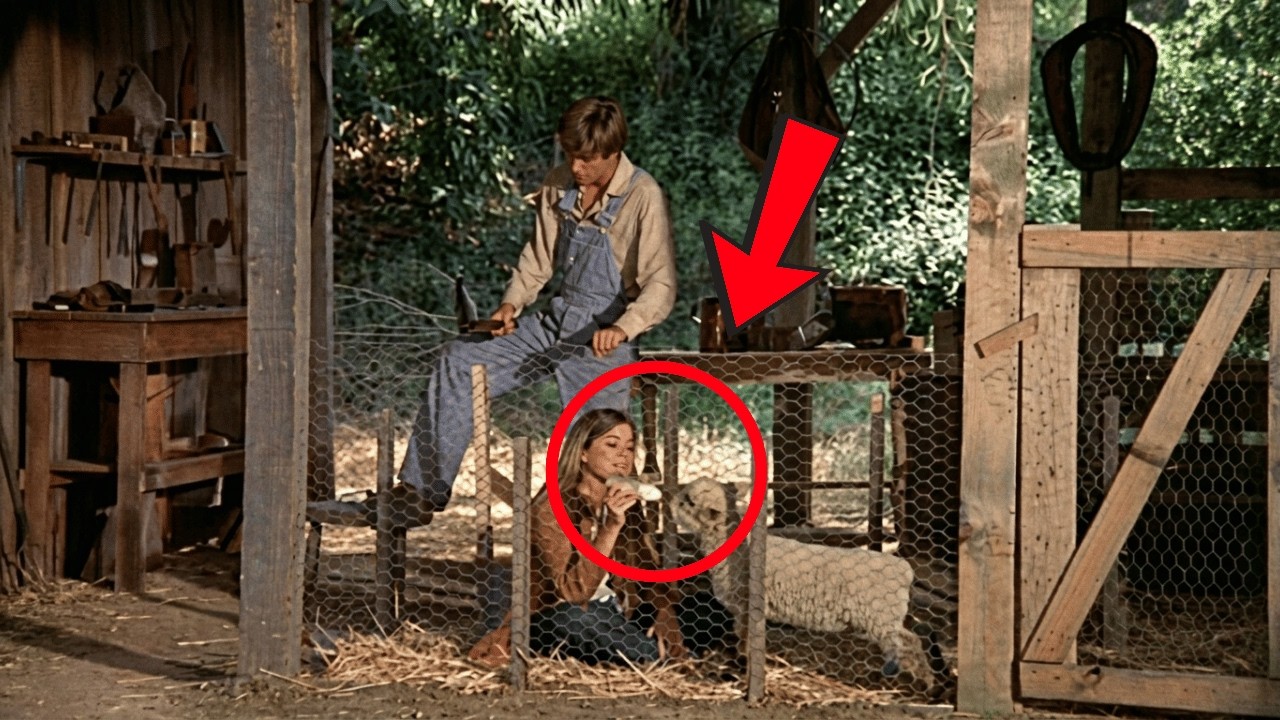
During the chaos, actor Will Geer, who played Grandpa, momentarily lost focus and shouted “Mary Elizabeth! ” instead of calling Erin by her character’s name. That was actually the real name of the young actress standing beside him. The camera kept rolling, and the mistake aired before millions of viewers.
Another moment came in the second-season episode “The Honeymoon. ” Young actor David W. Harper, who played Jim Bob, missed his cue to leave a room. He froze, turned his head to stare directly into the camera, muttered silently to himself, and then ran awkwardly off screen.
Actress Mary Earle, who played the talkative neighbor Maude Gormley, often moved her lips silently while other actors delivered their lines, apparently rehearsing her own dialogue in her head. Wardrobe inconsistencies also made it to air. In the fourth-season episode “The Secret,” little Elizabeth sits on the porch wearing a bright red jacket over her dress. Seconds later, she goes inside to speak with her grandmother and mother, and the jacket has vanished.
When she walks back outside, the jacket has returned with no explanation. In the fifth-season episode “The Long Night,” Grandpa leaves for the hospital wearing a dark shirt under his clothes. By the time he arrives and exits the truck, he is wearing a blue-and-white plaid shirt. The show never addressed the change.
Set decorations also contained visual contradictions. Signs for the National Recovery Administration featured noticeable spelling errors that changed between episodes. Fans also noticed that the small garden shed in the family’s backyard looked tiny from the outside, but interior scenes showed a surprisingly spacious room, creating a comical architectural mismatch. The show’s attempt to recreate the Great Depression era was sometimes undermined by 1970s fashion.
Over the seasons, actors appeared with thick, fluffy hairstyles, modern makeup, and long sideburns that clearly belonged to the decade in which the show was filmed, not the 1930s. The timeline of the local school also confused viewers. Early episodes showed John-Boy and his younger brother Jason sitting together in the same classroom, even though the series had already established that they had separate teachers. Miss Hunter was shown teaching a mix of ages, including John-Boy, Jason, Ben, and young Elizabeth all at once.
A larger historical problem appeared in the episode “The Burnout,” in which a fire destroys part of the family home and the characters blame faulty electrical wiring inside the walls. The episode takes place years before rural electricity lines reached the area in 1937, meaning the family had electrical problems before electricity had actually arrived. The television reunion films created even bigger continuity problems. In the sixth-season episode “The Anniversary,” the story takes place in 1940, and the family celebrates John and Olivia’s twenty-fifth wedding anniversary, placing their marriage around 1915.
But in the 1997 reunion film “A Walton Easter,” set in 1969, the couple celebrates their fortieth anniversary. Simple arithmetic shows that 29 years passed between those two stories, meaning John and Olivia should have been celebrating their fifty-fourth anniversary. The writers erased 14 years of marriage without explanation. The character of John-Boy’s brother Jason also had a shifting backstory.
In a ninth-season episode, Jason tells a detailed story about buying his beloved classic car in San Francisco. Later, in the reunion film “Mother’s Day on Walton’s Mountain,” he claims he bought the exact same car from Harry’s Used Cars in Dead Eye Gulch, Nevada. The show never addressed the contradiction. Behind the scenes, the production faced practical challenges.
The show was filmed at Warner Bros. Studios in Burbank, California, and 1970s sound equipment could not filter out the surrounding city noise. During quiet outdoor scenes, viewers can often hear the hum of heavy traffic from streets beyond the studio fence. Actress Judy Norton, who played Mary Ellen, later revealed that the famous two-story house was mostly an empty facade.
The front looked complete on camera, but the back of the building was open. A door that appeared to lead into a cozy farmhouse kitchen actually led directly to the actors’ makeup trailer. The second floor was just a small wooden platform reached by a simple ladder, used so the crew could set up lighting equipment. John-Boy’s bedroom and all other interior rooms were filmed in a completely separate studio set across the lot.
The original outdoor structure was burned by an arsonist in 1991, but studio carpenters carefully rebuilt it. Years later, set designers repainted and renovated the exterior, turning it into the famous Dragonfly Inn from “Gilmore Girls. ”
Casting choices also ignored basic genetics. John and Olivia Walton both have light blue eyes, as do the grandparents and extended family.
In the real world, blue eyes are a recessive trait, and two blue-eyed parents having a dark-eyed child is statistically extremely unlikely. Yet three of the Waltons’ seven biological children have dark brown eyes, a contradiction the show never addressed. The family dog, a loyal hound named Reckless, appeared in dozens of episodes. Early in the series, characters consistently referred to the dog as male.
But in a later episode, the writers needed a cute pet storyline, and suddenly Reckless was pregnant and giving birth to puppies. No character expressed surprise, and no explanation was given for why their male dog had become a mother. The narrator’s voice at the beginning and end of each episode belonged to Earl Hamner Jr. , the creator and writer of the entire series.
Hamner was the real boy who grew up in rural Virginia during the Depression, and his autobiographical novel “Spencer’s Mountain” was the blueprint for the show. He insisted on recording the narration himself as the adult John-Boy. Hamner also made a rare on-camera appearance. In one memorable episode, an elderly neighbor named Maggie McKenzie dreams of taking a final trip to the ocean to honor her late husband.
During a quiet dance in the final episode, the camera cuts to a romantic flashback in which Hamner appears as her deceased husband, dancing with her on the beach. It was the only time during the series that the creator appeared on screen as an actor. Getting the show on the air was something of a miracle. In the early 1970s, network executives were undergoing what became known as the “rural purge,” canceling popular shows like “The Beverly Hillbillies” and “Green Acres” to attract a younger, urban audience.
CBS initially seemed unlikely to pick up a slow historical drama set in rural Virginia during the Depression. According to actress Kami Cotler, who played young Elizabeth, the network was under heavy pressure from government officials. Congressional hearings were questioning the moral direction of television broadcasting, and CBS approved the series as a quick goodwill gesture to placate lawmakers. However, they placed it in a difficult Thursday night time slot, directly competing with highly rated shows like “The Flip Wilson Show” and “The Mod Squad.
”
Before production began, the network approached Hollywood legend Henry Fonda to play the family patriarch. Fonda had starred in the 1963 film adaptation of Hamner’s novel and seemed the obvious choice. But after reading the pilot script, he turned the role down, telling producers that the script had no single star because the family itself was the star. He believed his presence would distract from the ensemble charm.
The decision proved wise, as viewers fell in love with the largely unknown cast and the show climbed to the top of the ratings. The actors faced personal struggles behind the scenes. Michael Learned, who played Olivia Walton, was secretly battling alcoholism during her first audition. She later admitted she was so nervous that she kept a bottle of bourbon hidden in her pocket to get through the day.
She thought she had no chance of getting the part because she felt unsuited to the producers’ idealized image. She got the role on pure talent, and working on the show changed her life for the better. Her on-screen husband, Ralph Waite, was also struggling with alcoholism and drank heavily during lunch breaks in the early seasons. Spending years in that healthy environment inspired both actors to seek help.
They supported each other, attended recovery meetings together, and watched each other’s behavior. Their mutual trust translated into remarkable on-screen chemistry, and fans wondered whether the pair were dating. The two actors did go on one romantic date to test the connection, but they realized their relationship was better suited to a lifelong friendship. They agreed to keep things professional and remained close friends for the rest of their lives.
In November 1976, beloved veteran actress Ellen Corby, who played Grandma Esther, suffered a sudden severe stroke. The medical emergency left her with significant speech impairment and physical limitations. Instead of recasting the character or writing her out, the creators paused her storyline to give her time to recover. They eventually wrote her real health battle directly into the script, allowing her to face her recovery struggle on camera.
The full cast supported her and welcomed her triumphant return to the screen in March 1978. Tragedy struck again when Will Geer, who played Grandpa Zeb, died in 1978 from respiratory failure. Geer was so beloved on set that he served as a real grandfather figure to the youngest actors and even tended a personal garden on the studio lot. Producers decided to write Grandpa’s death into the storyline rather than replace him, turning the on-screen mourning into a heartfelt reflection of the cast’s real grief.
Young actress Mary Elizabeth McDonough, who played middle sister Erin, faced intense pressure from wardrobe staff and producers to maintain a thin, ideal physique while growing up on camera. The pressure caused her to develop a painful stomach ulcer and serious body image struggles. She tried to hide the pain from everyone around her. Guest star John Ritter, who played Reverend Matthew Fordwick, noticed her suffering and encouraged her to start journaling.
The habit helped her recover mentally and physically. When production on “The Waltons” ended in 1981, the actors who had spent nearly a decade sharing meals around the same wooden kitchen table found themselves at a major crossroads. Richard Thomas, who left the role of John-Boy in 1977 to avoid permanent typecasting, spent years proving his versatility on stage and television. He eventually earned critically acclaimed roles, including FBI agent Frank Gaad in the hit drama “The Americans.
” Despite a distinguished decades-long career, Thomas always cherished his roots on Walton’s Mountain, returning as John-Boy for three reunion films in the 1990s. Ralph Waite took a different path. While continuing steady work as a respected character actor, earning recurring roles on shows like “NCIS” and “Bones,” he turned his attention toward public service. Driven by social issues, he ran two separate campaigns for the U.
S. House of Representatives in California, one in 1990 and another in 1998. Though he did not win those elections, his post-Waltons life remained heavily focused on public engagement, community work, and mentoring young actors until his death in 2014. Michael Learned proved her talent extended far beyond the role of Olivia Walton.
Shortly after leaving the show, she starred in the medical drama “Nurse,” for which she won her fourth Emmy Award. She continued building an impressive career across soap operas and stage productions, becoming one of the most awarded actresses in American television history. The child actors who grew up in front of millions took different journeys into adulthood. Jon Walmsley, who played musical middle brother Jason, built an entire second career in music as a multi-instrumentalist and songwriter.
He performed and recorded alongside notable artists in blues, country, and rock while occasionally picking up acting and voice roles. Judy Norton continued working in theater and directing and eventually launched a popular web series analyzing behind-the-scenes memories from each episode of “The Waltons. ” Mary Elizabeth McDonough turned her painful childhood struggles with Hollywood body standards into a life mission. She became an author and wrote about her experiences, speaking publicly to help others dealing with similar difficulties.
Kami Cotler chose to step away from professional acting entirely. She pursued higher education and eventually became a dedicated teacher and school administrator. Sadly, some family members died young or unexpectedly. Will Geer passed away shortly after the end of the sixth season in 1978.
Mary Earle, who charmed viewers as the cantankerous Maude Gormley, died in 1984. Ellen Corby bravely fought through her final years, making touching appearances in the reunion films before passing away in 1999. The surviving cast members maintained a genuine bond that lasted for decades. They not only reunited for television films and events but also remained present in one another’s lives, attending personal milestones and supporting each other through crises.
The connection formed under the bright studio lights proved as real as the family dynamic millions of viewers loved on screen.