An elephant approaches the weathered bones of another elephant, bones that may have lain in the earth for years, unknown to the living animal. It reaches out with its trunk and begins touching the skull, the tusks, the jaw, standing there for minutes. Other elephants in the group approach and do the same. They do not display this behavior toward the bones of other species, nor toward rocks or fallen trees.
It appears only in response to their own kind. This behavior has been documented across separate field observations on multiple continents over several decades, appearing in elephant populations that have never witnessed another elephant doing it. It is now considered one of the most well-established examples of what researchers cautiously call death-related behavior in non-human animals. What it means, whether elephants are grieving, whether they understand what those bones represent, is among the most contested questions in animal behavior research.
The question of whether animals know when someone dies is deceptively complex. In cognitive science, knowing involves having a mental representation that generalizes beyond specific instances. A dog that whines at the door where its recently deceased owner used to enter may simply be responding to an absent sensory expectation, not demonstrating knowledge of death. These appear similar from the outside but are fundamentally different cognitive events.
The full human concept of death involves understanding that a living thing has become permanently non-living, that the change is irreversible, that the dead individual was a distinct being, and that death is universal. Developmental psychology research finds that human children typically complete this full concept around age 7 or 8. Whether any non-human animal achieves this full concept is not established. What is increasingly clear is that many animals demonstrate complex, specific behavioral responses to the death of members of their own species.
The elephant data is the most extensive of any species. Field researchers have documented repeated patterns around dead or dying elephants, with group members remaining close, touching and vocalizing. The bone touching behavior is particularly striking because elephants respond to bones of animals they may never have known, suggesting some category representation of elephants as a distinct kind of being that retains significance after death. Cases involving known individuals are more striking still.
A mother elephant whose calf has died may carry the dead calf, supporting its body and preventing it from sinking in water, or attempting to lift or nudge it on land, for extended periods lasting days. This is metabolically costly and practically useless if the calf is dead. Evidence also suggests elephants show distress specifically when they cannot be with the body of a dead group member, with groups moved away from a carcass before completing investigation showing agitation distinct from ordinary distress. Cetacean research has expanded dramatically in recent decades.
Bottlenose dolphin mothers have been documented carrying dead calves for periods of days to weeks, supporting bodies at the surface, attempting to nurse them, and showing altered social behavior. This has been documented in at least 15 cetacean species. In most cases the calves showed clear signs of death visible even at a distance, and carrying continued for days after any reasonable expectation of recovery. In 2018, an orca designated Tahlequah carried her dead calf for 17 days and over a thousand miles of travel in the Pacific Northwest.
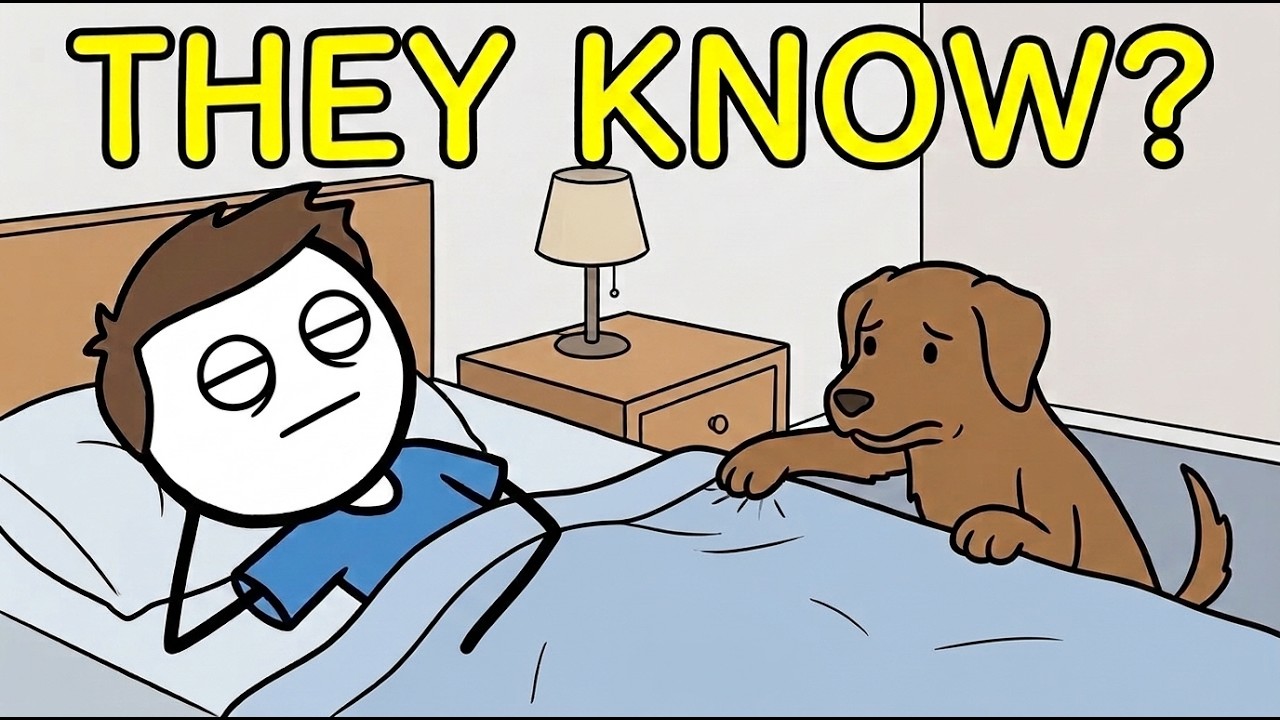
The event attracted global media attention, partly because the behavioral pattern was so recognizable that the word grief was used in coverage almost unavoidably, despite scientific caution around applying human emotional categories to animal behavior. Domestic animals provide a different window into responses to death. Dogs show behavioral responses to the death of human companions consistent across documented cases, including reduced appetite, increased vocalization, searching behavior in locations associated with the deceased, and periods of reduced activity. These changes are specific to the loss of the person rather than general responses to environmental change.
Studies of bereaved dog owners consistently find behavioral changes that parallel the human grief response in observable terms, beginning at the time of death and persisting for weeks to months. Cats show analogous but less extensively documented responses, tending toward withdrawal, reduced social engagement, and altered activity in locations associated with the deceased. Primate data is the most varied and in some ways most revealing. Chimpanzee mothers have been documented carrying dead infants for weeks, even as the body begins to decompose.
Communities have been observed becoming unusually quiet after the death of a group member, with reduced social activity and altered movement patterns. In 2009, a female named Noel at the Zambian Sonso chimpanzee community carried her dead infant Thomas for 27 days, allowing other females to inspect the body. Gorilla groups have shown similar patterns, with dominant females remaining with dead infants and allowing other group members to inspect the bodies. The response of animals to the death of non-kin social partners may be even more revealing about the depth of animal social cognition.
In elephant populations, detailed studies have documented behavioral changes in adult females following the death of their closest social associates. When these associates die, the surviving elephant shows altered movement, reduced social engagement, and changes in foraging behavior that cannot be attributed to the maternal bond. This matters because it separates the death response from the maternal bonding system, suggesting the social bonds themselves generate behavioral responses to loss. Long-term studies of baboon populations, most extensively by researchers Barbara Smuts and Dorothy Cheney, have documented behavioral and physiological changes in females following the deaths of close social partners who were not kin.
These include elevated stress hormone levels, measurable cortisol increases persisting for weeks after the partner’s death, and increased social contact-seeking behavior as the bereaved individual appears to compensate for the lost relationship. Crow and raven behavior around death is both well documented and deeply counterintuitive. The research group at the University of Washington led by John Marzluff has documented what they call crow funerals, gatherings of crows around a dead crow in which living crows land near or on the body and vocalize in specific patterns different from their ordinary repertoire. This has been reproduced in controlled experiments using taxidermied crow bodies.
Crows not only gathered around the dead, but subsequently showed increased wariness around the humans present, suggesting they were forming associations between humans and the death event. The behavior may serve the functional purpose of sharing information about threats, but it is specific to crow bodies. Crows do not gather around dead squirrels or pigeons in the same way. The evolutionary question of why death-related behavior exists at all has several credible answers.
The simplest is that such behavior is a byproduct of social bonding systems that evolved because animals living in stable social groups with long-term bonds have fitness advantages. When a bonded individual dies, the systems that maintained the bond do not switch off instantaneously, and the resulting behaviors may be the non-adaptive byproduct of adaptive systems encountering a situation they were not designed for. This explanation does not fully account for the elephant bone touching behavior, which requires some kind of category recognition of elephant bones as a special kind of object. The scientific study of animal behavior has been cautious, for good reasons, about attributing human emotional experiences to animals.
The corrective of skepticism has sometimes swung too far, partly because emotional experience in animals is difficult to study, and partly because the denial of animal inner life was convenient for human activities that depended on treating animals as though their experience did not matter. The death-related behavior data provides one of the strongest arguments for a middle path, taking animal behavior seriously as evidence of internal states without projecting the specific content of human emotional experience onto it. When an elephant carries a dead calf for days, spending metabolic energy and social attention on an animal that can provide no reciprocal benefit, the most parsimonious explanation involves something like distress, something like attachment, something like a state that persists in the absence of its trigger. The language used for those states in humans is grief.
The caution appropriate to comparative psychology suggests we do not assume the states are identical, but the evidence suggests we do not assume they are absent. Whether any animal has a concept of its own mortality is the most philosophically significant question in this territory. It requires a level of self-awareness and temporal reasoning that is cognitively demanding in ways that death-related social behavior is not. The mirror test, developed by Gordon Gallup Jr.
, has been used as a measure of self-recognition, with great apes, dolphins, elephants, and some corvids showing evidence of passing. But passing the mirror test does not establish the kind of temporal self-projection required to understand one’s own mortality. What is clear is that some animals in the period before natural death show behavioral changes consistent with awareness of incapacity, including reduced movement and withdrawal from social activity. Whether these changes reflect awareness of death specifically or simply awareness of physical decline is impossible to determine from behavior alone.
We have no direct access to any mind other than our own, and the methodological gap between behavior and experience is one that science has not closed and may never close entirely. The behaviors are real, documented, replicated, consistent, and specific in ways that cannot be dismissed as simple reflexes. The elephants touching the bones, the dolphin mother carrying her dead calf across miles of ocean, the crows gathering around one of their own, the chimpanzee community going quiet, the dog that will not leave the grave, the female baboon whose cortisol spikes after losing her closest companion, all are showing us behaviors that in any human we would recognize immediately and call by a specific name.
The experience of losing a member of your group, the specific disruption of bonds that were ongoing, the specific absence of a being who was present, is not exclusively a human experience.


