In August 2014, Cliff Richard was on holiday in Portugal when he turned on the television and watched live aerial footage of police officers searching his home in Berkshire. He had received no prior warning, learning about the raid at the same moment as the British public. The helicopter footage, broadcast from above, showed officers entering the property as part of an investigation into a historical sexual assault allegation dating back decades. The timing was unforgiving for the 73-year-old entertainer.
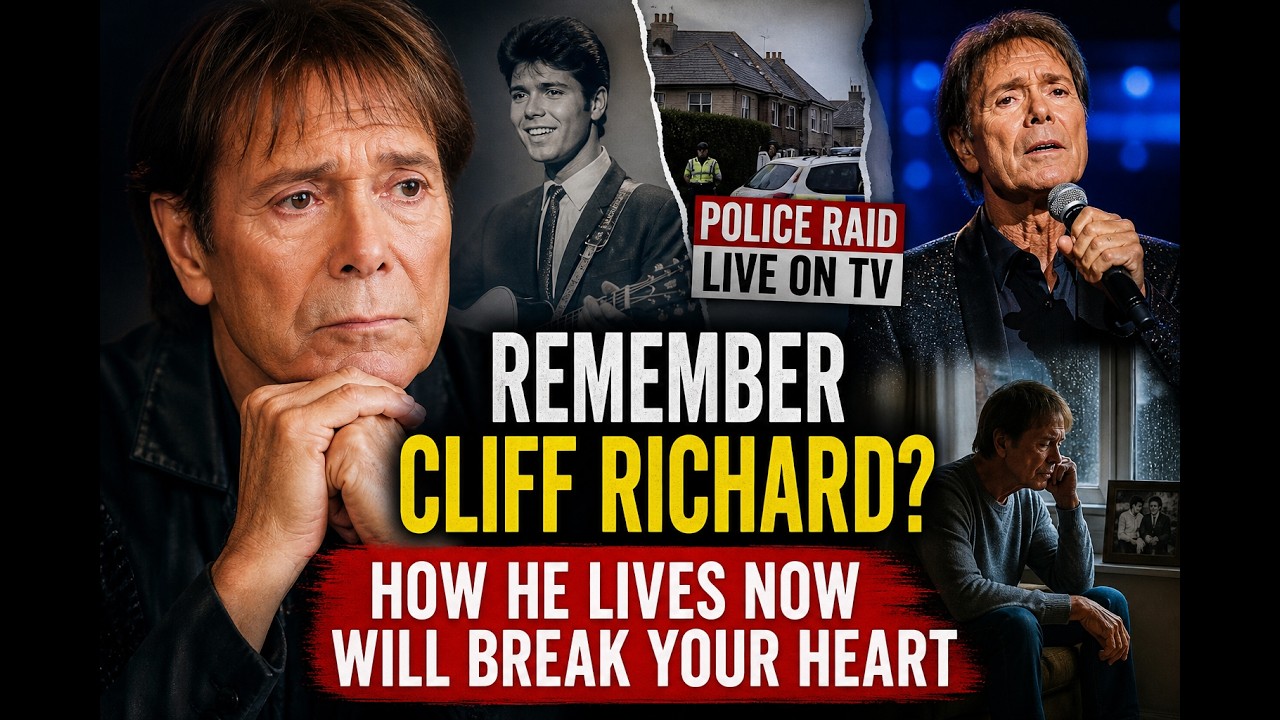
The case followed the national reckoning triggered by the Jimmy Savile scandal, leaving police and the media under intense pressure to act decisively. Richard immediately denied the allegation, but the optics were already set: a beloved, clean-cut star whose home was being searched in full view of the nation. The situation escalated when it emerged that the BBC had been tipped off about the raid in advance. Camera crews were already in position when officers arrived.
The network later admitted that its coverage of the search was planned, a revelation that transformed a police matter into a media event and made Richard appear culpable long before any evidence was examined. For close to two years, the investigation hung over him. He was never arrested and never charged. In June 2016, the Crown Prosecution Service announced there was insufficient evidence to pursue the case, legally clearing Richard.
The allegation had been made by a man claiming to have been molested by the singer in 1985, though the claim was later withdrawn by the complainant’s family. Despite the legal outcome, public perception did not follow neatly behind. The footage had already circled the globe, and the headlines were written. Richard, determined to reclaim his name, launched legal action against the BBC for its role in broadcasting the raid.
In July 2018, the High Court ruled in his favor, finding that the BBC had seriously and sensationally violated his privacy. He was awarded substantial damages, a landmark verdict in the ongoing debate over press ethics and individual rights. The personal cost, however, proved harder to repair. Richard said the stress triggered shingles, caused rapid weight loss, and brought on periods of severe anxiety.
At one point, he feared a heart attack or stroke. He admitted that looking in the mirror became unsettling because he no longer recognized himself. The house searched on live television felt contaminated to him, and he never returned to live in it. The scandal accelerated a retreat that had already been underway.
Once a permanent fixture in the British spotlight, Richard grew wary of public attention and drastically reduced his interviews and appearances. His withdrawal was compounded by what he later described as loneliness. He never married and has no children, a decision he long maintained was deliberate, shaped by his Christian faith, his career, and his desire for independence. In time, he acknowledged wondering what a more private family life might have looked like.
Richard’s rise to fame was as extraordinary as his ordeal. Born in 1940 in British India, he moved to England in 1947 after the subcontinent gained independence, a transition that brought financial hardship to the family. Inspired by American rock and roll, he took up the guitar as a teenager and broke through in 1958 with “Move It,” a track now regarded as a defining moment in British rock music. The success never stopped: over 250 million records sold, 68 UK top-10 singles, and a knighthood in 1995.
In later years, his health became a more immediate battle. In 2024, a routine medical check before a tour revealed prostate cancer. It was detected early and had not spread. By late 2025, Richard announced the cancer was gone for now, words he chose carefully, aware that nothing in his health is guaranteed.
He continues to perform, though at a more measured pace. His movements on stage are slower, and his speaking voice frailer. But the singing voice remains steady. Richard has drawn a clear line between retiring and simply stopping: retirement feels final, while stopping leaves the door open.
For now, he insists that door stays open. Cliff Richard’s story has become less about chart statistics and more about survival. He has faced a scandal that nearly ended his career, a legal fight that tested his resolve, and health crises that would break lesser spirits. He emerges not untouched and not unchanged, but he continues to stand.
The spotlight that once tracked his every move has mellowed, and the roar of the crowd has given way to quieter reflection. Yet the man who helped define British rock and roll remains, as he put it, unbroken.


