For most of human history, childhood was not a protected period of play and schooling. Archaeological evidence from a 34,000-year-old double burial in Sunghir, near modern-day Russia, reveals just how different the ancient view of children was. In a shallow grave dug into the permafrost, the bodies of a boy around 12 years old and a girl barely nine were found buried head-to-head, covered in more than 10,000 individually carved mammoth ivory beads. Experimental archaeologists have determined that carving a single bead takes roughly 45 minutes to an hour of labor, meaning the children’s clothing represented at least 10,000 hours of collective human work.
In stark contrast, an adult male hunter buried nearby received only about 3,000 beads. The disparity has puzzled researchers, especially since the children showed signs of physical disability—the boy had bowed thighs and the girl had a deformity that would have made walking difficult. In a mobile Ice Age hunter-gatherer group, keeping such children alive required significant communal effort. Rather than being abandoned, they were carried, fed, and protected, and upon death, buried with a level of wealth no adult in the camp could match.
Archaeologists believe this may indicate the first evidence of inherited social status or a belief that children who died young held special spiritual significance. The Sunghir burial challenges the modern assumption that ancient parents were emotionally detached from children due to high mortality rates. Skeletal analysis across hunter-gatherer sites shows that roughly 40% of children died before age five from infections, injuries, and seasonal starvation. Yet the archaeological record shows elaborate, loving burials for children who died.
At Windover in Florida, researchers found the skeleton of a 15-year-old boy paralyzed from the waist down by spina bifida, whose bones showed he had been kept clean, fed, and cared for by his tribe for his entire life. These findings suggest prehistoric communities were bound together by deep empathy for their children. The integration of children into ancient survival was not limited to burial customs. At the Melka Kunture site in southern Ethiopia, researchers excavating a 700,000-year-old layer of volcanic ash found fossilized footprints of Homo heidelbergensis, including tracks made by toddlers aged one to three.
These young children were standing alongside adults as they butchered a hippopotamus with sharp stone tools. Demographers estimate that children and adolescents made up nearly half of prehistoric hunter-gatherer populations. A tribe of 30 people would likely have included 15 children, meaning communities could not afford to support such a large portion of the population as passive consumers. Children had to contribute from a very early age, and they did so by being present and participating in every survival task.
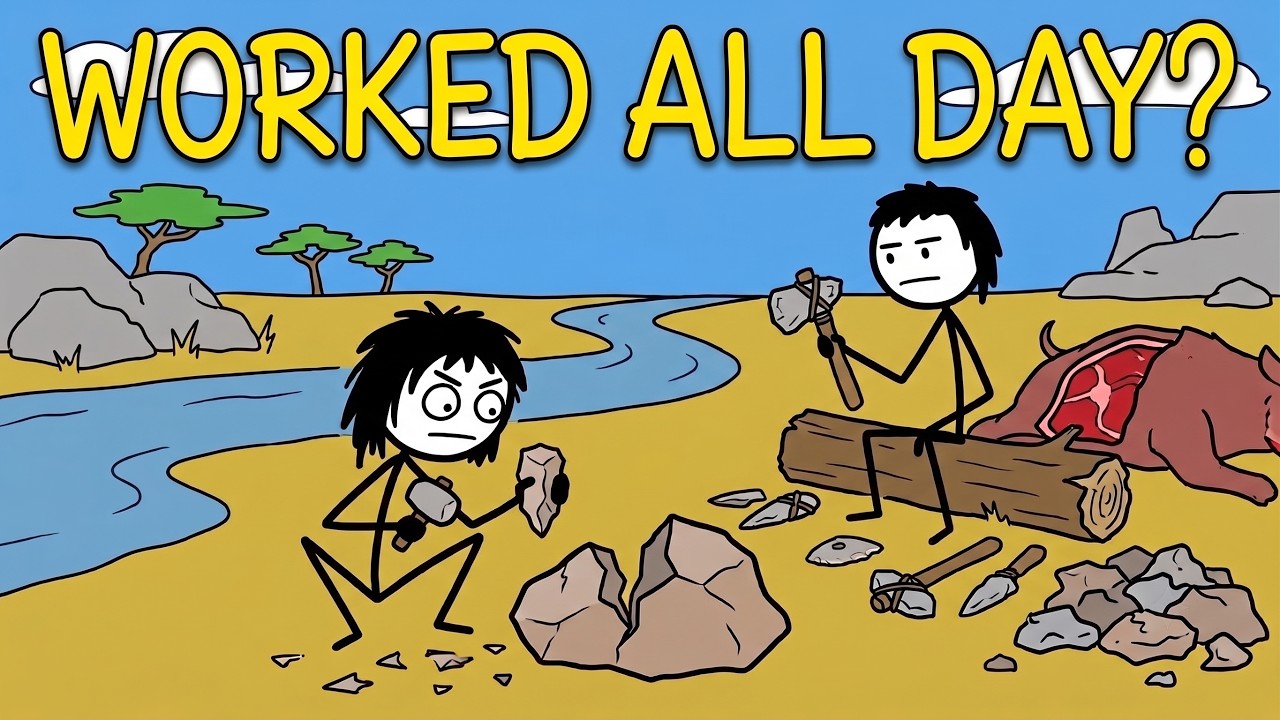
Without classrooms or textbooks, prehistoric education was entirely visual and hands-on. The first school in human history was simple: watch, copy, and repeat. Archaeologists have found the physical evidence of these lessons across Scandinavia, Ireland, and Switzerland in piles of discarded stone flakes. Among perfectly crafted stone knives and handaxes, researchers kept finding messier, poorly struck stones with clear signs of errors—wrong angles, strikes too hard or too soft.
For a long time, these were dismissed as garbage or the work of lazy adults. But modern flintknapping experts recognized them as practice pieces—the homework of ancient children. At the late Paleolithic site of Trollesgave in Denmark, archaeologists found flint flakes that could be refitted like a jigsaw puzzle. The refit showed a master knapper had struck a series of perfect blades from a core, handed it to a beginner who made errors crushing the platform, then took it back and corrected the mistake with a single precise blow before returning it to the child to try again.
At a Neolithic site in Sweden, researchers found a specific area where these clumsy ruined stones were concentrated away from the main camp—a play area where children gathered to practice knapping without the pressure of producing functional tools. This teaching process may have been central to human development itself. In 2015, researchers ran an experiment testing how different forms of communication affected the transmission of stone knapping skills. Chains of participants taught each other to make Oldowan stone tools.
Some used only silent imitation, others used gestures, and the last group used full verbal instruction explaining the physics of the strike. The language group learned significantly faster and made better tools. This suggests the need to teach children complex survival skills was one of the primary forces that drove ancestors to develop complex language. Rather than evolving speech to discuss abstract concepts, language may have developed so adults could tell children exactly where and how to strike a rock to keep from starving.
Prehistoric children were not merely practicing for the future—they were producing in the present. Modern hunter-gatherer societies offer insight into how much children contributed. Anthropologists studying the Martu, an indigenous group in Australia’s western desert, documented children as young as five going on hunting trips without adults. They targeted sand monitor lizards that hide in burrows under spinifex grass.
Using small fire brands to burn away the grass and digging sticks to extract the lizards, they built their own fires, roasted their catch, and ate on the spot. Researchers found a Martu child could gather up to half of their own daily calorie requirements during certain seasons. They adapted their search to their smaller stature, shorter strides, and lower walking speeds, focusing on resources that were stationary and close to the ground while leaving high-risk hunting to adults. This likely reflects how prehistoric children lived for hundreds of thousands of years—gathering berries, nuts, tubers, and catching small animals like frogs, lizards, and birds.
They also held crucial roles in camp, watching younger siblings, carrying firewood, guarding fires, and monitoring for predators. As societies shifted into the Bronze and Iron Ages, children’s contributions turned from voluntary foraging into heavy labor. Archaeologists studying ancient bricks and pottery have found millions of tiny fingerprints preserved in fired clay. By measuring ridge density and width, researchers can calculate the age of the people who handled the wet clay.
Studies of building materials from Roman villas and medieval castles found that over 10% of bricks and tiles carried fingerprints of children aged eight to 13. These children worked in brickyards, carrying heavy wet clay molds, stacking bricks in the sun, and loading kilns. In ancient salt mines at Hallstatt, Austria, archaeologists found miniature leather backpacks and small pickaxes worn down by the hands of children who spent their days in dark, narrow shafts hauling heavy salt blocks. Despite the demands of survival, prehistoric children still found time for play and creative expression.
Some of the most famous cave art sites in Europe, long thought to be the work of solitary adult shamans, actually carry the playful markings of children. In Rouffignac Cave in France, also known as the Cave of the Hundred Mammoths, one chamber’s ceiling is covered in finger flutings—lines drawn into soft red clay by human fingers. In 2011, researchers Jess Cooney and Leslie Van Gelder analyzed the width of these flutings and discovered many were made by children. The most prolific artist in one chamber was a girl only five years old.
Some of the flutings are high on the ceiling in places a small child could never reach alone. The markings show an adult must have picked the child up, hoisted her onto their shoulders, and held her so she could draw her fingers across the soft clay in the flickering light of fat lamps. Similar child flutings and hand stencils have been found at Gargas Cave. This was not a sacred ritual restricted to adult men but a shared generational moment—parents bringing children into deep dark chambers to leave their own signatures on the stone.
Children also had toys. Archaeologists have excavated miniature stone spears in Sweden, tiny clay pots in Russia, and small toy boats carved from wood in Viking-era Greenland. These toys were small versions of adult tools, allowing children to play at being adults while practicing survival skills. Play was not an escape from reality but a rehearsal for it.
Around 4,000 years ago, this natural process of learning through imitation was replaced by the first formal schools. In the ancient Sumerian city of Nippur in modern-day Iraq, students attended the Eduba, literally translated as “tablet house. ” To graduate as a scribe, students had to memorize and write over 600 complex cuneiform characters—a dry, grueling process taking up to 12 years. Archaeologists know exactly what this life was like because they excavated dozens of copies of a Sumerian text called “School Days,” reconstructed from 21 clay fragments over 40 years of work by scholar Samuel Noah Kramer.
The text is a first-person diary of a Sumerian schoolboy. He describes waking up in a hurry, terrified of being late, then suffering a day of repeated beatings: caned by the school monitor for speaking without permission, by the writing teacher for bad handwriting, by the supervisor for standing up. Desperate to stop the punishment, the boy begs his father to invite the headmaster to their house. The father hosts a lavish dinner and gives the headmaster expensive clothes and a ring, after which the teacher suddenly changes his attitude and praises the boy as the best student in the school.
This is the first recorded instance of bribing a teacher in human history. In the ruins of House F at Nippur, which served as a scribal school, archaeologists found physical traces of bored students: a clay tablet with the clear bite marks of a child who had bitten into wet clay in frustration, and a student’s tablet from Kish with a drawing of a fish doodled in the corner of a writing exercise. Many tablets show the teacher’s neat, perfect writing on one side and the student’s messy attempt to copy it on the other, complete with finger smudges and errors. Four thousand years ago, children were biting their pencils, doodling in the margins, and complaining about their teachers.
The modern version of childhood as a protected, separate period of play and education is a historical blink of an eye. For 99% of human existence, children were not kept in a sanitized bubble. They ran in the mud next to hippo carcasses, practiced toolmaking next to masters, hunted lizards in the desert, and drew their fingers across the ceilings of dark caves. They were active, vital members of their communities, integrated into the economy, culture, and survival of their species.
Modern progress has brought vaccines, clean water, warm beds, and schools, drastically reducing the 40% child mortality rate of the past. But in creating this safe, separate world, an ancient connection has been severed. Children have been taken out of the community and placed in front of screens and standardized desks. The need for free play, the drive to imitate adults, and the hunger for real-world contribution are still programmed into every child.
They are not built for constant confinement or artificial separation but to explore, learn by doing, and stand shoulder-to-shoulder with their community.


