The first step of a million-step journey begins in a strip mall, and the 18-year-old who walks through the door of that recruiting station, tucked between a nail salon and a phone repair shop, is signing a contract for a life he cannot possibly imagine, a life that will strip him bare and rebuild him in the fires of a crucible he volunteered for.
The handshake from the recruiter is a vice, a firm, bone-crushing greeting that is equal parts welcome and warning, and the words “part of something bigger than yourself” hang in the air as he signs the paperwork. He is 18 years old, worked two years at a grocery store, and holds neither the money for college nor the grades for a scholarship, but the Army offers both, eventually, if he survives it, and he thinks he knows what survival means. He does not.
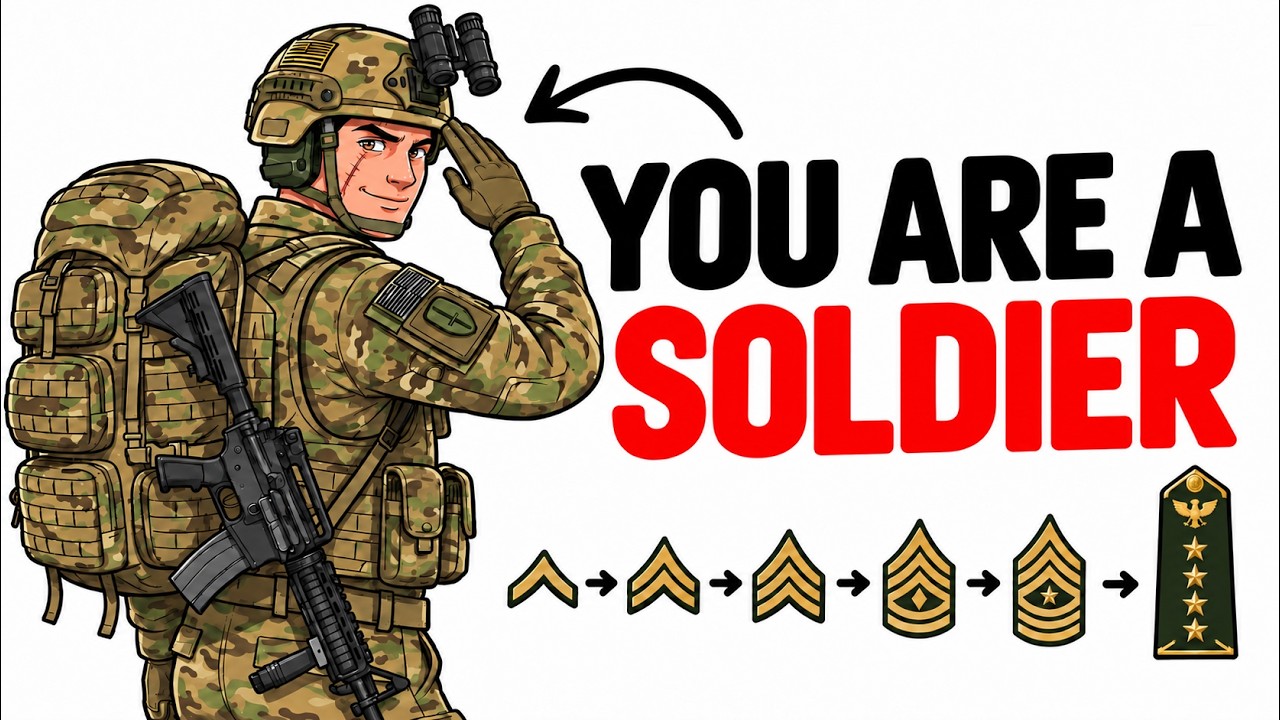 The flight to Fort Jackson, South Carolina, for basic combat training is the first time he sees the reality of his decision materialize out of a bus window. A drill sergeant’s scream meets him before his boot can even touch the pavement, and within the hour, his head is shaved and he’s handed a duffel bag stuffed with uniform pieces that fit no one yet, loose threads and hems that have resisted any sense of structure. The next 10 weeks were reduced to a frantic blur of 4 hours of sleep a night, learning to make a bed so tight a quarter bounces off it, and disassembling an M4 rifle in the pitch black until it becomes a second language of clicks and pins.
He learns to survive, carving his identity out of land navigation and the Georgia heat during 9 weeks of advanced infantry training at Fort Benning, where machine guns and squad tactics are his new professors. Getting lost twice in the pine forests is a necessary failure; finding every point the third time with only a protractor and his own two legs for company gives him his first taste of genuine, physical pride. The live grenade feels impossibly heavy and his hands tremble so violently he nearly drops it into the pit, but he doesn’t.
He graduates quietly, with no band to christen his achievement, just a bus ticket to Fort Campbell, Kentucky, where he arrives as a private, the lowest of the low, still expected to carry every ammo can that nobody else wants to carry and clean weapons senior guys fired themselves and never cleaned.
The daily work is monotonous, washing down to the rhythm of making 10-minute phone calls to his mother from a payphone, telling her everything is fine. The volume is still a thin veneer, though, and his promotion to specialist feels like a tenth of it all.
The weight of his responsibilities begins to be etched out in his 14th month in the ranks; a second stripe, a few hundred more dollars, and the gravity of being promoted to a higher responsibility. The unit gets alert orders when he’s still adjusting to the name, prompting 6 weeks of desert training in the Mojave at the National Training Center to rehearse a war not yet fought, learning to spot pressure plates and the snaking lines of command wires in California. That methodical training proves its value when he lands in Iraq, a private in a Humvee with no doors, patrolling a permanent state of clenched muscles and shallow breaths.
His first deployment is a series of moments—clearing houses in a city whose name he can now spell without looking—and trying to tell the difference between families cowering in back rooms and caches of mortar rounds until he’s already inside. A first IED goes off 40 meters out, damaging the gunner in a truck behind, but everyone keeps working. He spends 3 weeks running a traffic control point, and it’s at the final barrier where the reality of his job shatters; a sedan doesn’t slow down, his team leader fires two rounds through the windshield, and the panic that unfolds reveals a family, shocked but unharmed, changed into something else.
No one says much that night, and he turns 20 years old in a chow hall eating a sheet cake, carrying the smell of war in his uniform and a silence he decides is his to hold alone.
At 21, he makes sergeant, a team leader, leading to the second deployment to Afghanistan and a new rule of engagement where the mission is no longer about his own survival but ensuring the survival of the four under him. In the Kunar Province, at a combat outpost, he is a guide to a 19-year-old private from Ohio who freezes under fire, his small team following him as he leads them through extreme terrain. He learns the meaning of fear and bravery in the snow when a culvert bomb flips his vehicle, pulling the driver out through the hatch, and he loses the first of his soldiers, a specialist named Torres, in the winter.
 He writes a letter to the man’s mother, trying to find the words to describe the whole, helpless feeling of not getting it right.
Staff sergeant at 24 introduces him to a rank built on the weight of nine soldiers and the weight of his own name. His third deployment back to Iraq transitions him into an advisory role with Security Forces, and he sees the conflict for the ugly, evolving beast it is. Some of his trainees remind him of his own privates; some cut and rejoin the enemy later, but he leaves that world of small lessons behind.
When he comes home to a wife he met on leave, his daughter cry, doesn’t recognize him—she only knows the two weeks he was home as “dad,” not the storm of his absence. He reenlists for 6 more years without a ceremony; no clapping, no cheering. He doesn’t need it.
He knows why he’s doing it.
By 12 years, he is a sergeant first class and a platoon sergeant; 40 soldiers under him. He becomes an expert at cataloging disturbed dirt and reading shephards from the spotter, and he brings his platoon through 4 deployments. That’s when the weight shifts to a deeper level.
A specialist in his platoon, reminding him of himself at 19, steps on a pressure plate, and he carries the weight of the fact he wasn’t even there. Flying to a funeral in a small Texas town, he stands at attention and holds the folded flag, an act that embeds itself in his soul. He takes on training new platoon sergeants, passing on his 15 years, repeating the lessons that a job isn’t shooting, it’s about bringing your people home, and the crushing weight of the ones you couldn’t save.
His selection to the mission of the Sergeant Major Academy brings him away from the field, a year of and logistic and strategy to re-learn, and to realize the entire Army was far bigger than his own muzzle sights. He years of her life, she feels his name, she sees him as a new kind of man. It feels like the first year of her marriage with him, she tells them, she promises there will be more.
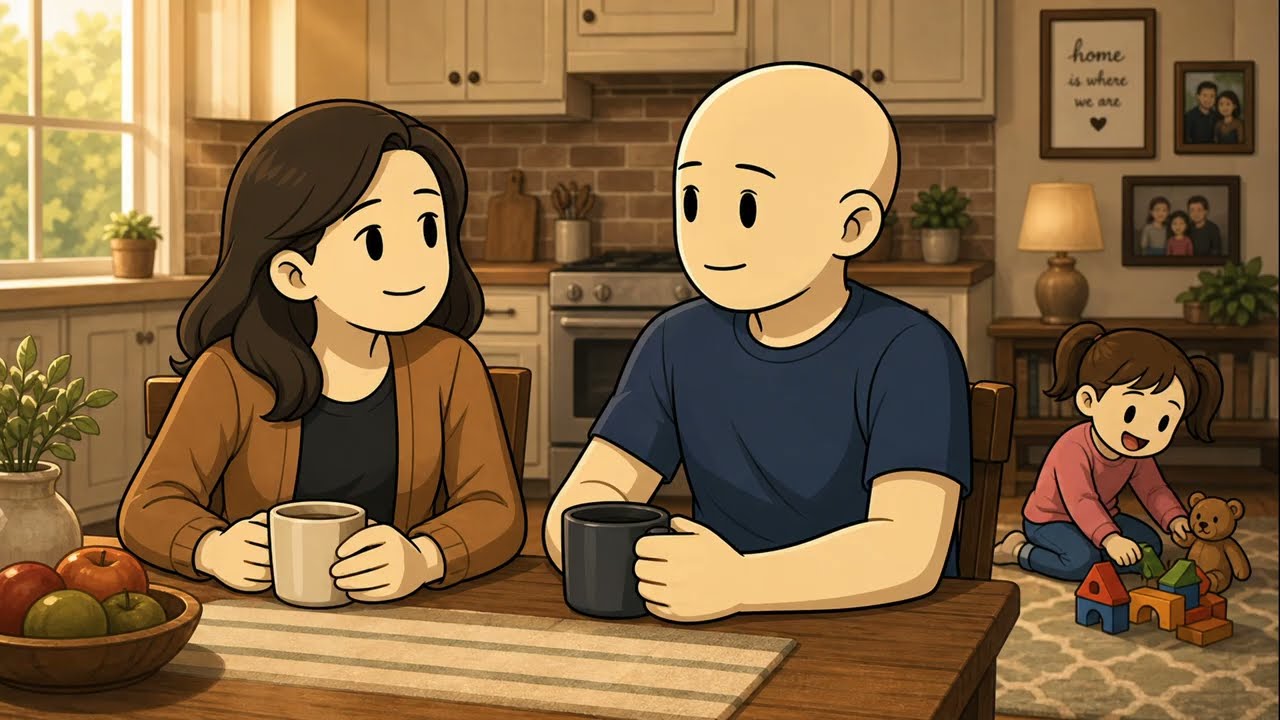 The First Sergeant role at 37 puts 150 lives in his hands, the constant professional, the mix of drill sergeant and counselor and father figure for soldiers 10 to 20 years his junior. Garrison management is quiet combat: marriages collapse, drinking problems hidden, and the only one to lean on after midnight is him. A rotation to Eastern Europe, the cold, and the tense deterrence mission feels like it’s not war, but he misses his son’s first day of kindergarten and his daughter’s 10th birthday, watching them on video calls, functioning with a 2-second delay that sounds like a foreign language.
A suicide in his company makes the job take a toll and writes a memorial formation script, and his personal mantra becomes the burden of prevention.
Sergeant major means 42, an advisor to 800 soldiers, and a measure of brevity for the infantryman’s war. One last aspect of his carer is a deployment to an unnamed place, where another can’t be written, even as he stops leading patrols and walks the perimeter. The soldier’s bodies are breaking down now—knees, shoulders, a pounding tinnitus, and he counts them as the cost of doing business.
Mentoring a young captain, a fresh and fiery trigger-happy version of his own lieutenant at 20 years ago, he spends six months correcting bad instincts that could get soldiers killed. And it’s the route of his success. Years later, a letter thanked him for that mentorship.
He puts it with his commendations; it means more than all of them. He holds a private notebook of the fallen, and he looks at it every promotion, a reminder of the true cost of that rank.
A position as the Commanders Sergeant Major for full brigade, four thousand soldiers, means he is the senior NCO advisor. More time at the Pentagon and in briefings with the generals. He lobbies for change in the way the military handles trauma, and it gets shelved, but he sees his daughter graduate through a laptop.
In the Pacific, he’s stationed far from home, and the mission is quiet, but the weight of his job is to fix things. He pushes through 24 years of pressure and learns to measure success in inches instead of miles.
 At 51, the highest honor: they select him as the Sergeant Major of the Army. The singular requirement—there is no representation of this rank—the nemesis of the senior enlistment leader for a million soldiers. He meets with the entire army, works with drill sergeants, and with the memories of privates at Fort Jackson.
He is testifying on Capitol Hill, not just loud but persuasive, fixing barracks through policy recommendations that ribbons all the way from barracks to readiness. He attends an Army-Navy game, shakes hands with senators, and flies out the next day to sit in the mud, trading the mire of his war. He carries with him a mission to the way transitions out of the Army are handled and would say in the end his conversation with his old squad leader from Iraq reduces him to the human being in Tennessee.
But the silent pride in what he built is deeply secure.
And finally, he retires after 32 years on Fort Liberty, with a daughter who once didn’t know his face, but who now carries his name. He’s in public, with a dog he finally gets to train, and a porch he can on. The call about the staff sergeant, the one he trained 20 years ago, who never made it home in his own was the one that drove it war.
He makes those same calls all the time, driving to the funerals, and still visits transition a week out. Army. He sees the soldiers week out and he’s the one saying: “What do I do with my hands now?”
“How do I explain the silence?” “How do I love my family the way I always meant to?” He gives his answer, There are no perfect answers, only that he had 32 years to try.
The cycle continues as he stands there, a retired command sergeant major at the podium for a new graduation, and the generational echo comes back into hyper focus. The private on the bus from a small town will learn, just as he and every other soldier before him had to learn, through the ranks, what it costs to be a soldier. The cycle continues, and it’s a life—from private to sergeant major part of the ordinary and the ultimate surreal.