In 2011, headlines around the world announced the discovery of a “gay caveman” near Prague. The roughly 5,000-year-old burial was initially identified as male, but the body had been placed on its left side with its head facing east—a position more commonly associated with female burials in that Copper Age culture. Male burials usually lay on the right side facing west, and the grave lacked several objects typically found with men. The media quickly concluded the case was solved.
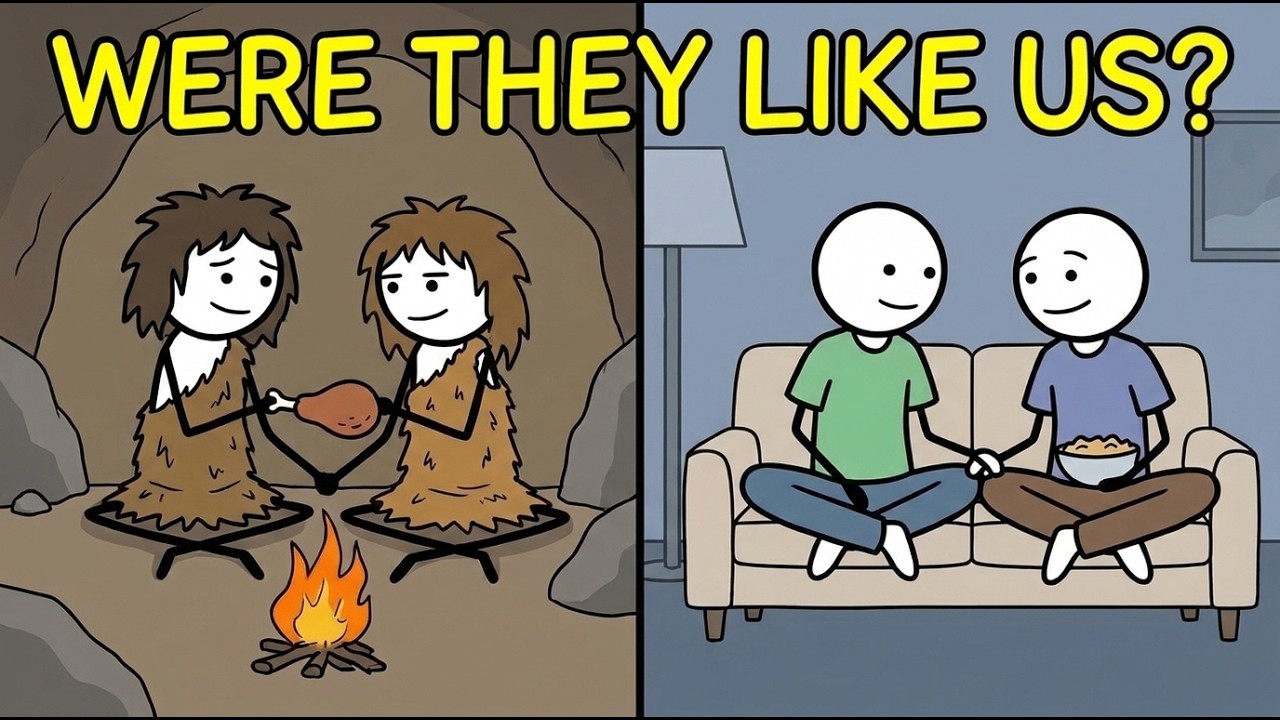
The archaeologist involved had actually offered a far more tentative interpretation, suggesting the burial might represent someone with a different social gender or an unusual ritual identity. Skeletal sex estimates can be uncertain, and burial customs are patterns, not laws. A person placed differently might have been a ritual specialist, an outsider, or someone buried during an emergency. None of those possibilities establishes sexual orientation.
A feminine man is not automatically attracted to men, just as a masculine woman is not automatically attracted to women. Gender expression and sexual attraction are not the same thing. The “gay caveman” became famous because people wanted a single body to settle an entire question. Archaeology cannot provide that body.
What it can provide is context. Same-sex attraction exists in every region of the modern world, and same-sex sexual behavior appears throughout the animal kingdom, including among our closest primate relatives. If the biological and developmental processes that produce same-sex attraction operated in ancient written societies and appear across other primates, there is no credible reason to imagine they switched on only when humans invented writing. Same-sex sexual behavior has been documented in hundreds of mammal species.
A 2023 comparative study reported observations across 261 mammal species and found it especially common among primates, with records from at least 51 primate species. That does not mean every animal engaging in same-sex behavior possesses a human-style gay identity. Behavior, attraction, partnership, and identity are different layers. But the animal evidence undermines the idea that same-sex behavior required modern cities or someone explaining the concept first.
The real problem for prehistory is preservation. Stone tools survive, hearths survive, and bones occasionally survive, but a private relationship leaves evidence only if it changes material culture in a way researchers can identify. Two women sharing a shelter would not leave behind a chemical signature labeled romantic. Two men caring for one another might look exactly like brothers or hunting partners.
Even burial together proves little, as people are buried beside relatives, spouses, servants, and strangers who died in the same disaster. Prehistoric art is similarly difficult to read, with shapes and scenes open to widely varying interpretations. Once writing arrives, the evidence becomes clearer. In ancient Mesopotamia, cuneiform texts contain references to same-sex acts, gender non-conforming religious personnel, and omens involving sex between men.
Some texts treat a male same-sex encounter as an ordinary event with ritual consequences. Certain incantations ask for a man to gain the desire of another man. Laws and omens do not regulate behaviors no one can imagine, so the tablets prove recognition even if they do not prove universal acceptance. Ancient Egypt offers a more intimate mystery.
Around 2400 B. C. E. , two royal manicurists named Niankhkhnum and Khnumhotep were buried together at Saqqara.
Their shared tomb shows them embracing, holding hands, and touching noses—an Egyptian gesture often compared with kissing. In the most intimate image, the two men stand face to face in a pose commonly used for married couples. They may also have been brothers, perhaps even twins, and both men had families. The tomb gives us intimacy without a confession.
Ancient Greece is often described as accepting homosexuality, but that sentence is both partly true and deeply misleading. Athenian pottery depicts courtship between older men and younger males, and poetry celebrates male beauty. However, Greek sexual rules focused heavily on age, citizenship, masculinity, and social role. The best-documented Athenian system involved an adult male citizen courting an adolescent male, with the older partner expected to be dominant.
This was pederasty, and it cannot be discussed honestly without acknowledging the age and power imbalance. The central question was often not the sex of a partner but whether a man behaved in a role appropriate to his age and rank. Women appear less clearly because men produced and preserved most surviving records. Around 600 B.
C. E. , Sappho of Lesbos wrote lyric poetry describing desire and emotional intensity directed toward women. Only fragments of her work survive, but the woman whose island eventually gave English the word lesbian left poems that cannot be explained away as purely ceremonial.
Plato’s Symposium even includes a myth explaining why some people seek partners of the same sex. Rome inherited Greek traditions and converted them into an even more explicit system of power. Masculinity depended less on whether a partner was male or female than on whether a citizen remained dominant. Being penetrated could threaten a citizen’s reputation.
The emperor Hadrian formed an intense relationship with a young Greek man named Antinous, whose drowning in the Nile in 130 C. E. transformed him into one of the most widely represented faces in the Roman Empire. The emperor founded a city in his honor and supported his worship as a god.
Another emperor, Elagabalus, is described in hostile sources as marrying a male athlete and later a charioteer whom the emperor reportedly called husband. The same sources portray Elagabalus as violating Roman gender expectations. Some modern readers identify the emperor as transgender, but it is difficult to separate the historical person from senatorial authors who despised the emperor and used sexual scandal as a weapon. Beyond the Mediterranean, the pattern continues.
In ancient China, the story of Emperor Ai of the Han dynasty and his favorite Dong Xian involves the emperor cutting his sleeve rather than waking the sleeping man, giving rise to the literary expression “the passion of the cut sleeve” for love between men. The Kama Sutra in ancient India describes men of a “third nature” and discusses sexual acts between men and between women, while temple art from later centuries depicts an even wider range of sexual imagery. This evidence destroys two equally convenient myths. The first says homosexuality is modern or invented by declining societies; ancient evidence makes that impossible.
The second says the ancient world universally celebrated sexual freedom until a later religion ruined everything; that is also false. Ancient societies could be brutal, and their sexual systems were shaped by patriarchy, slavery, age inequality, and obsession with legitimate heirs. The greatest difference between ancient and modern sexuality is therefore not desire but classification. The words “homosexual” and “heterosexual” emerged only in the 19th century.
Ancient languages had insults, poetic terms, and role descriptions, but generally did not organize every person around a permanent orientation in the modern sense. An Athenian citizen might marry a woman, pursue adolescent males, and think of all these acts as compatible with one masculine social identity. Would some ancient people have been what we now call gay or lesbian—consistently and perhaps exclusively attracted to the same sex? Almost certainly.
Would they all have understood themselves as members of one shared minority? Probably not. Identity requires more than attraction; it requires language, social recognition, community, and a belief that this pattern defines a kind of person. This is why searching for the first homosexual person is doomed.
There was no first one in recorded history—only the first one whose culture left evidence we can still recognize. Some prehistoric people probably formed lasting same-sex bonds, and most left no trace. That absence is not mysterious; the overwhelming majority of heterosexual love also disappeared. What changed was not the existence of desire, but how society sorted it by age, status, gender, power, morality, identity, or love.
The earliest humans did not need a word for homosexuality in order to experience it.