Margaux Hemingway seemed to have everything.
The famous surname.
The extraordinary beauty.
The million-dollar modeling contract.
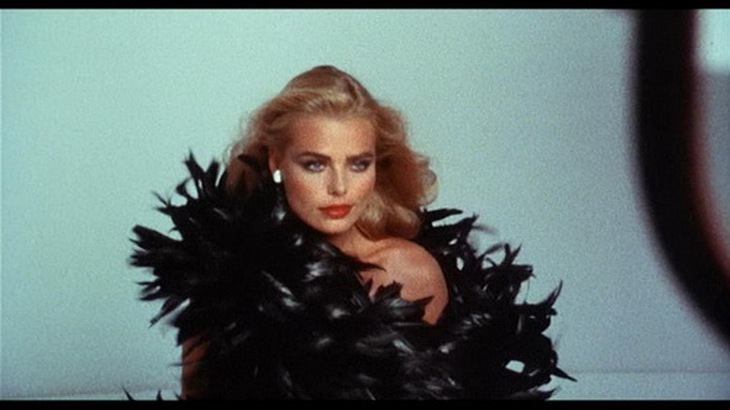 The parties.
Studio 54.
And an entrance into New York society that made her look almost untouchable.
But behind the photographs was something much darker.
Depression.
Alcohol.
Illness.
Career collapse.
And the crushing weight of belonging to one of America’s most famous—and most troubled—families.
By the time Margaux Hemingway died at only 42, the glamorous life the public remembered had almost completely disappeared.
And the Hemingway name had claimed another devastating chapter.
Born Margot Louise Hemingway in 1954, Margaux entered the world already carrying a surname larger than almost any career she could build for herself.
Her grandfather was Ernest Hemingway.
The Nobel Prize-winning author had become an American cultural legend.
But fame was not the only thing attached to the Hemingway family.
There was also alcoholism.
Mental illness.
Suicide.
And generations of complicated relationships with self-destruction.
Margaux would spend much of her life trying to understand where the family legacy ended and her own identity began.
For a while, it appeared she had escaped it completely.
She was tall, striking and impossible to ignore.
The modeling industry noticed.
In 1975, Margaux signed a groundbreaking fragrance contract reportedly worth $1 million.
It was an astonishing deal.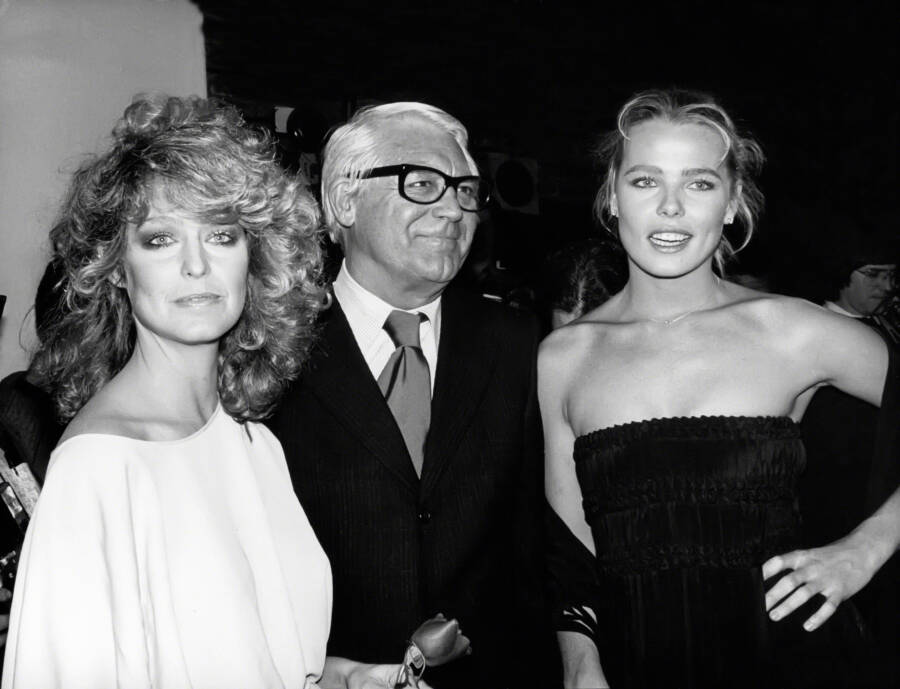
She was widely described as the first model to receive a million-dollar contract, helping establish the template for the celebrity supermodel that would become common decades later.
Suddenly, Margaux Hemingway was not merely Ernest Hemingway’s granddaughter.
She was famous herself.
Her face appeared on magazine covers.
She entered elite social circles.
And in 1970s New York, she became part of a nightlife world built around fame, fashion, excess and constant attention.
Studio 54 represented that world perfectly.
Celebrities.
Models.
Artists.
Money.
Parties that seemed to have no ending.
Margaux fit the image.
But maintaining that image was another matter.
Hollywood soon came calling.
In 1976, she starred in Lipstick, hoping acting would become the next stage of her career.
The film also featured her younger sister, Mariel Hemingway.
But the critical response was disappointing.
Margaux did not receive the breakthrough she needed.
Then something especially painful happened.
Mariel began emerging as the more successful actress.
For Margaux, whose identity had already been shaped by comparison and expectation, the changing dynamic added another layer of pressure.
The modeling world was also unforgiving.
Beauty could create a career overnight.
But it offered little protection when appearances changed or trends moved on.
Margaux’s life became increasingly unstable.
She struggled with alcohol.
She battled depression.
She also lived with epilepsy, adding another private challenge behind the glamorous public image.
Then, in 1984, a serious skiing accident changed things further.
The injury affected her physically.
Her weight increased.
And in an industry obsessed with appearance, the consequences were brutal.
Opportunities became harder to find.
The woman once celebrated as a million-dollar beauty watched the world that had elevated her begin turning away.
The decline was not immediate.
Margaux continued trying to work.
She pursued acting.
She appeared in various projects.
She searched for new directions.
But the extraordinary momentum of her early twenties never returned.
The parties that once represented success increasingly looked like part of something much more destructive.
Alcohol became a serious problem.
Depression remained.
Money became another source of instability.
And the Hemingway family history was impossible to ignore.
Her grandfather Ernest had died by suicide in 1961.
Other members of the family had also experienced profound struggles with mental illness and addiction.
Margaux began speaking more openly about her own problems.
 There was courage in that.
Instead of maintaining the perfect image expected of a former supermodel, she acknowledged what was happening.
She discussed addiction.
She confronted her depression.
And she tried to understand the destructive patterns running through her family.
But honesty did not magically solve them.
By the 1990s, Margaux’s circumstances looked dramatically different from the glamorous world that had once surrounded her.
She worked on projects such as Wild Guide and participated in material connected to the legacy of her grandfather.
She continued searching for purpose.
But financially, she struggled.
Bankruptcy followed.
The famous surname remained.
The million-dollar modeling history remained.
But much of the security associated with those things was gone.
And increasingly, there was loneliness.
It was a brutal contrast.
Margaux Hemingway had once walked into rooms where everyone wanted to know her.
Now she was fighting battles that celebrity could not solve.
On July 1, 1996, Margaux Hemingway was found dead at her home in Santa Monica.
She was 42.
Her death was ruled a suicide by overdose.
The timing carried an eerie connection to her family history: her grandfather Ernest Hemingway had died almost exactly 35 years earlier.
Margaux became the fifth person across four generations of the Hemingway family reported to have died by suicide.
It intensified talk of a Hemingway “curse.”
But calling it a curse risks hiding something more important.
Behind the famous surname were generations of real people confronting mental illness, addiction, trauma and emotional pain.
Margaux herself had tried to speak about those struggles.
She knew something was wrong.
She tried to confront it.
And that makes her ending even more heartbreaking.
Today, Margaux Hemingway should not be remembered only for how she died.
She helped change modeling.
Her million-dollar contract anticipated an era when models themselves could become global celebrities.
She possessed a presence powerful enough to create an identity separate from one of the most famous literary names in America.
For a moment, she seemed destined to build an empire of her own.
But fame could not protect her.
Beauty could not protect her.
Money could not protect her.
Neither could the Hemingway name.
The glamorous photographs captured only one version of Margaux.
Behind them was a woman trying to outrun addiction, depression, family trauma and an industry that could discard its former stars with astonishing speed.
She became famous because she was a Hemingway.
Then she became famous enough to stand on her own.
But escaping everything that came with that name proved far more difficult.
And behind the million-dollar face was a battle almost nobody watching from the outside could truly see.


