Mi chiamo Lukas, ho ventinove anni e lavoro come analista finanziario in una società di Francoforte. In apparenza, la mia vita sembrava ordinaria e solida, ma dentro di me c’era un vuoto che né la carriera né i successi riuscivano a colmare. Sono cresciuto in quella che chiamo la mia famiglia adottiva, ma fin da bambino ho avuto la sensazione di essere un pezzo che non combaciava con il resto del puzzle. I ricordi del giorno in cui fui adottato non mi appartengono.
Le uniche parole che ho sempre sentito sono state quelle di mia madre adottiva, Eva, che quando era arrabbiata con me ripeteva: “Ti abbiamo salvato da una vita inutile. Ci devi tutto. ” Sono stato adottato che avevo meno di tre mesi. I miei genitori adottivi, Stefan ed Eva, erano benestanti.
Vivevano in una grande casa a due piani in un quartiere elegante di Francoforte, con un prato curato e una staccionata bianca. Avevano due figli: Moritz, due anni più giovane di me, e Sophie, cinque anni più piccola. Sulla carta ero parte della famiglia, ma nei loro cuori ero solo un’ombra. Non assomigliavo a nessuno: capelli scuri, occhi chiari, e loro non perdevano occasione per farmelo notare.
Alle riunioni di scuola presentavano Moritz e Sophie come loro figlio e loro figlia. Di me dicevano semplicemente: “Questo è Lukas. ” Nient’altro. Ricordo un Natale, avevo circa sette anni.
Ero in un angolo del soggiorno mentre tutti posavano davanti all’albero illuminato. Quando mi avvicinai, Sophie mi spinse via con un gesto brusco e disse: “Tu non appartieni a questa famiglia. ” Mia madre sorrise, accarezzò la testa di Sophie e continuò a scattare foto. Io rimasi lì, a guardare le lucine, sentendo il mondo festeggiare mentre io restavo ai margini.
Ho fatto di tutto per meritare la loro approvazione. Studiavo fino a tardi, ero il primo della classe, riempivo il frigo di trofei e medaglie. Aiutavo in casa, in giardino, imparavo a piegare il bucato secondo i loro standard rigorosi. La ricompensa era un cenno freddo o un laconico “bravo”.
Una volta ho sentito mia madre dire a mio padre in cucina: “Si impegna perché sa che ci deve qualcosa. ” Quelle parole mi hanno trafitto il cuore con precisione chirurgica. Non ero loro figlio, ero un debito. Ma c’era qualcuno che mi faceva sentire vivo: mio nonno, il signor Werner.
Viveva in una fattoria a un’ora di macchina da Francoforte, con campi infiniti e un cielo notturno pieno di stelle. Ogni estate, dopo la scuola, restavo da lui. Erano i mesi in cui mi sentivo davvero amato. Lui non mi chiamava mai “Lukas” con distacco.
Ero sempre “ragazzo mio” o “caro ragazzo”. Mi insegnò a riparare il vecchio trattore, a piantare i pomodori, e la sera sedeva con la sua chitarra e suonava canzoni popolari mentre io cantavo stonato. Era l’unico che mi vedesse davvero. Quando avevo dodici anni, seduto con lui su una panchina a guardare un tramonto rosso fuoco, gli chiesi: “Perché mamma e papà non mi vogliono bene?
” Lui posò la chitarra, mi prese per le spalle e disse con voce profonda: “Tu sei la cosa migliore che questa famiglia non sa apprezzare. Non lasciare che la tua bontà dipenda da come ti trattano. Tu vali molto di più. ” Quelle parole sono diventate una piccola fiamma nei miei giorni più bui.
Un’altra sera, in fattoria, mi chiese: “Pensi mai a tua madre biologica? ” La domanda mi colpì come un pugno. Eva diceva sempre che era stata irresponsabile e che non valeva la pena cercarla. Ma gli occhi di nonno, pieni di mistero e tenerezza, mi fecero battere il cuore.
“Non lo so”, risposi tremando. “Non credo che mi volesse. ” Lui mi strinse la mano. “Non pensarlo mai, Lukas.
Ci sono storie che non conosci ancora, ma un giorno tutto avrà un senso. ”
Quelle parole accesero la mia curiosità. C’era una verità più grande dietro la mia vita, ma il calore di quelle estati non bastava a scacciare il freddo che sentivo il resto dell’anno. A casa, Moritz mi vedeva come un rivale indegno e mi derideva davanti ai suoi amici chiamandomi “il salvato”.
Sophie non era crudele, ma mi guardava come se fossi un estraneo che dormiva sotto il loro tetto. Vivevo in una piccola stanza in soffitta, l’unica senza una finestra grande sul giardino, mentre Moritz e Sophie avevano camere spaziose piene di poster e giocattoli. Non mi lamentavo mai. Avevo imparato che lamentarsi portava solo allo sguardo di disapprovazione di mia madre e alla frase: “Dovresti essere grato di avere un tetto sopra la testa.
”
A quattordici anni, per il compleanno di Sophie, passai una settimana intera a fare un braccialetto di cuoio per lei, sperando che le piacesse. Lo avvolsi in una piccola scatola con un fiocco rosso e lo misi sul tavolo dei regali. Quando lo aprì, lo guardò a malapena e lo mise da parte per aprire i regali più costosi: un iPod nuovo dai miei genitori, scarpe firmate da Moritz. A fine serata trovai il braccialetto nel cestino, tra la carta straccia.
Lo tirai fuori, lo pulii e lo misi in una scatola dei ricordi. Fu l’ultima volta che provai a fare un regalo a qualcuno di loro. A sedici anni, un altro colpo. Volevo fare qualcosa che rendesse orgoglioso Stefan, che aveva parlato davanti ai suoi amici di come riparava la vecchia macchina di famiglia.
Pensai che se avessi fatto qualcosa di simile, mi avrebbe guardato diversamente. Con gli attrezzi che mi aveva regalato nonno, passai ore a riparare la vecchia bicicletta di Moritz, con la gomma a terra. Quando Stefan tornò a casa, lo accompagnai emozionato in garage per mostrargli il lavoro. Lui guardò la bici a malapena e disse: “Non toccare le cose di Moritz.
Non sono tue. ” Rimasi paralizzato. Le parole non uscivano. Salii in camera, chiusi la porta e piansi in silenzio.
Così passò la mia infanzia: estati calde nella fattoria di nonno, inverni freddi in una casa grande ma senza amore. Imparai a nascondere le emozioni, a sorridere anche quando dentro ero distrutto. Mi dicevo che un giorno avrei trovato il mio vero posto, ma non sapevo che quel percorso mi avrebbe portato a verità più dolorose di quanto potessi immaginare. A diciotto anni, ricevetti una borsa di studio per l’Università Tecnica di Berlino.
Non era lontana, ma per me rappresentava una porta verso un altro mondo. Il giorno in cui feci le valigie, Eva stava sulla soglia con le braccia incrociate, lo sguardo freddo come sempre. “Stai attento”, disse con un tono che assomigliava più a un addio verso un inquilino. Stefan alzò appena lo sguardo dal giornale per fare un cenno con la testa.
Uscii da quella casa con il cuore pesante, ma con una scintilla di speranza. Forse, andandomene, avrei scoperto dove appartenevo davvero. L’università fu una boccata d’aria fresca. A Berlino nessuno mi conosceva come “l’adottato” o “l’estraneo”.
Mi buttai a capofitto negli studi di finanza, perché ero sempre stato bravo con i numeri. Notti in biblioteca, tesine infinite, presentazioni davanti ai compagni. Ogni sfida era un modo per dimostrare che valevo qualcosa, non per loro, ma per me stesso. Lavoravo part-time in un caffè vicino al campus e risparmiavo ogni euro per non dover chiedere soldi a loro.
Volevo dimostrare di potcela fare da solo, senza la loro approvazione. Ma non importava quanto mi impegnassi, quella sensazione di essere alla deriva non mi abbandonava. Di notte, nella mia stanza in condivisione, pensavo alla mia famiglia. Si sarebbero mai chiesti come stavo?
Sarebbero stati orgogliosi di me? Scrivevo loro lettere scritte a mano, raccontando piccoli successi: un esame superato, una borsa di studio. Ricevevo solo e-mail fredde da Eva: “Bravo Lukas. Continua così.
” Nient’altro. Le conservavo in una cartella speciale come consolazione. Almeno rispondevano. Ogni estate tornavo nella fattoria di nonno invece che a Francoforte.
Era più vecchio ora, i capelli bianchi, la schiena curva, ma i suoi occhi scintillavano ogni volta che mi vedeva. Suonavamo ancora la chitarra sulla veranda, piantavamo insieme, e ogni tanto ripeteva quelle parole che erano diventate la mia ancora: “Un giorno, Lukas, saprai la verità. ” Quando gli chiedevo cosa volesse dire, sorrideva, mi dava una pacca sulla spalla e diceva: “Il tempo lo dirà. ”
Nell’ultimo anno di università, mi laureai con lode, il migliore del mio dipartimento di finanza.
Alla cerimonia salii sul palco con un sorriso luminoso, ma dentro mi sentivo vuoto. Avevo invitato i miei genitori adottivi, li avevo persino chiamati. “Siamo molto occupati, Lukas”, disse mia madre con la solita voce monotona. Ma aggiunse: “Comunque, congratulazioni.
” Dal palco guardai il pubblico. Famiglie che applaudivano, si abbracciavano, scattavano foto. Solo nonno era lì, in ultima fila, in un abito vecchio ma stirato con cura. Quando scesi dal palco, mi abbracciò forte.
“Sono orgoglioso di te, ragazzo mio”, sussurrò. Sorrisi, ma le lacrime caddero senza che potessi fermarle. Era la prima volta che piangevo davanti a lui. Dopo la laurea, ricevetti un’offerta di lavoro da una società finanziaria a Francoforte.
Decisi di tornare, non per la mia famiglia adottiva, ma per stare vicino a nonno. Gli anni successivi furono dedicati a costruire una nuova versione di me stesso. Lavoravo senza sosta, facevo straordinari, analizzavo rapporti finanziari come se fossero la chiave per una nuova vita. I miei colleghi mi chiamavano “l’uomo di ferro”, perché non mi lamentavo mai, non mancavo mai.
Ma non sapevano che ogni notte, tornando nel mio piccolo appartamento, mi sedevo al buio e ascoltavo le canzoni popolari di nonno, chiedendomi se stavo davvero vivendo. Con il passare degli anni e il miglioramento dello stipendio, cominciai a mandare soldi ai miei genitori adottivi ogni mese. Non perché lo chiedessero, ma perché sentivo di dover ripagare quella colpa invisibile che mi avevano inculcato. Quando chiamavo per sapere come stavano, mia madre diceva solo: “Grazie, ma non era necessario.
” Moritz e Sophie, ormai adulti, erano ancora dipendenti da loro. Moritz aveva abbandonato l’università e passava le giornate con gli amici. Sophie spendeva senza freni, ossessionata dai social e dallo shopping. Non li odiavo.
Speravo solo che un giorno mi vedessero come parte della famiglia. Sei anni dopo, fui promosso ad analista senior. Un traguardo importante, non solo per lo stipendio, ma perché mi sentivo più vicino al sogno di costruire una vita di cui essere orgoglioso. Ma non importava quanto fossi di successo, quel vuoto dentro di me non spariva.
Desideravo ancora una famiglia, non una grande casa in un quartiere elegante, ma un posto a cui appartenere davvero. Fu allora che mi venne un’idea: una cena di Natale. In Germania, questa festa è sinonimo di famiglia e riunione. Pensai che se avessi organizzato una cena perfetta e invitato tutti, forse mi avrebbero guardato con occhi diversi.
Forse avrei smesso di essere “l’adottato”. Passai settimane a preparare. Scelsi un ristorante elegante nel centro di Francoforte, con tovaglie bianche e candele. Prenotai un tavolo per sei: i miei genitori adottivi, Moritz, Sophie, nonno e io.
Scrissi gli inviti a mano con inchiostro dorato, mettendoci dentro tutto ciò che non avevo mai detto. A mia madre scrissi: “Cara mamma, spero che tu possa venire a condividere con me la gioia di questo giorno. ” Chiamai anche mio padre adottivo. “Mi farebbe davvero piacere vedervi tutti”, gli dissi.
Lui rispose: “Vedrò se riesco a organizzarmi. ”
Non mi lasciai scoraggiare. Ordinai il cibo in anticipo: arrosto d’oca, canederli di patate, cavolo rosso, tutti i piatti che sapevo apprezzavano. Dentro di me bruciava la speranza.
Forse questa volta verranno davvero, mi dicevo, anche se la paura mi stringeva il cuore. Il giorno della cena indossai un abito blu navy e curai ogni dettaglio davanti allo specchio. Guardai i miei occhi, quegli occhi chiari che mia madre diceva non assomigliassero a nessuno in famiglia. Mi dissi: “Oggi sarà diverso.
Oggi mi vedranno. ” Arrivai al ristorante puntuale alle cinque. La cameriera mi accompagnò al tavolo. Tutto era perfetto: tovaglioli piegati, bicchieri lucenti, un vaso di fiori al centro.
“La sua famiglia deve essere molto allegra”, disse la cameriera con un sorriso. Annui, nascondendo l’ansia che mi divorava. “Lo spero”, risposi. Mi sedetti e guardai l’orologio.
Erano le sei, l’ora dell’appuntamento. Il ristorante si riempiva, famiglie che ridevano, brindavano, parlavano ad alta voce. Guardai il telefono: niente, nessun messaggio, nessuna chiamata. “Forse sono in ritardo”, mi dissi, anche se il cuore batteva già forte.
Scrissi a Sophie: “Arrivi presto? ” Niente. Chiamai Moritz, non rispose. Lasciai un messaggio vocale: “Sono al ristorante, vi aspetto.
” Fingevo di essere calmo, ma dentro stavo andando in pezzi. Alle sei e mezza, i minuti sembravano interminabili. Gli altri tavoli erano pieni. Una famiglia vicina rideva mentre un bambino versava la salsa sulla camicia.
Una coppia anziana si teneva per mano. Guardai il mio tavolo vuoto. Le sei sedie sembravano prendermi in giro. Tremando, chiamai Eva.
Rispose al quinto squillo. “Lukas”, disse con voce tagliente. “Tuo padre non si sente bene e abbiamo già mangiato qui. Te la cavi, vero?
” In sottofondo sentivo le risate di Sophie, il tintinnio dei piatti, la voce di Moritz che parlava di calcio. Erano insieme, come sempre, come se io non fossi mai esistito. “Sì, me la caverò”, risposi con voce spezzata. Riattaccai e posai il telefono sul tavolo.
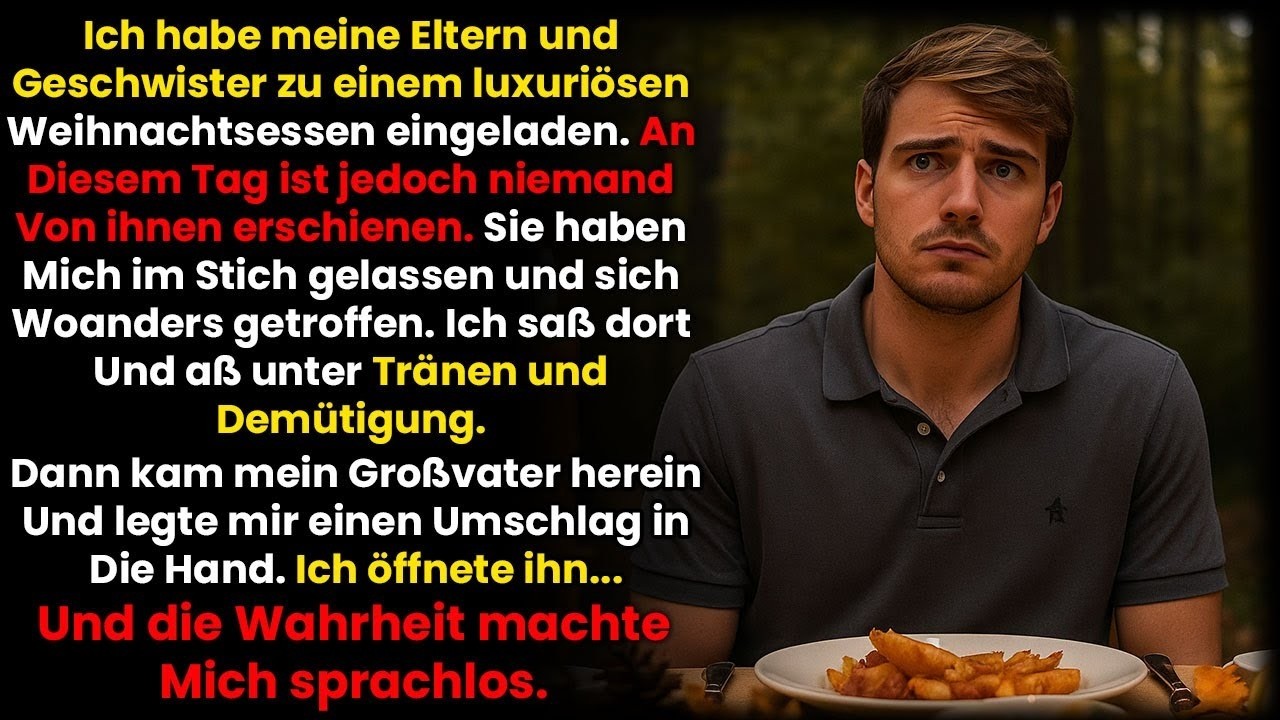
Le candele bruciavano ancora, ma non emanavano più calore. Sentivo il mondo festeggiare senza di me. Ancora una volta. Chiamai la cameriera e ordinai una porzione piccola di arrosto d’oca con canederli.
“Stasera è da solo? “, chiese con dolcezza. Annuii. “Sì, solo io.
” Il cibo arrivò, profumava di delizioso, ma ogni boccone mi restava in gola. Guardavo la sedia vuota dove avrebbe dovuto sedersi Eva. Pensavo ai piatti che avevo scelto con amore, immaginavo le loro risate. Piansi in silenzio, mordendomi il labbro per trattenere le lacrime.
Avevo promesso a me stesso di non piangere più. Avevo già pianto abbastanza durante l’infanzia. Presi il telefono. Pensai di chiamare nonno.
Era l’unica persona che non mi aveva mai deluso. Ma prima che potessi comporre il numero, la porta del ristorante si aprì. Un soffio d’aria fresca entrò, con l’odore della pioggia imminente. Alzai lo sguardo e il cuore mi si fermò.
Nonno era lì, nel suo cappotto di lana, i capelli bianchi che brillavano alla luce. Si guardò intorno, i suoi occhi si fermarono su di me e sorrise con quella tenerezza che mi aveva sempre riportato alla vita. “Scusa il ritardo, ragazzo mio”, disse. La sua voce calda, come i pomeriggi in fattoria.
Si sedette di fronte a me e prese le mie mani nelle sue, che tremavano ma erano forti. “Non ti lascerei mai da solo, Lukas. Mai. ”
Sentii di poter respirare di nuovo.
Nonno mi guardò con una tristezza nuova, come se si preparasse a dire qualcosa di ancora più grande di tutto ciò che aveva detto prima. “Lukas”, iniziò, gli occhi fissi nei miei. “Ti sei mai chiesto perché ti ho sempre amato più di tutti gli altri? ” La sua domanda mi colpì come un fulmine.
Il mondo sembrò fermarsi, le candele tremolavano, ma nient’altro contava più. Solo lui e io. “Perché, nonno? “, chiesi con voce tremante.
Tirò fuori dal cappotto una busta ingiallita e la posò sul tavolo. La spinse verso di me. “Aprilo, Lukas, ma promettimi una cosa prima. Qualunque cosa accada, non lasciare che la verità ti distrugga.
”
Le mie mani tremavano mentre toccavo la busta. Non pesava per la carta, ma per tutto ciò che rappresentava: gli anni di domande che non avevo mai osato fare. Guardai nonno. Nei suoi occhi vedevo amore, ma anche paura.
“Sono pronto”, gli dissi. Lui annuì lentamente. Il ristorante era ancora pieno di risate, piatti che tintinnavano, famiglie che godevano della loro serata. Ma per me il mondo si era ridotto a quella busta, a quel momento.
La aprii con cura, come se contenesse qualcosa di fragile. Dentro trovai una vecchia foto, una lettera scritta a mano e un biglietto da visita. Presi prima la foto. Mostrava una giovane donna con capelli biondi e occhi chiari, proprio come i miei.
Sorrideva, ma era un sorriso triste, come quello di qualcuno che porta molto dolore dentro. Guardai nonno confuso. “Chi è? “, chiesi.
Lui respirò a fondo, come se si preparasse a una confessione difficile. “Questa donna”, disse con voce seria, “è tua madre biologica. ”
Sentii il sangue gelarsi nelle vene. Guardai di nuovo la foto.
Il suo viso non somigliava per niente al ritratto crudele che Eva mi aveva dipinto per tutti quegli anni. Non sembrava irresponsabile, ma fragile, come qualcuno che aveva sofferto molto. “Devi sapere la verità”, continuò nonno, guardando il tavolo. “Ma lascia che ti racconti tutto dall’inizio.
” Fece una pausa e guardò fuori dalla finestra, dove le luci di Francoforte scintillavano in lontananza. “Più di trent’anni fa, lavoravo come autista per una famiglia molto ricca a Düsseldorf. Erano potenti, ma pieni di conflitti e facciate. La donna nella foto, Klara, era la figlia maggiore.
Era intelligente, bella, ma con un cuore libero. Si innamorò di un povero musicista, un sognatore di nome David. Quando rimase incinta, fu uno scandalo. La sua famiglia la ripudiò, la diseredò.
David, vedendo che non poteva trarre vantaggio dalla relazione, la lasciò. Klara era sola, senza soldi, senza supporto, con un bambino in arrivo. Lavorava in un caffè per sopravvivere, viveva in un piccolo appartamento alla periferia. Un giorno andai a trovarla dopo il lavoro.
Mi raccontò tutto. Mi chiese aiuto. Voleva darti una vita migliore. ”
Nonno fece una pausa, abbassando lo sguardo, la voce spezzata.
“Quando nascesti, Klara mi implorò di prendermi cura di te. Non voleva lasciarti, Lukas. Aveva solo bisogno di tempo, tempo per ricostruire la sua vita, per diventare la madre che sentiva che meritavi. Mi chiese di proteggerti, di trovarti una casa.
” Avevo un nodo alla gola. “Allora, i tuoi genitori adottivi, Stefan ed Eva, non potevano avere figli. Proposi loro di adottarti. Pensavo fosse la cosa migliore.
Mi sbagliavo. Non avrei mai immaginato come ti avrebbero trattato. Ogni volta che vedevo come ti allontanavano, come ti ignoravano, il cuore mi si spezzava. ”
Tenevo ancora la foto in mano, senza sapere cosa provare.
Guardai nonno, cercando una spiegazione più profonda. “E mia madre, dov’è ora? ” Lui prese il biglietto da visita e me lo diede. “Klara ora è una donna di successo.
Ha lasciato Düsseldorf, ha studiato, ha lavorato duramente, ha creato la sua azienda ad Amburgo e ti ha cercato per oltre dieci anni. Mi ha trovato di recente. Vuole vederti, ma ha paura. Paura che tu non voglia vederla.
Vuole che sia tu a decidere. ”
Lessi il biglietto: Klara Fischer, Amministratrice Delegata, Fischer & Söhne GmbH, un indirizzo ad Amburgo, un numero di telefono. Lo girai tra le dita, sentendo di avere in mano un pezzo che mi era mancato per tutta la vita. Aprii la lettera.
La scrittura era morbida, inclinata, femminile. “Caro Lukas, non so se leggerai mai questa lettera, ma non ho smesso un solo giorno di pensare a te. So di averti lasciato e non mi aspetto che tu capisca subito. Voglio solo che tu sappia che l’ho fatto con il cuore spezzato.
Non è stata una mancanza d’amore. Eri l’unica luce nel periodo più buio della mia vita, ma non avevo modo di darti ciò che meritavi. Ero senza casa, senza famiglia, senza supporto, e l’unica cosa che mi rimase fu chiedere a tuo nonno di proteggerti. E lui lo ha fatto.
Da quel giorno, giurai che sarei tornata a prenderti. Andai all’università, lavorai instancabilmente, costruii qualcosa nella speranza di trovarti. Ma quando ci provai, la paura mi sopraffece. La paura che mi rifiutassi, che mi odiassi.
Ma dovevo scriverti, dirti quanto ti amo, quanto mi sei mancato. Non mi aspetto perdono, solo una possibilità di spiegarti, di vederti. Anche se fosse una sola volta, per dirti che non ti ho mai dimenticato, che sei sempre stato mio figlio, la mia vita, il mio amore. Tua madre, Klara.
”
Finito di leggere, le lacrime scorrevano sulle mie guance. Non sapevo perché piangevo. Forse per il dolore di Klara, o per gli anni in cui mi ero sentito invisibile, o forse per quel bagliore di speranza che ora brillava intenso. Guardai la foto di Klara, i suoi occhi, il mio riflesso.
Immaginai la giovane donna, sola con un bambino in braccio, che si fidava di nonno. Le mie mani tremavano. “E cosa faccio ora, nonno? “, chiesi, posando la lettera sul tavolo, cercando una risposta nei suoi occhi.
Lui tenne il mio sguardo, teneramente. “Questo lo puoi decidere solo tu, ragazzo mio. Questa verità ti appartiene. Ma qualunque cosa accada, non sei solo.
Io sarò sempre con te. E Klara, anche lei ti aspetta. ”
Sentii la sua mano calda sulla mia. Non era solo mio nonno, era il ponte tra il mio passato e il mio futuro, l’uomo che aveva mantenuto la sua promessa per quasi trent’anni.
Respirai a fondo. “Voglio conoscerla”, dissi con determinazione. “Voglio andare ad Amburgo. Voglio guardarla negli occhi, sentire la sua storia, capire.
” Nonno sorrise sollevato. “Allora fallo. Ma c’è qualcosa che vuoi fare prima? Qualcosa che devi chiudere prima di iniziare questo nuovo capitolo.
” Pensai un momento, poi lo seppi. “Voglio andare dai miei genitori adottivi”, dissi con voce calma ma decisa. “Voglio raccontare loro tutto. Non per litigare, non per ottenere la loro accettazione, ma perché capiscano che ho trovato una parte di me che loro non hanno mai voluto vedere.
” Nonno annuì con gli occhi lucidi. “Bene, Lukas. Vengo con te. Qualunque cosa accada, sarò lì.
”
Lasciammo il ristorante. Anche se la notte di Francoforte era fredda e il vento soffiava forte, nonno camminava saldo al mio fianco. Salimmo nella sua vecchia station wagon, che odorava di legno, olio e ricordi, e ci dirigemmo verso la casa dei miei genitori adottivi. Mentre guidavamo per le strade illuminate dalle luci di Natale, passando davanti a case piene di famiglie riunite, avevo un nodo allo stomaco, ma anche una determinazione che non avevo mai provato.
“Sei sicuro, Lukas? “, chiese nonno. “Non sarà facile. ” “Sono sicuro”, risposi senza staccare lo sguardo dal parabrezza.
“Non voglio urlare. Voglio solo chiudere questo capitolo. Devono sentire quello che ho da dire. ”
Quando arrivammo, il vecchio cancello bianco era invariato.
Le luci del soggiorno erano accese. Si sentivano le risate di Sophie, il mormorio di Moritz e la televisione in sottofondo. Festeggiavano ancora, come se la mia cena non fosse mai esistita. Bussai alla porta, il cuore che martellava.
Eva aprì. Il suo viso mostrò sorpresa, ma assunse subito la solita espressione fredda e controllata. “Lukas”, disse, incrociando le braccia. “Cosa ci fai a quest’ora?
” “Devo parlare”, risposi con voce ferma. “Con tutti. ” Esitò, ma aprì la porta. Entrammo.
Stefan sedeva come sempre nella sua poltrona, leggendo il giornale. Moritz e Sophie erano sul divano, mangiavano torta. Nessuno si alzò, nessuno disse “ciao”. Stefan disse senza alzare lo sguardo: “Cosa vuoi dire?
” Respirai a fondo. Le mie dita tremavano, ma non la voce. “Ho trovato mia madre biologica e partirò per Amburgo per conoscerla. Volevo solo che lo sapeste, perché anche se ho passato ventinove anni in questa casa, sono sempre stato solo un ospite.
E oggi ho finalmente trovato una parte di me che era andata perduta. ”
Ci fu un silenzio, un silenzio pesante. Sophie posò la forchetta a metà del gesto. Moritz si agitò sul divano, infastidito.
Eva mi guardò con quella miscela di giudizio e disprezzo che avevo sentito così spesso. “Quindi pensi di trovare ora ciò che ti è mancato? “, disse quasi beffarda. “Non illuderti, Lukas.
Sei sempre stato l’adottato. Questo non cambierà. ” Le sue parole facevano male, ma questa volta non mi spezzarono. “Non ho più bisogno di illusioni”, risposi con calma.
“Grazie per avermi dato un tetto sopra la testa, ma non vivrò più come se dovessi pagare per questo. Non ho bisogno della vostra accettazione. Ho trovato qualcuno che mi accetta. ” Stefan fece per alzarsi, ma nonno parlò per la prima volta.
La sua voce era ferma, potente, come un tuono nel soggiorno. “Basta, Stefan. Hai avuto ventinove anni per trattarlo come un figlio. Hai fallito.
Ora lascialo vivere la sua vita. ”
Nessuno rispose. Guardarono solo a terra e capii che non c’era più nulla da dire. Mi girai e uscii dalla stessa porta da cui ero entrato mille volte.
Ma per la prima volta, lo feci da uomo libero. Nonno mi seguì e quando salimmo in macchina, prese la mia mano. “Hai fatto la cosa giusta, ragazzo mio”, disse con gli occhi umidi. “Sono orgoglioso di te.
” Tornammo a casa mia in silenzio, ma era un silenzio caldo, pieno di sollievo. Mentre bevevamo un caffè, lo guardai negli occhi. “Vuoi venire con me ad Amburgo? ” Sorrise con quel sorriso saggio che mi aveva sostenuto per tutta la vita.
“Se vuoi, vengo. Ma non dimenticare, Lukas, questo è il tuo viaggio. Io ti accompagno solo. ”
Annuii.
Il giorno dopo comprammo i biglietti. Due giorni dopo salimmo su un volo mattutino per Amburgo. Nonno indossava il suo vecchio cappotto di lana e stringeva il bracciolo durante il decollo. “Non sono un fan di volare”, disse con un sorriso.
“Ma per te faccio qualsiasi cosa. ” Guardai fuori dal finestrino. Le nuvole passavano lentamente sotto l’aereo. Nella mia tasca c’era il biglietto da visita di Klara.
Mentre le ore passavano, continuavo a chiedermi: “Pensa a me? Ha paura? ” Quando atterrammo all’aeroporto di Amburgo, una pioggerellina leggera ci accolse. Le gocce scorrevano sul finestrino del taxi mentre andavamo verso il centro.
Tutto era diverso: gli edifici alti, le persone di fretta, il profumo del caffè per le strade. Alloggiammo in un piccolo hotel vicino a Eimsbüttel. Nonno prese il telefono e compose il numero di Klara. Io sedevo sul bordo del letto, il cuore in gola.
“Sono Werner”, disse con calma. “Siamo ad Amburgo. Lukas vuole vederti. ” Dopo qualche minuto riattaccò e si rivolse a me con espressione seria ma dolce.
“Ci aspetterà in un caffè nella HafenCity. È nervosa, ma vuole vederti assolutamente. ” Annuii. Non sapevo cosa dire.
Sentivo solo che la mia vita stava per cambiare per sempre. Nel pomeriggio andammo a piedi al caffè. Era un posto accogliente, con pareti di mattoni, tavoli di legno e lampade a sospensione. Dalla finestra si vedeva il viavai della città, i venditori, i musicisti di strada.
Scegliemmo un tavolo vicino all’ingresso. Nonno si sedette di fronte a me. “Stai bene? “, chiese.
“Non lo so”, risposi, facendo oscillare le gambe sotto il tavolo. “Cosa devo dirle? E se non è come la immagino? ” Lui posò la mano sulla mia.
“Sii semplicemente te stesso, Lukas. È tutto ciò che desidera. ” L’orologio segnava le 14:55. Guardavo la porta ogni volta che sentivo il campanello.
Alle tre in punto, una donna entrò in un cappotto blu scuro. I suoi capelli biondi erano raccolti in modo elegante. Portava occhiali, ma i suoi occhi erano inconfondibili. Erano i miei occhi.
Klara ci guardò, si fermò. Le sue mani tremavano leggermente mentre si avvicinava. Mi alzai. Le gambe cedevano.
Anche nonno si alzò. “Klara”, disse con un dolce sorriso. “Questo è Lukas. ” Lei mi guardò.
I suoi occhi andarono alla mia mano, dove ho ancora un piccolo neo a forma di goccia. Le sue labbra si piegarono in un sorriso tremante. “Lukas”, sussurrò. “Mi somigli più di quanto pensassi.
” Non riuscivo a parlare. Restavo lì a guardarla, la donna che mi aveva dato la vita. Non ci furono urla o lacrime drammatiche, solo un’emozione trattenuta, come se entrambi avessimo paura di rovinare il momento. Klara fece un passo verso di me e mi abbracciò.
Non era un abbraccio forte, ma tremante, come se tenesse qualcosa che potesse rompersi. Sentii il suo calore, il suo profumo delicato e una strana sensazione, come se avessi ritrovato qualcosa di perduto da tempo. “Puoi perdonarmi di averti lasciato? “, sussurrò.
Non risposi subito. La abbracciai di ritorno. Il tempo sembrò fermarsi. Pensai alla mia stanza in soffitta, alle lacrime silenziose, alle notti fredde.
Volevo dirle che la perdonavo, ma le parole non uscivano. Non perché non volessi, ma perché non avevo ancora imparato a perdonare me stesso per aver lasciato che il dolore guidasse la mia vita per così tanti anni. La lasciai andare, la guardai negli occhi e sussurrai: “Sono qui, mamma. ” Era tutto ciò che potevo dire.
Klara sorrise. Un sorriso fragile, ma pieno di speranza. Ci sedemmo. Nonno, silenzioso e paziente, rimase vicino.
Come sempre. Ci sedemmo attorno a quel piccolo tavolo mentre il rumore della città continuava come un’eco lontana. Klara prese la sua tazza di caffè con le mani tremanti, ma il suo sguardo non si staccava dal mio. C’era così tanto da dire, ma non sapevamo da dove cominciare.
“Come sei cresciuto? “, chiese infine con voce dolce e piena di desiderio. “Voglio sapere tutto, quando sei pronto a raccontarmelo. ” Guardai la mia tazza, da cui saliva un vapore leggero.
Non sapevo come riassumere anni di solitudine, desiderio e piccoli bagliori di speranza che arrivavano da un’unica fonte: mio nonno. Le raccontai di Francoforte, della casa con la staccionata bianca, della stanza in soffitta, degli anni in cui cercavo di essere perfetto per essere visto. Le raccontai di come mi sentivo un intruso, come se ogni mio passo fosse osservato per vedere se meritavo il posto che occupavo. Le raccontai dei momenti in cui cercavo di essere un figlio senza essere mai chiamato tale.
Le parlai anche di nonno, di come mi aveva salvato in silenzio, di come mi aveva insegnato a riparare le cose, a piantare pomodori, a cantare con la sua chitarra in fattoria, di come mi aveva detto che un giorno avrei capito tutto. Ma lasciai fuori i momenti più duri. Non le parlai del braccialetto nella spazzatura, né dell’arrosto d’oca mangiato da solo la sera di Natale. Quelle ferite erano ancora troppo fresche.
Klara mi ascoltò senza interrompermi, con le lacrime che scorrevano sulle sue guance. Quando menzionai nonno, lo guardò con occhi pieni di gratitudine. “Grazie, Werner”, disse con voce sottile. “Grazie per aver mantenuto la tua promessa.
” Nonno annuì semplicemente, con lo sguardo basso. Non amava mai gli elogi. C’era sempre stato, senza chiedere nulla in cambio. Dopo quella conversazione, Klara ci invitò a casa sua.
Un attico moderno nel centro di Amburgo, con grandi finestre affacciate sull’Elba. Era elegante ma accogliente: quadri astratti, una libreria, piante in vasi bianchi appese alle pareti. Guardai tutto con un misto di stupore e malinconia, confrontando quel luogo con la mia piccola stanza in soffitta, con la sua lampada tremolante e la scrivania spoglia. Ci sedemmo sul divano grigio chiaro e Klara versò il tè con cura in stoviglie bianche, come se ogni movimento facesse parte di un rituale.
“Lukas”, iniziò, “so di non avere il diritto di chiedere nulla, ma voglio una possibilità di rimediare a ciò che ho fatto. Se vuoi, puoi restare qui con me ad Amburgo. Posso offrirti un posto nella mia azienda o aiutarti a creare qualcosa di tuo. Qualunque cosa tu scelga, voglio solo che tu sappia che ora avrai sempre un posto con me.
”
La sua proposta mi sorprese. Una parte di me voleva dire sì in quel momento. Era ciò che avevo sempre desiderato: una madre, una casa, un’appartenenza. Ma una parte più forte di me mi trattenne.
Non potevo smettere di pensare che mi ero costruito da solo, con duro lavoro, impegno e lacrime silenziose. Accettare il suo aiuto, anche con le migliori intenzioni, sembrava come rinunciare a una parte di me stesso. Guardai nonno in cerca di supporto. Mi sorrise, quel sorriso saggio che avevo visto per tutta la vita.
“Che cosa hai in mente, Lukas? “, chiese, senza pressione. Respirai, guardai Klara e risposi: “Grazie, mamma, davvero. Ma se devo lavorare nella tua azienda, voglio iniziare dal basso, come qualsiasi altro impiegato.
Voglio guadagnarmi il mio posto, non perché sono tuo figlio, ma per quello che so fare. ” Klara mi guardò a lungo, poi sorrise. Un sorriso diverso, un misto di orgoglio e rispetto. “Mi somigli più di quanto pensassi”, disse con gli occhi lucidi.
“Bene, Lukas. Rispetto la tua scelta. Ti sosterrò sempre. ”
Annuii.
Per la prima volta, non mi sentivo un bambino davanti a un adulto. Mi sentivo bene. Mi sentivo un uomo che poteva prendere le sue decisioni. Alcuni giorni dopo, convincemmo nonno a trasferirsi anche lui ad Amburgo.
All’inizio rifiutò con il suo classico tono burbero. “Sono vecchio, ragazzo mio. Non ho voglia di viaggiare avanti e indietro”, protestò. Ma quando gli proponemmo di creare un piccolo orto sul balcone dell’appartamento, i suoi occhi brillarono.
“Beh, se ci sono i pomodori, potrei anche provarci. ” Klara rise. Era la prima volta che la sentivo ridere così liberamente, come se anche lei stesse guarendo. “Avrai sempre un posto qui, Werner”, disse.
“Questo appartamento sarà ancora più completo con te. ”
E così diventammo una famiglia inaspettata: nonno, Klara e io. Non perfetta, ma vera. Decisi di restare temporaneamente nell’attico per stare vicino a loro e adattarmi.
Feci domanda per un posto in Fischer & Söhne e fui assunto come analista finanziario junior. Non perché Klara avesse tirato fili, ma perché il mio curriculum parlava da solo. Il primo giorno di lavoro, davanti all’edificio di vetro, ero un misto di nervosismo ed eccitazione, ma non avevo paura. Non ero più il ragazzo della soffitta.
Ero Lukas, un uomo che era sopravvissuto e ora era pronto a vivere. Le settimane successive ad Amburgo furono come una rinascita. Klara e io condividevamo le cene, parlavamo dei nostri film preferiti, delle canzoni che ascoltavamo da adolescenti. Mi raccontò di come si era fatta strada dal nulla, di come piangeva di notte chiedendosi se mi avrebbe mai trovato.
Io le raccontavo storie delle estati in fattoria e di come il ricordo di lei, anche se lontano, mi aveva accompagnato per tutta la vita. Nonno si adattò come se avesse sempre vissuto lì. Piantava pomodori, trovava amici al mercato settimanale e ogni sera sedeva con la sua chitarra sul balcone. A volte Klara cantava con lui.
Li guardavo in silenzio, sentendo il mio cuore riempirsi lentamente. Ma la guarigione non era semplice. A volte, nella solitudine del mio nuovo appartamento, pensavo a Eva, a Stefan, a Moritz e Sophie, alle parole crudeli, all’indifferenza. Mi chiedevo se avessero mai pensato a me, se si fossero pentiti.
Ma con il tempo capii che non avevo più bisogno di risposte. Ciò di cui avevo bisogno era chiudere quel capitolo. Una sera, dopo aver finito un lungo rapporto in ufficio, tornai a casa, mi sedetti al tavolo e, senza pensarci troppo, presi un foglio bianco. Presi una penna e cominciai a scrivere.
Non era una lettera di lamentele o un grido di dolore. Era semplicemente un addio, il mio modo di chiudere con dignità il capitolo più doloroso della mia vita. “Care Eva, caro Stefan, cari Moritz e Sophie, spero che stiate tutti bene. Non ci vediamo da mesi e sento che è tempo di dirvi una cosa importante.
Ho trovato mia madre biologica e ora vivo ad Amburgo, costruendo una nuova vita. Non vi scrivo per chiedere qualcosa. Voglio solo ringraziarvi per avermi dato un tetto sopra la testa per tutti questi anni, anche se quel tetto non è mai stato una vera casa. Ho imparato che la famiglia non è sempre quella con cui vivi.
A volte la famiglia è quella che ti sceglie, che ti vede, che ti apprezza. Questo l’ho trovato qui, con mia madre e con nonno. Non mi aspetto che questo cambi qualcosa tra noi. Vi auguro solo di stare bene e di seguire le vostre strade.
Io, per la mia parte, ho deciso di seguire la mia. Con rispetto, Lukas. ”
Piegai la lettera con cura, la misi in una busta e la spedii il giorno dopo. Quando la infilai nella cassetta delle lettere, sentii qualcosa sollevarsi dal mio petto.
Non avevo bisogno di una risposta o di scuse. Quella lettera era la mia libertà. Sei mesi dopo, mentre pranzavo con un collega, ricevetti una notifica sul telefono. Era di Sophie.
Non me l’ero aspettata. Il messaggio era breve, ma il tono era diverso. Più umano, meno arrogante. “Lukas, mamma e papà stanno attraversando un brutto periodo.
Moritz ha perso tutti i risparmi scommettendo. Puoi aiutarci? ” Fissai il messaggio come se non fosse vero. Come se Sophie non sapesse quanto avevano ignorato, quanto avevano disprezzato.
Non mi sorprese che Moritz avesse preso quella strada. Aveva sempre vissuto senza conseguenze. E nemmeno che i miei genitori lo avessero sostenuto. Ma questa volta non sentivo colpa, solo chiarezza.
Per anni avevo mandato soldi. Per anni avevo aspettato qualcosa che non era mai arrivato. Questa volta non avrei permesso che la loro crisi diventasse la mia responsabilità. Avevo dato loro abbastanza possibilità.
Mostrai il messaggio a nonno. Era sul balcone, annaffiando pazientemente i suoi pomodori. Lo lesse, si passò una mano sulla barba e scosse la testa. “Lukas”, disse con fermezza, “hai fatto più di quanto chiunque altro avrebbe fatto.
Loro hanno scelto come trattarti. Non devi portare i loro errori, non più. ” Annuii, sentendo che le sue parole mi davano la forza di cui avevo bisogno. Alcune settimane dopo, nonno mi raccontò di aver chiamato Stefan e di avergli detto senza mezzi termini che non gli dovevo nulla e che dovevano essere responsabili di ciò che avevano combinato.
“Ho detto loro quello che avrebbero dovuto sentire da anni”, disse con sguardo deciso. “Devono cavarsela da soli. Non sei tu la loro salvezza. ” Non chiesi dettagli.
Non ne avevo bisogno. Sapevo che per la prima volta qualcuno aveva stabilito dei limiti con loro, e non ero stato io. La mia vecchia famiglia, con la sua vita fatta di apparenze, spese eccessive e silenzio emotivo, stava crollando. Ma per la prima volta non mi sentivo responsabile.
Avevo dato tutto ciò che avevo, persino ciò che non mi era rimasto. Era tempo di guardare avanti. Quell’autunno, decisi di organizzare un piccolo incontro per festeggiare il mio trentesimo compleanno. Niente festa grande, solo un incontro intimo con le persone che erano davvero nella mia vita.
Questa volta non era una cena nella speranza di essere accettato, ma una celebrazione sincera che apparteneva solo a me. Klara preparò una torta di mele, come quella che nonno mi faceva sempre in fattoria. Nonno sedeva nel suo angolo preferito del soggiorno, con la chitarra in mano, suonando le melodie che avevano riempito la mia infanzia. Vennero alcuni colleghi di Fischer & Söhne, persone che mi rispettavano.
Non perché ero il figlio della capa, ma per il mio lavoro, per la mia personalità. Stavo in mezzo alla stanza, guardandoli tutti. Parlavano, ridevano, brindavano. E sentii qualcosa che non avevo mai provato prima: appagamento.
Klara si avvicinò, mise una mano sulla mia spalla e disse con dolcezza: “Buon compleanno, figlio mio. ” Era la prima volta che qualcuno mi chiamava “figlio” con amore, senza condizioni, senza riserve. La abbracciai e le sussurrai: “Grazie, mamma, per avermi trovato. ” Quella notte, dopo che tutti se ne furono andati, andai sul balcone con nonno.
Le luci di Amburgo scintillavano in lontananza. L’aria era fredda e il mio cuore era leggero. “Come ti senti, ragazzo mio? “, chiese nonno.
Lo guardai. Sorrisi. “Libero”, risposi. “Per la prima volta nella mia vita, so a chi appartengo.
”
Guardando indietro, ho capito che nella vita non si tratta di cercare l’approvazione degli altri, ma di scoprire il valore che portiamo dentro. Per anni ho creduto che se mi fossi impegnato abbastanza, se fossi stato perfetto, la mia famiglia adottiva mi avrebbe visto. Pensavo che l’amore dovesse essere guadagnato, ma mi sbagliavo. L’amore non si chiede, non si implora.
Il vero amore ti riconosce senza che tu debba chiederlo. Una casa non è necessariamente il luogo dove sei cresciuto o con cui condividi un cognome. È dove vieni ascoltato, visto e scelto ogni giorno. Nonno mi ha scelto.
Klara mi ha scelto. Io stesso ho imparato a scegliermi. E anche se a volte penso ancora al mio passato, alla casa con le grandi finestre dove ero solo un’ombra, non fa più male come una volta. Lo accetto come parte di ciò che ero, ma non di ciò che sono.
Oggi mi chiamo Lukas. Ho trent’anni. Lavoro come analista finanziario in un’azienda in cui sono arrivato con le mie forze. Vivo ad Amburgo, in un piccolo appartamento con vista sui tetti della città.
Ogni mattina mi sveglio con il profumo del caffè che sale dalla panetteria all’angolo. Ogni notte torno a casa con la sensazione di scrivere la mia storia. Klara e io passiamo le domeniche insieme. A volte cuciniamo, a volte parliamo soltanto.
Ci sono ancora cose difficili tra noi: silenzi che durano più del dovuto, ferite che hanno bisogno di tempo. Ma abbiamo l’un l’altro e questo basta. Nonno ha ancora il suo orto sul balcone. È diventato una leggenda tra i vicini.
Ha sempre una storia da raccontare, una canzone da suonare. A volte lo guardo e mi chiedo cosa sarebbe stato di me senza di lui, senza il suo amore, senza la sua pazienza, senza la sua silenziosa forza. Ora so che non sono nato per essere il figlio di qualcuno. Sono nato per essere me stesso, per costruirmi.
Sì, con cicatrici, ma anche con coraggio. E se posso dire qualcosa a quelli che si sono sentiti persi, ignorati o incompleti, è questo: non abbiate paura di guardare al passato. Non abbiate paura di affrontare la verità, per quanto dura possa essere. Perché a volte, ciò che fa più male può anche liberarci.
Non lasciatevi definire da chi non ha saputo vedervi. Definitevi da ciò che siete capaci di costruire. Perdonate non solo gli altri, ma anche voi stessi per esservi sentiti indegni, per aver aspettato amore dove non c’era. Siate misericordiosi con la vostra versione spezzata, perché è quella versione che vi ha portato fin qui.
Io continuo ad andare avanti. Non so cosa riservi il futuro. Forse salirò di grado in Fischer & Söhne, o forse scoprirò un’altra strada. Forse un giorno perdonerò completamente Klara.
Forse anche Eva, Stefan, Moritz e Sophie. O forse no. Ma non importa, perché ora ho qualcosa che prima non avevo: la libertà di scegliere.
E questo, per me, è già una casa.