雨の朝、白石蒼井は机の上に並んだ10枚の不採用通知を眺めていた。4ヶ月で10社分の結果だった。最初の頃は封筒を開けるたびに手が震えたが、今はもう震えない。慣れてしまったことが何より怖かった。
3年間誠実に働いた会計事務所が倒産したのは4ヶ月前のことだ。月次決算も年次決算も税理士との窓口対応も、蒼井がほぼ一人で回していた。倒産の日、社長は蒼井の手を両手で握り、涙をこらえながら「本当にお前に助けられた。ありがとう」と言った。その言葉が今も蒼井の背中を押し続けていた。
だが転職市場では、その3年間は「中小企業の経理補助経験あり」と一言で片付けられる。面接に行くたび、面接官が学歴欄を見た瞬間だけ目色が変わる。その一瞬を蒼井はもう10回も経験してきた。
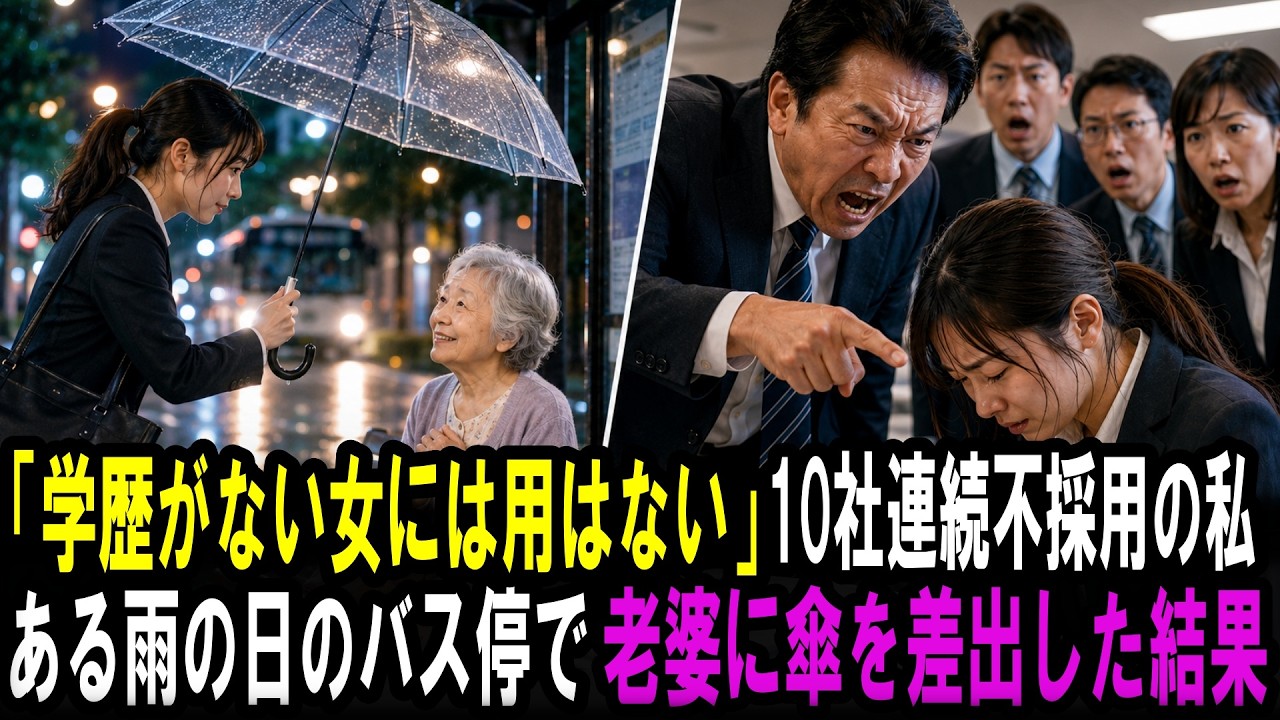
昨日の10社目の帰り道、廊下ですれ違った採用担当がひそひそとささやいた。「学歴がない女に用はないね」
聞こえないふりをして蒼井はビルを出た。雨の中を歩きながら涙が出るかと思ったが、出なかった。もう泣く体力も残っていなかったのかもしれない。
夜、次の応募先を探そうとパソコンを開いたが、30分ほど画面を見つめたまま何も入力できなかった。
翌朝目が覚めると、また雨だった。鞄の中には丁寧に手書きしたサワフーズの履歴書が入っている。食品メーカーとしては業界大手の企業だ。受かるとは思っていない。それでも立ち止まったら本当に終わりになると思って、蒼井は重い体を起こした。
玄関を出ると冷たい雨が一気に肩に落ちた。
バス停には数人が立っていた。皆一様にスマートフォンを見つめ、雨を遠ざけるように画面に集中している。蒼井もそうするつもりだった。鞄から携帯を取り出し路線図を確認しようとした時、前方で小さな声がした。
振り返ると、小柄な老婆がバス停の端に一人で立っていた。白髪が雨に濡れ、薄い上着に水が滲んでいる。傘はない。肩が細かく震えていた。周囲の人は誰も気づいていない様子だった。気づいて目をそらしているのかもしれない。
蒼井は携帯をポケットに戻した。面接まで40分、バスで20分かかる。余裕は多くない。それでも体が先に動いていた。
「あの、よかったらどうぞ」
老婆の頭の上に傘を差し入れながら言うと、老婆は驚いたように顔を上げた。深い皺の奥に、静かで澄んだ目があった。
「ありがとう。でも、あなたが濡れてしまいますよ」
「大丈夫です」
蒼井のビジネス用の傘はそれほど大きくない。左肩に雨が当たるのを感じながら、蒼井は傘の角度を調整した。
「菊池と申します」老婆は小さく頭を下げた。
「白石です」
それだけで会話が途切れた。雨が傘を叩く音が一定のリズムで続いている。二人で一つの傘に入って、蒼井はただ正面を向いていた。
やがてバスが到着した。蒼井が老婆の乗車を手伝い優先席まで案内すると、老婆は蒼井の手をそっと握った。その手は小さかった。
「今日はどちらへ?」
「面接なんです」
老婆は少し間を置いてから穏やかに言った。「うまくいくといいですね」
その声があまりにも静かで温かくて、蒼井は返事ができなかった。うまくいくとは思えなかった。それでもその言葉が胸の奥にちんと落ちた。
降りる停留所が近づいても、さっきまで胸にあった重さが少しだけ遠くなっていた。
サワフーズの本社ビルは駅から歩いて5分の場所にあった。ガラス張りの外観に、エントランスの床は白く磨かれている。蒼井は一瞬だけ足を止め、濡れた上着の水気を拭いてから中に入った。
受付で名前を告げると、案内係が蒼井を会議室へ通した。廊下を歩く途中、数人の男性とすれ違った。40代前半、がっしりとした体格。胸元の名札に「人事部長 堂島周一」とある。堂島は蒼井をちらりと見て、すぐに視線を外した。値踏みするような目だった。
会議室にはすでに二人の応募者が座っていた。どちらも有名大学の名前が入ったバッジを鞄につけ、背筋を伸ばして椅子に腰かけている。蒼井は端の席に腰を下ろした。
配られた資料に目を落とす。最終面接、グループ討議形式。テーマは「採用における多様性の推進について」とある。皮肉な題材だと思った。
隣の応募者が慣れた手つきで資料に付箋を貼っている。もう一人は手元のノートに何かを書き込んでいた。蒼井は資料を静かに読み込んだ。言葉を準備するより先に、内容を理解することが先だと思っていた。
やがて堂島が部屋に入ってきた。もう一人の面接官、落ち着いた雰囲気の女性を伴っている。
「それでは始めます」
堂島の声は低く、感情がない。視線が三人の応募者を順に流れた。蒼井のところで一瞬だけ止まった。その一瞬で蒼井は全てを理解した。履歴書はすでに読まれている。高卒という文字も見られている。
それでも蒼井は背筋を伸ばした。やれることをやるだけだ。前の職場で学んだことがそう言っていた。
討議が始まった。他の二人が活発に意見を出し、場の主導権を握っていく。蒼井は焦らずメモを取り続けた。話す前に考える。考えてから短く言う。それが蒼井のやり方だった。
討議が20分ほど続いた。二人の応募者は流暢だった。キーワードを並べ、論理的に聞こえる言葉を次々と繰り出す。女性面接官が頷く場面が続く。堂島は表情を変えない。ペンの先でテーブルを軽く叩いている。
蒼井の番が来た。
「白石さん、あなたはいかがですか」女性面接官が蒼井を見た。堂島は手元の資料に目を落としたままだ。
「採用における多様性というテーマで言うと」蒼井はゆっくり口を開いた。「実務経験の中身を、学歴と同じ重さで評価する仕組みが必要だと思います」
場が一瞬止まった。
「具体的には、私が前職で経理を一人で担当していました。月次決算、資金繰り、税理士対応まで全てです。3年間でミスはゼロでした」
淡々と言った。隣の二人がわずかに息を飲む気配がした。堂島のペンが止まった。
「ですが、面接の場ではその3年間は学歴の前でなかったことにされる。採用担当の方には、聞こえていないことになっています」
最後の一言を言いながら、蒼井は堂島をまっすぐ見た。堂島の手がほんの少し止まった。一瞬だけ堂島の目が蒼井を捉えた。それからすぐに視線は資料へ戻った。
「ありがとうございます」女性面接官が静かにメモを取る。
討議は終了を告げられ、三人は席を立った。廊下に出た蒼井の背後で、堂島の声が聞こえた。
「高卒は書類段階で弾くよう言ったはずだが」
「それはコンプライアンス上問題があります」女性面接官の声が低く返した。
蒼井は振り返らなかった。胸の中で何かが静かに固まっていた。
結果がどうであれ、今日だけは自分の言葉で話した。それだけで十分だと蒼井は思うことにした。
ビルを出ると雨はほとんど上がっていた。歩道の水たまりに空の反射が揺れている。蒼井は立ち止まり、深く息を吸った。肩に張り付いた上着の冷たさが現実的だった。
終わった。声に出すと、ようやく体の力が抜けた。
駅に向かいながら、蒼井は今日の討議を何度も反芻した。うまく話せたかどうかは分からない。最後の言葉は言わなくても良かったかもしれない。堂島の目が一瞬変わったことは分かったが、それがいい方向なのか悪い方向なのかは分からない。
ホームのベンチに腰を下ろし、蒼井は携帯を握った。通知はない。もちろん、まだ結果が出るはずもない。分かっていても指先が震えるのは止まらなかった。
電車が来て蒼井は乗り込んだ。窓に映る自分の顔は少しこけて見えた。座席の硬さが背中に伝わる。落ちたらまた次だ。そう思おうとした瞬間、10社分の不採用通知の束が頭に浮かんだ。11社目で同じ封筒が届いたら、自分はまだ立っていられるだろうか。
蒼井は天井を見上げ、呼吸を整えた。吸って、吐いて。それを繰り返すたびに、胸の中の圧が少しだけ下がる。今日バス停で老婆に傘を渡した時のことを思い出した。うまくいくといいですね。あの声の温かさがまだ手の中に残っている気がした。
自分がしたことは特別なことじゃない。ただ目の前に困っている人がいたから動いただけだ。だが、あの瞬間だけは自分が情けなくなかった。
帰り道、コンビニの前を通りすぎた。窓に映る自分の顔が目に入る。疲れてはいるが、折れてはいない。そう思えたのは久しぶりだった。
駅で降り、蒼井は夜の道を歩き出す。まだ終わってない。小さく呟くと、足が少しだけ軽くなった。
翌朝は目覚ましより先に目が覚めた。天井を見つめたまま、しばらく動けなかった。携帯を手に取る勇気が出ず、布団の中で呼吸を数える。来ていないような気がすると小さく呟いてから、ようやく画面を確認した。
通知はゼロだった。安堵と落胆が同時に胸をよぎる。
台所では母が朝食の準備をしていた。鍋の音が一定のリズムで響いている。
「早いね」と声をかけられ、蒼井は曖昧に笑った。
「眠れなくて」
それ以上は話さなかった。母も深く聞いてこなかった。母はいつもそうだった。聞かずにそばにいる。その距離感が今の蒼井にはありがたかった。
午前中、蒼井は部屋で次の応募先を調べていた。前職の結果を待ちながら次を探すのは消耗する作業だ。だが動きを止めると不安が膨らむ。手を動かしていることだけが支えだった。
昼過ぎ、気分転換に近所を少し歩いた。昨日の雨が嘘のように空は晴れている。水たまりが路面に残っていて、蒼井は避けながら歩いた。古いパンプスは底が薄くなっている。面接にはまだ使えるが、長くはないだろう。新しいものを買う余裕は今はまだない。
翌日も通知は来なかった。蒼井は夜の会社の履歴書を書き始めた。今度は中堅の食品メーカーだ。サワフーズの結果がどうであれ、次に進まなければいけない。
ペンを走らせながら昨日の面接を思い出す。堂島の目が変わった瞬間、女性面接官がメモを取った瞬間。どちらも自分にとってどういう意味だったのか、まだ分からない。ただ、あの場で自分の言葉を使えたことは確かだった。それだけは誰にも消せない。
書き終えた履歴書を封筒に入れ、蒼井は電気を消した。まだ3日目だ。焦るな。自分に聞かせながら蒼井は目を閉じた。
3日後の昼過ぎ、携帯が突然震えた。画面に表示された「サワフーズ」という文字を見た瞬間、心臓が強く跳ねた。深呼吸を一度して通話ボタンを押す。
「はい」声が少しだけ上ずる。
人事担当と名乗った相手は、落ち着いた女性の声だった。短い挨拶の後、要件に入った。
「先日の面接の件ですが、ぜひ採用という形で進めさせていただきたいと思います」
一瞬、言葉の意味が取れなかった。
「え、あの、というのは……」
「正式に内定として、改めてご案内をお送りします」
通話を終えると、蒼井は携帯を握ったまま動けなかった。飛び上がるほど嬉しいはずなのに、感情は不思議と静かだった。胸の奥で何か重いものが、ゆっくりと解けていく感じだけが残った。
窓の外を見た。空は晴れていた。4ヶ月間ずっと曇って見えていた景色が、今日だけは違う色をしている気がした。
台所にいた母の背中が見えた。
「決まった」
短く伝えると、母は振り返り目を見開いた。
「本当に?」
「うん」
母は何も言わずにそっと頷いた。喜びすぎない声が、かえって現実感を帯びていた。母の目の端が少し赤くなっていた。蒼井はそれを見ないふりをした。
夜、蒼井は一人で部屋に戻り窓の外を見た。なぜ受かったのか、まだよく分からない。あの討議の中で自分だけが突飛な発言をした気がした。それが良かったのか悪かったのか。
ただ一つだけ確かなことがあった。嘘をつかなかった。言えないことは言わなかった。自分の3年間をそのまま言葉にした。そこだけはごまかさなかった。
蒼井は机の上の不採用通知の束を、そっと引き出しにしまった。10社分の拒絶が、今日だけは少し遠くなった気がした。
入社手続きのためにサワフーズの本社を訪れたのは、内定の連絡から1週間後だった。ロビーでネクタイを受け取り、案内された会議室に入る。そこには他に4名の新入社員がいた。皆、有名大学の名前が入ったバッジを持っている。蒼井だけが高卒だ。それでも今日は気にしないことにした。
やがて会議室の扉が開き、担当の女性社員が入ってきた。先日の面接でメモを取り続けていた女性だ。名札に「安田」とある。
「おめでとうございます。本日から皆さんはサワフーズの社員です」
安田は穏やかに言って笑った。書類の説明が始まり、蒼井はペンを走らせた。雇用条件、配属先、研修スケジュール。一つ一つ確認しながら、蒼井は自分が本当にここにいることをようやく実感し始めた。
一通りの説明が終わった後、安田が蒼井に近づいてきた。
「白石さん、少しよろしいですか」
会議室の隅に呼ばれた蒼井に、安田は静かに言った。「実は会長がお話ししたいとおっしゃっています」
「会長ですか」
「菊池会長です」
その名前を聞いた瞬間、蒼井は息を飲んだ。菊池と申します。バスで老婆が言った言葉が耳の奥で甦った。
「先日、バス停でお世話になった方のお母様だということです」
「お母様ですか」
「はい。菊池会長のお母様です」
蒼井は廊下の先を見た。視線の先に、見覚えのある白髪の老婆が歩いてきた。あの日と同じ穏やかな目だ。
「また会えましたね」老婆が静かに言った。
蒼井は頭を下げた。言葉が出てこなかった。
「うちの息子があなたの面接のことを話してくれました。随分と真っすぐな子だと」
「私は大したことしたことです」
「いいえ」老婆は短く言った。「雨の日に傘を渡せる人間が、今の会社には足りていない」
その言葉が静かに蒼井の胸に落ちた。足りていない。その一言の重さを、蒼井はしばらく噛みしめた。
翌週の朝、入社初日を迎えた蒼井が経理部のフロアに足を踏み入れた時、堂島がそこにいた。部門への挨拶周りの途中だったらしく、蒼井と目があった瞬間、堂島の顔色が変わった。
「白石さんは本日から経理部にお世話になります」
蒼井は深く頭を下げた。堂島は固まったまま返事をしなかった。廊下に立ち尽くす堂島の横を、蒼井は静かに通りすぎた。
その日の昼、安田が蒼井のデスクに来た。
「堂島部長のことは知っておいてください」安田は声を潜めた。「先週、会長室から調査が入りました。採用基準の運用についてです」
蒼井は黙って聞いた。
「堂島部長は長年、書類先行の段階で高卒の応募者を非公式に弾いていました。会社の方針には反する運用です。今回それが会長の知るところとなりました」
「なぜ今回、分かったんですか」
「白石さんが最終まで残ったからです。堂島部長が弾くはずの応募者が最終面接を突破した。そこで不審に思った会長が直接調べたということです」
さらに調査が進むと、堂島が特定の大学の後輩を優遇し、採用結果を操作していた事実まで浮かんだ。複数の採用において、選考過程の記録が改ざんされていた。
堂島の顔が青ざめたのは、その結果が社内に知れ渡った翌日のことだ。廊下で蒼井とすれ違った時、堂島は目をそらした。かつて「学歴がない女に用はない」とささやいた男が、今蒼井の前で視線を落としている。
蒼井は何も言わなかった。怒りをぶつける気にもなれなかった。ただ背筋を伸ばして通りすぎた。それで十分だった。
同期入社の霧島七が蒼井に声をかけてきたのは、入社2日目のことだった。
「白石さんって、高卒なんですよね」
昼休みの休憩室で、他の同期が聞こえる声で言った。
「はい。そうです」
「へえ。珍しいですよね。サワフーズでどうやって通ったんですか」
七の口元は笑っていたが、目は笑っていなかった。
「ちゃんと選考を受けました」蒼井は短く返した。
七は「そうですか」と言って、それ以上は何も言わなかった。
だが翌日から、小さな嫌がらせが始まった。会議の資料が蒼井だけに渡されない。メールの宛先から蒼井が抜けている。昼食の誘いも蒼井だけが後から知らされる。どれも証拠を残さない種類のものだった。
蒼井は気づいていた。だが黙っていた。感情を顔に出す前に、仕事で返す。それが蒼井のやり方だった。
入社1週間が経った頃、経理部のチーフが蒼井にデータ整理を依頼した。前任者が引き継ぎを途中で置いたまま移動した案件で、数字の整合性が取れていないという。蒼井は2時間で問題箇所を特定し、修正案をチーフに提出した。
チーフは資料を見てしばらく黙っていた。
「どこで学んだの」
「前の職場で一人でやっていたので」
チーフは少しの間蒼井を見てから、静かに言った。「助かりました」
その場には七もいた。七は資料の内容を見て何も言わなかった。その沈黙がどんな言葉よりも雄弁だった。
入社から2週間が経つ頃、蒼井の仕事の速さと正確さは経理部内で話題になっていた。月末処理の時期に差しかかり、部内は残業が続いていた。ベテラン社員でも手が止まる複雑な仕訳作業を、蒼井は黙々と片付けていく。
「前の会社で同じような案件を何度もやっていたので」
聞かれるたびに、蒼井はそれだけ言った。その一言が「高卒」という事実を上回っていくのに、それほど時間はかからなかった。
ある日の会議で経費計上のミスが発見された。すでに承認済みの書類で、誰も原因を特定できずにいた。蒼井が手を上げた。
「3期前のデータと照合すると、仕訳コードの割り振りが変わった時期がありました。その時点で例外処理が反映されていない可能性があります」
会議室がしんと静まった。担当者がデータを確認すると、蒼井の指摘通りだった。
チーフが静かに言った。「白石さん、この修正案を作ってもらえますか」
「はい」蒼井は頷いた。
会議室を出る時、他の社員たちの視線が蒼井に集まるのを感じた。値踏みではなく、信頼に近い目だった。
その夜、七が蒼井のデスクに来た。
「あの資料、私も手伝いますよ」
蒼井は少し考えてから答えた。「ありがとうございます。では、数字の確認をお願いできますか」
七は一瞬だけ黙った後、「分かりました」と言って席についた。見下していた相手に仕事を教わる側になる。その沈黙の重みを、蒼井はあえて指摘しなかった。ただ淡々と仕事を進めた。感情を使わずに結果を出す。それが蒼井の唯一持っていた武器だった。
調査の結果が経営層に報告されたのは、蒼井の入社から3週間後のことだった。堂島が行っていた採用操作は5年以上に渡るものだった。特定の大学の後輩を書類通過させ、代わりに学歴フィルターで落とされた応募者の数は、記録に残るだけでも140名を超えた。さらに選考過程での個人情報の不正管理も発覚した。
社内調査委員会が設置され、堂島は人事部長を外れ、自宅待機となった。廊下で見かける機会はなくなった。ただ最終的な処分が出る前に、堂島は依願退職の申し出をした。業界内でその話は静かに広がったらしく、別の人材会社への転職も難航したと聞いた。
5年間、自分の判断で140人の可能性を閉じた男が、今自分の選択肢を閉じられていた。蒼井はそれを聞いた時、何も感じなかった。怒りも安堵も、特に出てこなかった。ただあの廊下で言われた言葉を思い出した。
学歴がない女に用はない。
その一言が蒼井の耳に残り続けた4ヶ月間を思った。あの言葉が蒼井を傷つけたことは確かだ。だが今思えば、あの言葉があったから今日の蒼井がここに立っていた気もした。立ち止まれなかっただけだ。ただそれだけのことが、今日につながった。
蒼井は窓の外の空を見上げた。晴れていた。雨のバス停が遠い昔のことのように感じられた。でもあの日、傘を差し出さなければ今日はなかった。特別なことをしたわけじゃない。ただ目の前に困っている人がいたから動いた。それが今日という日になった。
霧島七の異変が表面化したのは、入社1ヶ月が経った頃だった。七は有名私立大学の経済学部を卒業し、学業成績の資料も面接での印象も申し分なかったと聞いていた。しかし実務の場では話が違った。理論は語れる。言葉が滑らかだ。だが数字を扱う作業になると手が止まる。確認作業を省き、ミスを他の要因のせいにする。そうした積み重ねが、入社1ヶ月で経理部内に知れ渡った。
ある日、七が担当した月次集計に誤りが出た。金額は小さくなかった。チーフが確認に入ると、七は言った。
「Aさんの渡し方が悪かった」
その場に蒼井もいた。データを渡したのは蒼井だった。蒼井は何も言わなかった。反論する気にもなれなかった。結果が示してくれると思っていた。
翌日、チーフが蒼井に声をかけた。
「昨日のデータ、念のため確認しました。問題ありませんでした」
「ありがとうございます」
「白石さんは、何も言わなかったんですね」
蒼井は少し考えてから答えた。「仕事の結果が示してくれると思いました」
チーフは静かに頷いた。
その週の終わり、七が蒼井のデスクに来た。
「あの、先日はすみませんでした」
視線が下を向いている。
「月次処理、教えてもらえませんか」
蒼井は少しだけ間を置いてから言った。「いいですよ。霧島さん、早めに来てもらえますか」
七は驚いたように顔を上げた。蒼井はそれ以上何も言わず、資料の整理に戻った。仕返しはいらなかった。見下されたことへの怒りはとっくに消えていた。ただ同じ経理部の人間として、仕事ができる環境を作る方がいい。それだけだった。
入社から2ヶ月が経った春の朝、蒼井は本社のロビーで菊池老婆と再会した。月に一度、会長の母として挨拶に来るのが習慣らしい。
「白石さん、馴染めましたか」
「はい。おかげさまで」
老婆は蒼井の顔をしばらく見てから、穏やかに笑った。
「あの日の雨の話を息子にしたの。傘を渡してくれた子がいたと」
「会長にですか」
「ええ。あの子は昔から人を見る目があるから、どんな子かと聞かれて」
蒼井は少し俯いた。「私は特別なことをしたわけじゃないです」
「そうよ」老婆は静かに言った。「特別じゃないことができる人間が少ないの」
その言葉が蒼井の胸に落ちた。
帰りの電車の中で、蒼井はあの4ヶ月を思い返した。10社分の不採用通知。廊下で聞いたあの言葉。学歴がない女に用はない。あの言葉が蒼井を傷つけたことは確かだ。でも今日、自分はここに立っている。高卒という学歴は変わらない。でも3年間積み上げた実績も変わらない。言葉が得意じゃなくても、目の前のことに誠実に向き合う力は持っていた。それを証明できたのは、一人の老婆に傘を渡したあの朝からだった。
何かを変えようとしたわけじゃない。ただ震えている人が目の前にいたから動いた。その小さな一歩が、今という場所につながっていた。
駅で降り、蒼井は春の風を胸いっぱいに吸った。空は晴れていて、あの雨の朝が遠く感じられた。それでもあの朝があったから今日がある。蒼井はゆっくりと歩き出した。声にしなくても、足が前に出る。まだ始まったばかりだ。その実感だけが静かに胸の中で燃えていた。